Original|Odaily Planet Daily (@OdailyChina)
"A generation has its own way of cracking eggs," and the value of this saying continues to rise!
This time, the egg scramble is being stirred up by the duopoly of the prediction market—Kalshi and Polymarket.
In order to gain more attention ahead of the "American Spring Festival" Super Bowl, both platforms have recently started their own "offline promotional performances"—Kalshi distributed $50 worth of free food benefits to users at a supermarket in New York; Polymarket went even further, launching the "first free grocery store in New York," which is set to officially open on February 12. In the competition for attention and user numbers, the $10 billion valuation prediction market giants chose the most traditional yet effective "offline promotion" route.
In response to this, we promptly contacted Connie, our colleague at Odaily Planet Daily in New York, to get the latest updates on "Kalshi and Polymarket's offline promotions" and the real information on "what $50 can buy in New York City," to share with our readers.
When prediction market giants engage in offline promotions: Kalshi does a flash mob, Polymarket "opens a store with one click"
As one of the top metropolitan areas in the United States, New York has become a battleground and focal point for the two prediction market giants, Kalshi and Polymarket.
In light of the increasingly prominent cost of living pressures in New York and across the U.S., Kalshi and Polymarket have both unleashed their big moves—
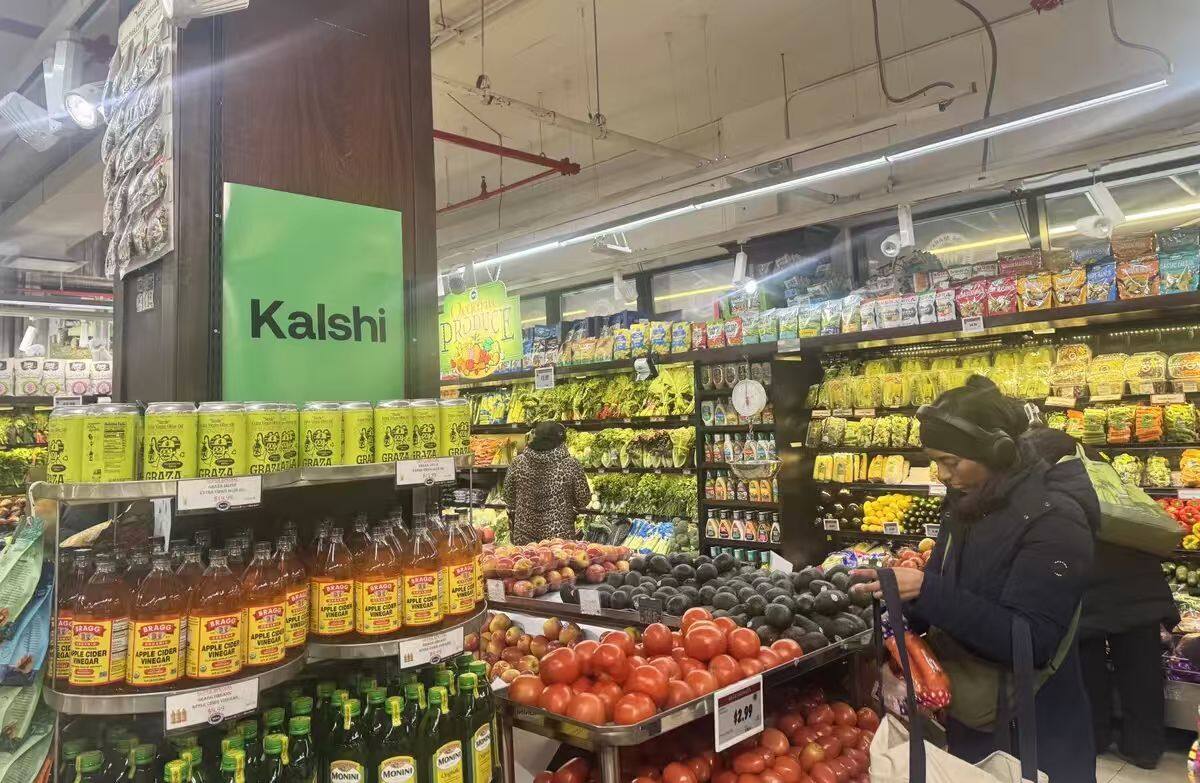
On February 3, Kalshi distributed $50 worth of free food benefits to select users at the West Side Market located at 84 Third Avenue in New York to attract more users to participate in various real event predictions on the platform.
From the surrounding "telephone pole flyers," "supermarket KT boards," and other nearby materials, it appears that Kalshi's offline promotion resembles an impromptu "flash mob," collaborating with local supermarkets to quickly deploy some offline materials, using the "free $50 food" benefit as "bait" to attract people to line up and watch in person. This was also confirmed by Connie.
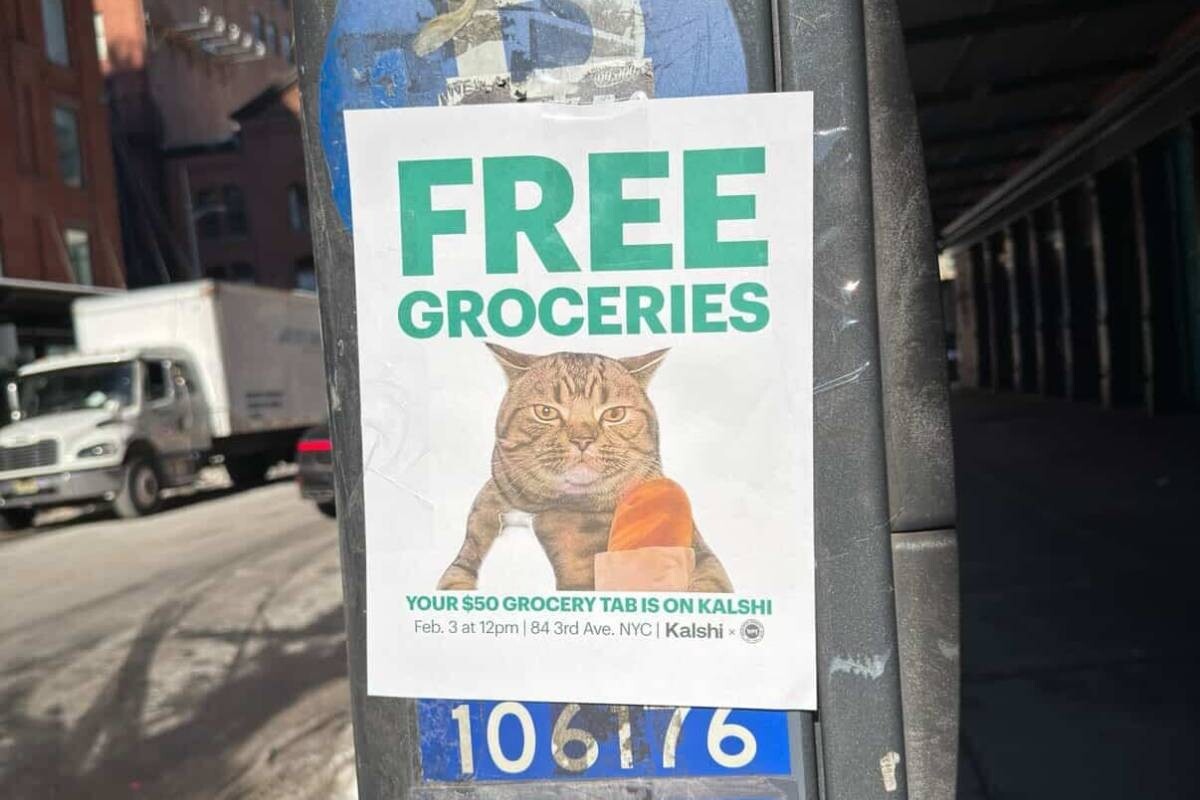
Additionally, it is clear that through this flash mob event, Kalshi hopes to encourage more people to join the prediction market with low-threshold, easily understandable betting questions, such as "Will gas prices in New York City exceed $3.3 this year?" This aims to achieve commercial goals like brand marketing and user activation.

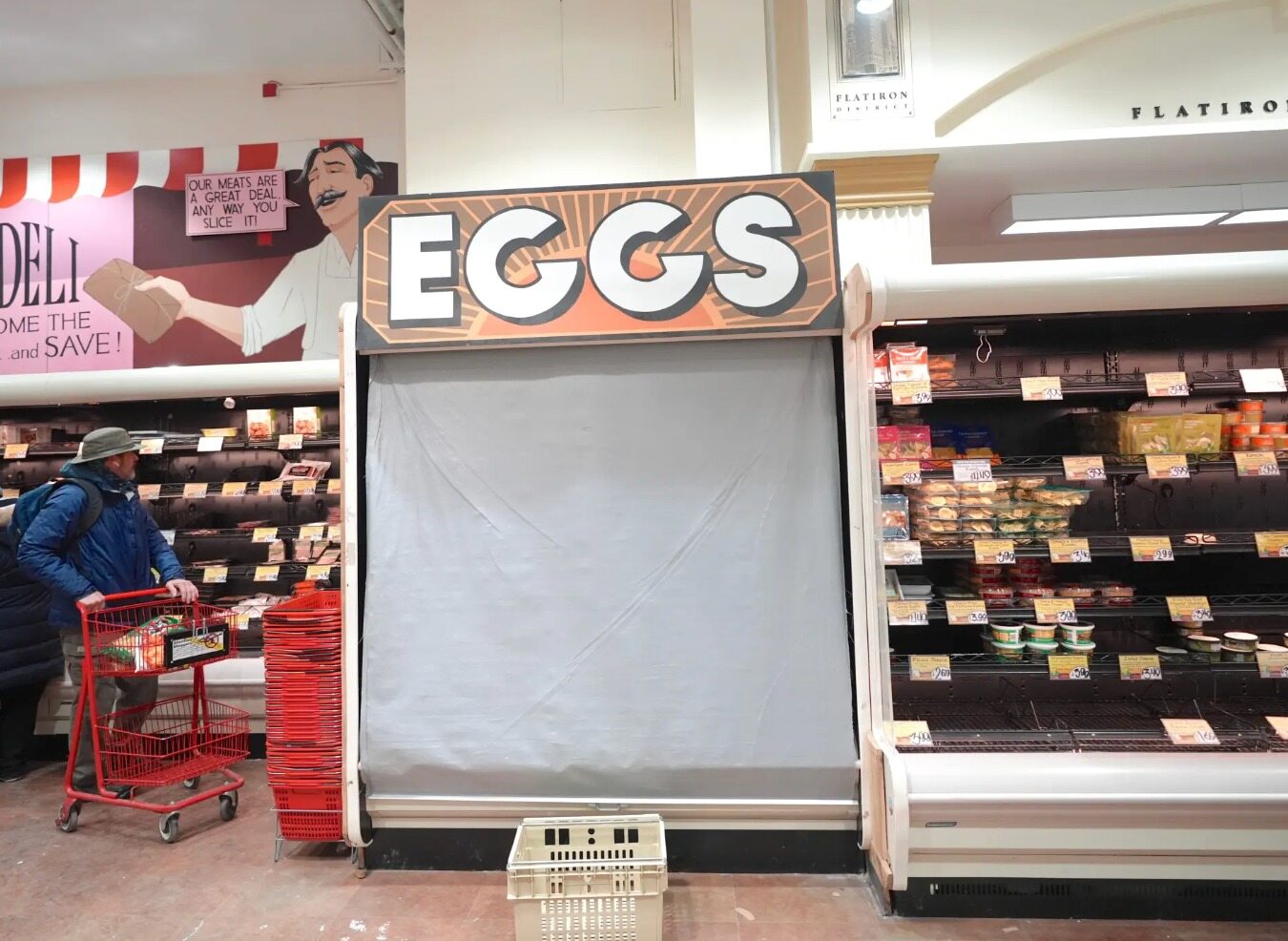
Kalshi's co-branded flash mob grocery store eggs were snatched up
In contrast to Kalshi's somewhat rough and highly commercialized approach, Polymarket's preparations are much more thorough.
On February 3, slightly ahead of Kalshi's official announcement, Polymarket officially announced that after months of offline preparation, it plans to open "New York's first free grocery store" through a rented storefront on February 12 (Eastern Time). Additionally, Polymarket donated $1 million to the New York City Food Bank to address the region's "hunger problem."
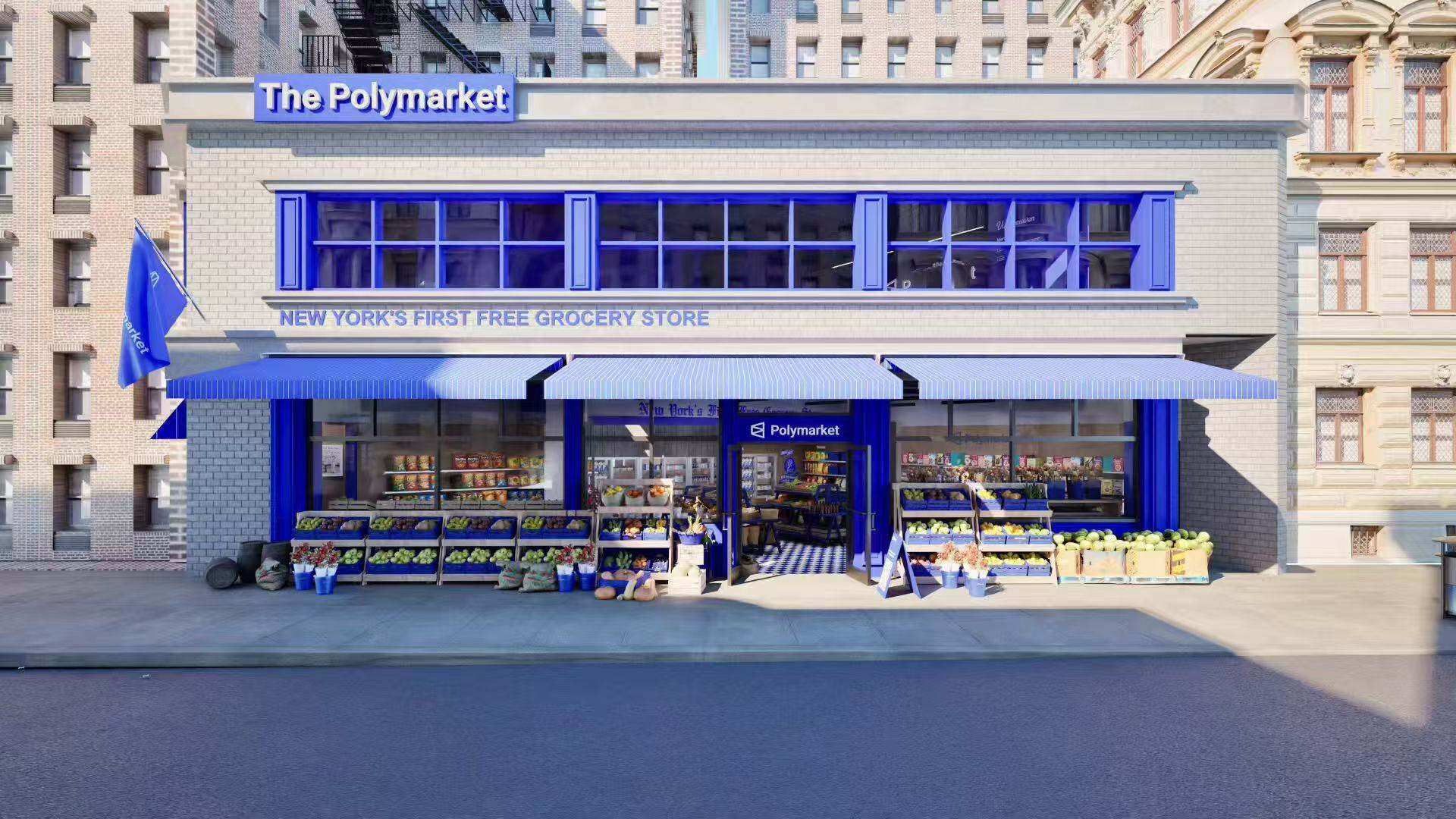
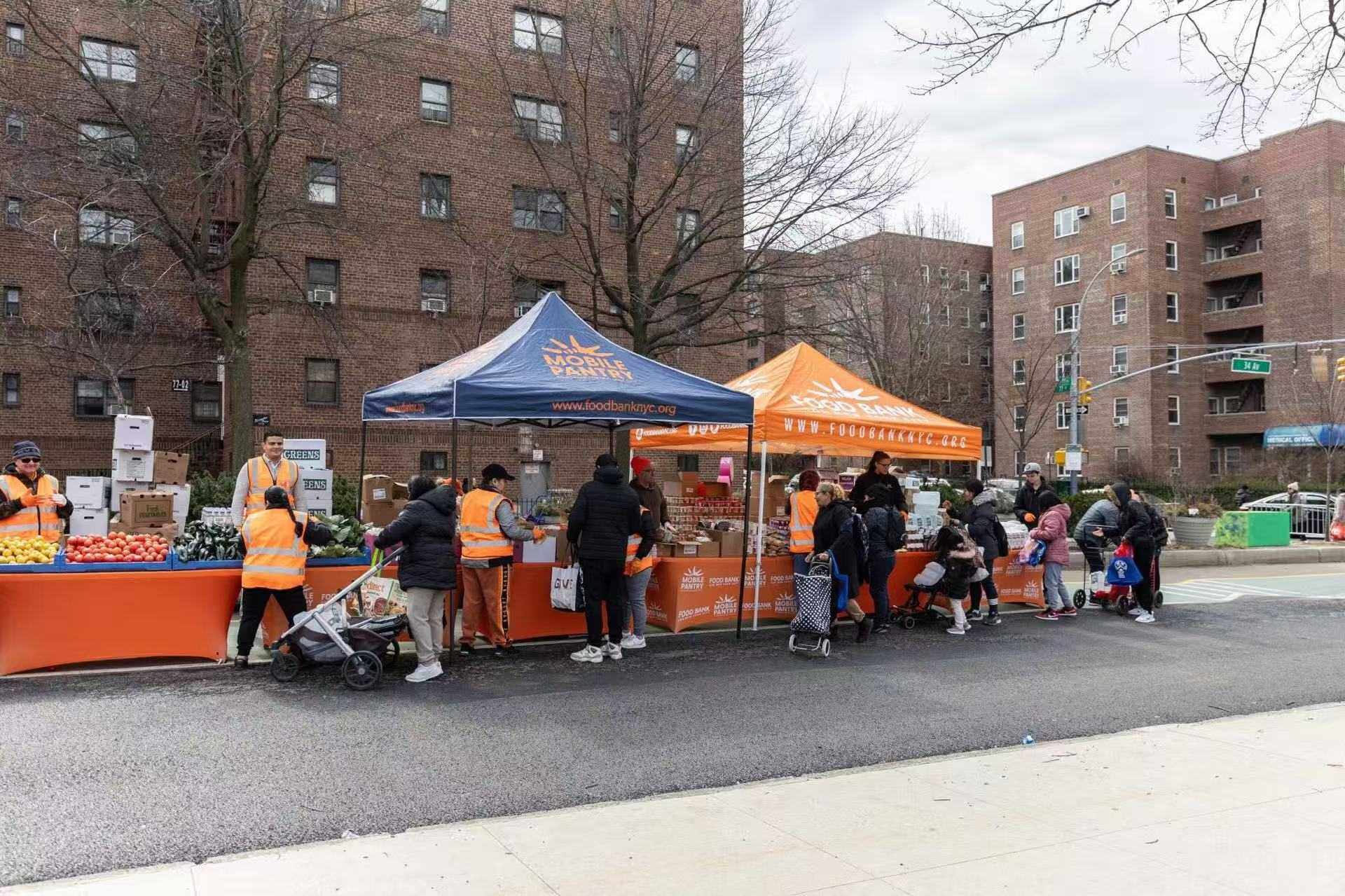
Polymarket also released real photos of distributing vegetables like tomatoes and eggplants, evoking memories of the domestic internet platform promotion era, reminiscent of "download the app and get eggs" and "first recharge gets a new user gift pack."
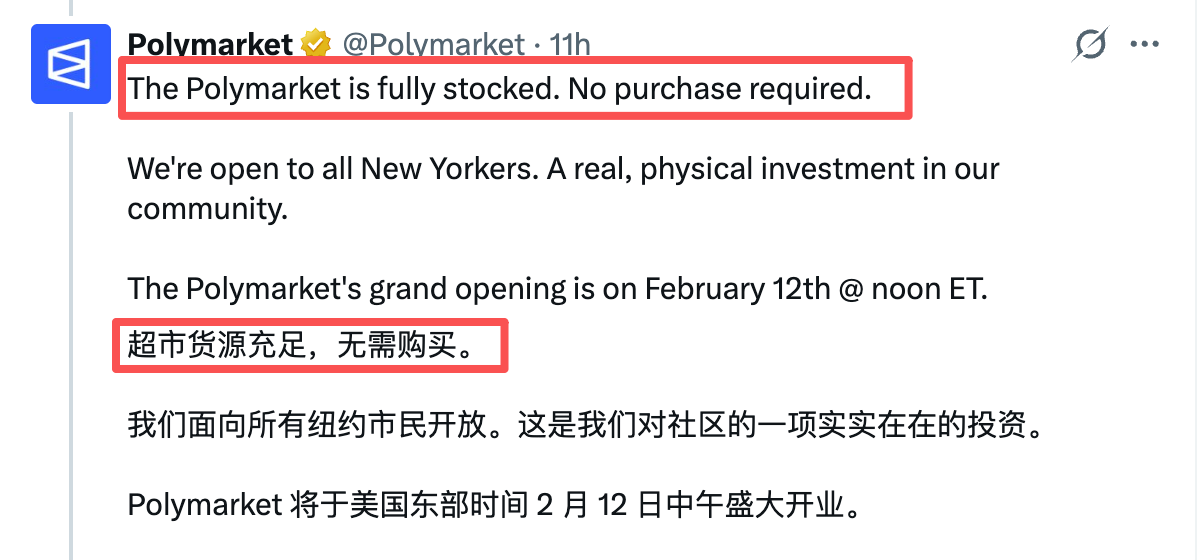
It is worth mentioning that Polymarket not only emphasized that "the Polymarket offline store has ample supplies and no purchase is necessary," but also called on everyone to donate to the New York City Food Bank at the end of the tweet, encouraging people to take action to address the real issues of high food costs and living expenses leading to "hunger problems."
Seeing this scene, I couldn't help but exclaim—
Fake crypto project promotions: holding offline conferences, feasting on seafood, and promoting various fake concept tokens;
Real crypto project promotions: giving away vegetables, giving away eggs, opening offline stores to distribute free food, doing charity and public welfare, and calling on people to donate and show love.
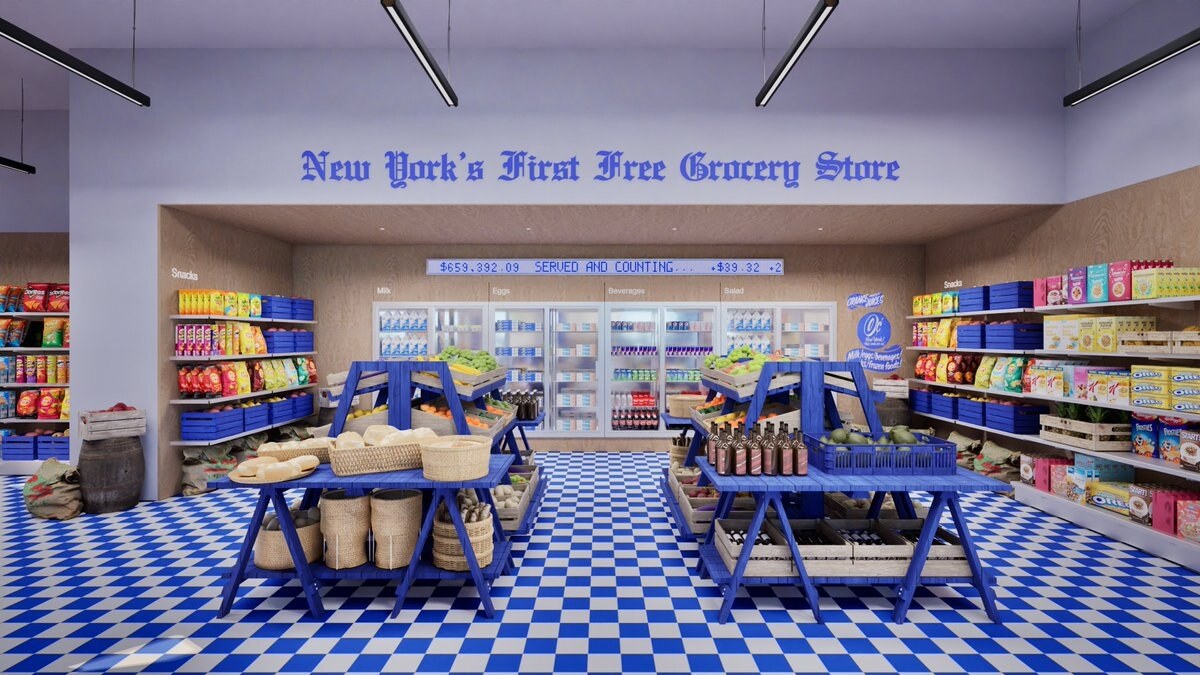
Regarding the real purchasing power of Kalshi and Polymarket's "egg distribution event," we also had a detailed discussion with Connie from Odaily in New York.
The real purchasing power of $50 in New York City: 5 meals at McDonald's, 1.5 pounds of beef, or 2 days' worth of meals for an average person
According to Connie, the real purchasing power of $50 in New York City is quite significant.
"In local supermarkets in New York, a 0.5-pound (approximately 0.45 kg) portion of beef costs about $18, so $50 can buy approximately 1.5 pounds of beef," which is enough protein intake for an adult for three meals a day. In comparison, the price of beef in China is only about 30 yuan per pound, which is only 1/8 of the cost in New York.
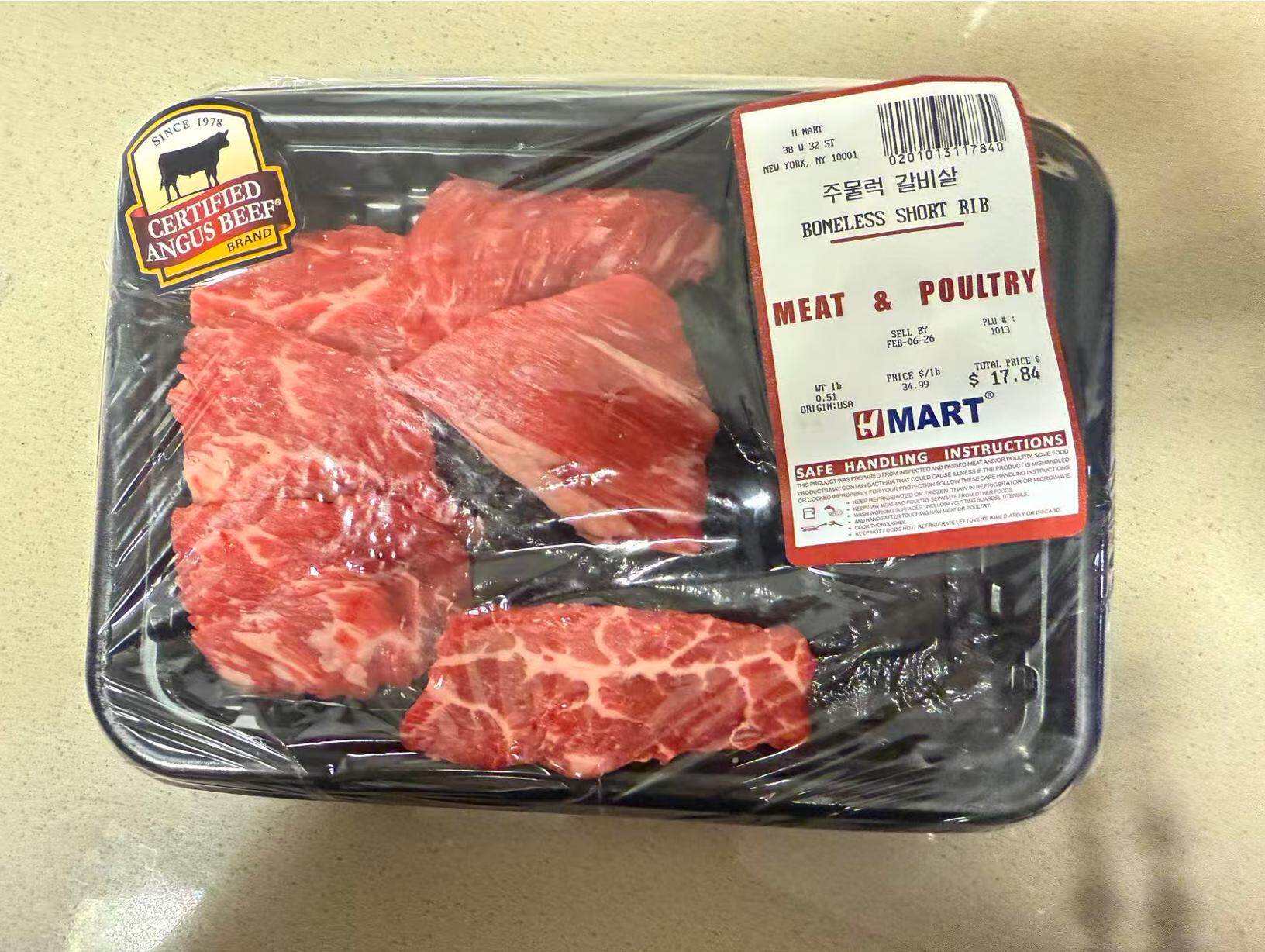
When converted to the well-known "Big Mac Index," the real purchasing power of $50 is also quite impressive—an 800-1000 calorie cheeseburger meal costs about $10.89, so $50 can buy about 5 meals; if purchasing a 580-calorie double burger, it only costs around $7.20. Of course, in China, this price is considered "astronomical," as the same burger meal only costs about 25-40 yuan, which is only half the cost of the same food in New York.
In other words, by spending a little less, $50 is close to covering the average person's meal costs in New York for about 2 days (based on 5-6 meals). According to Connie, Kalshi's event attracted many Americans to line up for "food," and even "the enthusiasm of Americans lining up for things is higher than that of Chinese people." Polymarket's "offline free grocery store" is also expected to attract a large crowd to line up. Based on the existing information released by Kalshi and Polymarket, the hard costs of the related activities for both platforms are at least over $50,000 to $100,000.
With such a significant investment of manpower and resources, aside from doing charity and showing love, both Kalshi and Polymarket are also calculating their own "small profits."
The business behind the prediction market platforms "giving away eggs": using political issues to influence institutional regulation
The food donation activities by Kalshi and Polymarket were not coordinated or communicated with the New York City government; they were spontaneous actions by the companies.
However, the wording and purpose of the external statements from both are strikingly similar to the "policies" repeatedly emphasized by New York's new mayor, Zohran Mamdani, during his campaign—who proposed "opening public grocery stores in all five boroughs of New York to lower food prices." Zohran Mamdani pointed out that city-owned grocery stores could reduce rent and operating costs through a nonprofit operating model and by utilizing public property. This proposal is still in the pilot stage, and a final implementation timeline has yet to be determined.
On the other hand, as one of the key states in the U.S., New York legislators are actively drafting new bills targeting the emerging industry of prediction markets. Among them, the “ORACLE Act” plans to restrict or prohibit New York residents from betting on certain prediction market events and impose stricter limitations on event-based prediction markets; another piece of legislation aims to require prediction market operators to obtain a license issued by the state government before operating.
It is evident that some legislative decision-makers still have various concerns about prediction markets, viewing them as akin to unregulated gambling or more susceptible to insider manipulation.
In light of this, although the mayor of New York does not have direct jurisdiction over the regulation of prediction markets (Note from Odaily Planet Daily: the regulatory authority over prediction market platforms belongs to state and federal governments), Kalshi and Polymarket's actions may also be an attempt to seek regulatory friendliness through indirect means.
Finally, regardless of how the actions of "giving away eggs" ultimately impact, we must say that the promotional models of Chinese internet companies are at least 5-10 years ahead of the Western world.
免责声明:本文章仅代表作者个人观点,不代表本平台的立场和观点。本文章仅供信息分享,不构成对任何人的任何投资建议。用户与作者之间的任何争议,与本平台无关。如网页中刊载的文章或图片涉及侵权,请提供相关的权利证明和身份证明发送邮件到support@aicoin.com,本平台相关工作人员将会进行核查。