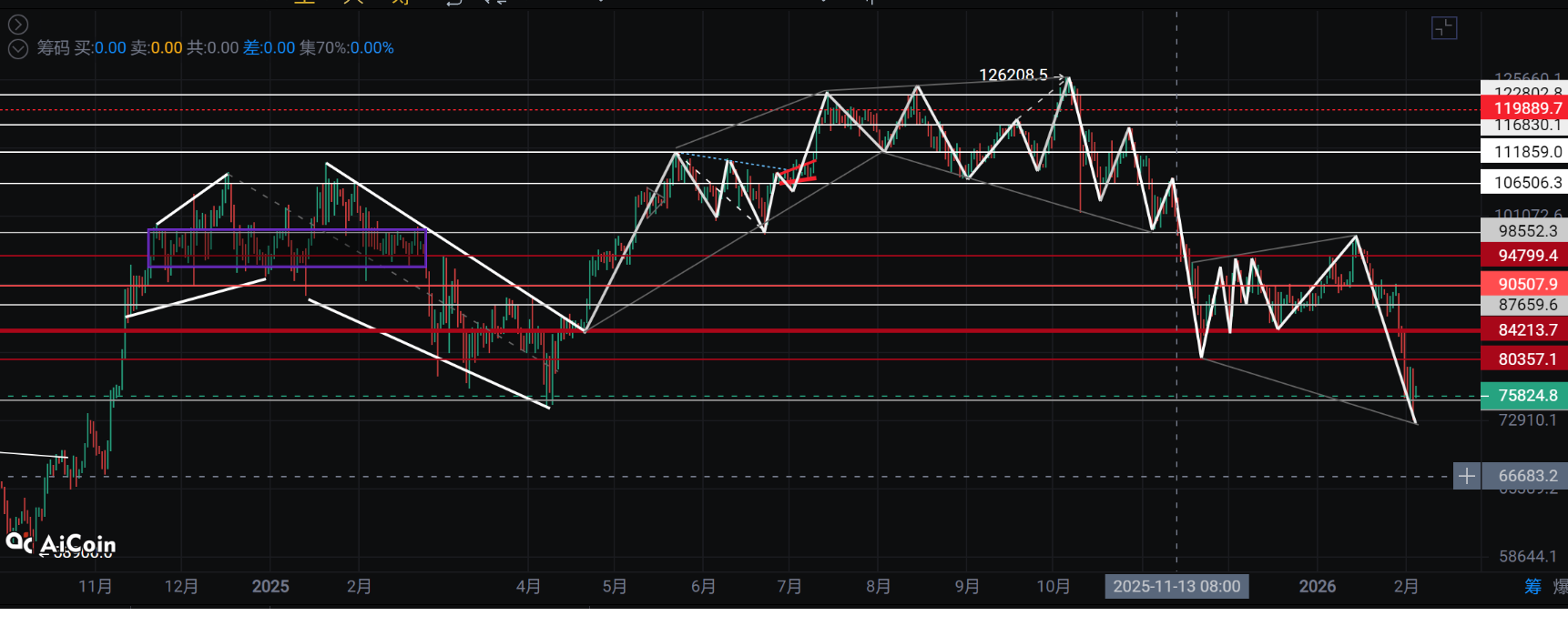
On February 4, 2026, at 8:00 AM Beijing time, the government of Butuo County in the Liangshan Yi Autonomous Prefecture of Sichuan Province issued a notice announcing a comprehensive ban on all related mining activities, including Bitcoin and Ethereum, within the county. This has drawn significant attention from the industry. The notice explicitly cites higher-level policies, categorizing mining activities as outdated production processes that the state has ordered to be eliminated, and recognizes related businesses as illegal financial activities, thereby establishing a clear and strict regulatory red line at the local level. Behind this notice is the county-level government's reiteration and implementation of the central government's mining ban policy from 2021, serving as a typical example of the narrative surrounding mining in China's hydropower-rich regions coming to an end. This article will trace the signals released by the Butuo County notice and the long-term trends behind it along the path of "Central - Local - Miners - Computing Power Landscape."
Small County Shows Its Strength: The Ultimatum of Power and Internet Cutoffs
● Qualitative Upgrade: The Butuo County notice directly quotes the regulatory stance from higher authorities, categorizing Bitcoin, Ethereum, and other mining activities as outdated production processes that the state has ordered to be eliminated, and emphasizes that related businesses fall under illegal financial activities. This statement comes from official A/C channels and is a verbatim policy-level citation rather than a media interpretation. By closely linking technical actions with industrial policy and financial regulation, it indicates that mining is no longer merely an issue of energy utilization or industrial choice, but has been included in the category of activities that need to be "zeroed out."
● Violation Costs: The notice specifies that for those refusing to cease operations or attempting to covertly mine, comprehensive measures such as power cuts, internet disconnections, and loan terminations will be implemented, and these actions will be included in the credit punishment system. This means that not only will mining machines be "disconnected," but relevant entities will also face ongoing impacts in terms of financial credit, electricity, and internet usage for production and operations. For industry participants, the risk has expanded from a singular "equipment seizure" to systemic sanctions covering financing, operations, and future development space.
● High-Pressure Signal: Media commentary, including from PANews, points out that the Butuo County notice indicates that "the regulatory high-pressure situation remains unchanged," emphasizing that this is a continuation of existing central policies rather than a new tightening. Rather than being seen as a sudden action, it should be viewed as another local example within a context of ongoing regulation: the regulatory environment has not loosened; it is merely that the execution landscape is continuously being filled in. A county-level notice is seen in public opinion as yet another confirmation of the long-term effectiveness of the "2021 mining ban."
● Spillover Scope: On the surface, the notice targets "mining sites and related enterprises," but with the interconnected measures of power cuts, internet disconnections, and credit punishments, the potential affected parties clearly extend beyond large-scale mining parks. Small to medium-sized computing power operations, personal or family workshop-style mining, as well as supporting businesses providing space, electricity, and internet hosting for mining, are all under the shadow of risk. This "package" approach effectively sends a withdrawal signal to all on-chain computing power production activities.
From Central to County: The Extension of the 2021 Ban
● Timeline Review: Since 2021, China has classified virtual currency mining as an industry to be eliminated at the national level, clearly requiring all regions to "strictly prohibit new additions and accelerate the exit of existing operations." This classification has pushed mining from a once "gray area" into the negative policy list, becoming an object that needs to be reduced to zero. At that time, many regions issued cleanup notices, but the pace and intensity varied, leaving a time and spatial gap in execution progress.
● Continued Execution: Deep Tide TechFlow commented that the Butuo County notice defines it as "the continued implementation of the central mining ban by local governments in China." In other words, this is not a brand new regulatory action, but rather a reiteration, redeployment, and re-execution of existing policies at the local level. Transforming the abstract expression of "eliminated industries" into actionable measures such as power cuts, internet disconnections, and credit punishments at the county level reflects the ongoing advancement of policy from documents to implementation.
● Local Sample: From the perspective of the county-level government, choosing to issue a separate document in 2026 is both a periodic alignment with higher-level requirements and a response to any remaining mining activities that may still exist locally. Unlike a one-time concentrated cleanup, such notices resemble a form of normalized governance, gradually filling in compliance gaps that have emerged or still exist under the premise of unchanged macro trends, indicating that the policy transmission regarding mining is not a short-term movement but a governance process extended over several years.
● Risk Boundaries: It is important to emphasize that the notice itself does not disclose specific past law enforcement cases, the number of investigations, or the scale of confiscations, and the brief does not provide comparative data across regions. Any extrapolation regarding historical law enforcement intensity rankings or penalty statistics would exceed the existing information boundaries. For readers, it is crucial to recognize the clearly defined qualitative measures rather than extending imagination based on unverified data, misreading local notices as a new policy of "comprehensive upgrades."
The Curtain Falls on the Hydropower Paradise: The Reversal of Liangshan's Computing Power Memory
● Computing Power Stronghold: Long before the mining ban in 2021, Sichuan, with its abundant hydropower resources, was one of the regions with the highest concentration of Bitcoin computing power globally. According to data from 2019, Sichuan once accounted for about 20% of the world's Bitcoin computing power, with hydropower-rich areas such as Liangshan Prefecture and Aba Prefecture becoming important destinations for mining machines during the rainy season. Liangshan Prefecture, where Butuo County is located, was a key geographical coordinate in the narrative of energy arbitrage at that time.
● Scene Contrast: During the wet season, the combination of cheap hydropower and the cool climate of the mountainous areas attracted a large number of mining operations, with containerized data centers, transformers, and fiber optic lines laid along the river valleys, forming a temporary and dense computing power cluster. Now, this same land rich in hydropower resources has declared the end of the local mining era through a cold "comprehensive ban" notice. The once profit-driven influx and today's hard zeroing create a strong reversal on the timeline.
● Power Redistribution: From the perspective of resource allocation, the mining ban will force local authorities to replan the direction of hydropower—electricity that was originally used for mining loads is more likely to be redirected to traditional industries, residential electricity, or compliant new energy and data center projects. Although specific project structures and plans are not presented in the notice, it is certain that "supplying cheap electricity for mining machines" is no longer a policy option for such counties, and the discourse power over electricity has returned to the regulatory and industrial planning levels.
● Information Gap: It must be acknowledged that current public information does not disclose the number or scale of remaining mining operations within Butuo County, nor is there a specific shutdown timetable or phased goals. No quantitative assessment can be made based on this, and it is inappropriate to speculate on details such as "withdrawal ratios" or "remaining computing power." In the absence of information, this article views Butuo as a sample of policy attitude and execution direction, rather than deriving an accurate picture of the entire Liangshan or even national mining stock from it.
The Exit Route for Miners: From Gray Areas to the Edge of Zeroing
● Compliance Risks: When mining and related businesses are clearly categorized as "illegal financial activities" and linked to credit punishments, entities choosing to remain in the country to continue mining or provide related services will face composite risks that exceed simple administrative penalties. In addition to the possibility of equipment being seized and profits being reclaimed, being included on a list of dishonest entities will also affect loans, guarantees, government procurement, and bidding processes, transforming mining from "gray arbitrage" into a choice that stands in opposition to the overall credit of individuals and enterprises.
● Direction Choices: Since 2021, the industry has already experienced a round of computing power migration, with some miners relocating to regions with relatively loose regulations or advantageous electricity prices, such as North America, Central Asia, and the Middle East, while others have turned to computing power hosting and cloud computing sales models, attempting to distance themselves from local regulatory risks. Some practitioners have chosen to completely exit mining, shifting to trading, infrastructure development, or other digital asset-related businesses. The Butuo County notice has not changed this existing migration trend; it has merely further compressed the survival space for "waiting" or "wandering in gray areas" within the country.
● Deterrent Effect: For large cross-regional mining operations, the county-level notice may just be one part of the overall risk landscape; however, for individuals and small enterprises within counties like Butuo, the combination of "county-level notice + credit punishment" carries a strong deterrent effect. Local operating entities often rely heavily on local financial institutions for financing, and their electricity and internet usage are highly dependent on county public services. Once linked to "illegal financial activities," it is equivalent to having their operational lifeline "choked," making it difficult to offset this pressure through covert operations.
● Misreading Risks: For investors and practitioners, it is important to be wary of a common bias—interpreting the silence at the local level as a relaxation of regulation and viewing the absence of new documents as a tacit approval window. The Butuo case illustrates that even during seemingly calm periods, grassroots governments may still issue supplementary notices or measures at any time to refine the execution map. The so-called "regulatory window" is often just a lack of explicit information, rather than a change in policy direction.
Regulatory High Pressure Remains: The Chinese Variable in the Global Computing Power Landscape
● Visible and Invisible Positions: PANews summarizes the Butuo County notice as "the regulatory high-pressure situation remains unchanged," and this judgment holds true within the global computing power landscape as well. Since publicly exiting mining activities, China's share of computing power in official statistics has significantly declined, but its "invisible" presence in areas such as mining machine manufacturing, power engineering, and some cross-border hosting remains non-negligible. Local bans like Butuo's are more about continuously weakening publicly visible computing power production activities within the country rather than eliminating China's overall influence in the computing power industry chain.
● Expectation Misalignment: From the investor's perspective, on one hand, the domestic attitude towards mining remains tough, while on the other hand, the secondary market's attention and participation in mainstream on-chain assets have not cooled down simultaneously. This misalignment between "policy high pressure" and "market enthusiasm" can easily create noise in sentiment and valuation expectations. Understanding this structural split helps investors separate policy risks from asset fundamentals and the global liquidity environment, rather than explaining price fluctuations with a single regulatory variable.
● Behavioral Boundaries: The Butuo County notice targets mining and related illegal financial activities and does not directly extend to the mere holding of on-chain assets or trading activities on compliant platforms. For readers, the key is to distinguish between activities that "produce computing power" and behaviors related to "holding and allocating assets," avoiding the infinite extrapolation of a single local mining ban notice into a comprehensive negation of all crypto-related activities, thereby amplifying panic in understanding.
● Maintaining Bottom Lines: The clauses mentioned in the brief regarding "civil actions investing in crypto derivatives being invalid" are still in a state of verification, and this article does not discuss them as established facts to avoid excessive extrapolation while legal boundaries remain unclear. Maintaining this restraint emphasizes that in regulatory and legal matters, compliance and credibility depend on respect for the sources and certainty of information, rather than jumping to conclusions.
After Normalizing High Pressure: The Distance Between China and the Future of Crypto
The key signals released by the Butuo County mining ban notice are very clear: the central government's mining ban positioning from 2021 has not faded from view, and local governments are still actively aligning, supplementing execution details, and advancing the "zeroing" goal through power cuts, internet disconnections, and credit punishments. For hydropower-rich regions represented by Sichuan and Liangshan, the era of mining supported by idle electricity during the wet season is coming to an end, and electricity resources will be redirected to more policy-compliant industrial uses. The long-term risk of China's absence in the global public chain infrastructure and computing power production fields is also becoming more apparent. For industry participants, a basic judgment is becoming increasingly clear: the narrative surrounding domestic mining is nearing its conclusion, and the real opportunities and risks worth paying attention to are shifting from the computing power production segment to other tracks and jurisdictions. Whether it is overseas layout, compliant trading, or participating in global infrastructure construction, one must find their position within the newly defined regulatory coordinates.
Join our community to discuss and grow stronger together!
Official Telegram community: https://t.me/aicoincn
AiCoin Chinese Twitter: https://x.com/AiCoinzh
OKX Benefits Group: https://aicoin.com/link/chat?cid=l61eM4owQ
Binance Benefits Group: https://aicoin.com/link/chat?cid=ynr7d1P6Z
免责声明:本文章仅代表作者个人观点,不代表本平台的立场和观点。本文章仅供信息分享,不构成对任何人的任何投资建议。用户与作者之间的任何争议,与本平台无关。如网页中刊载的文章或图片涉及侵权,请提供相关的权利证明和身份证明发送邮件到support@aicoin.com,本平台相关工作人员将会进行核查。