Written by: Glendon, Techub News
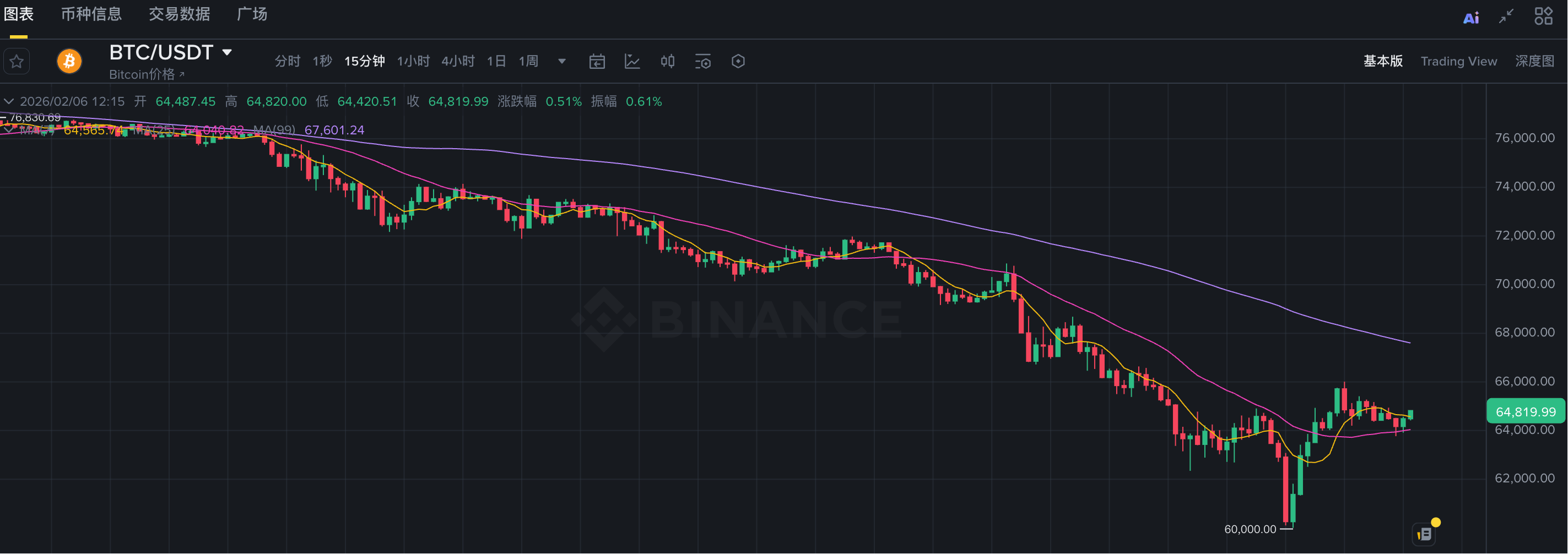
Last night, after Bitcoin fell below the key psychological price level of $70,000, its price plummeted again this morning, crashing down to $60,000, marking the lowest record since September 2024. Compared to last October's historical peak of $126,000, this drop exceeds 52%, effectively "halving" its value. Subsequently, Bitcoin experienced a "deep V" trend, rebounding to around $64,000. Within less than 12 hours, Bitcoin's decline once exceeded 14%, triggering widespread market panic, with the cryptocurrency fear and greed index dropping from 12 yesterday to 9, intensifying the atmosphere of extreme fear in the market.
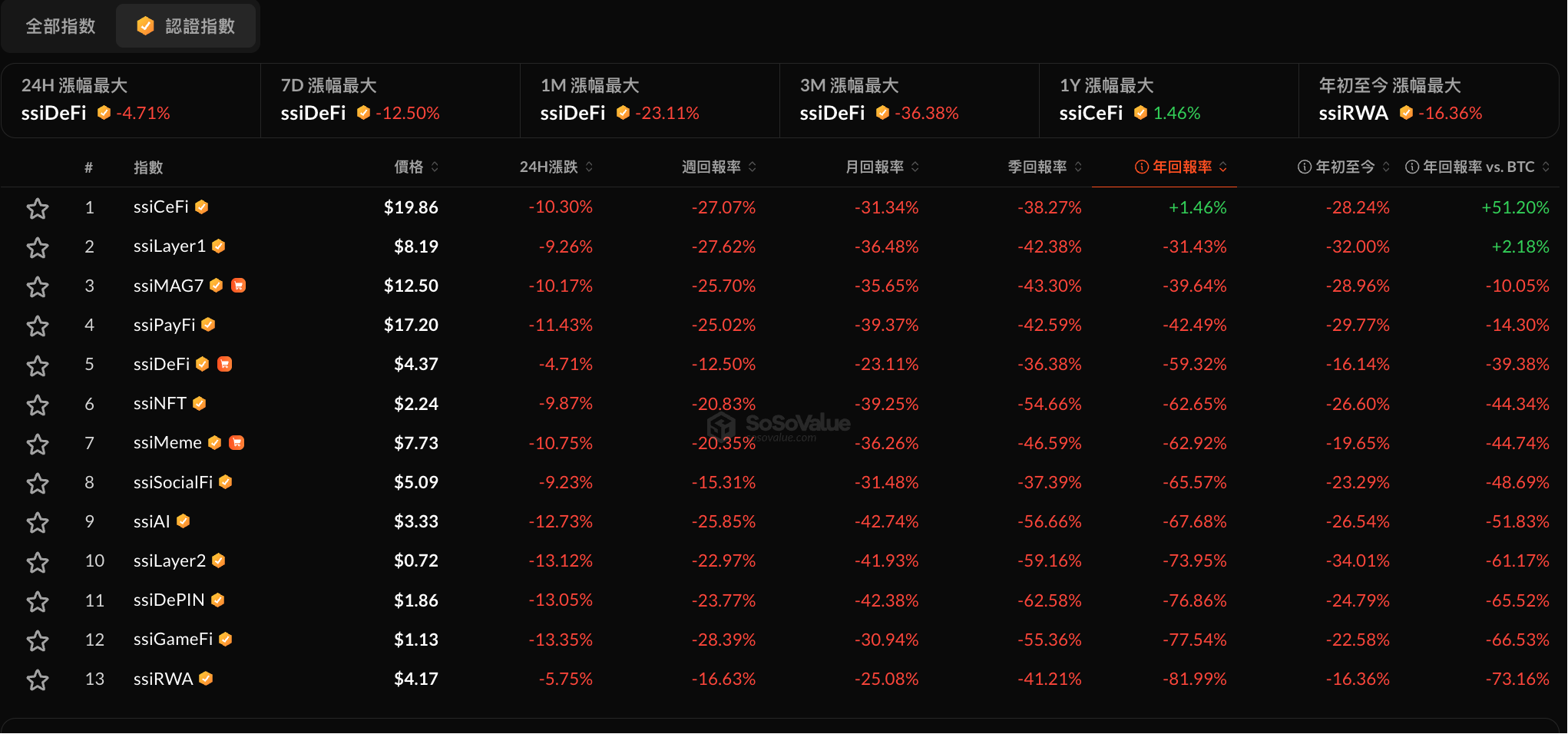
Bitcoin's sharp decline quickly triggered a chain reaction across the entire cryptocurrency market, with various sectors collectively "plunging," among which popular sectors like Layer2 and Meme saw declines generally exceeding 10%. According to CoinAnk data, as of the time of writing, the total liquidation amount across the network in the past 24 hours reached $2.2 billion, with long positions liquidating over $1.9 billion, affecting more than 450,000 people, including nearly $1 billion in liquidations of Bitcoin long positions.
In this "bloodbath" market, Ethereum also continued to decline, falling below $1,800. This forced the investment institution Trend Research, which had just "caught its breath," to transfer another 19,000 ETH to Binance this morning to repay loans and avoid liquidation risks. Meanwhile, the unrealized losses of Ethereum treasury company BitMine also soared to over $8.1 billion at one point. As the pioneer of the DAT market and the company with the largest Bitcoin holdings, Strategy's situation is equally grim.
As early as February 1, when Bitcoin fell below $76,000, it breached a long-term psychological threshold that had been viewed as Strategy's cost line, drawing widespread attention and discussion in the industry. Now, with Bitcoin's sharp decline, Strategy has suffered a double blow. Today, its stock MSTR price dropped significantly from $129 to $106.99, a decline of over 17% in a single day. Prior to this, its stock price had fallen for seven consecutive months, and compared to the historical high of about $540 in November 2024, its current decline has reached approximately 80%. If nothing unexpected happens, MSTR is expected to continue to decline this month, setting an embarrassing record of eight consecutive months of losses.
On February 1, as Strategy disclosed that it had spent approximately $75.3 million to acquire 855 BTC, its total Bitcoin holdings reached 713,502 coins. According to official information, Strategy's total acquisition cost is approximately $54.26 billion, with an average cost of about $76,052 per Bitcoin. At current prices, the total value of Strategy's Bitcoin holdings is approximately $45.66 billion, with unrealized losses reaching about $8.6 billion.
Faced with a plummeting stock price and massive unrealized losses, the market cannot help but question Strategy's "stock-for-coin" model that it relies on for survival, while also speculating whether it will respond to the crisis by selling Bitcoin like Trend Research or continue to increase its Bitcoin holdings against the trend.
Has Strategy's Financing Ability Dried Up?
As a Bitcoin treasury company, Strategy is fundamentally different from Trend Research, which is a high-leverage long investment institution. Its core business model is not simple price speculation but a carefully laid financial engineering plan. For a long time, the company's financing model has relied on a key indicator: market net asset value ratio (mNAV), which is the ratio of the company's market capitalization to the net value of its Bitcoin holdings. When mNAV is greater than 1, it means the market gives the company's stock a premium, allowing Strategy to issue stocks or bonds at a price higher than the net value of Bitcoin to raise funds and purchase more Bitcoin, creating a "financing—buying coins—market value growth" flywheel effect.
However, the continuous decline in Bitcoin and MSTR stock prices over the past few months has put immense pressure on Strategy's mNAV ratio, repeatedly falling below the critical level of 1. As of the time of writing, Strategy's market capitalization is approximately $30.744 billion, and the net mNAV has dropped to about 0.67. This value not only intuitively reflects that the company's market value is significantly lower than the value of its Bitcoin holdings but also indicates that Strategy may currently find it difficult to raise funds through the market by issuing common stock to purchase Bitcoin.
In November last year, Strategy CEO Phong Le stated regarding this indicator that if the mNAV ratio continues to be below 1 and the ability to obtain new capital continues to deteriorate, selling Bitcoin would be seen as a "last resort." He emphasized that this is not a long-term policy shift or an active selling plan for the company, but merely a "financial decision" that would be taken only in extreme market and capital environments.
So, has Strategy now reached a point where it cannot raise funds?
On February 1, Strategy founder Michael Saylor announced that the February dividend rate for Strategy's perpetual preferred stock STRC was raised by 25 basis points to 11.25%. The dividend rate is adjusted monthly, and Strategy can issue stocks through an at-the-market (ATM) method linked to this product's market price, thereby raising more funds to increase Bitcoin holdings.

In the fourth-quarter financial report released by Strategy today, it also clearly conveyed positive signals: Strategy still has the ability to continuously obtain funds through common stock issuance plans and various preferred stock (such as STRK, STRF, STRC, etc.) at market price issuance plans (ATM), indicating that its financing channels have not dried up.
The financial report shows that in the three months ending December 31, 2025, the company obtained approximately $5.6 billion in total revenue through multiple ATM plan transactions; from January 1 to February 1, it additionally obtained approximately $3.9 billion in total revenue. As of February 1, there is still about $8.1 billion in funds available for raising under the common stock issuance plan. Additionally, under the STRK ATM plan, STRF ATM plan, STRC ATM plan, and STRD ATM plan, there are still approximately $20.3 billion, $1.6 billion, $3.6 billion, and $4 billion available for issuance, respectively. This shows that Strategy's structured financing design allows it not to rely on a single market or tool; even if common stock financing efficiency declines due to mNAV discounts, it can still attract specific investors through high-yield preferred stocks.
For example, under the STRK ATM plan, although Bitcoin's price has fallen to $60,000, significantly reducing Strategy's financing efficiency and putting pressure on market sentiment, the remaining financing quota of $20.3 billion can still be realized and will not automatically expire due to Bitcoin price fluctuations. However, it should be clarified that these ATM plans are not designed to complete the entire financing quota at once but are issued in batches and progressively. Typically, the company will issue a small number of shares daily or weekly based on market acceptance, stock price fluctuations, and funding needs to avoid impacting the market. Therefore, as long as the stock price does not go to zero, financing can continue, allowing Strategy to sustain and stabilize its financing plans over months to years.
Analysts believe that a core logic here is that Strategy's business model does not rely on "selling stocks to raise money to buy coins," but rather attracts capital in the form of high-dividend preferred stocks based on the long-term appreciation expectations of Bitcoin, and then uses these funds to purchase Bitcoin. Therefore, as long as Bitcoin is still regarded as "digital gold," institutions are still willing to pay a premium for "Bitcoin exposure," then Strategy's financing cycle will not easily break.
Will Continue to Execute the "Bitcoin Standard" Strategic Route
On the critical issue of increasing and decreasing Bitcoin holdings, Strategy's attitude is very firm. Despite the significant drop in Bitcoin prices in the fourth quarter, leading the company to record an operating loss of $17.4 billion and a net loss of as much as $12.4 billion, it still purchased 41,002 BTC in January 2026, demonstrating that its long-term confidence in Bitcoin has not wavered due to market fluctuations.
Phong Le stated that Strategy actively promoted its Bitcoin treasury strategy in 2025, successfully raising $25.3 billion in funds. Meanwhile, the scale of its flagship digital credit tool STRC has grown to $3.4 billion. In 2026, Strategy will continue to focus on expanding the scale of STRC to enhance the Bitcoin earnings per share (BPS) for MSTR common stock investors and drive its continuous growth.
It is worth noting that Strategy emphasized in its financial report that as of February 1, the company has $2.25 billion in cash reserves. This amount is sufficient to cover over two and a half years of preferred stock dividends and interest payments on outstanding debts, eliminating the need to raise funds by selling Bitcoin. As an effective risk-averse measure, Strategy established a dollar reserve fund in early December last year specifically for paying dividends. This fund comes from the proceeds obtained by the company from selling Class A common stock according to market issuance plans. Strategy's Chief Financial Officer Andrew Kang stated that this cash reserve further enhances Strategy's credit status, making its capital structure more robust and resilient than ever.
Last night, Michael Saylor once again wrote "HODL" (Hold On for Dear Life) on X, emphasizing in the financial report that Strategy has built a digital fortress centered around 713,500 Bitcoins and is transitioning towards digital credit, a strategic move that aligns closely with their vision of holding Bitcoin indefinitely.

From the above series of data and viewpoints, it is not difficult to see that although Strategy currently faces the severe dilemma of significant unrealized losses in its Bitcoin holdings, the company still has ample liquidity to support daily operations and potential continued Bitcoin accumulation strategies.
In fact, for Strategy, selling Bitcoin may signify a strategic failure of its core business model. Holding Bitcoin is the fundamental purpose of Strategy's existence, rather than merely serving as an investment tool. Once the decision is made to sell Bitcoin, it will directly impact the narrative logic of its "digital gold" reserves, raising questions about its business model in the market, which could lead to a more severe crisis of trust and a decline in stock prices, creating a vicious cycle.
In today's Strategy fourth-quarter financial performance webinar, Phong Le candidly stated that under extremely adverse conditions, if the price of Bitcoin were to drop by 90%, falling to $8,000 and maintaining that level for five to six years, it would pose a real threat to repaying its convertible debt. At that point, they would be unable to use their Bitcoin reserves to repay the convertible bonds and would consider measures such as restructuring, issuing additional stock, or issuing additional debt. Meanwhile, Andrew Kang also made it clear that even amid market fluctuations, they would continue to execute their established strategy.
Overall, although Strategy faces significant short-term financial pressure, its cash flow remains ample. Furthermore, Strategy is fully prepared to continue executing its "Bitcoin standard" strategic route. This extreme focus on "anchoring to Bitcoin" is both a bet on market cycles and a test of its narrative capabilities. When the price of Bitcoin remains below its holding cost for an extended period, the ability to build sufficient trust buffers through new businesses like "digital credit" to avoid falling into the predicament of selling coins and collapsing business models will become the most critical survival issue for the next few years, and it will also be the focal point of market attention.
免责声明:本文章仅代表作者个人观点,不代表本平台的立场和观点。本文章仅供信息分享,不构成对任何人的任何投资建议。用户与作者之间的任何争议,与本平台无关。如网页中刊载的文章或图片涉及侵权,请提供相关的权利证明和身份证明发送邮件到support@aicoin.com,本平台相关工作人员将会进行核查。


