The latest judgment on Bitcoin prices by Wall Street investment bank Bernstein has sparked strong market attention, with analysts predicting that this digital asset could reach $150,000 by the end of 2026.
In a recent report, Bernstein analysts stated that the current market correction is the "weakest bear market" in Bitcoin's history, with the decline reflecting a crisis of confidence rather than structural damage.
They noted that, unlike past downturn cycles, there have been no significant bankruptcies, hidden leverage, or systemic collapses this time.
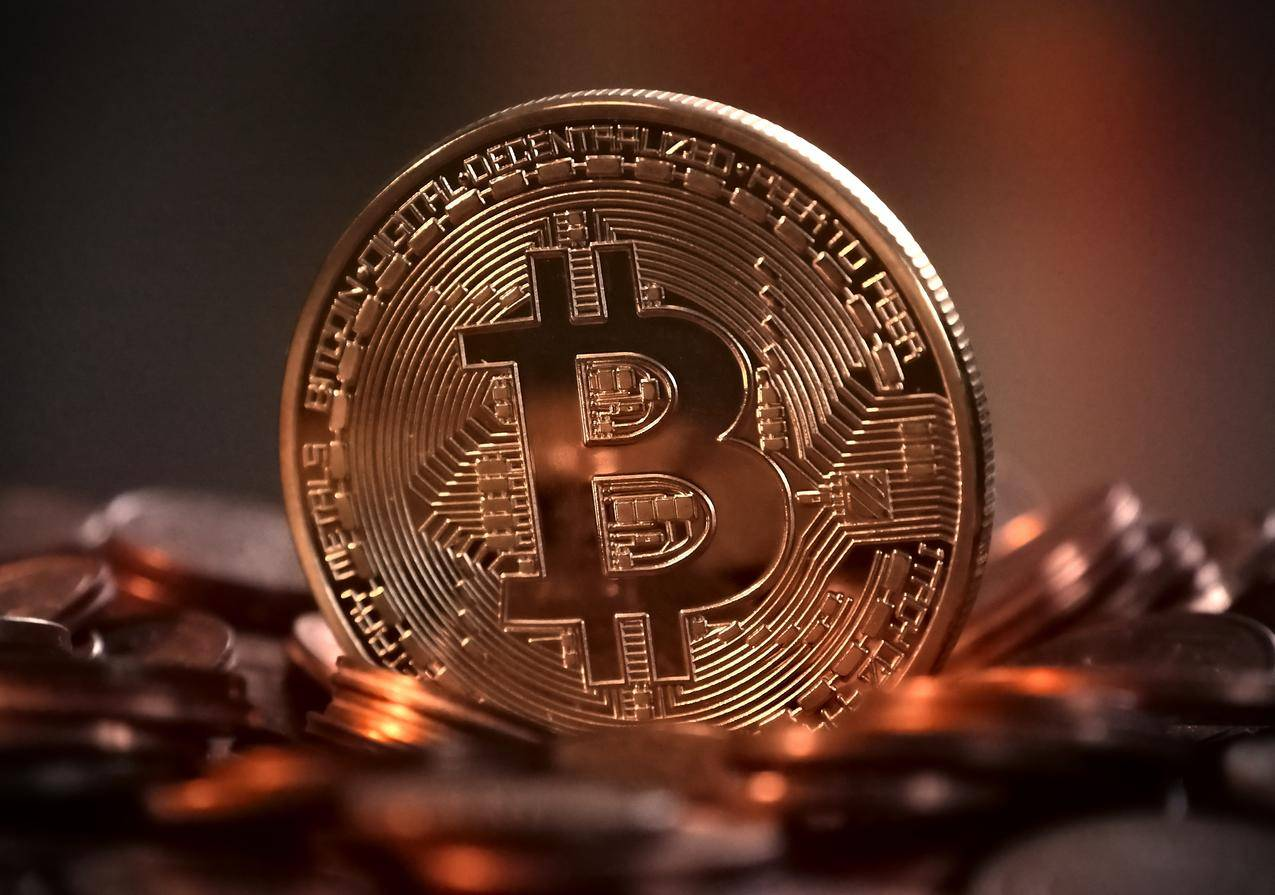
1. Price Prediction Spectrum
For Bitcoin's price trajectory in 2026, major global financial institutions and analysts have provided a diverse range of predictions, from extremely pessimistic to highly optimistic.
The optimistic core prediction range centers around $150,000 to $250,000.
● The highest prediction, represented by Fundstrat founder Tom Lee, reaches $200,000 to $250,000, while JPMorgan suggests that Bitcoin's "fair value" is close to $170,000. Both Standard Chartered Bank and Bernstein have set target prices at $150,000.
● Citigroup's base prediction is $143,000, Ripple CEO Brad Garlinghouse predicts $180,000, and Bitmex founder Arthur Hayes believes it could rise to a range of $124,000 to $200,000.
The pessimistic camp warns of a potential significant correction.
● Bloomberg Intelligence senior commodity strategist Mike McGlone proposed an extreme pessimistic scenario where prices could drop to $10,000.
● Technical analyst Peter Brandt pointed out the risk of a deep correction to $25,000 based on technical analysis, while CryptoQuant predicts that due to weak demand, prices could fall to $56,000.
2. Institutional Funds Reshaping the Market
● The core logic supporting the bullish Bitcoin predictions is a fundamental shift in market structure. The traditional four-year cycle model is being broken, and institutional investors are forming a "long-term bull market."
● Bernstein noted that during this market correction, only about 5% of ETF funds have flowed out, indicating the confidence of institutional investors.
● Grayscale, the world's largest digital asset management company, emphasized in its 2026 digital asset outlook that Bitcoin is transitioning from a retail-dominated asset to an institutionally supported financial tool. These structural changes will push Bitcoin into a new price discovery phase.
3. Three Pillars of Optimistic Predictions
● Accelerated institutional adoption has become the primary driver of Bitcoin's value growth. Bernstein analysts believe that a pro-Bitcoin U.S. president, the adoption of spot Bitcoin ETFs, increasing corporate capital allocation, and the continued participation of large asset management firms have created a strong institutional synergy.
● Ongoing fund inflows into spot Bitcoin ETFs provide stable support for the market. Several institutions predict that as regulatory progress and market rules become clearer, institutional funds will flow into the market in a more predictable and sustained manner.
● The macroeconomic environment is also driving demand for Bitcoin. Citigroup analysts believe that advancements in U.S. cryptocurrency regulation and monetary policy easing will accelerate institutional investment.
4. Concerns and Rebuttals
The market still harbors concerns about Bitcoin's future, but institutional analysts have systematically rebutted these worries.
● Regarding doubts about Bitcoin losing relevance in an AI-driven economy, Bernstein believes that with the rise of autonomous software agents, blockchain is well-suited for the emerging "agentic" digital environment. Blockchain systems have advantages over traditional banking infrastructure.
● Quantum computing risks are also seen as a potential threat. Bernstein acknowledges that this challenge is worth noting but points out that all key digital systems face similar challenges.
5. Rational Perspective on Market Predictions
● Looking back at 2025, many analysts' optimistic predictions did not materialize. At that time, some experts expected Bitcoin prices to reach $200,000, but as of December 30, 2025, Bitcoin prices hovered around $88,000.
● Some institutions maintain a cautiously neutral stance. Barclays Bank in the UK expects the market to perform weakly in 2026 due to a lack of significant catalysts; asset management firm VanEck believes 2026 will be a consolidation phase suitable for accumulation strategies, with no dramatic price fluctuations.
● The cryptocurrency market remains influenced by multiple factors, and price predictions should consider macroeconomic conditions, regulatory environments, and market sentiment from multiple dimensions.
As major Wall Street investment banks set Bitcoin's target price for next year at $150,000, traditional financial institutions have begun to evaluate this digital asset using a new framework. JPMorgan concluded that Bitcoin's "fair value" is close to $170,000 based on its volatility model relative to gold.
Grayscale predicts that Bitcoin will break its historical high of $126,198.06 in the first half of 2026. Bernstein's longer-term forecast suggests that Bitcoin could reach $1,000,000 by 2033.
Behind these predictions is an ongoing digital asset revolution that may be extending the current bull market cycle and redefining Bitcoin's role in the global financial system.
Join our community to discuss and grow stronger together!
Official Telegram community: https://t.me/aicoincn
AiCoin Chinese Twitter: https://x.com/AiCoinzh
OKX benefits group: https://aicoin.com/link/chat?cid=l61eM4owQ
Binance benefits group: https://aicoin.com/link/chat?cid=ynr7d1P6Z
免责声明:本文章仅代表作者个人观点,不代表本平台的立场和观点。本文章仅供信息分享,不构成对任何人的任何投资建议。用户与作者之间的任何争议,与本平台无关。如网页中刊载的文章或图片涉及侵权,请提供相关的权利证明和身份证明发送邮件到support@aicoin.com,本平台相关工作人员将会进行核查。


