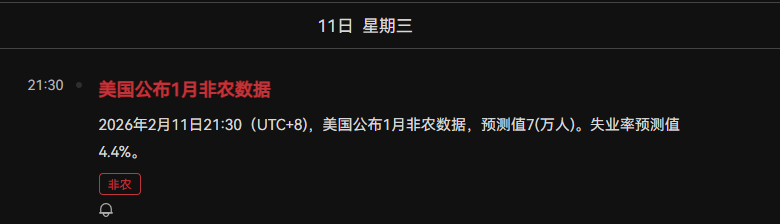
On February 11 (Wednesday) at 21:30 (Singapore time), the US Labor Department will release the non-farm employment report for January. This delayed data has garnered an unprecedented level of attention. Market analysts generally believe that this report is not only a critical "check-up" on the health of the US labor market but could also become a decisive variable in reshaping market expectations regarding the Federal Reserve's monetary policy path.
1. Expected Game after Data Gap
Typically, non-farm reports are a fixed market agenda at the beginning of each month. However, the delayed release of January's data has created a rare information vacuum. During this period, the market could only rely on "high-frequency but non-determinative" data such as ADP private employment and initial jobless claims for speculation, leading to an accumulation of uncertainty.
Currently, the market has formed a set of preliminary consensus expectations:
- New non-farm jobs: Expected value of 70,000, which already reflects the market's judgment that the employment market may slow further.
- Unemployment rate: Expected to remain at 4.4%, close to recent highs.
The key is that the significance of these numbers themselves is far less important than their comparison to the final "actual value." The market's first response is always driven by the "expectation difference."
2. Beyond the Simple Narrative of "Good or Bad"
Mature investors should not just be satisfied with determining whether the report is "overall strong or weak," but should follow a more structured analytical framework to capture deeper signals.
First Layer: Shockwave — Actual Value vs Expected Value
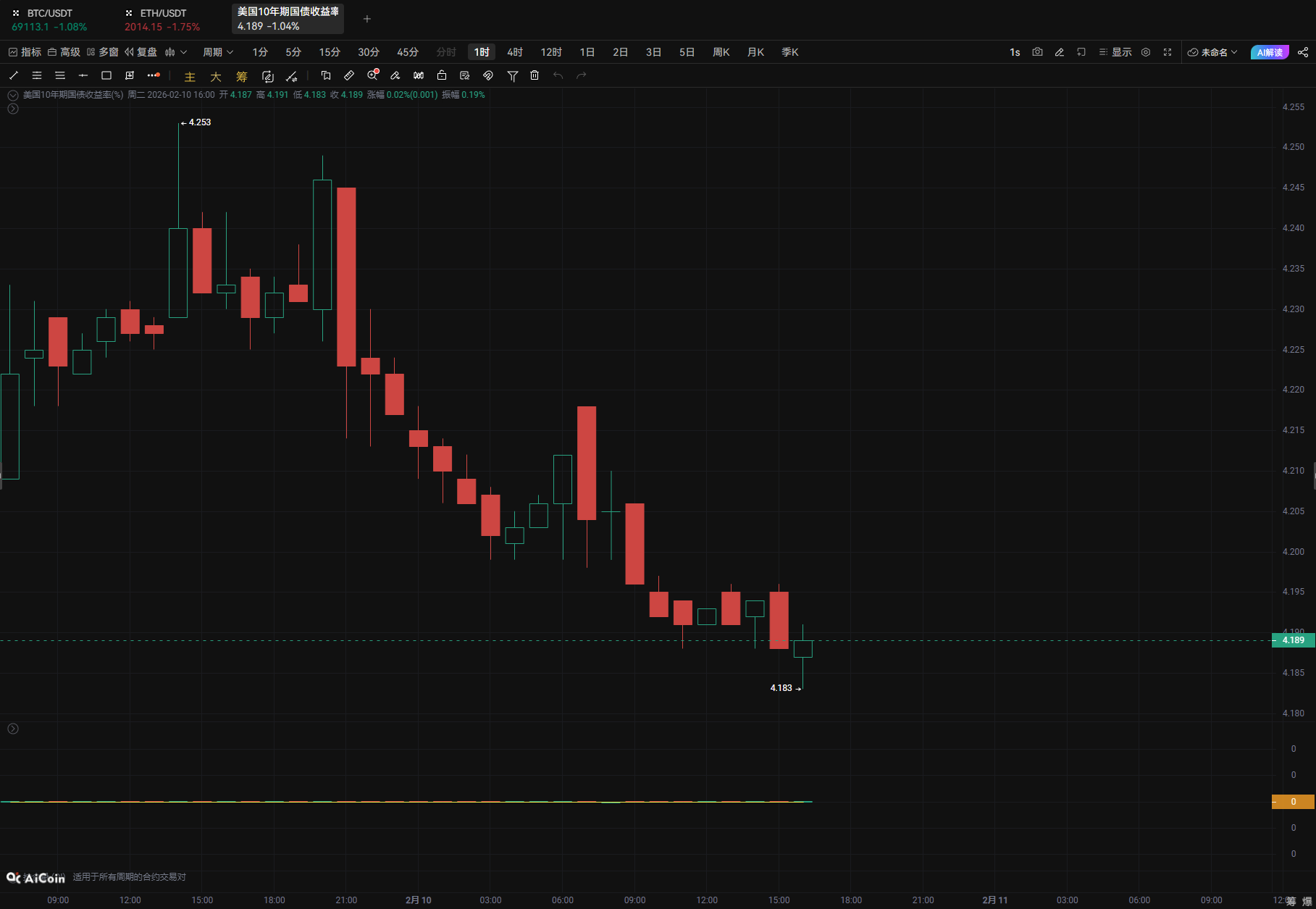
This is the direct trigger for instant market fluctuations. Regardless of the overall tone of the report, as long as any key data point regarding new jobs or the unemployment rate significantly deviates from market consensus, it is enough to trigger violent fluctuations in US Treasury yields, the dollar index, and stock index futures within minutes.
Stronger than expected (New jobs > 70,000): This could instantaneously boost the dollar, raise US Treasury yields, and put pressure on US stocks, as it suggests strong economic resilience, providing more basis for the Federal Reserve's "higher for longer" interest rate stance.
Weaker than expected (for example, new jobs < 70,000): This could trigger the opposite chain reaction, reinforcing market bets that the Federal Reserve will soon (or more quickly) start a rate-cut cycle.
Second Layer: Joint Interpretation of Three Core Indicators
[Overheating Warning]: Strong new jobs + declining unemployment rate + accelerating wage growth. Hawkish scenario, indicating not only a tight labor market but also that wage pressures are still on the rise, which would completely extinguish recent rate-cut expectations.
[Soft Landing Dawn]: Moderately slowing new jobs + slight increase in unemployment rate but maintaining stability + steady easing of wage growth. The economy is cooling, but not stalling; inflation pressures are easing. This will support the narrative of "later but orderly rate cuts."
[Recession Concerns]: Sharp drop in new jobs + jump in unemployment rate + stagnant or even declining wage growth. This would immediately ignite concerns about economic recession, with the market likely adjusting to price in the Federal Reserve's "emergency rate cuts" to save the economy.
3. The Transmission from Data to Policy Expectations
The core concern in the current market is: Will this report compel the Federal Reserve to modify the language of its policy guidance?
In the January meeting, the Federal Reserve acknowledged progress in inflation but emphasized the need for "greater confidence" before starting rate cuts. The state of the labor market is a key basis for assessing economic resilience and inflation risks.
If the report shows the labor market is still overheating, the narrative of "the inflation battle is not over" will regain dominance in the market, leading risk assets to face ongoing adjustment pressure.
If the report clearly shows the economy is cooling in line with the Federal Reserve's expectations, then the narrative of "waiting for the rate cut signal" will be solidified, and the market may start pricing in rate cut expectations around mid-year.
The importance of non-farm data lies not in telling us whether the economy is 'good' or 'bad' now, but in whether it will change the Federal Reserve's and future data's 'what they will say.' The market trades the changes in expectations, not the current situation.
4. Action Guide
1. Avoid chasing highs and lows at the moment of data release: The initial violent fluctuations are often driven by algorithmic trading and short-term sentiment, which may not represent the market's final direction.
2. Pay attention to cross-asset reactions: Simultaneously observe the reaction of the dollar, US Treasuries (especially 2-year and 10-year yields), gold, and S&P 500 futures, which can provide a more comprehensive reflection of market interpretations than a single asset trend.
3. Listen to subsequent comments from Federal Reserve officials: After the data release, any public statements from Federal Reserve officials (especially the Chair or Vice Chair) will serve as an important calibration of market interpretations.
The January non-farm report is a delayed "stress test." On the balance of inflation and growth, it will add a crucial weight to global economic expectations. In this game of information asymmetry, insight is the only moat.
Join our community to discuss together and become stronger!
Official Telegram community:
AiCoin English Twitter:
免责声明:本文章仅代表作者个人观点,不代表本平台的立场和观点。本文章仅供信息分享,不构成对任何人的任何投资建议。用户与作者之间的任何争议,与本平台无关。如网页中刊载的文章或图片涉及侵权,请提供相关的权利证明和身份证明发送邮件到support@aicoin.com,本平台相关工作人员将会进行核查。