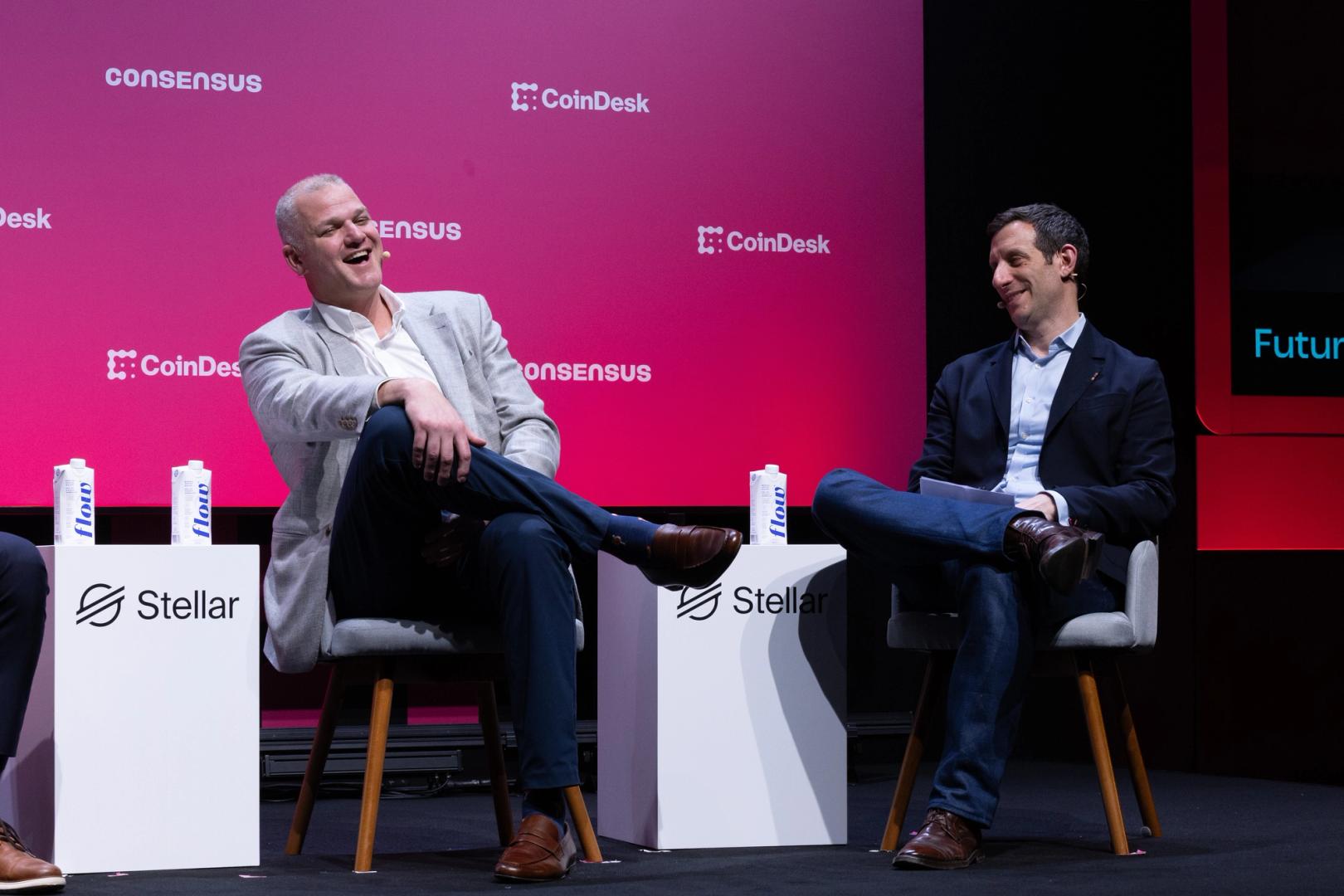
What to know : Major financial institutions are expanding into crypto derivatives as clearer U.S. regulation helps make digital assets a mainstream portfolio allocation. New products such as overnight rate futures, multitoken indexes and access to DeFi liquidity are enabling institutional investors to move beyond bitcoin into broader crypto exposure and arbitrage strategies. Futures and other derivatives, underpinned by a robust industrywide beta benchmark, will channel trillions of dollars of institutional capital into crypto, making non-participation a growing career risk for traditional finance professionals, panellists said.
Clearer rules and improved technology are accelerating the convergence of traditional finance (TradFi) and decentralized markets, driving established institutions into areas such as crypto derivatives, according to panelists at Consensus Hong Kong.
"Regulation is really important. It gives you the rails that you need to operate in," said Jason Urban, global co-head of digital assets at Galaxy Digital (GLXY), who took part in the "Ultimate Deriving Machine" panel.
Other speakers, including executives from exchange operator ICE Futures U.S., crypto prime brokerage FalconX and investment company ARK Invest highlighted how developments in the U.S., such as the 2024 approval of spot crypto exchange-traded funds (ETFs) and harmonization between the Securities and Exchange Commission (SEC) and the Commodity Futures Trading Commission (CFTC) have flipped crypto from a speculative sideline to a portfolio staple.
The key takeaway is that derivatives are set to grease the path for trillions of dollars in institutional inflows to the market. The momentum goes well beyond bitcoin , the largest cryptocurrency by market value.
ICE Futures U.S. President Jennifer Ilkiw highlighted forthcoming overnight rate futures tied to Circle Internet's (CRCL) USDC stablecoin, launching in April, and multitoken indexes as evidence of institutions looking beyond bitcoin for exposure to a range of tokens.
"It makes it very easy. It's like, if you're taking our MSCI Emerging Markets, there's hundreds of equities in there. You don't need to know every single one," she said, citing demand from former crypto skeptics.
Josh Lim, the global co-head of markets at FalconX, stressed bridging traditional financial exchanges like the CME with liquidity pools in decentralized finance (DeFi) using prime brokerages for hedge-fund arbitrage and leverage.
"Hyperliquid, obviously has been a big theme for this year, and last year, we've enabled a lot of our hedge fund clients to access that marketplace through our prime brokerage offering," Lim said, referring to the largest decentralized exchange (DEX) for derivatives.
"It's actually essential for firms like us … to bridge this liquidity gap between TradFi and DeFi … That's a big edge," Lim said. Crypto innovations like 24/7 trading and perpetuals are influencing Wall Street.
ARK Invest President Tom Staudt called the debut of spot bitcoin ETFs in the U.S. a milestone that slotted crypto into mainstream wealth managers' portfolios and systems.
But he urged adoption of a true industry-wide beta benchmark — a broader market standard for measuring an asset's risk and performance relative to the overall crypto market. There's a need for a diversified index, rather than relying solely on a single reference point like bitcoin, he said.
"Bitcoin is a specific asset, but it's not an asset class ... You can't have alpha without beta," he said, pointing to futures as the gateway for structured products and active strategies.
inaction now is akin to "career suicide," as real-world assets come onchain and demand participation, Urban said.
免责声明:本文章仅代表作者个人观点,不代表本平台的立场和观点。本文章仅供信息分享,不构成对任何人的任何投资建议。用户与作者之间的任何争议,与本平台无关。如网页中刊载的文章或图片涉及侵权,请提供相关的权利证明和身份证明发送邮件到support@aicoin.com,本平台相关工作人员将会进行核查。


