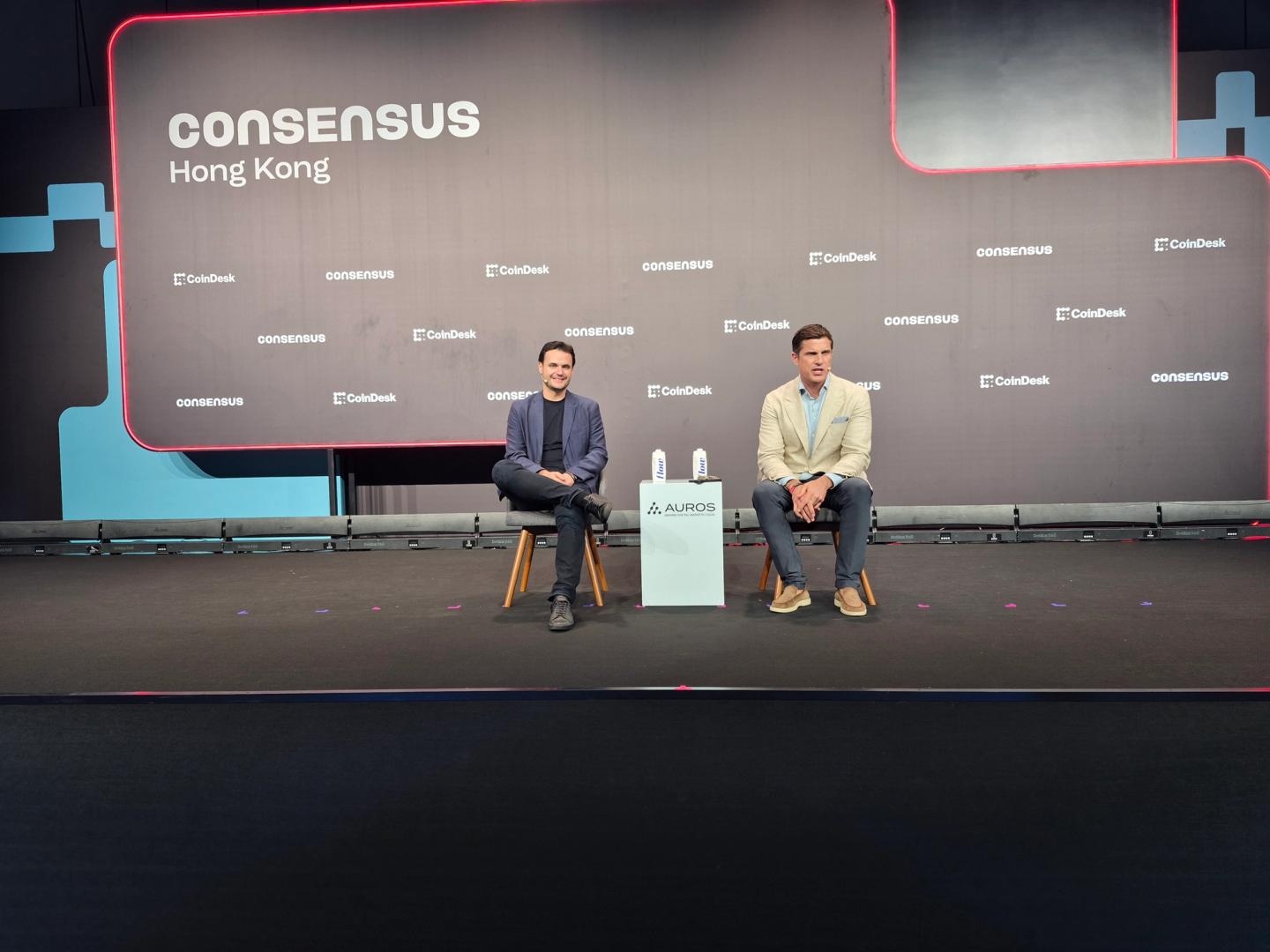
What to know : Robinhood executive Johann Kerbrat said stablecoin issuers and platforms should pass yield on to consumers while clearly disclosing that such products lack protections like FDIC insurance. Kerbrat argued that customers, once fully informed of the risks and guarantees, should be free to choose between high-yield savings accounts, stablecoins or tokenized payment options. He said traditional T+1 settlement is an outdated systemic risk and outlined Robinhood’s push into tokenization and 24/7 trading via its new Ethereum Layer 2, as NYSE and Nasdaq also race to launch round-the-clock tokenized stock markets.
Stablecoin yields should be passed on to the consumer, Robinhood General Manager Johann Kerbrat said Wednesday at CoinDesk's Consensus Hong Kong conference.
Kerbrat also said it should be up to consumers to decide what they want to do with their savings, though they need to be made aware of the risks inherent in these products.
“We think that we should be able to pass the yield to the consumer,” Kerbrat said. “They don’t want to be locked into a stablecoin earning no interest if they can do it on a high-yield savings account.”
However, he said stablecoins have risks and issuers, fintechs and trading platforms need to let consumers know what these are, such as the fact that stablecoins are not insured by the FDIC, marking one difference from a traditional bank account.
The Robinhood general manager said consumers need to know what guarantees are in place and which are not, so they can then make their own decision on “whether they keep it in a high-yield savings account, use a stablecoin or use tokenized payments.”
The stablecoin yield debate is at the center of the crypto market structure framework or CLARITY Act that is being discussed in the U.S. The digital assets industry is in contention with traditional bankers, who argued that such yield could catastrophically compete with the deposits business at the core of U.S. banking and credit.
Market conditions
Moderator Tom Farley, the CEO of CoinDesk parent company Bullish, moved on to the crypto market conditions. “The market is currently down between 60% to 65% and it feels to me like there's some real bad taste in the retail mouth about crypto in the world because of what happened on Oct. 10. Are you optimistic it’s coming back?”
Kerbrat said Robinhood has a positive outlook, which he based on the buying behaviour of their customers.
“We actually see a lot of people buying the dip. We see them growing their portfolio,” which he said is a significant shift from years prior, when people more largely kept their distance during crypto downturns.
The current traditional finance system is “operating on borrowed time,” Kerbrat said, using a T+1 (one-day) settlement model he described as an “antiquated relic.”
Kerbrat said that the 24-hour waiting period for stock settlements is a systemic risk that modern blockchain technology has already rendered obsolete. He advocated for a shift toward "atomic" settlement, where the transfer of ownership and payment happen simultaneously, effectively ending the concept of a settlement period altogether.
This vision for a modernized market is anchored in Robinhood’s aggressive push into tokenization, which the company views as the gateway to 24/7 global trading. By moving assets onto the newly announced Robinhood Chain, an Ethereum Layer 2 built on the Arbitrum stack, Robinhood intends to enable users to trade tokenized real-world assets like US stocks and ETFs with the same continuous liquidity found in the crypto markets.
Sources familiar with the move to 24/7 trading said that round-the-clock trading will not be likely until the end of 2026, when either the Nasdaq or the New York Stock Exchange roll-out their digital asset platforms.
Robinhood is not alone in this race toward round-the-clock tokenized stock trading. The NYSE announced mid-January plans to introduce an around the clock blockchain-based tokenized stocks and exchange-traded funds trading venue later this year.
The rollout of the NYSE’s tokenized securities platform is one component of ICE’s broader digital strategy, which includes preparing its clearing infrastructure to support 24/7 trading and the potential integration of tokenized collateral. NYSE’s main competitor in the US, Nasdaq, in December revealed its plans for round-the-clock trading as well.
免责声明:本文章仅代表作者个人观点,不代表本平台的立场和观点。本文章仅供信息分享,不构成对任何人的任何投资建议。用户与作者之间的任何争议,与本平台无关。如网页中刊载的文章或图片涉及侵权,请提供相关的权利证明和身份证明发送邮件到support@aicoin.com,本平台相关工作人员将会进行核查。


