In the crypto narrative of 2026, the combination of AI and physical infrastructure (DePIN) — that is, "Embodied AI" — is becoming the new battleground. The market is no longer satisfied with mere hype; it is starting to look for practical application scenarios.
This article selects the three hottest and most representative projects in the current field: peaq, PrismaX, and OpenMind. They each occupy three different ecological niches in the robotic economy. We will set aside marketing language and analyze their status and potential through actual data and cases.
TL;DR
- peaq ($PEAQ): Focused on network infrastructure and asset tokenization. The core highlight is "Real Yield," with automated farms in its ecosystem already distributing cash flow to NFT holders. The current market capitalization is about $35 million and is viewed as an undervalued infrastructure asset.
- PrismaX: Focused on AI training data and human-robot collaboration. The core highlight is the $11 million funding led by a16z, as well as the expectation of an airdrop for "earning points by remotely controlling robots." It addresses the scarcity of "physical world interaction data" for robots.
- OpenMind ($ROBO): Focused on operating systems and application distribution. The core highlight is the narrative of "Android for robots" and the controversial high valuation of $400 million FDV. It attempts to establish a unified app store standard for robots.
1. @peaq: A Layer-1 network that lets machines earn money
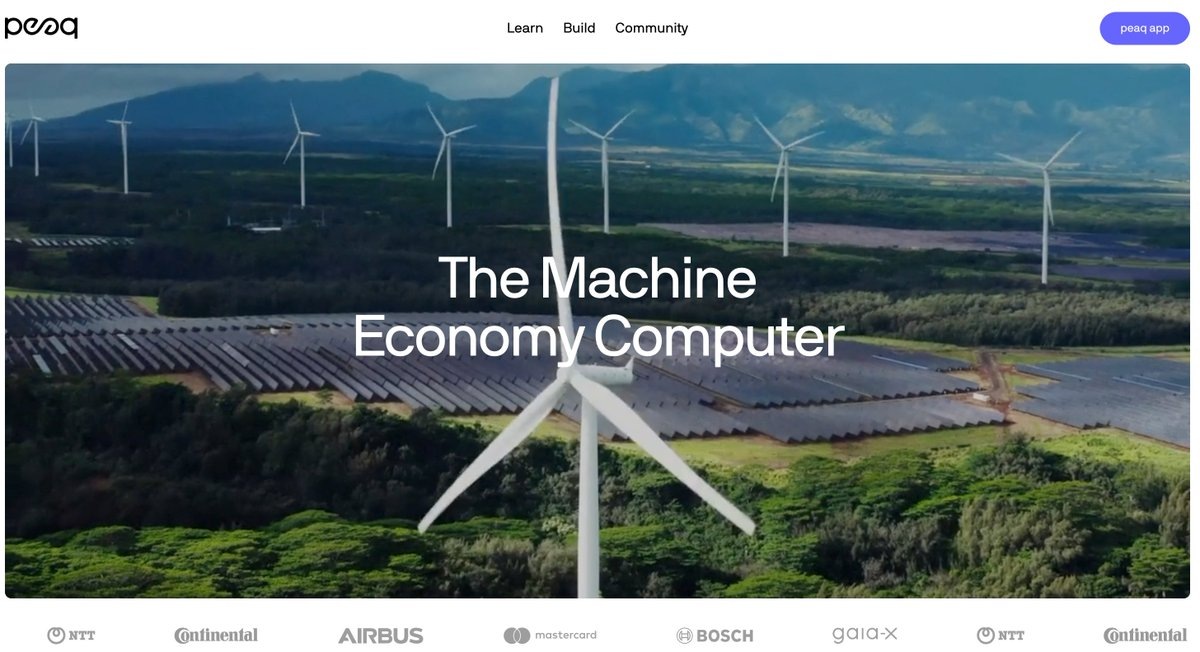
Positioning: A Layer-1 blockchain designed specifically for the Machine Economy. Core logic: Machines are not just tools but economic entities capable of owning wallets, signing transactions, and earning income. This is similar to making each device an automatically earning agent.
Concrete Case 1: Tokenized "Robot Farm"
While most DePIN projects are still selling nodes, peaq has already presented a case that generates real cash flow.
At the end of 2025, projects in the peaq ecosystem launched the world's first tokenized robot farm (Robo-farm) in Hong Kong, using automated robots to grow hydroponic vegetables. Its operation logic is very simple and direct:
- Users purchase NFTs representing shares of the farm.
- Farm robots work, plant, and sell vegetables.
- Revenue generated from sales (real-world fiat earnings) is converted to stablecoins.
- Earnings are directly distributed on-chain to NFT holders.
According to on-chain data and community feedback, at the end of January 2026, the farm completed its first earnings distribution:
- Distribution amount: A single prominent holder disclosed earnings of about 3820 USDT
- Annualized yield (APY): Early participants calculated to be about 18%
This model of "making money through selling vegetables rather than relying on token inflation" is certainly a strong stimulus for crypto industry investors currently seeking stability and low risk, with real-world asset (RWA) case studies.
Concrete Case 2: Partnerships and Industrial Validation
peaq has partnered with several corporate giants:
- Bosch: The partnership focuses on IoT sensors and decentralized identity (peaq ID), testing devices that automatically record data and put it on-chain, potentially allowing household appliances or industrial equipment to come with a "wallet" when they leave the factory.
- Mastercard: Exploring payment gateway integration to connect traditional fiat systems with peaq's machine wallets (for example, paying with a credit card after charging an electric vehicle, settled through peaq in the background).
- Airbus: Formerly tested supply chain tracking.
These collaborations are more about technical validation (PoC) at this stage and have not yet generated huge revenues through large-scale commercial use, but they prove that peaq's technical standards can meet industrial-grade security demands, which is unmatched by other projects.
Fundamentals and Market Performance (Data as of 2026-02-15)
- Current price: ~$0.019
- Circulating market cap (MC): ~$34.25 million
- Fully diluted valuation (FDV): ~$78 million
- Ecosystem scale: 50 to 60 DePIN applications are currently running or under development; the ecosystem connects over 2 million to 5.2 million physical devices, robots, and sensors; the industry spans across 21-22 sectors, including mobility (EV charging, navigation), energy, telecommunications, agriculture, and smart cities.
- Risk points: As a Layer-1, tokens are mainly used for Gas and staking, needing explosive growth in ecosystem applications to support token prices; a large total supply (approximately 4.3 billion) may face inflationary pressure.
peaq’s advantage lies in its established commercial closed loop, backed by industrial giants. With an FDV of less than $100 million, it is valued relatively low compared to other AI infrastructure projects, making it suitable for cautious allocations that favor infrastructure.
2. @PrismaXai: A data gold mine backed by a16z
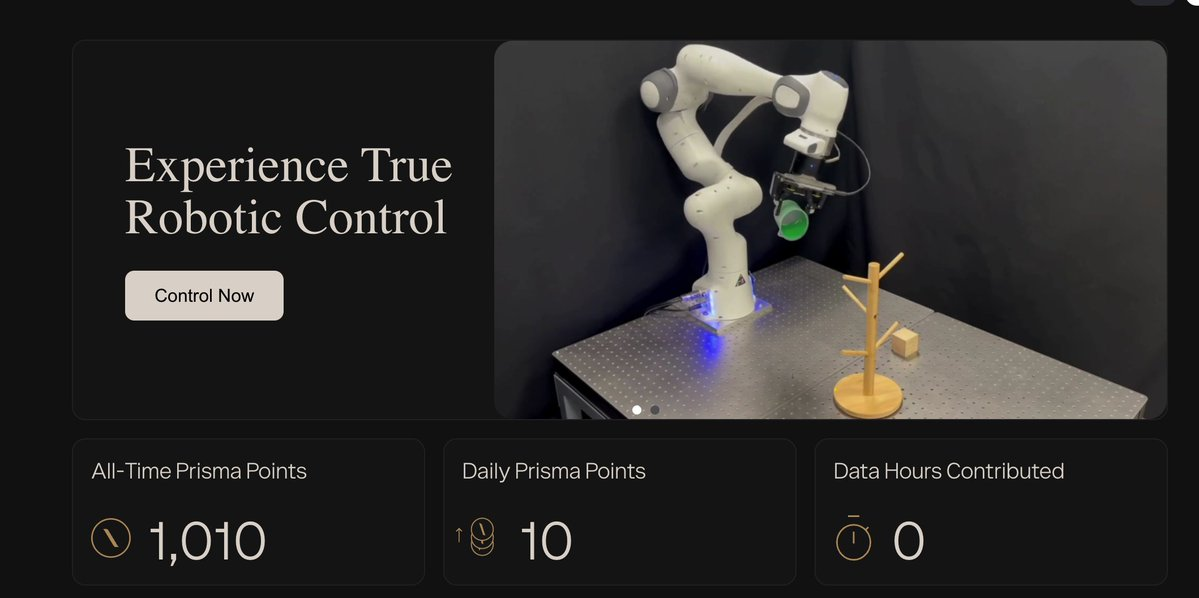
Positioning: An AI robot data layer based on human-machine collaboration (RLHF). Core logic: Robots need vast amounts of data to become smarter. PrismaX allows ordinary people to remotely control robots to complete tasks, thus generating high-quality training data and rewarding users. This addresses the "last mile" problem of AI models — the leap from digital intelligence to physical intelligence.
Concrete Case: Teleoperation
PrismaX builds a platform that allows users to remotely control real robotic arms (such as devices in a lab) via the web:
- Users operate the robotic arm to complete actions (such as moving objects).
- The system records operation data.
- Data is sold to robot companies to train AI.
- Users earn points, which can be exchanged for tokens in the future.
This "Play-to-Train" model differs from traditional "computing power mining." It requires users to do real labor, the data is more valuable, forming a data flywheel: more user participation → more data → better models → more efficient operations → more users.
Fundamentals and Market Performance (Data as of 2026-02-15)
- Funding background: Seed round funding of $11 million led by top VC a16z, with participation from Virtuals Protocol.
- Current stage: Points system and airdrop expectation phase, users can earn points through daily check-ins, white paper quizzes, and paid training ($99).
- Ecosystem scale: Over 500 participants in remote operations have completed teleoperation of robotic arms, covering multiple regions globally; Operable robotic arms: 2 complete systems (Unitech Walker "Tommy" and "Bill") are online, allowing direct interaction by users.
- Risk points: Currently, a large number of “token farming studios” are flooding in to accumulate points. If the project team cannot effectively filter high-quality training data, then these points will become worthless, ultimately leading to severe selling pressure when airdrops are monetized. There is still controversy in the industry over whether the quality of remote operation data can truly train commercially-grade robots.
The core appeal of PrismaX lies in the endorsement by a16z and its unique "data flywheel" mechanism, allowing zero-cost participation to tap into the most scarce segment of robot training. With a16z's backing and a unique mechanism, it represents an early Alpha opportunity.
3. @openmind_agi: The Android system for robots
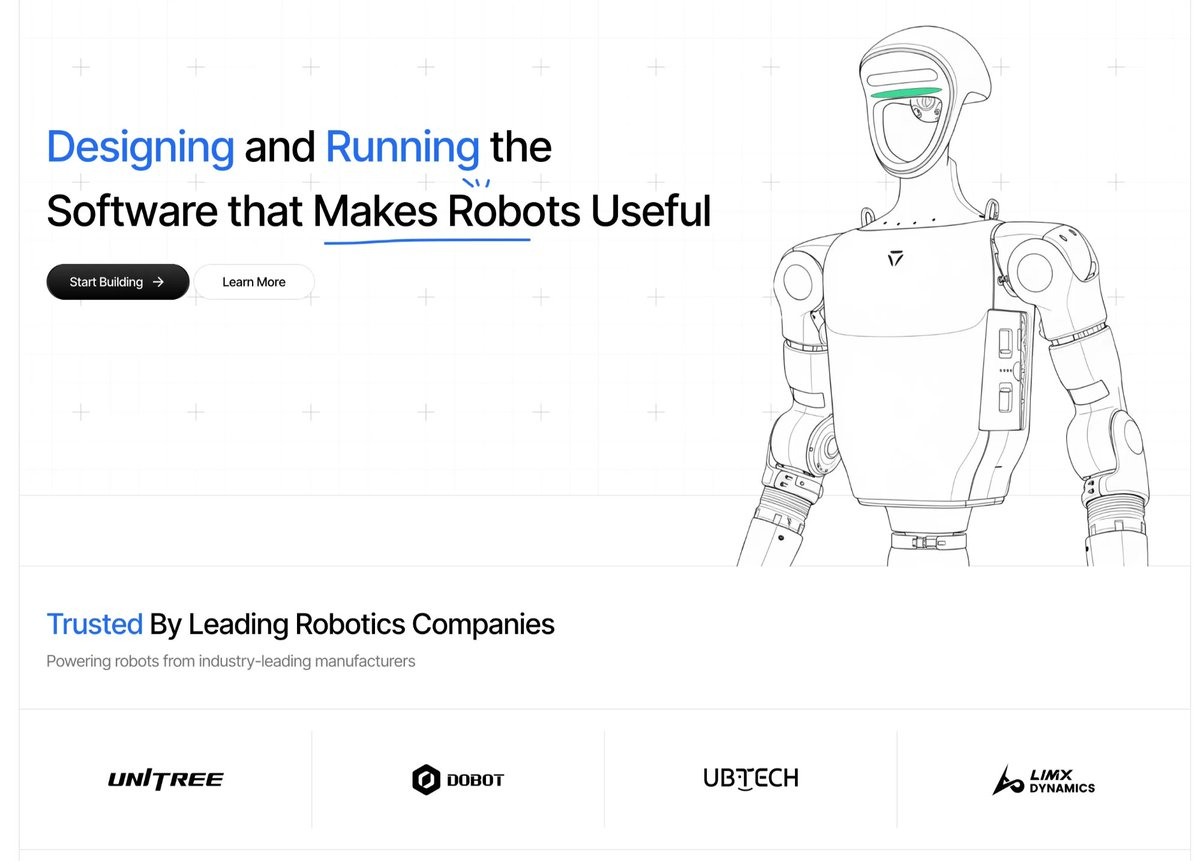
Positioning: The general operating system (OS) and app store for robots. Core logic: Solving the issue of hardware fragmentation in robots, allowing developers to write code once and run it on different brands of robots (like Unitree, Fourier), similar to the Android system in the smartphone industry.
Concrete Case: The App Store in its infancy
OpenMind has launched an app store and recently announced partnerships with 10 embodied AI companies, mainly focusing on leading manufacturers in China and the U.S., such as:
- Unitree: The leader in the robotic dog field.
- Fourier: Focused on humanoid robots.
- UBTECH: The first publicly traded humanoid robot company.
- Deep Robotics: Industrial-grade quadruped robots.
Details: https://x.com/openmind_agi/status/2015671520899817620?s=20
According to multiple official reports from late January to early February 2026, the OpenMind robot App Store initially includes 5 applications running in real-time, focusing on areas like Autonomous Mobility, Social Interaction, Privacy Protection, and Education & Skills Training.
Although the number of hardware currently online is not large, it proves that its technology logic of "cross-hardware operation" works.
Fundamentals and Market Performance (Data as of 2026-02-15)
- Recent financing: Top institutions like Pantera Capital and Sequoia China participated.
- Previous round valuation: About $200 million.
- Kaito Launchpad presale valuation: $400 million FDV (double premium).
- Ecosystem scale: Number of App Store applications: 5+ (as of the end of January); Hardware partners: Over 10 leading international/domestic manufacturers; Globally, over 1,000 developers have joined the ecosystem.
- Risk analysis: High valuation with low circulation: The $400 million FDV opening valuation is high, overdrawing secondary market space and facing early VC unlock pressure. Competition from giants: Traditional robot manufacturers (like Tesla Optimus) tend to use closed systems (like Apple iOS). Whether OpenMind's open-source Android model can survive in the cracks between giants depends on whether it can attract enough mid-tier manufacturers.
OpenMind is currently in a strategic stage of "narrow cuts, broad compatibility, and high ceilings." Although the number of applications is still in its infancy, it has achieved coverage of ten hardware manufacturers below and constructed a technical base through thousands of developers above. Its true potential lies in providing a unified cognitive layer for global hardware and solving the hardest data problems for AI training through a decentralized network. A future where skills can be updated anytime, like a phone, and knowledge is shared between machines is already beginning to take shape through this App Store.
Comprehensive Comparative Analysis
To better understand the differences between these three projects, we conduct a horizontal comparison across core dimensions:
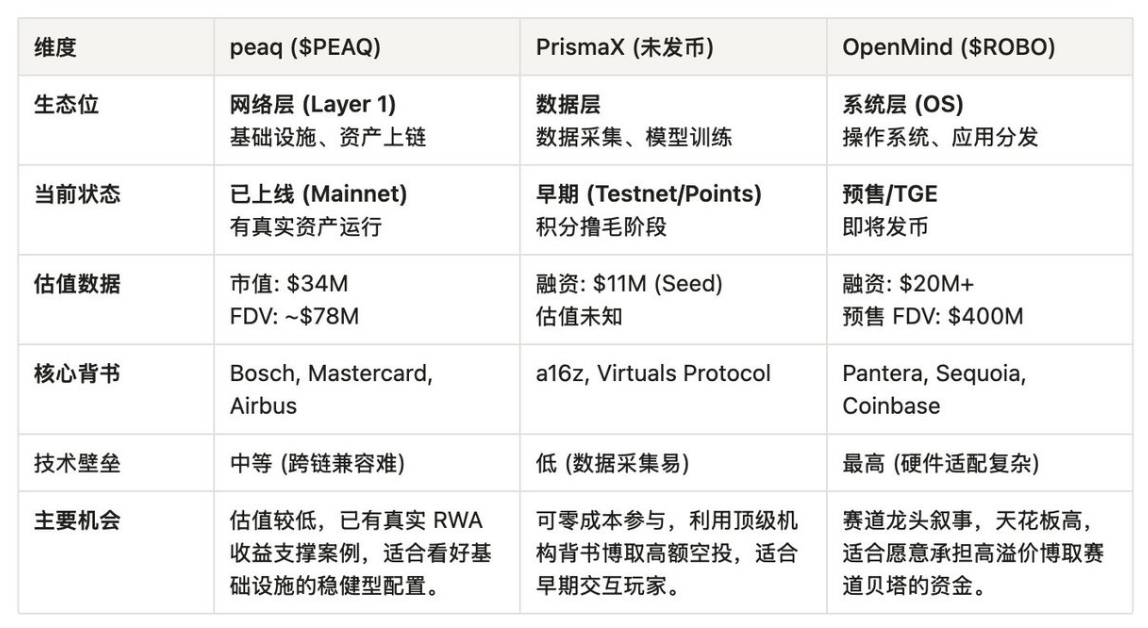
In 2026, decentralized "Embodied AI" applications are no longer just a concept; they are a reality unfolding. The three projects analyzed in this article represent the three most indicative ecological niches within this emerging field — network layer, data layer, and system layer.
Imagine a scene at the end of 2026: a robot on an automated farm is at work. The reason this robot can operate efficiently requires support from three levels:
① Data support (PrismaX): How did it learn "how to grow vegetables"? It was taught by a remote operator through PrismaX. Teleoperation data from 1000 global operators has imparted complete agricultural operational logic to the AI model.
② System support (OpenMind): Which brand is this robot? How does it compete with other branded robots? It operates on OpenMind OS and can download "agricultural optimization apps" from the App Store to compete within the same system as other branded robots.
③ Network support (peaq): How is the money earned by this robot distributed? The USDT generated from the farm's sales of hydroponic vegetables is automatically settled through smart contracts on the peaq network, distributed among owners based on NFT shares.
All three levels are indispensable. Without PrismaX's data, the robot cannot become smarter; without OpenMind's system, applications cannot be deployed across platforms; without peaq's incentives, participants lack the motivation to maintain the entire cycle.
Conversely, when these three layers collaborate, they form a positive feedback loop — more participants → higher data quality → better application outcomes → higher economic incentives → attracting more participants. This is the core value of combining Web3 with the physical world.
The opportunity in the robotic track of 2026 lies not in which project will become the "winner," but in how these three levels collaborate to push embodied intelligence from a concept to scalable applications.
免责声明:本文章仅代表作者个人观点,不代表本平台的立场和观点。本文章仅供信息分享,不构成对任何人的任何投资建议。用户与作者之间的任何争议,与本平台无关。如网页中刊载的文章或图片涉及侵权,请提供相关的权利证明和身份证明发送邮件到support@aicoin.com,本平台相关工作人员将会进行核查。


