Original Title: "AI Within Range of Cannons"
Original Author: David, Deep Tide TechFlow
On March 1, Iran's missiles and drones struck the Gulf region, one of which hit an Amazon data center in the UAE.
The server room caught fire, power was cut, and about 60 cloud services were disrupted.
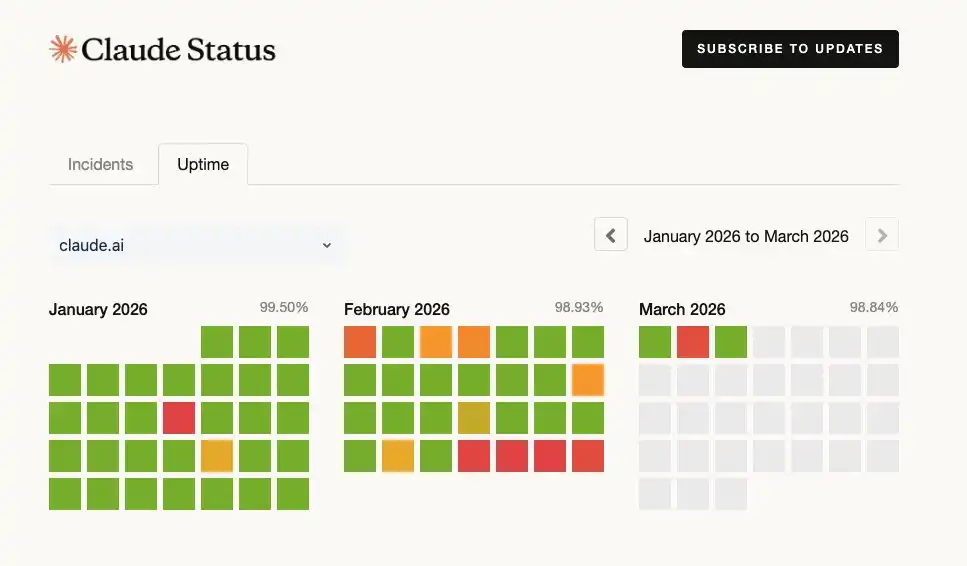
One of the largest AI services in the world, Claude, runs on Amazon's cloud. On the same day, Claude experienced a global outage.
Anthropic's official statement attributed this to a surge in users that overwhelmed the servers.
As of the time of writing, there are still complaints on social media about the unavailability of Claude's services; on the well-known prediction market Polymarket, there is already a prediction topic stating "Claude will experience several outages in March."
If it is ultimately confirmed that the strike was carried out by Iran, this will be the first time in human history:
A commercial data center is physically destroyed in wartime.
However, why would a civilian server room be bombed?
Two days earlier, on February 28, the United States and Israel conducted airstrikes on Iran, killing Supreme Leader Khamenei and a number of senior officials.
A significant portion of the intelligence analysis, target identification, and battlefield simulation for this airstrike was done with the assistance of Claude. Through cooperation with the military and data analytics company Palantir, Claude was already embedded in the U.S. military's intelligence systems.
Ironically, just a few hours before the airstrike, Trump had just ordered a complete ban on Anthropic because Anthropic refused to hand over AI unconditionally to the Pentagon. But a ban is one thing, and warfare is another.
It is said that it would take at least six months to extract Claude from the military systems and publicly state it.
So, just as the ink on the ban was drying, the U.S. military took Claude to bomb Iran. Then Iran retaliated, and the missile hit the server room running Claude AI.
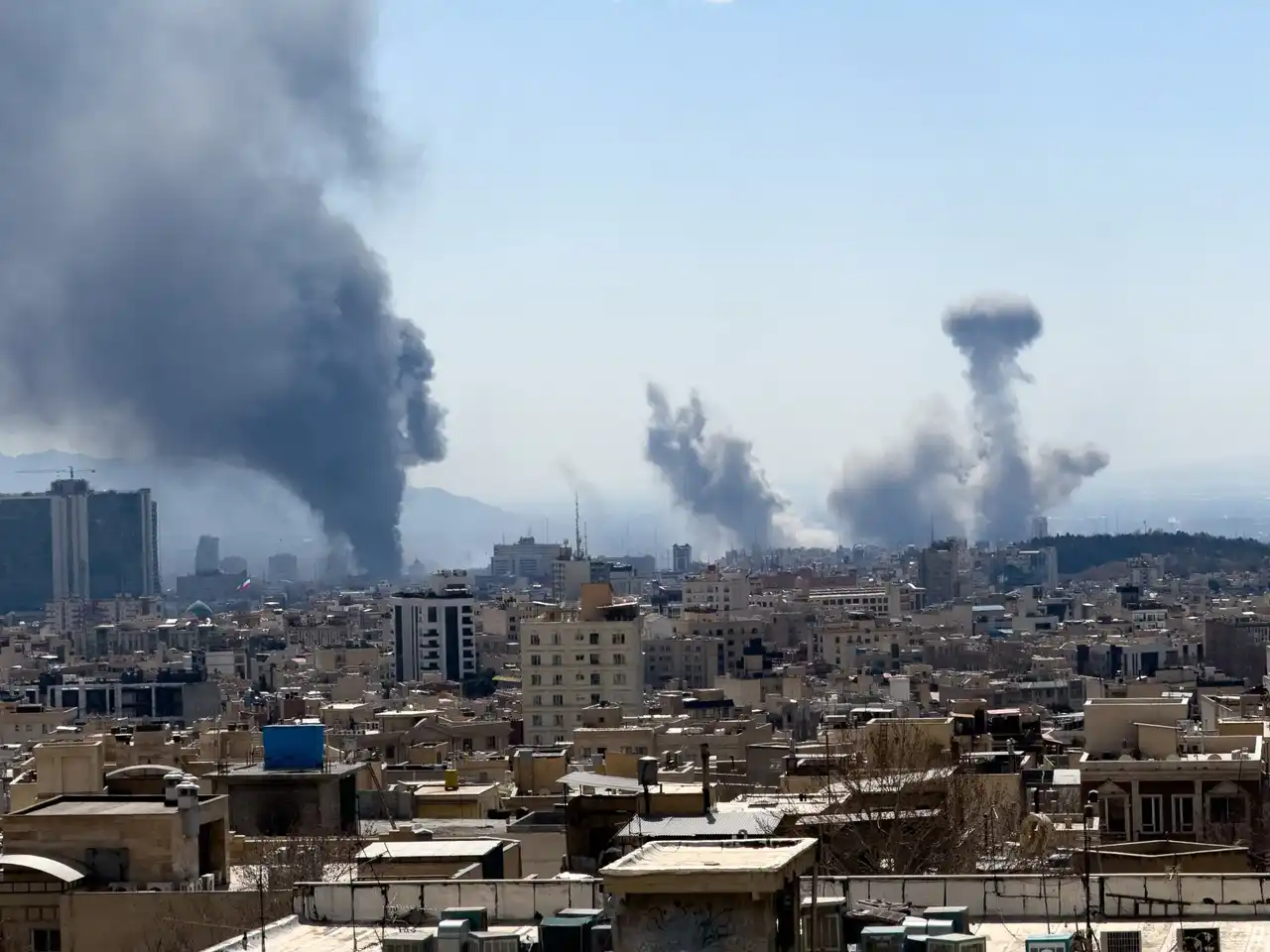
Image Source: Bloomberg
The server room was likely not directly targeted but rather impacted as a collateral damage. But regardless of whether the missile was aimed at the server room, one thing is certain:
The truth lies within the range of cannons, and AI is also within the range of cannons. Both sides— where the cannon is fired from and where it strikes— are included.
AI Infrastructure Built on a Powder Keg in the Middle East
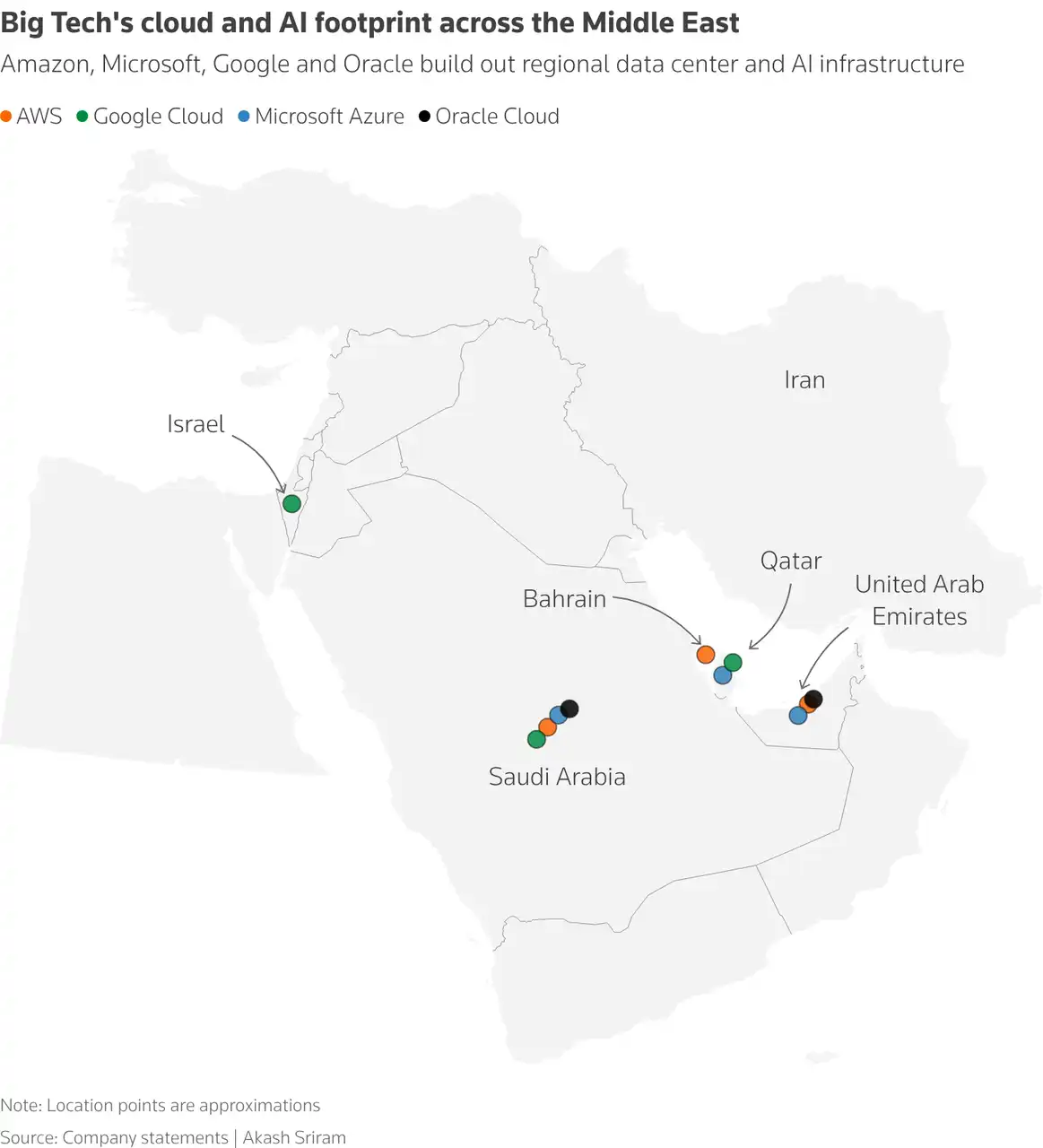
In the past three years, Silicon Valley has moved half of the AI industry to the Gulf in the Middle East.
The reason is simple. The UAE and Saudi Arabia have the world's richest sovereign wealth funds, cheap electricity, and a mandate:
If you want to serve my clients, data must exist on my territory.
Therefore, Amazon has set up data centers in the UAE and Bahrain and is investing $5.3 billion in Saudi Arabia to open another one; Microsoft has nodes in the UAE and Qatar, and its Saudi facility is completed.
OpenAI, together with NVIDIA and SoftBank, is building an AI park in the UAE worth over $30 billion, claiming to be the largest computing power base outside the United States.
In January of this year, the United States just signed an agreement called "Pax Silica" with the UAE and Qatar. Translated, it means "Peace of Silicon" and sounds beautiful.
The core content of the agreement is to control the flow of chips and ensure advanced chips do not fall into Chinese hands.
In exchange, the UAE received permission to import hundreds of thousands of the most advanced processors from NVIDIA annually. G42 in Abu Dhabi cut ties with Huawei, and Saudi AI companies promised not to purchase Huawei equipment...
The entire AI infrastructure in the Gulf has shifted entirely towards the United States, from chips to data centers to models.
These agreements considered everything, from export control on chips, data sovereignty, investment reciprocity, to risks of technology leakage.
But not a single clause considered that someone would bomb a data center.
An international security scholar from Qatar University commented after witnessing the Amazon data center on fire: "These security frameworks are designed for supply chain control and political alignment; physical security was never on the agenda."
Cloud computing has told a story for a decade about elasticity, redundancy, and decentralization. But data centers are tangible buildings with addresses, walls, roofs, and coordinates. No matter how advanced your chips are, if the data center is bombed, it's still bombed.
"Cloud" is a metaphor, but data centers are not.
AI appears to be intangible, running in code, floating in the cloud. But code runs on chips, chips are installed in data centers, and data centers are built on the Earth.
Who Will Protect AI?
This time, Amazon's server room can be said to have been affected, and one could optimistically say it was mistakenly hit.
But what about next time?
With the intensifying global geopolitical conflicts, if your data center is running AI models that help an opponent with target identification, the opponent has every reason to treat your data center as a military facility and strike it.
This question has no answer in international law.
The current laws of war have provisions for "dual-use facilities," but those clauses refer to factories and bridges; no one has considered data centers.
A data center that helps banks run transactions during the day and assists the military with intelligence analysis at night— does it count as civilian or military use?
In peacetime, the location of data centers is determined by factors like latency, electricity prices, and policy incentives... When war comes, all of this no longer matters; what matters is how far your data center is from the nearest military base.
Therefore, this bombing has shifted attention.
Previously, everyone discussed the same anxiety: whether AI would replace my job; but no one discussed another question:
Before AI replaces you, how vulnerable is it itself?
A regional conflict caused the Middle Eastern node of the largest cloud service provider in the world to be down for an entire day; and this was just one data center.
There are now nearly 1,300 large-scale data centers worldwide and another 770 under construction. These data centers consume more and more electricity, water, and money, and carry an increasing amount of information— your savings, your medical records, your food delivery orders, and even a nation's military intelligence...
But the plans to protect these data centers, as of today, might still be just fire systems and backup generators.
When AI becomes a country's infrastructure, its security is no longer just a company's concern. Who will protect AI? Cloud providers? The U.S. Department of Defense? Or the UAE's air defense system?
This question was theoretical three days ago. It is no longer.
AI is within the range of cannons. In fact, it’s not just AI. In this era, what is not within the range of cannons?
免责声明:本文章仅代表作者个人观点,不代表本平台的立场和观点。本文章仅供信息分享,不构成对任何人的任何投资建议。用户与作者之间的任何争议,与本平台无关。如网页中刊载的文章或图片涉及侵权,请提供相关的权利证明和身份证明发送邮件到support@aicoin.com,本平台相关工作人员将会进行核查。