For beginners just entering the market, terms such as “spot,” “perpetual,” “coin-margined,” and “options” on the trading interface can often be confusing. In fact, these concepts are just different “trading rules.”
We compare this market to a massive financial supermarket, starting from the bottom logic to help you understand.
First Stop: Spot Trading —— The Foundation of Trading
[Definition]
Spot trading is the most traditional form of trading: cash for goods.
You pay for one asset (for example, USDT) and immediately gain ownership of another asset (for example, BTC).
It’s like buying apples at the supermarket; once you pay, the apples are in your pocket, and they totally belong to you.
[Core Features]
- Low Risk: There is no concept of “liquidation”; as long as the coin does not go to zero, you can hold it indefinitely.
- One-Way Profit: You can only make money when the price goes up.
[Common Trading Pair Examples]
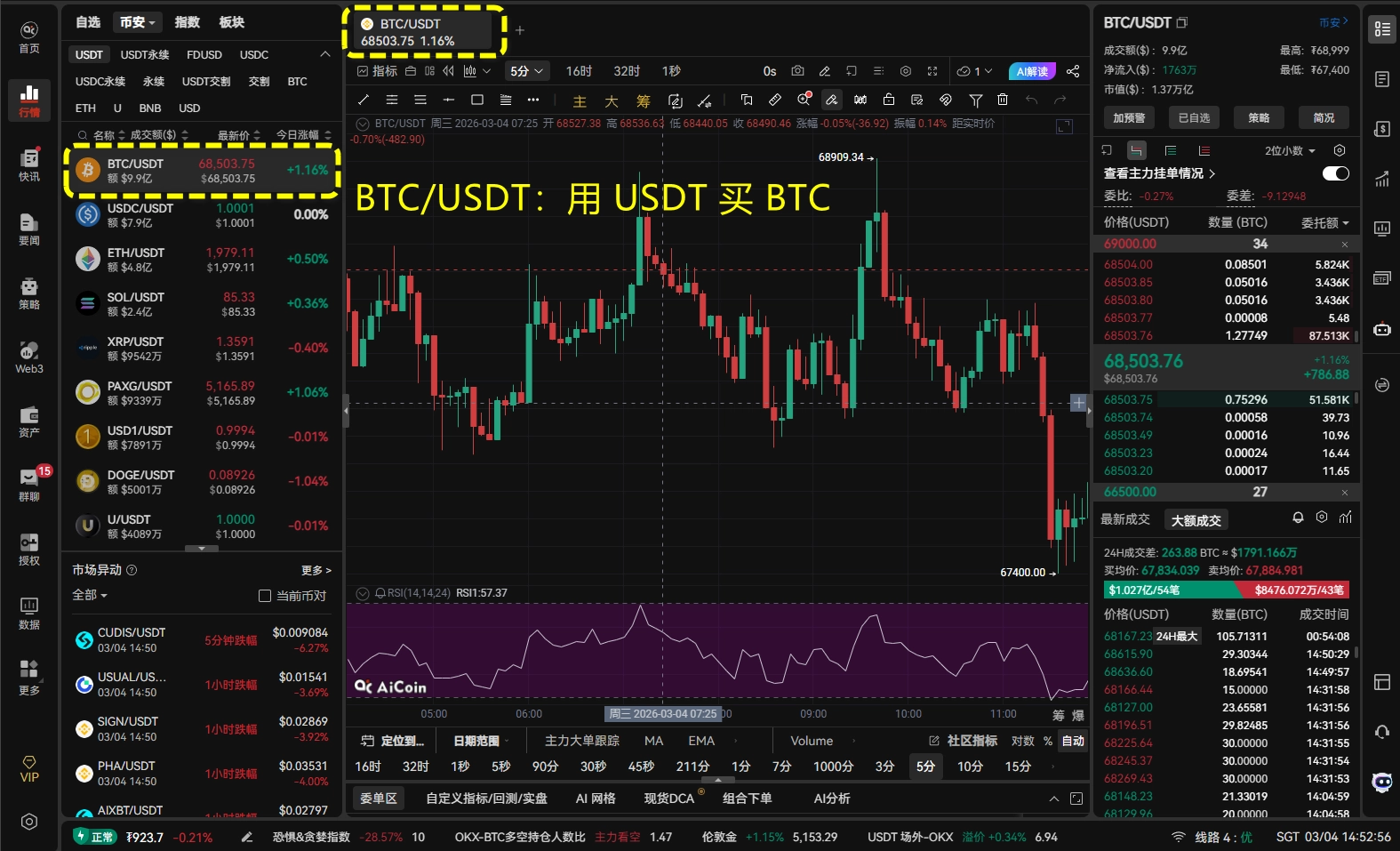
- BTC/USDT: Buy BTC with USDT
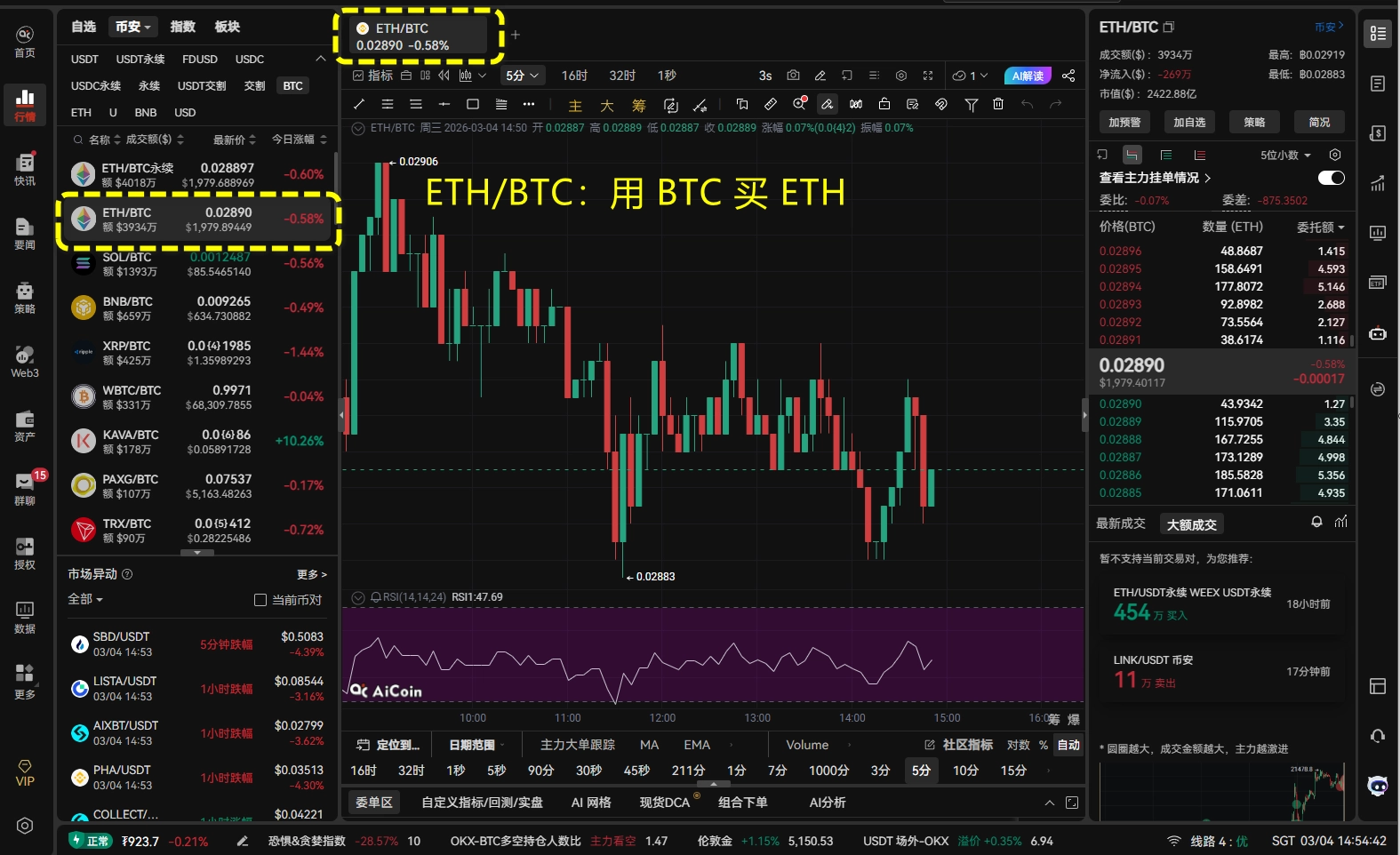
- ETH/BTC: Buy ETH with BTC
Example:
You use 1000 USDT to buy BTC
Rises to 1200 → Profit 200
Falls to 800 → Loss 200
👉 Suitable for beginners to practice first step
Second Stop: Contract Trading —— Trading “Price Expectations”
[Definition]
You are not buying coins, but an agreement. You and the counterparty agree: at some specified time in the future, to buy or sell a certain asset at a certain price.
You can:
- Go Long (Profit from rising)
- Go Short (Profit from falling)
- Use leverage to amplify returns and risks
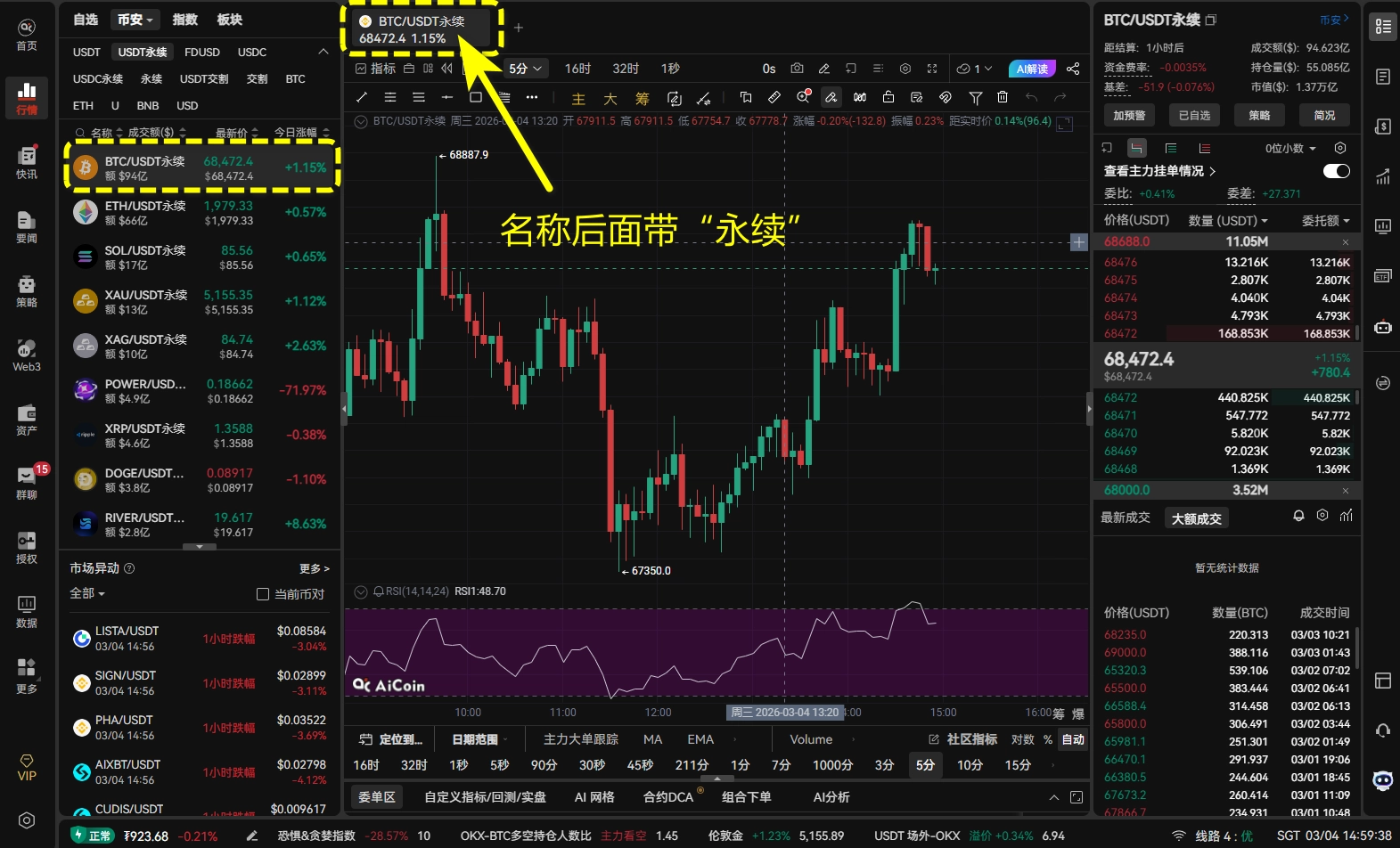
1. Perpetual Contracts
[Definition]
A contract with no expiration date; as long as there is sufficient margin in your account, it can be held indefinitely.
[Core Mechanism: Funding Rate]
To keep the contract price close to the spot price, both longs and shorts will periodically pay a funding fee.
- Longs Strong → Longs Pay
- Shorts Strong → Shorts Pay
Typically settled every 8 hours.
[Common Trading Pairs]
- BTCUSDT Perpetual
- ETHUSDT Perpetual
2. Delivery Contracts
[Definition]
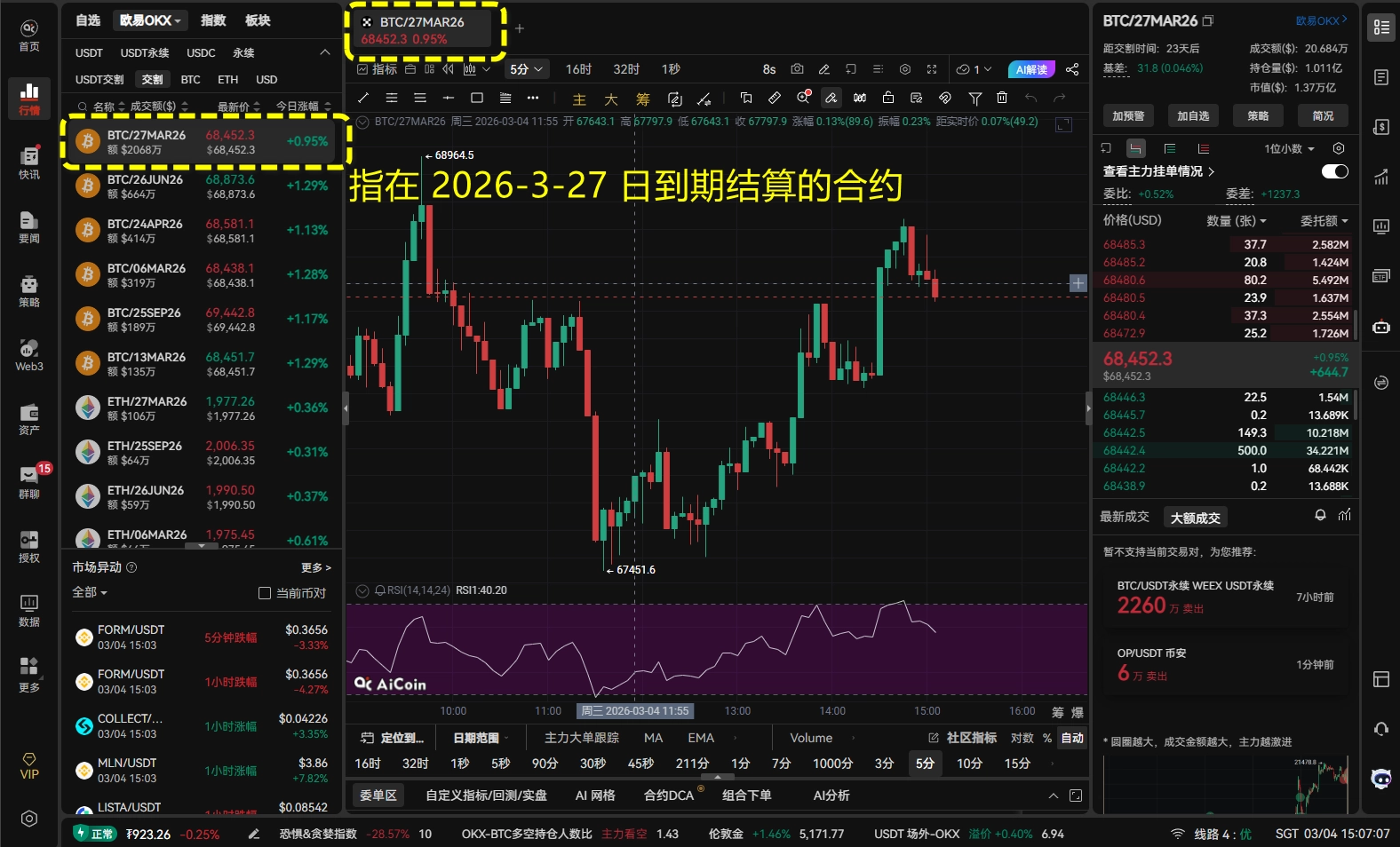
A contract with a specified expiration date (weekly, quarterly, etc.); upon expiration, regardless of price, the system will enforce liquidation.
[Features]
- No funding rate
- Fixed delivery time
- Prices may be at a premium or discount
More commonly used for institutional arbitrage or hedging.
[Examples]
- BTC Current Quarter
- BTC/ 27MAR26
Third Stop: Settlement Basis —— Are You Earning “Dollars” or “Coins”?
In contract trading, you need to decide: what to use as margin? How to settle profits and losses?
This is the “basis.”
1. USDT Basis (U-Margin)
[Definition]
Using USDT as margin, and profits and losses are settled in USDT.
[Advantages]
- Profits and losses are straightforward (how much U you earned is how much money you made).
- Stable fiat value (USDT is pegged to the US dollar)
Example:
You use 1000 USDT to open a 10 time BTCUSDT long position; if it rises 1% = you earn 10% (100 USDT)
Losses are also in USDT
👉 Most friendly for newcomers, simple risk calculations
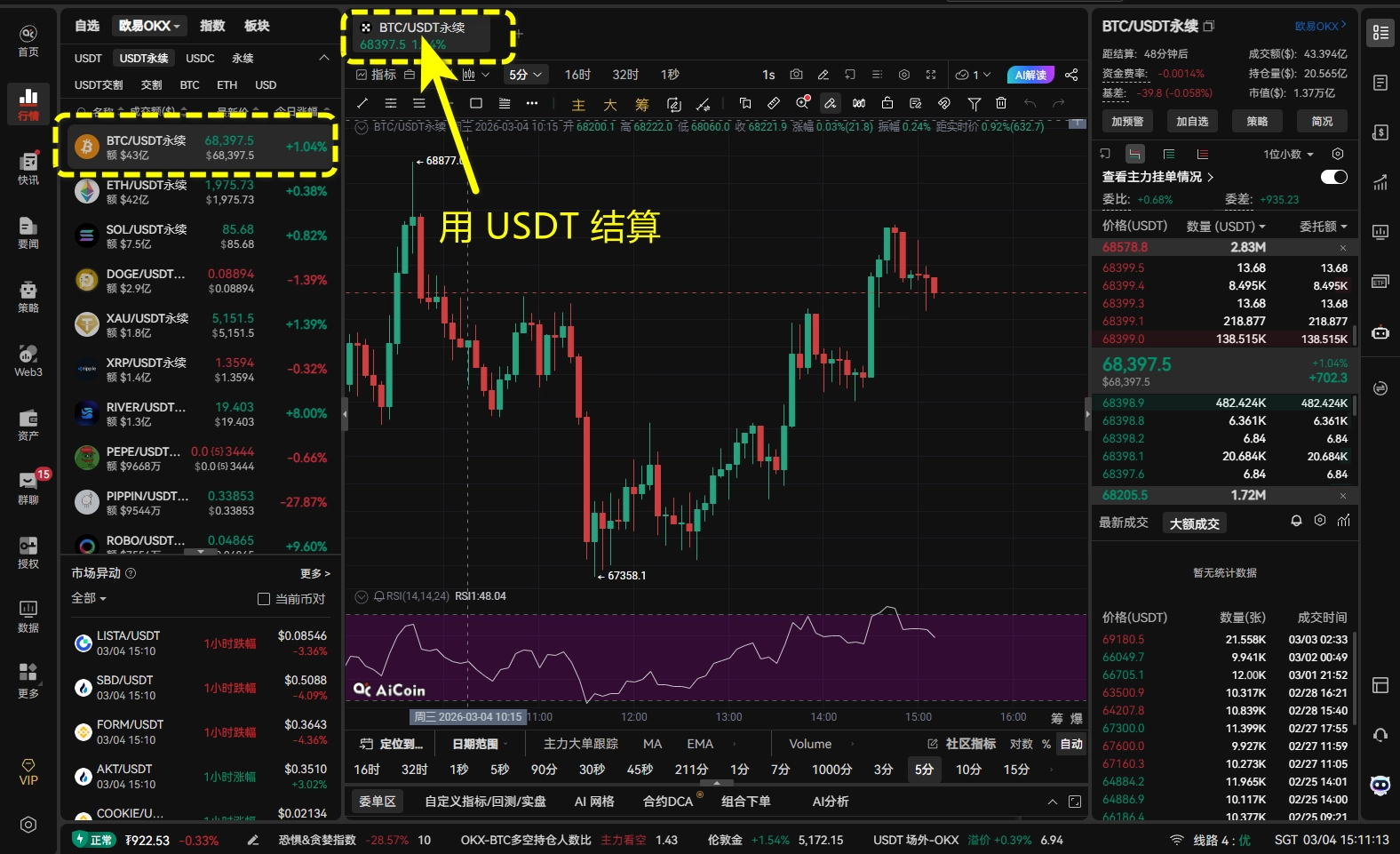
2. Coin Basis (Coin-Margin)
[Definition]
Using BTC, ETH, etc. as margin, and profits and losses are settled in that currency. For example: using BTC as margin, trading BTCUSD contracts.
[Risk Characteristics]
- When rising: Contract profit + Margin appreciation (dual profit)
- When falling: Contract loss + Margin depreciation (dual loss)
Suitable for traders who are bullish in the long term on a particular coin and wish to “roll coins.”
[Example]
- BTCUSD Perpetual (Coin Basis)
If BTC rises, not only do you profit from the contract, but your margin also appreciates
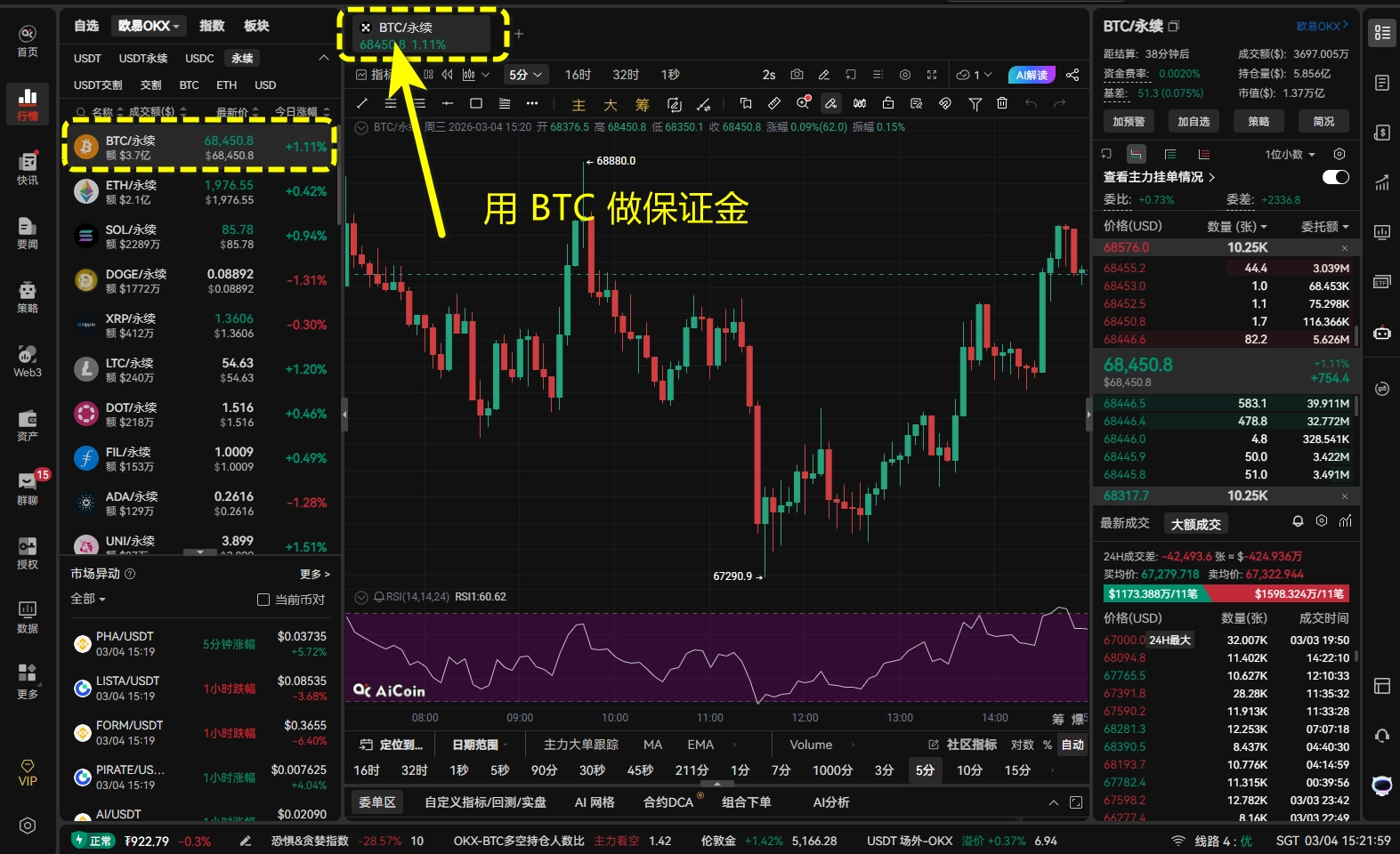
Fourth Stop: Options Trading —— Buying and Selling a “Right”
[Definition]
Options give you the right (but not the obligation) to buy or sell an asset at an agreed price at a specific time in the future.
- Call Option: Bullish on future price increase, buying a “right to buy at a cheaper price.”
- Put Option: Bearish on future price decline, buying a “right to sell at a higher price.”
[Features]
- Limited loss, unlimited profit (for the buyer): Your maximum loss is the “premium” (deposit) you paid.
- Non-mandatory: If the price is unfavorable at expiration, you can choose not to exercise the option and let it expire.
- Leverage effect: Using a small amount of money (premium) to seek high returns from drastic asset fluctuations.
[Example]
- BTCUSD-20261226-25000-C
Imagine you are interested in a 1 million house, but worry that housing prices will rise dramatically next month, so you pay 10,000 to the landlord as a “deposit” (premium), agreeing that next month you can still buy this house for 1 million.
- If the housing price rises to 1.5 million next month: You exercise the right to buy at 1 million, earning 490,000 (after deducting the 10,000 deposit).
- If the housing price falls to 800,000 next month: You choose to “back out” and forfeit the 10,000 deposit, then buy cheaper on the market. Your loss limit is that 10,000.
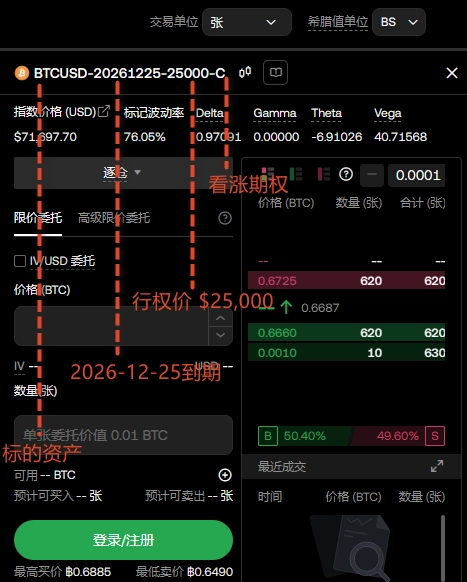
Comprehensive Comparison Table (Must Read for Beginners)
- Spot is “rice,” while contracts are “spice”: Spot should occupy most of your position, while contracts should be used as a small amount of seasoning or speculative tools.
- Beginners should choose U Margin: Until you learn to calculate complex coin price fluctuations, please use USDT as the basis for trading.
- Beware of leverage: Contracts and options carry leverage properties, which can amplify your profits but can also reduce your principal to zero in seconds.

Join our community to discuss and become stronger together!
Official Telegram community: t.me/aicoincn
AiCoin Chinese Twitter: https://x.com/AiCoinzh
Group Chat - Wealth Group:
https://www.aicoin.com/link/chat?cid=10013
免责声明:本文章仅代表作者个人观点,不代表本平台的立场和观点。本文章仅供信息分享,不构成对任何人的任何投资建议。用户与作者之间的任何争议,与本平台无关。如网页中刊载的文章或图片涉及侵权,请提供相关的权利证明和身份证明发送邮件到support@aicoin.com,本平台相关工作人员将会进行核查。