This article is solely a personal market perspective and does not constitute investment advice. Any operations based on this are at one's own risk.
Since the last update, nearly a month has passed in a flash. During this month, the market has repeatedly oscillated within a range and reached a maximum of 74,000 this week. In the article dated February 9, I mentioned several points:
1. The closer to 75,000, the higher the cost-effectiveness of shorting;
2. Near 70,000, I do not recommend going long; one should look for positions to short.
At present, these two viewpoints still seem to be reasonable suggestions. During this month's oscillation period, BTC has provided multiple good long-term short entry opportunities. Of course, this week was the best opportunity.
Today's article will not include technical analysis or share any specific price points. Instead, I will provide my views on BTC's trajectory from a fundamental perspective in the coming period. If you want to see the conclusion, go directly to the end of the article.
1. Recent Market Review
Since February 28, when the war between the US and Iran broke out, BTC has experienced a complex trajectory, rapidly completing a decline-rebound-decline within less than a week, with various different logics alternately taking over the market.
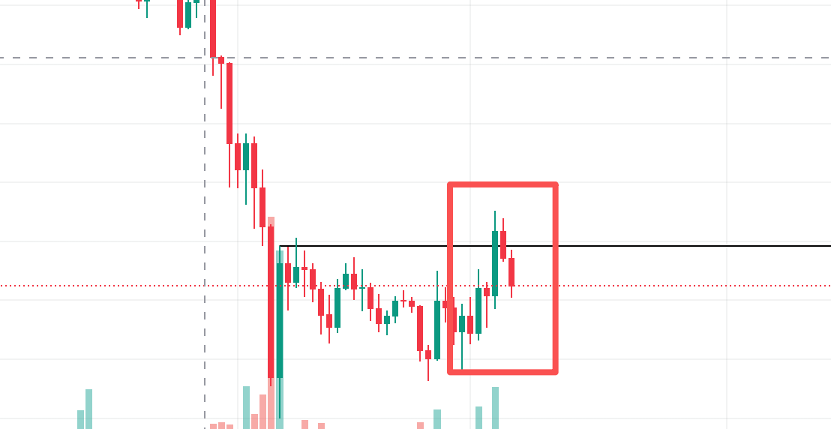
1. The liquidity shock that occurred suddenly after the war started. This led to a risk aversion trade where all high-volatility assets were sold, causing BTC to rapidly decline on February 28, the day the war began. This was an event-driven trade, and BTC performed as a high-beta, highly leveraged risk asset during this phase and the following one.
2. The market switched from trading on the fear of "the war might spiral out of control" to "perhaps it won't get out of control immediately." In this context, although oil prices rose, the market bet that the conflict was controllable and diplomatic solutions were possible, leading to a large-scale short covering, and risk assets began to rebound. BTC quickly transformed from a sell-off target to one of the most elastic and rapidly recovering risk assets. Even on the day the Strait of Hormuz announced a blockade, BTC only experienced a brief pullback before embarking on another upward trend, reaching as high as 74,000.
3. However, as the Strait of Hormuz confirmed a substantial blockade on March 5, the market began to trade inflation expectations. Due to the surge in tanker premiums and the expiration of the original insurance terms not being renewed, the oil tanker transportation through the entire strait has been confirmed as substantially interrupted. The market began to switch to a trading path of "higher inflation → fewer interest rate cuts → stronger dollar → higher real discount rates," leading BTC to come under pressure and initiate a pullback.
Thus, within just a few days, BTC experienced two significant reversals, as the market's trading logic repeatedly switched, corresponding to the pricing power fluctuating among different groups.
2. What is the Market Trading Now?
So far, what is the market currently trading? Let's look at the performance of several important varieties:
1. Brent crude oil has broken 90 with a significant increase. The market has begun to trade that "oil and gas supply disruptions" are not issues that can be resolved in the short term.
2. Gold has slightly risen. Geopolitical conflicts are beneficial for gold, but the strengthening dollar and rising US Treasury yields are both bearish for gold. Under the combination of these three forces, gold saw a slight uptick, and didn't surge significantly due to the geopolitical tensions.
3. Copper has slightly dropped. This indicates that the market believes that rising oil prices will increase costs, suppressing demand expansion, reflecting a more fragile world. However, there has not yet been trading related to recession.
4. The dollar index has risen. This suggests that the market recognizes the liquidity of the dollar, with funds flowing into the dollar, reflecting a combination of concerns over re-inflation and safe-haven demand.
5. US Treasury yields are up. This indicates that the market believes cost shocks will lead to inflation rising again, causing the Fed to potentially maintain high interest rates for a longer time, "higher for longer."
6. US stocks are down. Rising Treasury yields imply an increase in discount rates, which will suppress the performance of long-duration assets and high-valuation sectors.
Combining the performances of the aforementioned main varieties, the market has not yet entered the "recession" trading phase; rather, it is trading on "inflation shock possibly increasing recession probabilities." The specific logical path is:
War/blockade risk → damage to oil and gas supply → rise in energy prices → inflation path raised over the next few months → interest rate cut expectations retracted / "higher for longer" → real rates tightening with financial conditions → pressure on consumption, manufacturing, and profits → decline in future growth, rising recession probabilities.
The most crucial link in all this is: oil prices. If oil prices remain high, or even rise further (which I believe is highly probable), then this trading path will only continue to strengthen. Under this trading path, BTC has no opportunity. As a risk asset, BTC is most fearful of tightening real rates and financial conditions.
Additionally, attention can be paid to US Treasury yields and the dollar; if both rapidly decline, it indicates that the market is merely reflecting short-term geopolitical emotions.
3. Is There an Opportunity for BTC in an Inflationary Environment?
Some of you may have questions again; isn't BTC always characterized as an inflation-resistant asset? Shouldn't it benefit from inflation?
In reality, this is an inaccurate statement. A more accurate way to put it is that BTC has long been associated with a "narrative of resisting fiat currency dilution," rather than having the property of "providing stable hedges against inflation."
Fiat currency can theoretically be issued indefinitely over a long cycle, leading to a sustained and stable rise in prices over an extended period, which means the constant dilution of fiat currency value, while BTC has a total supply limit of 21 million coins. As fiat currency gets diluted, BTC should appreciate. This has been the core narrative logic of BTC for a long time.
However, rising prices correspond to already occurring CPI inflation. The inflation that the market is trading includes at least two others: anticipated future inflation and policy responses triggered by inflation (such as interest rate hikes, balance sheet reductions, stronger dollar, etc.).
The long-term narrative of BTC corresponds only to ultra-long-cycle CPI inflation. In the medium to short term, BTC's reaction to the latter two types of inflation trading significantly exceeds that of the former. High inflation → tighter central bank policies → worse liquidity → BTC declines.
BTC is primarily a highly volatile financial asset, and only secondarily an "experimental currency."
A more important point is that even if BTC has a narrative against fiat currency dilution, the premise is "sufficiently long observation windows," which means observing over dimensions like 5 years or 10 years, rather than a few weeks or months. Thus, we see that BTC has long maintained an upward trend in its bottom and a constant increase in its top, but the intermediate fluctuations remain significant.
4. Conclusion
The blockade has not yet lasted a week, and the market is not particularly pessimistic, and there may even be a small rebound recovery next week. However, if by the end of next week there is still no hope of lifting the blockade, then the aforementioned trading path will enter a self-reinforcing phase, making BTC more challenging.
If the blockade still cannot be lifted next week, then in the time frame of a few weeks to 1-2 months, the only opportunity for BTC to rise will come after the blockade of the Strait of Hormuz is resolved, leading to a wave of corrective rebound for risk assets.
However, this will only bring about a single rebound, as the longer the blockade lasts, the more the rising oil prices will inevitably impact future inflation data. The shorter the blockade period, the lesser the impact; the longer the blockade, the greater the impact, and the future financial environment will tighten further.
As for whether a liquidity crisis will emerge due to excessively high oil prices, the temporary judgment is unlikely, unless Iran goes completely mad. Iran's best strategy right now isn't to attack every oil tanker; it only needs to prove its ability to blockade, leading tankers to dare not cross the strait due to premium issues. By extending the blockade, it can raise oil prices to between 90-120, causing pain for the US, its allies, and East Asia without being unacceptable, thus jointly pressuring the US to stop the attacks, winning itself negotiating windows and bargaining chips. If overly aggressive actions lead to oil prices soaring unreasonably, it may result in multiple countries joining in to escort and bomb Iran, which would be a Pyrrhic victory.
Of course, if the judgment is wrong and there really appears an unpredictable oil price guarantee leading to a liquidity crisis, then the opportunity to pick up the pieces will arise.
Follow me to earn the maximum trend profits with the least operations.

免责声明:本文章仅代表作者个人观点,不代表本平台的立场和观点。本文章仅供信息分享,不构成对任何人的任何投资建议。用户与作者之间的任何争议,与本平台无关。如网页中刊载的文章或图片涉及侵权,请提供相关的权利证明和身份证明发送邮件到support@aicoin.com,本平台相关工作人员将会进行核查。