Wall Street was broadly lower as of about 2:30 p.m. EDT on Monday, March 9, with geopolitical risks tied to the ongoing U.S.-Iran conflict weighing on investor sentiment. Concerns about disruptions to global oil supply — particularly around the Strait of Hormuz — lifted crude prices and revived worries about inflation and slower economic growth.
The Dow Jones Industrial Average fell 497.27 points to 47,004.28. The S&P 500 dropped 40.38 points to 6,699.64, while the Nasdaq Composite declined 60.98 points to 22,326.70. The NYSE Composite was down 453.90 points to 22,335.65. Losses earlier in the session were slightly steeper before markets trimmed some declines midday.
Small-cap stocks showed even greater strain. The Russell 2000 lagged larger indexes earlier in the day, reflecting broader risk aversion among investors moving away from more economically sensitive companies.
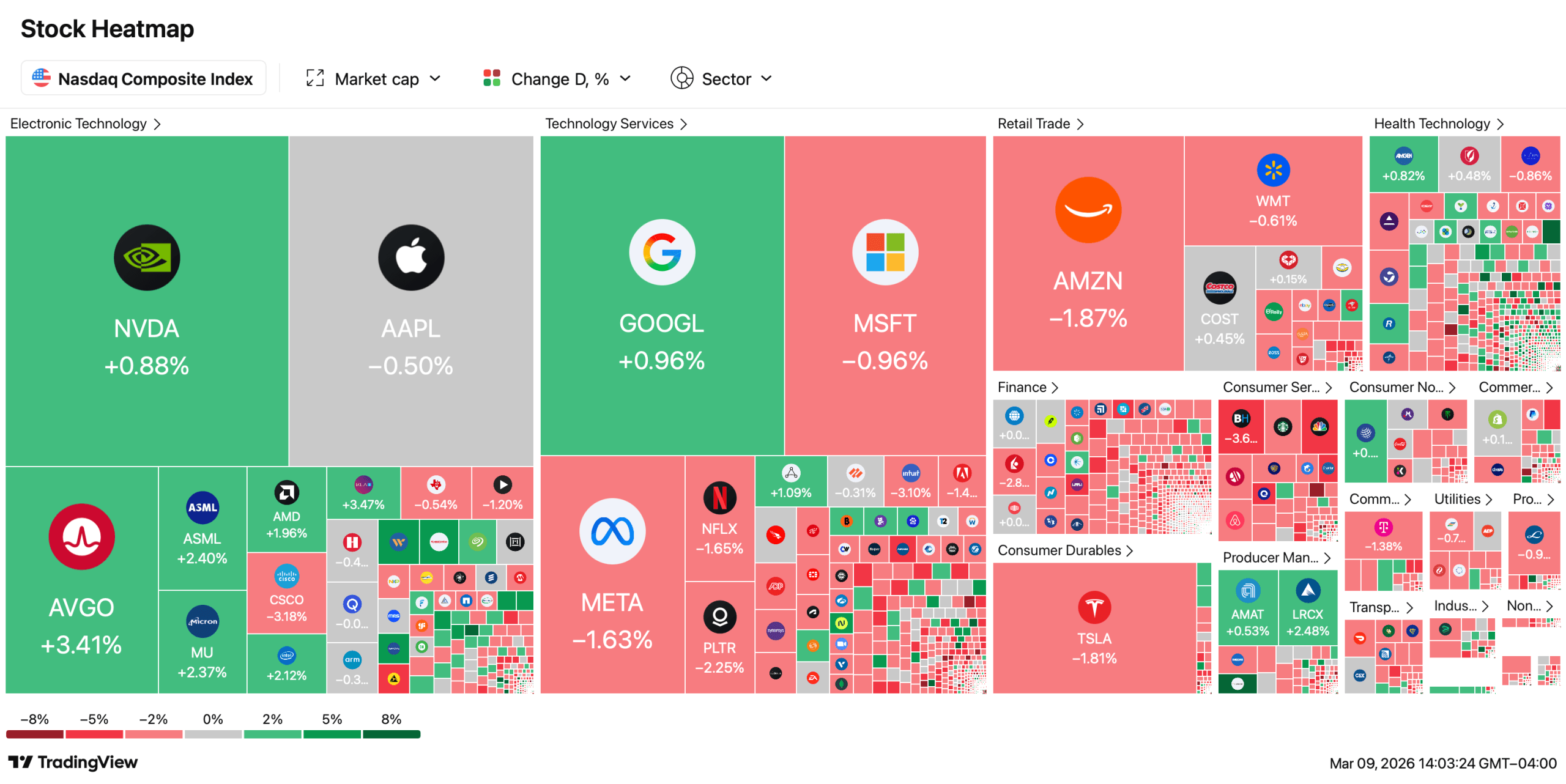
Image source: Nasdaq Composite Index heat map via tradingview.com
Market breadth painted a clear picture of the day’s mood: roughly three-quarters of listed stocks were trading lower, leaving only a narrow slice of companies holding gains. Among the Dow’s 30 components, only a handful managed to stay positive.
Energy companies stood out as one of the few bright spots. Rising oil prices — briefly pushing above the $100 per barrel mark in the trading session — boosted shares of oil producers and energy-related firms. Chevron was among the rare Dow components trading higher during the session.
Crude’s sharp climb followed escalating military activity between the United States, Israel and Iran, with analysts warning that prolonged disruptions in the region could pressure global supply. The Strait of Hormuz, a critical oil shipping route, remains a focal point for traders watching for potential bottlenecks.
The jump in oil prices has also revived talk of stagflation — a mix of persistent inflation and slowing growth — an economic combination that investors rarely greet with enthusiasm.
Volatility remained elevated but not extreme. The Cboe Volatility Index (VIX) hovered around the high-20 range, reflecting heightened uncertainty while stopping short of full-blown panic selling.
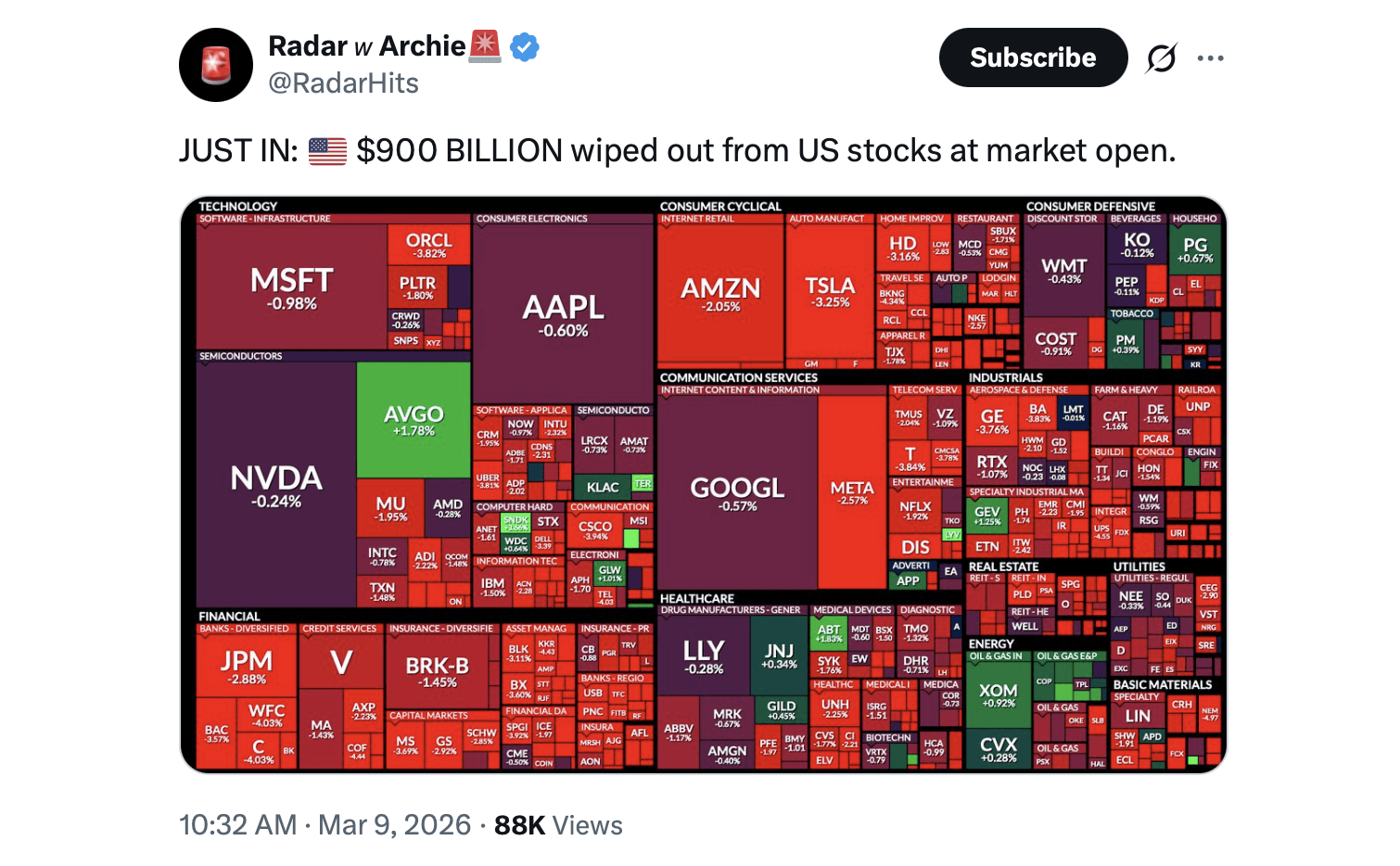
Image source: X
Treasury yields were relatively steady as traders weighed competing pressures. The 10-year Treasury yield held near 4.13% while the 2-year note traded around 3.58%, suggesting markets are balancing inflation risks against a potential economic slowdown.
Kitcoin price metrics show precious metals offered little refuge on Monday. Gold traded near $5,095 per ounce, down $77 on the day, while silver slipped slightly to about $84.14 per ounce. The declines came despite geopolitical uncertainty, indicating some investors may be raising cash or shifting positions elsewhere.
Beyond geopolitics, the economic backdrop has already been showing signs of strain. February payroll data recently indicated a drop of roughly 92,000 jobs, pushing unemployment up to about 4.4%. The figures added to growing concerns that the economy could lose momentum in the months ahead.
The coming week includes several economic events that could further influence markets, though geopolitical headlines may overshadow them. The February consumer price index (CPI) report, scheduled for Wednesday morning, will be closely watched for signs of inflation pressure — even though the data predates the latest oil spike.
Corporate earnings are also on the radar. Hewlett Packard Enterprise is scheduled to report results Monday after the closing bell, while Oracle’s earnings later this week may offer clues about demand trends in artificial intelligence (AI) and enterprise technology spending.
While equities stumbled, digital asset markets moved in the opposite direction. The cryptocurrency market rose about 2.29% over the past 24 hours, with bitcoin (BTC) gaining roughly 2.42% during the same period — a reminder that risk assets do not always move in lockstep during periods of macro stress.
For now, markets appear to be in wait-and-see mode. Any signs of easing tensions in the Middle East or stabilization in oil markets could spark a rebound, while prolonged conflict risks further pressure on stocks already trading near historically elevated valuations.
If oil prices remain elevated, investors may brace for continued volatility in the days ahead — because when geopolitics and energy markets collide, Wall Street rarely gets a quiet trading session.
- Why are U.S. stocks falling on March 9, 2026?
Rising tensions in the U.S.-Iran conflict and higher oil prices are driving investor caution and pushing major indexes lower. - How did the Dow, Nasdaq, and S&P 500 perform today?
The Dow fell about 497 points while the S&P 500 and Nasdaq also declined in midday trading. - What role is oil playing in the market drop?
Crude prices near or above $100 per barrel are raising concerns about inflation and slower economic growth. - Why is bitcoin rising while stocks fall?
Digital assets sometimes move independently of equities, and traders may rotate into crypto during geopolitical uncertainty.
免责声明:本文章仅代表作者个人观点,不代表本平台的立场和观点。本文章仅供信息分享,不构成对任何人的任何投资建议。用户与作者之间的任何争议,与本平台无关。如网页中刊载的文章或图片涉及侵权,请提供相关的权利证明和身份证明发送邮件到support@aicoin.com,本平台相关工作人员将会进行核查。


