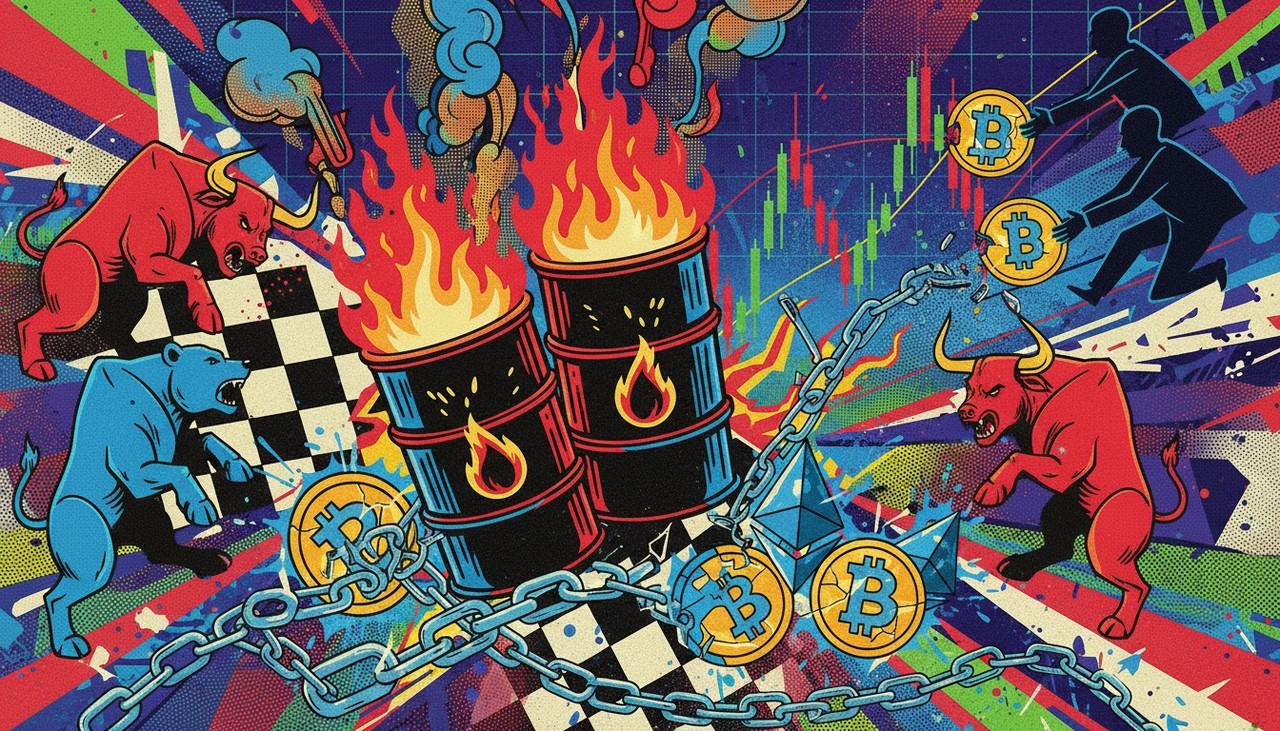
From June to August 2025, SafeX Exchange was reported to have experienced a theft and money laundering case involving approximately 6.9 million USD in cryptocurrency assets; almost simultaneously, the other end of the crypto world was preparing for a Web3 infrastructure financing deal of up to 125 million USD and the introduction of a new ETF. On March 7, 2026, East Eight Zone Time, the United States announced initial unemployment claims data, coinciding with advancements in Avalanche Staking ETF, expanding the compliance funding channels at both macro and product levels. While regulators are chasing hackers and prosecuting collusion, they are simultaneously giving a "green light" to institutions and ETFs, with the two trajectories diverging further. The security gaps have not truly been filled, yet they have been connected to a "power amplifier" that can expand the scale of funds; this is also the sharpest contradiction in the current crypto market: employment data and new ETFs are reshaping the flow of funds, while basic security governance remains in a remedial stage.
The Black Box of the 6.9 Million Theft and the Focus of Criminal Responsibility
● Outline of Criminal Charges: According to public accusations, Zhang Xinghua and Chen Chong Xin have been identified as conspiring to steal and launder approximately 6.9 million USD in cryptocurrency from SafeX Exchange, with the case's nature defined as a composite crime of cross-border theft and money laundering. This figure currently mainly comes from a single source disclosure and lacks further judicial documents for cross-verification, but it is sufficient to place the case at a high level within regional crypto security events.
● Time Span and Information Vacuum: The timeline provided in research briefings shows that the SafeX security incident concentrated between June and August 2025, involving multiple suspicious transfers and abnormal asset changes within the exchange. However, aside from the amounts and basic identities of the parties involved, critical information regarding the trigger points of the incident, internal risk control response processes, and whether users and regulators were notified at the first instance is almost entirely absent. It remains unclear whether SafeX is still operating normally and can only be broadly viewed as having significant security and compliance uncertainties.
● Differences from Traditional Financial Theft: In a traditional bank or brokerage system, similar amounts of theft would typically be accompanied by clear records of fund flows, strict account freezing processes, and cooperation among multiple judicial jurisdictions for evidence collection. However, the SafeX case occurred in a context interwoven with on-chain assets and cross-border platforms, where funds rapidly flowed among multiple addresses, compounded by the use of privacy tools and cross-chain bridges, making the tracking paths and identification of responsible parties more complex. On-chain evidence is highly precise in terms of timestamps and transfer relationships but heavily relies on off-chain KYC for real identity matching, leading to a structural problem in the judicial responsibility path that is entirely different from traditional finance.
● Sources of Uncertainty: Current public materials intentionally avoid disclosing the specific technical details of Chen Chong Xin's methods and the types of internal powers he might have held; the internal control structure of the SafeX exchange, private key management system, multi-signature or custody arrangements are also missing. In the eyes of regulators, this makes it difficult to determine whether the incident was due to individual "insider" abuse of power, systematic internal control failure, or a hybrid of external infiltration and internal collusion; from the investors' perspective, it means they cannot assess the actual risk exposure of their funds in similar platforms, and the black box itself has become part of the risk.
Stolen Funds and Financing: The Dual Narrative of 125 Million Commitment
● Fund Commitment Structure: Almost occurring in the same time slice as the SafeX theft case, another stream of money is taking shape—a commitment to Web3 infrastructure financing of 125 million USD has been disclosed, with BitMine planning to contribute 75 million USD, and ARK Invest and Payward each committing 25 million USD. This structure clearly reflects that a mining and infrastructure-oriented institution collaborates with two asset management and trading platforms to collectively bet on underlying technologies and service facilities rather than a single token price game.
● The Logic of Continued "Heavy Investment" Despite Frequent Security Events: On the surface, the large financing is in stark contrast to frequent security incidents, yet for institutions, it is precisely the weak infrastructure and frequent attack events that constitute potential sources of excess returns. By early investing in security components, custody solutions, and compliance trading stacks, institutions hope to gain leverage and bargaining power after future regulatory tightening and market clearing, transforming the "security issue" from their perspective into an "investment opportunity for infrastructure upgrades."
● A Cautious Footnote on the Claim of the Largest Single Commitment: There is a narrative circulating in the market that this 125 million USD commitment is "one of the largest single financing commitments in the Web3 infrastructure sector." The research briefing explicitly labels this statement as an unverified viewpoint, reminding us that we must retain boundary awareness when accepting similar super financing narratives: even if the data scale is indeed considerable, its relative ranking in historical context and actual arrival rhythm still await further verification from authoritative information.
● Framing Financing as "Upgrade Projects": In public opinion, this fund can easily be packaged as "using stronger infrastructure to hedge against the trust crisis brought by security incidents." The fundraising parties will emphasize the need to reconstruct custody, trading matching, and risk control systems, replacing the negative emotions from single events with technical upgrades, thus signaling to the market: the thefts are just the tail end of the old system, and the new system that the new funds will build is the future. The problem is that this narrative overlooks a fact—events like that of SafeX reflect not only technological issues but also systematic gaps in governance and incentives, and merely stacking funds might not resolve them in the short term.
Avalanche ETF and Another Amplification of On-chain Burden
● Correspondence Between Listing Time and Technological Positioning: At the other end of the capitalization of crypto infrastructure, the Avalanche Staking ETF has officially launched, its timing highly resonating with the current competitive landscape of public chains. Avalanche is positioned as a public chain infrastructure for smart contracts and high-concurrency applications, and the new ETF packages its Staking rewards and network participation rights into traditional financial products, shifting it from “the chain of developers and early users” to “the asset pool accessible by brokerage terminals and compliant funds.”
● Signal of 11.4 Billion Transactions: According to data released by Grayscale, Avalanche network has processed 11.4 billion transactions, a number used to demonstrate its high capacity and application activity in the public chain world. Whether in TPS or final confirmation time, Avalanche attempts to support more complex financial contracts and scenarios like NFTs and gaming through high performance and low cost, and an accumulated transaction volume at the level of 11.4 billion provides a narrative basis for launching an ETF centered on Staking, suggesting that the underlying network is sufficiently mature.
● How Staking ETF Transfers Risk Perception: In the traditional sense of on-chain Staking, participants need to confront a series of technical uncertainties including counterparty risks, smart contract vulnerabilities, and penalty mechanisms. The Staking ETF, however, seeks to encapsulate these on-chain native risks within the product’s structure, with the issuer and custodial institution assuming operational and technical management responsibilities, allowing investors to only deal with net asset value fluctuations and compliance disclosures. This "risk packaging" approach enables compliant funds to share on-chain return curves without directly touching private keys or node operations.
● Two Funding Paths on the Same Chain: Interestingly, whether it's hackers stealing coins or ETF subscription and redemption, both essentially utilize the transfer and settlement capabilities of the same or similar public chains. The former amplifies the efficiency of fund escape through rapid cross-address and cross-chain transfers; the latter introduces traditional financial funds into the chains under compliance through subscriptions, redemptions, and reallocations. For ordinary investors, these two paths are perceived starkly differently—coin theft symbolizes the "dark forest," while the ETF represents the "light tower"—but they share the same infrastructure in terms of underlying technology and systemic vulnerabilities, a dislocation that is the easiest part to overlook in current market sentiment.
Unemployment Data Better Than Expected: Fine-Tuning Liquidity and Risk Appetite
● A Set of Numbers in a Macro Context: On March 7, 2026, East Eight Zone Time, the United States published the latest weekly initial unemployment claims at 213,000, slightly better than the market expectation of 215,000. This small difference is not enough to change the overall judgment on the economic cycle, but it marginally strengthens the tone of "employment is relatively stable, and the economy is not showing a significant slowdown," adding a bit of optimism to the market's discussions about future interest rate paths and liquidity environments.
● Transmission of Employment and Risk-Free Rates: Stable employment data suggests that the Federal Reserve may remain cautious in its interest rate cuts, thus maintaining risk-free rates at relatively high levels for a longer period. For high-risk assets, this typically suppresses some speculative demand, but also shifts funds to focus more on "risk-adjusted returns." In the crypto space, this environment is unfavorable for short-term high-leverage speculation, yet it enhances the attractiveness of assets with cash flow or yield-like characteristics, such as public chains participating in Staking and infrastructure projects providing trading and custody services.
● Why Infrastructure and ETFs Are More Favored: During the phase where funds seek "explainable yield outlets," Web3 infrastructure financing and crypto ETF products are relatively more easily approved by institutional investment committees. On one hand, they can be packaged as “technology infrastructure” and “new asset allocation tools,” complementing traditional equities or fixed incomes; on the other hand, Staking yields or trading fee shares can be incorporated into models and evaluated through scenario analysis, thus softening the "pure price speculation" label. This makes projects like the aforementioned 125 million USD commitment and Avalanche Staking ETF appear more like "reasonable risks" rather than "blind speculation" in the current macro environment.
● Collective Negligence of Tail Risks of Safety: However, when the market collectively chases yield outlets, theft events like SafeX are often treated as "individual noise," with risks compressed to the tail. The more robust the macro data and abundant the liquidity, the more institutions tend to believe they can manage individual platform risks through diversification and professional risk control, thus underestimating the systemic fragility of the entire crypto ecosystem in governance, compliance, and technical coordination. This "tail risk discount" is often seen in traditional financial crises and is now being replayed in a crypto version.
Regulatory Dual Track: From Chasing Hackers to Welcoming Institutions
● Criminal Responsibility vs. Fund Release: In the SafeX case, the focus of regulators and judicial institutions is on holding Zhang Xinghua and Chen Chong Xin personally criminally liable for theft, money laundering, and possible conspiracy. This "chasing individuals" pathway emphasizes individual penalization but does not concurrently present a systemic reform plan for the exchange's internal control failures, cross-border platform responsibilities, and custody structures. Meanwhile, for institutional funding channels like the 125 million USD infrastructure financing and Avalanche Staking ETF, regulators more often provide a “compliance green light” through approval, registration, and information disclosure frameworks.
● Wavering Between Protection and Innovation: On one hand, regulators need to demonstrate their capability to protect asset safety to retail and the public, hence displaying a high-pressure stance on cases like SafeX; on the other hand, they don’t want to stifle potential technological and financial innovations represented by public chains and Web3 infrastructures, thus adopting a more cautious inclusivity approach towards institutional products and ETFs. In between these two objectives, the actual policies and enforcement often exhibit swings: stringent on small or peripheral platforms, leaning towards negotiation and guidance for large institutions and compliant products.
● Two Extremes of Transparency: On-chain tracking of stolen funds is theoretically transparent down to every transfer, every address, but the true identities and actual control relationships behind the addresses are often obscured or deliberately concealed, resulting in a state of "technically transparent, legally ambiguous." On the disclosure side of ETF subscriptions and institutional products, it is "legally transparent in text, technically ambiguous at the foundational level"—investors can see shares, net values, and custodians but find it challenging to assess the real conditions of underlying node operations and smart contract safety. This dual lack of transparency makes market trust increasingly rely on brand and regulatory endorsements rather than a full understanding of the risks themselves.
● Maintaining Caution on Institutional Narratives: Funders like BitMine are constructing a long-term narrative of "betting on infrastructure upgrades" through various public and semi-public channels. However, the research briefing has explicitly labeled the specific role of BitMine's chairman in the financing as unverified information, which means we cannot yet confirm the internal decision-making logic, risk control considerations, and profit distribution structure. Under such informational asymmetry, both retail and small-to-medium institutions need to stay wary of the narrative “institution has done due diligence” and “big money is betting,” realizing that institutions can make mistakes and trip over, often having the ability to externalize some costs to downstream participants.
Funds Accelerating, Safety Lagging: Choosing in the Gaps
The SafeX theft case, the loss of 6.9 million USD in assets, the information disclosure gap, and the other side’s 125 million USD infrastructure financing commitment, combined with the high-performance narrative told by the Avalanche Staking ETF through "the 11.4 billion transactions", are not isolated events but multiple segments entangled on the same time slice. On one side is the exchange bleeding, individuals being prosecuted; on the other, institutions pouring in, products listed, and compliance packaging; this extreme contrast constitutes the actual landscape of the current crypto market.
The current pattern can be roughly summarized as: regulators mainly chase individuals, capital mainly chases yields, technology mainly pursues expansion. The criminal responsibilities for specific hackers and internal collusions are clear and severe, but constraints on platform governance and cross-chain systemic risks remain loose; capital is more concerned with Staking yields, trading fee shares, and valuation space, relying on "market self-repair" for improvements in safety and transparency; the technology route is racing ahead on TPS, cross-chain interoperability, and asset diversity, often viewing security and governance as issues that can be "resolved later."
In this dislocation, the future game is likely to swing to an extreme: if safety and transparency cannot improve in sync with capital expansion, then the institutional funds currently held in high regard may rapidly withdraw during the next round of black swan-style mishaps, potentially even amplifying the trust crisis in reverse. SafeX is only a medium-sized sample; what is truly concerning is whether the current regulatory and market mechanisms can withstand the impact when similar incidents occur on larger platforms or chains directly related to ETF underlying assets.
For both individual and institutional investors, a more realistic strategy is: on one hand, to seriously distinguish between “the long-term value of infrastructure” and “short-term safety black holes,” and not equate the two merely based on financing scale and brand endorsements; on the other hand, to be wary of those structural risks obscured by narrative—such as the concentration of custody and private key management, systemic vulnerabilities of cross-chain bridges, and the substantive control of a few nodes in on-chain governance. The crypto market indeed stands at the gap: on one side is unprecedented institutionalization and compliance channels, and on the other side are security and governance pitfalls still unaddressed. How to navigate this gap is a question every participant cannot avoid.
Join our community to discuss and become stronger together!
Official Telegram community: https://t.me/aicoincn
AiCoin Chinese Twitter: https://x.com/AiCoinzh
OKX Welfare Group: https://aicoin.com/link/chat?cid=l61eM4owQ
Binance Welfare Group: https://aicoin.com/link/chat?cid=ynr7d1P6Z
免责声明:本文章仅代表作者个人观点,不代表本平台的立场和观点。本文章仅供信息分享,不构成对任何人的任何投资建议。用户与作者之间的任何争议,与本平台无关。如网页中刊载的文章或图片涉及侵权,请提供相关的权利证明和身份证明发送邮件到support@aicoin.com,本平台相关工作人员将会进行核查。