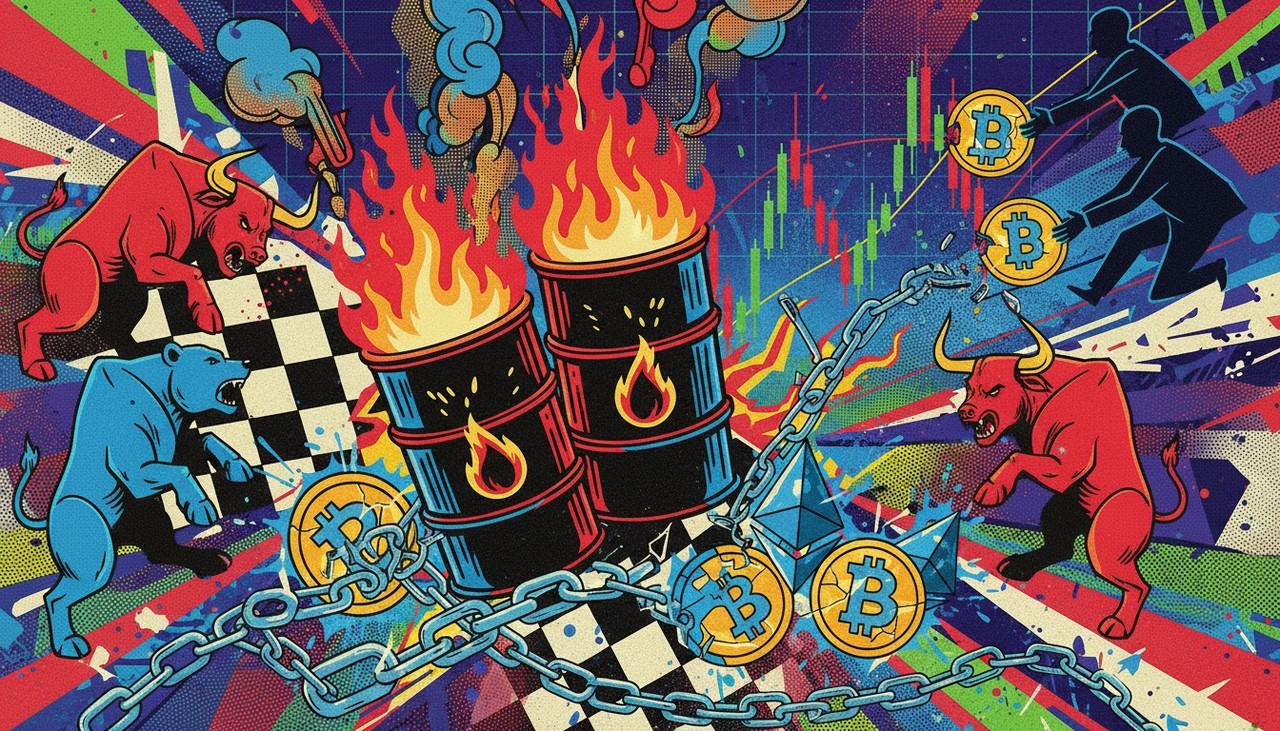
On March 12, 2026, the U.S. Commodity Futures Trading Commission (CFTC) released new regulatory guidelines and proposed rules regarding prediction markets, quickly attracting dual attention from the crypto and compliance circles during market hours in the eighth time zone. This move not only signifies that prediction markets are being written into the regulatory framework as independent subjects for the first time, but also illuminates a relatively clear path for future rule-making. Meanwhile, the higher regulatory clarity also indicates stricter behavioral boundaries and scrutiny requirements. Prediction markets are at a new crossroads: on one end, the compliance path is lit, and institutional funds see a predictable entry and exit channel; on the other end, product design and innovation space may encounter stronger constraints, with the game shifting from technology and narrative to regulatory details and capital costs.
Prediction markets written into rules for the first time
● Change in regulatory positioning: The document released by the CFTC is essentially a round of regulatory policy updates, but unlike past instances where prediction markets were ambiguously categorized under derivatives or betting gray areas, this time they are proposed as an independent subject requiring regulatory guidance and proposed rule pre-notice, meaning that regulators are responding directly to the existence of this track for the first time and attempting to set specific behavioral boundaries and compliance pathways for it.
● Significance of a systematic framework: Planet Daily dubbed this initiative as “the first systematic regulatory framework established for prediction markets,” implying that regulators are no longer just conveying their stance through case-by-case law enforcement or sporadic approvals, but are trying to build a reusable and predictable rules structure. This will impact the entire practice from event contract design, risk control mechanisms to information disclosure standards, providing compliance teams and legal advisors with clearer reference coordinates.
● Hierarchy of guidance and rules: The current release still consists of "regulatory guidance" and "proposed rule pre-notice," which has not yet elevated to formal rule text. Guidance represents a public explanation of regulatory expectations and enforcement tendencies, while pre-notice serves as groundwork for rule-making and opinion gathering before formal regulations are established, with both constituting an intermediate stage from policy declaration to formal regulatory implementation, allowing the market time for feedback and adjustments.
A new way of self-certification: who will...
● Basic mechanism of self-certification: According to public information, this guidance requires platforms to conduct "self-certification" when launching event contracts, whereby the platform evaluates whether the contract aligns with CFTC's regulatory expectations and reflects this compliance judgment in internal processes and external disclosures. This means that from topic selection, parameter design to settlement logic, platforms need to actively conform to regulatory standards rather than waiting for regulatory inquiries or enforcement afterwards.
● The appeal of reducing uncertainty: Rhythm cites market opinions stating, "The self-certification mechanism will reduce compliance uncertainty," based on the logic that platforms do not need to passively wait for separate regulatory approval every time they launch a new contract, but can iterate quickly within an established framework. For platforms and projects aiming to operate long-term in the U.S. market, this mechanism procedurally enhances predictability, lessens the risk of blanket rejections, and holds obvious appeal for institutional partners and legal risk control teams.
● Reshaping operational models: The guidance also emphasizes adjusting the rules manual to reflect regulatory expectations, listing the prevention of manipulation and insider trading as priorities. This will compel platforms to structurally transform in areas such as internal control, matching mechanisms, information disclosure, and employee trading, shifting from a “technology frontend + on-chain settlement” light asset model to one that requires greater investment in compliance structures, audit trails, and behavioral monitoring, raising operational costs and thresholds simultaneously.
From gray areas to predictable compliance:...
● Old pain points from an institutional perspective: Previously, prediction markets have long navigated the gray gaps between gambling and derivatives, with ambiguous regulatory attitudes and sporadic enforcement cases, causing traditional institutions, compliant funds, and large platforms to maintain distance from this track. Compliance concerns arise not only from potential legal risks but also from the fact that once facing regulatory rejection, initial technical investments, brand reputation, and user assets could suffer quantifiable losses.
● Predictable pathways changing the cost-benefit calculations: New guidelines clarify regulatory concerns and future rule paths, causing the cost-benefit calculation models of large platforms and compliant funds to change. Even if this does not equate to a full release, the predictability of "knowing what regulators are looking at" and "knowing how to self-certify" is itself a benefit item. Institutions can view compliance investments as estimable costs rather than difficult-to-price potential mines, thus making them more willing to explore or position related product lines.
● Balancing compliance thresholds with market space: Without declaring "complete legalization," it can be anticipated that future projects entering the prediction market track will face higher scrutiny costs, compliance advisor fees, and technological transformation expenditures. However, the predictable regulatory environment is expected to unleash greater user trust and institutional participation, potentially expanding the overall market size. The real game lies in who can find a sustainable balance between compliance costs and product innovation, rather than simply pursuing “high freedom without regulation.”
Emotional recovery meets stricter compliance on the same day
● Signals of emotional indicators warming: Within the same time window as the CFTC released the guidance, the Coinbase Bitcoin premium index turned positive for two consecutive days, regarded as an important emotional indicator of risk appetite recovery in the U.S. market. Although the specific figures have not been disclosed, the directional change indicates that U.S. stocks and crypto capital are beginning to re-accept risk asset exposure, providing a friendlier market environment and financial soil for any new narratives related to compliance and derivatives.
● The other side of global compliance tightening: On the same day, the Financial Action Task Force (FATF) issued a warning, naming offshore VASPs for regulatory arbitrage risks, urging countries to maintain high vigilance regarding cross-border services and offshore structures. This signal corresponds with the CFTC's guidance: on one hand, U.S. domestic regulators are beginning to provide path guidance for specific tracks; on the other hand, the international level is strengthening efforts to curb "regulatory vacuums" and "institutional arbitrage," indicating an overall tightening trend in the compliance environment.
● A sample of capital diversion: Against this macro backdrop, Ark Labs completed a $5.2 million financing for BTC infrastructure (including institutional participation from Tether), becoming a typical case. Part of the capital is betting on the long-term logic of "embracing compliant infrastructure," hoping to ride on the mainstream dividends brought by regulatory transparency, while another part continues to chase offshore, high leverage, and high volatility arbitrage opportunities. Prediction market projects are likely to be forced to position themselves between these two funding preferences in the future.
Regulatory boundaries remain uncertain: DeFi and...
● The ambiguity of the applicable scope: Currently, the published documents do not clearly specify whether and how these guidelines apply to decentralized prediction markets and fully offshore-operating platforms. For projects utilizing DAO governance and automated settlement through smart contracts, which subjects need to fulfill self-certification obligations and how to align with CFTC expectations remain critical issues to be verified. This uncertainty makes it difficult for the DeFi prediction track to directly incorporate itself into known compliance frameworks in the short term.
● Choosing sides between compliance and vacuum: Against the backdrop of FATF warnings about offshore arbitrage, prediction market projects will face more difficult choices in terms of geographic and architectural layout. One path is to migrate or establish operations in compliant jurisdictions, proactively connect with regulatory bodies like the CFTC, and accept stricter review and reporting obligations; the other is to continue relying on offshore structures and decentralized technology, attempting to remain in a regulatory vacuum or exploiting gaps in multiple regulations, but future pressures for cross-border enforcement and cooperation will also increase accordingly.
● Growing pains from migration and review: Before formal rules are established, market participants are likely to experience a phase of “compliance migration + product reconfiguration + KYC strengthening.” Some platforms may attempt to distinguish between U.S. users and non-U.S. users, designing dual product lines; some projects may compromise on user identity verification and fund flow tracking to meet future requirements. These adjustments will not only change user experiences and participation thresholds but will also reshape the liquidity distribution and innovation pace of the entire track.
The next bets after the regulatory pathway is illuminated
The CFTC's release of regulatory guidance and proposed rule pre-notice for prediction markets has brought structural changes in areas such as framework construction, self-certification, and risk prevention: on one hand, by clarifying regulatory expectations and emphasizing the prevention of manipulation and insider trading, it provides platforms with a rule outline for reference; on the other hand, by requiring adjustments to the rules manual and implementing a self-certification mechanism, it shifts more compliance responsibilities to operational entities, raising entry thresholds and governance costs. In the medium to long term, the prediction market track is likely to see a "dual-track parallel" model: compliant funds gradually entering the market under predictable regulatory conditions, driving scale and depth enhancement; while high-leverage, extreme event betting, and other high-risk plays are forced to retreat to the edges or shift to more hidden spaces under regulatory pressure. What truly determines the outcome will be how various platforms continue to iterate their structures amid regulatory refinement, cross-border coordination, and technological evolution. The future establishment of formal rules, alignment with international standards, and further clarification of the applicability of DeFi models will not only reshape the prediction market itself but will also have far-reaching implications for the broader crypto derivatives ecosystem — the next bet is no longer just on the outcomes themselves, but on which combination of compliance and innovation can survive and grow in the new cycle.
Join our community, let's discuss and grow stronger together!
Official Telegram community: https://t.me/aicoincn
AiCoin Chinese Twitter: https://x.com/AiCoinzh
OKX Welfare Group: https://aicoin.com/link/chat?cid=l61eM4owQ
Binance Welfare Group: https://aicoin.com/link/chat?cid=ynr7d1P6Z
免责声明:本文章仅代表作者个人观点,不代表本平台的立场和观点。本文章仅供信息分享,不构成对任何人的任何投资建议。用户与作者之间的任何争议,与本平台无关。如网页中刊载的文章或图片涉及侵权,请提供相关的权利证明和身份证明发送邮件到support@aicoin.com,本平台相关工作人员将会进行核查。