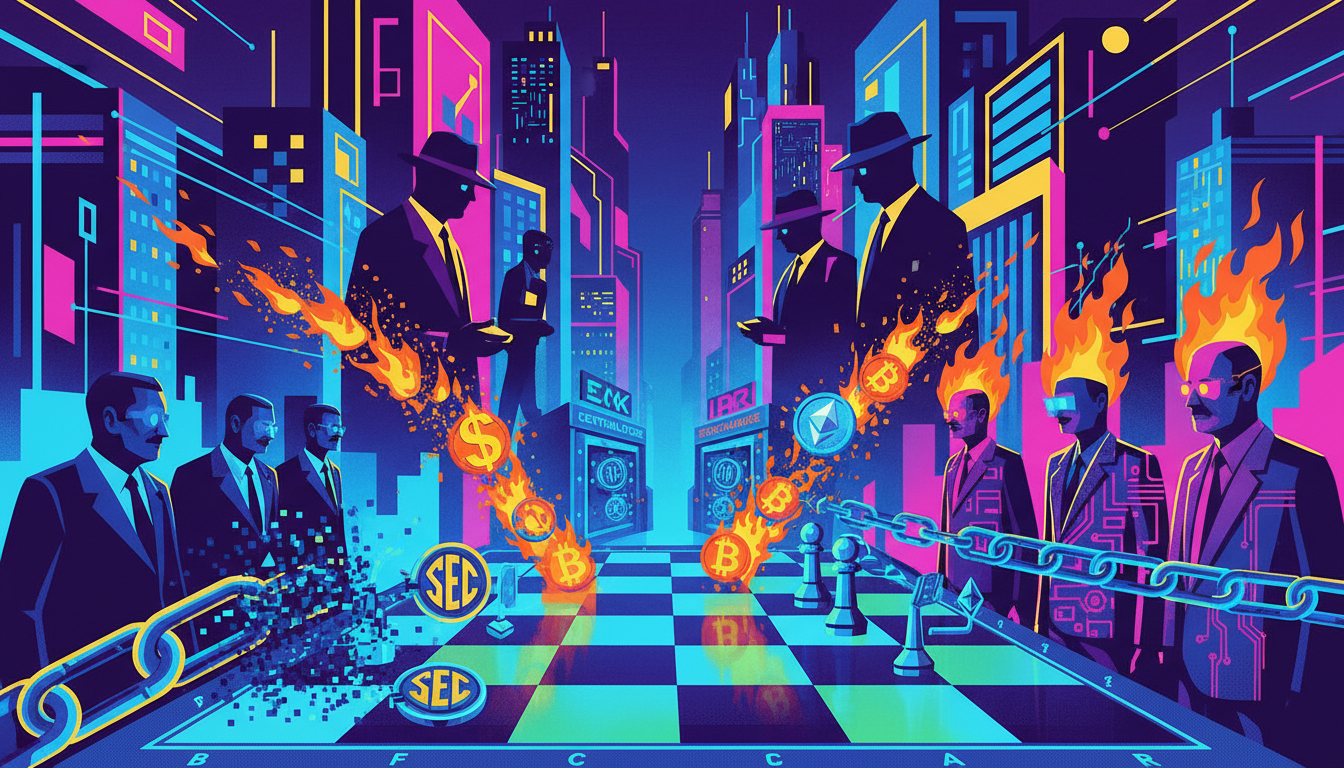
On March 12, Iran's newly appointed Supreme Leader Mojahed Tabatabai Khamenei sparked global market nerves in his first public speech by directly naming the Strait of Hormuz and surrounding U.S. military bases. As a strategic route that carries about 20% of global oil transportation, any disturbances could force a reassessment of energy, shipping, and financial pricing systems. On that day, the three major U.S. stock indices collectively fell over 1%, and risk-averse sentiment quickly intensified, with traditional assets being the first to provide intuitive feedback. Amidst such geopolitical turbulence, whether cryptocurrencies like Bitcoin will become an outlet for capital seeking hedging, or be reclassified as "high beta risk assets," has become one of the most critical uncertainties in this round of turbulence.
Threat to the Oil Throat: The First Round Reaction of the Global Market
● Political Signal: On March 12, in his first public speech after taking office, Mojahed Tabatabai Khamenei rarely ignited external concerns with strong rhetoric. He not only threatened to close the Strait of Hormuz but also issued warnings to regional U.S. military bases, shifting the focus from the diplomatic table to the security of critical infrastructure. This statement was regarded as the first significant policy signal after the regime change, setting a high-pressure tone for subsequent negotiations.
● Energy Artery: The Strait of Hormuz handles about 20% of the global oil transportation volume and is referred to as the "oil throat." Any statements regarding blockades, harassment, or security risks will be quickly amplified by the market as potential preludes to supply disruptions. Even without substantial actions, the imagined space for tanker insurance, shipping premiums, and risk discounts for oil-producing countries is enough to drive traders to embed the "Hormuz risk factor" in pricing.
● Financial Feedback: In the first trading window of rising geopolitical risks, all three major U.S. stock indices fell over 1%, instinctively reflecting expectations of conflict with a downward daily candle. From tech growth to cyclical blue chips, widespread pullbacks indicated that capital chose to unify its "defensive reduction" in a short time instead of finely selecting stocks. This sensitive response to macro threats formed a traditional financial reference frame for observing the relative performance of crypto assets.
From Wall Street to the Oil Market: How Panic Amplifies Itself in Expectations
● Negotiation Space Compressed: Analyst Dara Doyle pointed out that Mojahed's remarks were interpreted by the market as "almost no signs of concession." In the eyes of investors, this means that in the coming weeks, whether regional mediation or behind-the-scenes maneuvering will face higher political thresholds. Lacking visible paths to de-escalation, negotiation space is preemptively compressed by emotions, leading to a passive increase in risk premiums.
● Expectation Misalignment: At the commodity level, a whale-sized trader shorted $34.74 million in crude oil, currently losing about $1.84 million, becoming a microcosm of misalignment between expectations and reality. Short sellers betting that "bad news is priced in" were instead forced to bear paper pressure amid sudden escalation of rhetoric. This case illustrates that in a highly asymmetric information environment, even large funds find it challenging to accurately gauge the real extent of geopolitical impacts on prices.
● Worst-Case Scenario Hypothesis: In the absence of clear military action details and without confirmation of any actual blockade status, the market did not exercise restraint; instead, it tended to layer "worst-case scenario" imaginings in pricing. Investors began to automatically allocate larger risk buffers for oil prices, shipping costs, and defense expenditures; panic leveraged itself through expectation channels, forming a typical chain of "incomplete information—amplified imagination—overreaction in prices."
Finding an Outlet for Funds: The New Position of Crypto in the Safe-Haven Narrative
● Historical Comparison: In recent years, during certain geopolitical events, Bitcoin briefly moved in sync with traditional safe-haven assets like gold, but also faced selling alongside U.S. stocks when liquidity tightened. At certain stages, BTC was seen as a tool for capital outflows and asset transfers during localized conflicts, while during global risks, it was often categorized as "a high-volatility tech stock extension." This toggle between linkage and differentiation has left the "geopolitical hedging" label indefinitely unresolved.
● Enhanced Coordination: In the current context, the linkage between the crypto market and traditional finance has significantly increased, with both ETF channels and institutional allocations deepening their correlation. Compared to a few years ago, Bitcoin is more deeply embedded in the same system of global liquidity and risk appetite. This means that in this round of Hormuz risk pricing, for crypto assets to assume the role of an "independent hedging tool," the required narrative and funding support threshold has clearly risen.
● Emotional Constraints: Binance CEO He Yi mentioned, "clearing FUD is harder than spreading it," pointing to a structural problem within emotional cycles. When panic and uncertainty dominate pricing, even if crypto possesses some hedging logic based on asset attributes, it can still be lumped into the same "sell-off basket" in an environment filled with FUD. In periods dominated by emotion, the theoretical advantages of hedging tools are often overshadowed by liquidity demands and margin pressures.
On-Chain Signals: Grayscale's Minor Movements Create Big Waves
● Small Moves, Big Noise: Amid macro clouds, on-chain data detected Grayscale transferring 296 BTC (approximately $2.086 million) and 27,731 AVAX. In absolute terms, this is not exaggerated for an institution managing a large asset portfolio, but at such a sensitive moment, it was interpreted as various possibilities like "adjusting duration" or "preventive reduction," causing the community and media to over-amplify.
● Preventive Action Imagination: In an environment where geopolitical uncertainties are magnified, any small migration from institutional addresses is easily seen as a prelude to reconfiguration or risk hedging. Regardless of whether its true reason is internal account optimization, custody adjustments, or routine operations, the market tends to attribute it to "smart money smelling the wind," thus packaging technical maneuvers as macro bets on an emotional level.
● Smart Money Illusion: When on-chain dynamics coincide with macro news related to Hormuz, retail investors are more prone to overinterpret the movements of "smart money." Some investors attempt to piece together a complete institutional strategy based on fragmented transfer records, while ignoring the substantial operational noise that may exist behind such data. This deduction based on fragmentary on-chain signals often amplifies market volatility rather than reducing uncertainty in an information-asymmetric environment.
Narrative Battle: The Tug-of-War Between Hedging Tools and FUD
● Discourse Clash: Regarding this round of Hormuz risk, two entirely opposing narratives quickly formed on social media: one side emphasizes Bitcoin as a "geopolitical safe-haven asset," which will attract panic funds when traditional assets drop; the other insists on classifying crypto as "high-volatility risk assets," believing it will serve as a leveraged target amplifying bearish sentiment amid sharp fluctuations in the stock market and crude oil. This bullish and bearish discourse continues to be recited and reinterpreted on platforms like X and Telegram, amplifying the price's emotional driving component.
● Information Noise: He Yi's statement that "clearing FUD is harder than spreading it" reflects the dual overlay of information asymmetry and fragmented on-chain data. Moves from a few on-chain addresses, snapshots of capital inflows and outflows from a single exchange, can easily be taken out of context and labeled as "runaway," "bottom-feeding," or "institutional dumping," yet few have the capability to integrate multi-source data for systematic verification. The result is that noise propagates far faster than signals.
● Fragmented Pricing: In the absence of key macro details (such as specific oil price and U.S. Treasury yield changes), the market is forced to price based on an incomplete set of information. Investors have to rely on fragmented news, social media snippets, and some on-chain indicators to construct their own "worldviews." When most participants make decisions within such a fragmented reality, price trends reflect more the instantaneous state of collective emotion rather than a calm discounting of future cash flows or macro paths.
The Hormuz Alert Not Lifted: The Next Role and Boundaries of Crypto
The hardline stance of Iran's new leader has once again placed the Strait of Hormuz, a lifeline of energy, back in the global spotlight, forcing the market to find new balance points among geopolitical risk, energy corridor security, and global asset pricing. In the process of reshaping this balance, oil, stock markets, and crypto assets are all being compelled to rewrite their respective risk premium models, and any changes in phrasing from the policy end will become key weights on the scale.
In a scenario where geopolitical risks persist but have not yet transformed into actual blockades or clearly defined military escalations, crypto assets are likely to continue oscillating between "high-volatility risk assets" and "partial hedging vehicles." In the short term, volatility ranges may be driven by macro emotions rather than fundamentals, with upward movement relying on the resonance of narratives around safe-haven and liquidity easing, while downward movement may see amplified corrections amid traditional market shocks, margin pressures, and FUD spread.
In the coming weeks, what investors really need to keep an eye on is not the emotional tide on social media, but rather three variables with greater signal value: first, whether Iran and related parties clearly cool down their rhetoric, releasing negotiation and concession space; second, the volatility and return rhythm of traditional markets like U.S. stocks, which will determine the overall linkage strength of crypto and risk assets; third, the rhythm and direction of large on-chain transfers and institutional address behaviors, to discern whether smart capital is choosing defense, reconfiguration, or the re-allocation of risk exposure. Before the Hormuz clouds lift, how much panic the crypto world can withstand will ultimately be answered in these specific signals.
Join our community, let's discuss and grow stronger together!
Official Telegram community: https://t.me/aicoincn
AiCoin Chinese Twitter: https://x.com/AiCoinzh
OKX Benefits Group: https://aicoin.com/link/chat?cid=l61eM4owQ
Binance Benefits Group: https://aicoin.com/link/chat?cid=ynr7d1P6Z
免责声明:本文章仅代表作者个人观点,不代表本平台的立场和观点。本文章仅供信息分享,不构成对任何人的任何投资建议。用户与作者之间的任何争议,与本平台无关。如网页中刊载的文章或图片涉及侵权,请提供相关的权利证明和身份证明发送邮件到support@aicoin.com,本平台相关工作人员将会进行核查。