Just yesterday, the market was still discussing why the United States is so cautious about the digital dollar, and today Washington has dropped a policy depth charge. On March 13, the U.S. Senate voted overwhelmingly to put the brakes on the central bank digital currency (CBDC) process. This was not a small-scale discussion but rather a “sudden attack” hidden within a massive housing bill.
1. Unexpected Breakthrough: The “Sunset Clause” Hidden in the 302-Page Bill
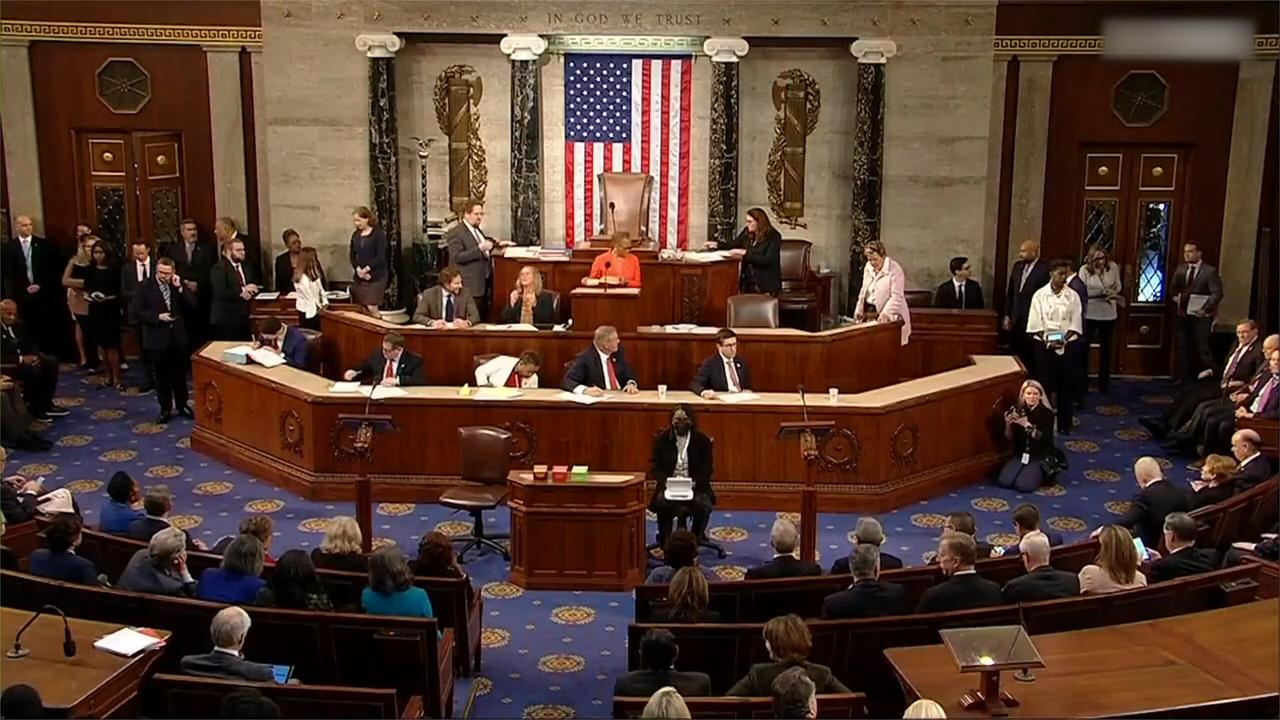
● The event happened rather suddenly. On March 13, local time, the U.S. Senate was voting on the “21st Century ROAD to Housing Act.” This is a bipartisan compromise document aimed at expanding housing supply, spanning 302 pages. However, what truly shook the financial circle was not the housing-related provisions but rather a few lines quietly hidden at the end of the bill.
● In the end, the Senate passed the bill with a strong majority of 89 votes to 10. This means that on the legislative front, a key step has been taken against the Federal Reserve's issuance of digital dollars.
● According to the terms, the Federal Reserve is explicitly prohibited from “issuing or creating any form of central bank digital currency (CBDC), or any digital assets that are essentially similar to CBDC, directly or through financial institutions and other intermediaries.” Notably, this ban is not permanent but sets a “sunset clause”—valid until December 31, 2030.
● In other words, for at least the next four years, the digital dollar project will be stalled at the federal level in the United States.
2. The Game Behind the Vote: Some Want It Shorter, Others Fear It’s Too Long
Although it seems like bipartisan consensus on the surface, behind those 89 votes in favor, there are actually a lot of political games.
● The voting result itself is quite interesting. Although it was passed, the 10 opposing votes were not all because of “supporting CBDC.” On the contrary, according to TokenPost’s report, those who voted against were mainly two groups: one group felt the ban was not strict enough, while the other was concerned that the legislative process was being hijacked.
● Republican hardliners represented by Ted Cruz and Mike Lee voted against it, arguing that having an expiration date on this “ban” is ridiculous. They believe the prohibition on CBDC must be permanent, rather than having a cutoff date in 2030, which is just leaving a backdoor to monitor citizens' financial data in the future.
● On the other side, Democrats like Brian Schatz also voted against it, mainly concerned that this approach of stuffing significant financial policy into a housing bill was too frivolous.
● This strange combination also confirms analyst MartyParty's previous judgment: the CBDC clause seems more like a political “sweetener” embedded in the housing bill to attract support from opposing factions, making broader bipartisan cooperation possible. In other words, to get the housing bill passed, the big shots from both parties decided to temporarily sacrifice the digital dollar as a bargaining chip.
3. Why Now? The Deep Game of Financial Privacy and Regulatory Power
Why is the U.S. political sphere so sensitive to the digital dollar? Behind it is a war over financial privacy rights.
● In American financial culture, the anonymity of cash is seen as a symbol of freedom. However, a digital currency directly issued by the central bank could theoretically allow the government to monitor every transaction in real time. This “visible hand” makes many conservatives uneasy.
● Cody Carbone, CEO of The Digital Chamber, stated after the bill was passed: “Financial privacy is the cornerstone of American freedom. The decision to authorize the issuance of a CBDC, which is a significant matter of national importance, should be made jointly by Congress and the people, not by the Federal Reserve unilaterally.”
● Furthermore, the banking industry does not want to see the emergence of a CBDC. Once digital dollars become widespread, people can open accounts directly with the Federal Reserve, which would completely bypass the commercial banking system, draining low-interest deposits away from banks and disrupting the existing credit creation mechanism. This fear of “disintermediation” in the financial system is also a significant reason the ban gained wide support.
4. A Carnival in the Crypto Market? The Spring of Stablecoins Is Here
● The Senate's hammer, although aimed at the digital dollar, sounds like a starting gun for the cryptocurrency market.
● After the news broke, market sentiment clearly shifted towards optimism. Logically, the U.S. government temporarily withdrawing from the direct issuance race for digital currencies means that the private sector’s issuance of stablecoins will welcome a substantial development window.
● In the past, the market was always worried that if the U.S. government issued an official digital dollar, private stablecoins like USDT and USDC might be marginalized because the official one would obviously be “safer.” But now, with the official players sidelined, U.S. dollar stablecoins have become the only “regular army” candidates in the domestic digital payment arena.
● Analysts point out that this move actually strengthens the position of private sector-led innovation in digital assets. For decentralized assets like Bitcoin, this is also good news. Because it further validates the core narrative: the government should not control your money. When American lawmakers explicitly reject a “controllable” digital dollar, Bitcoin’s value proposition of being “uncontrollable” stands out even more.
5. Unresolved: Variables in the House and Trump’s “Pen”
However, it may be too early to pop the champagne. Although this ban passed with a high vote in the Senate, there are still two hurdles on the road to codification.
● The first hurdle is the House of Representatives. Currently, there are different voices within the House. Some Republican members are very dissatisfied with the Senate version, arguing that the current “temporary ban” is not thorough enough and vow to modify it to a “permanent ban,” while expressing outrage over the Senate's undermining of the House's authority in the legislative negotiations. If the House really puts forth a modified version, the bill must be sent back to the Senate for another vote, which could render the legislative process delayed or even derail it.
● The second hurdle is the White House. After all, this is a housing bill and not just about the CBDC clause. The focus of the controversy also lies in the clauses restricting large investors like private equity firms from holding substantial amounts of housing. More importantly, former President Trump (in the current news context as a political figure) recently stated that he would not sign any bills until Congress passes a voter identification bill. This undoubtedly casts a thick shadow over the entire legislative outlook.
6. A Pre-Vote on the Future
● Overall, this Senate vote feels more like a “pre-vote” on the future of American currency. Although the final result is still to be determined by the subsequent games in the House and White House, the vote of 89 to 10 has clearly conveyed a message: at least during this cycle, the U.S. attitude toward the “digital dollar” is one of vigilance and rejection.
● For the crypto circle, this is a rare policy dividend period. Before the “sunset” in 2030 arrives, the U.S. market will temporarily become a testing ground without official competitors. Both stablecoin issuers and DeFi protocols will gain a more relaxed survival space in these years.
● However, there are still over four years until 2030, and four years is enough for tremendous changes in the crypto world. This pause on the “digital dollar” could either become the eve of a celebration for private crypto assets or just a strange calm before a storm. Everything has just begun.
Join our community to discuss and become stronger together!
Official Telegram community: https://t.me/aicoincn
AiCoin Chinese Twitter: https://x.com/AiCoinzh
OKX Welfare Group: https://aicoin.com/link/chat?cid=l61eM4owQ
Binance Welfare Group: https://aicoin.com/link/chat?cid=ynr7d1P6Z
免责声明:本文章仅代表作者个人观点,不代表本平台的立场和观点。本文章仅供信息分享,不构成对任何人的任何投资建议。用户与作者之间的任何争议,与本平台无关。如网页中刊载的文章或图片涉及侵权,请提供相关的权利证明和身份证明发送邮件到support@aicoin.com,本平台相关工作人员将会进行核查。


