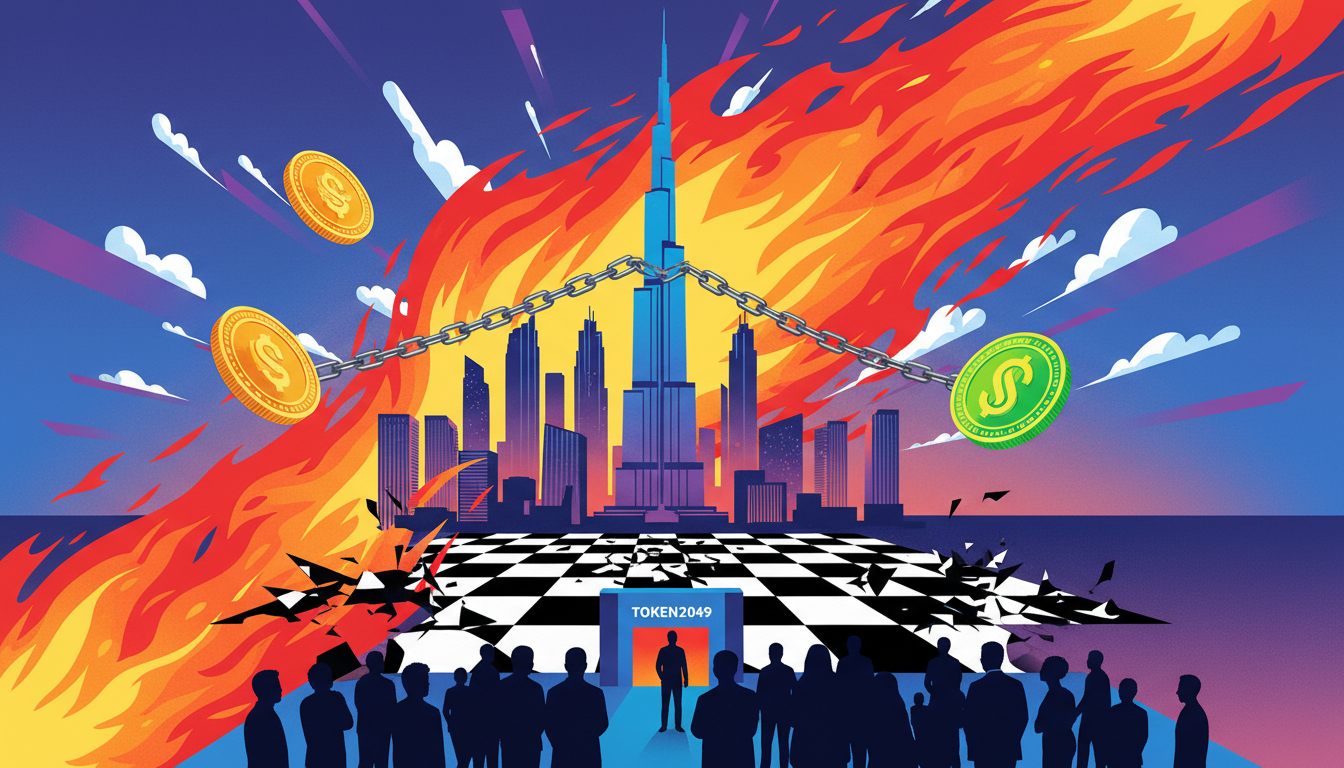
In 2021, at the height of the meme coin frenzy, Vitalik Buterin was unexpectedly transferred a large amount of SHIB and other dog-themed tokens, with its paper value once soaring to over 1 billion dollars, instantly positioning him at the forefront of the "crypto billionaire" narrative. In March 2026, Beijing time, he systematically addressed the relationship between this donation, himself, and the Future of Life Institute (FLI) on social media, emphasizing the fundamental divergences in their approaches to AI risk governance. Originally stemming from an unexpected crypto donation, they have now diverged into distinctly different paths for AI safety: one centered around political, cultural, and regulatory control, and the other focused on defensive technologies and open collaboration to raise safety limits. As key designers of the crypto industry step into the spotlight of AI governance, who is qualified and what values will reshape the definition of "AI risk," transforming what started as a technical debate into a public contest of routes.
1 Billion Dogecoin Storm: An Unexpected Amplifier of Donations
● The starting point of unexpected wealth: In 2021, the meme coin market was extremely euphoric, and the SHIB community actively transferred a huge amount of tokens to Vitalik's address, with the peak paper value reportedly exceeding 1 billion dollars. This was not a fundraising campaign he initiated or a donation mechanism he designed, but a “passive airdrop” that came with a community-driven character, placing him in the position of a massive fund allocator without any pre-set financial and governance arrangements.
● Uncontrolled donation operations and scale: Under the dual pressures of stress and responsibility, Vitalik exchanged part of the SHIB for ETH before donating to other organizations, with about half allocated to FLI for research on existential risks, among other directions. He explicitly mentioned in his review that his initial psychological expectation for the overall donation was only in the range of 10-25 million dollars, while the actual value that flowed to FLI and other organizations far exceeded this expectation. There are currently gaps in publicly available information concerning the specific cash out amounts and timings, so it can only be confirmed that the figures were "substantially over expected," rather than precise numbers.
● Passively amplified discourse power: This "1 billion-level dogecoin storm" put the originally limited and academically inclined FLI on a larger stage — in the public discussion of AI and existential risks, the resources, project planning capabilities, and visibility it held were significantly amplified due to this extraordinary donation. Vitalik's retrospective reflection essentially examines whether what has been amplified is not only research capability but also a narrative and political strategy regarding AI risk, and whether this amplification still aligns with his original intentions from years ago.
From Existential Risk Research to Political Controversy Slopes
● Original positioning: Existential risk research organization: FLI was initially positioned as a research institution focusing on existential risks such as biological, nuclear, and AI, promoting quantifiable assessments and theoretical frameworks of “humanity's long-term survival risks” through papers, seminars, and interdisciplinary collaboration. In the early discourse on AI safety, it acted more as an intermediary connecting the research community and public discussions, rather than being a frontline lobbying entity directly involved in policy struggles.
● Vitalik's concerns quoted: Academic shift towards political culture: In a statement in March 2026, Vitalik was quite restrained yet pointed in his wording — he expressed concern that FLI is drifting from its initial academic path focused on "existential risk research" towards a more politically and culturally driven action route. In his narrative, research and modeling are no longer the focus, replaced by mobilization around AI deceleration, regulatory frameworks, and cultural narratives, prompting him to question whether this is still the type of effort he hoped would be amplified with unexpected funds.
● The boundary of controversy: Necessary game or suppressing innovation: This change in route has sparked evident divides in the external audience. One side believes that in the face of potential AI existential risks, political games revolving around regulation, bans, and international coordination are inevitable, even the "only real lever that can change the trajectory"; the other side worries that excessive politicization could slip into structural suppression of open technology, open collaboration, and even the innovation space of ordinary developers. It should be emphasized that the "politicization shift" is currently more of an observational and critical perspective rather than an objectively recognized rigorous conclusion.
d/acc Defensive Accelerationism: Vitalik's New Tech Route
● Ideological breakdown: Prioritizing the development of defensive technologies: Vitalik has repeatedly emphasized in public statements that he identifies more with d/acc (defensive accelerationism). This idea does not simply mean "accelerating all technologies" but advocates for prioritizing the accelerated development of defensive technologies like epidemic defense, cybersecurity, and open-source infrastructure in the face of uncertain AI and biological risks, thereby enhancing the resilience of civilization as a whole, rather than suppressing a specific frontier capability.
● Raising the "safety ceiling" with technology: In Vitalik's view, the main battlefield for addressing AI risks should be at the engineering and infrastructure levels — stacking social "safety ceilings" through cryptography, decentralized governance tools, and open verifiable model training and deployment frameworks. In contrast, he keeps a clear distance from pathways that rely primarily on political mobilization and regulatory games, believing such routes are easily captured by existing power structures and harder for the global developer community to genuinely internalize and implement.
● Resource allocation tilted towards d/acc: A single source claims that Vitalik has invested approximately 40 million dollars in recent years to support defensive technology projects in the d/acc direction. This figure remains to be verified, but even within a blurred range, it sends a clear signal: he is directing resources away from traditional "existential risk lobbying and research" towards more engineered and open-sourced safety stacking practices, demonstrating his route choice through this financial flow.
The Collision of Crypto Ideals and AI Regulation: Tension between Decentralization and Centralized Lobbying
● Ideological collision: Decentralization vs. centralized advocacy: Ethereum and the broader crypto movement have always emphasized decentralization, autonomy, and open-source collaboration, advocating for protocols and code to serve as the fundamental rules restraining power. In contrast, FLI's recent path has revolved more around white papers, open letters, policy proposals, and international advocacy, practicing a highly centralized governance imagination, reliant on elite discourse and government interfaces. This path difference causes the same crypto wealth to be amplified into entirely different socio-technical experiments in different institutional contexts.
● Internal community division, not a single consensus: The divergence between Vitalik and FLI does not mean that the mainstream crypto community has collectively shifted or unanimously embraced d/acc. There are still significant splits within the community regarding whether "stronger regulation should be traded for higher safety." Some agree with constraining the model deployment of a few giants through international agreements and restrictive rules, while others worry this could solidify monopolies and squeeze open-source space. To simply describe it as "the crypto world uniformly supporting defensive accelerationism" lacks empirical support and obscures the real value tensions at play.
● The donor's value proposition authority: As crypto wealth continues to flow into the AI governance field in the form of donations, an unavoidable question arises: should and how should the fund providers make value propositions regarding fund utilization directions? Vitalik's reflection indicates that a large donation is not just a transfer; it implies a bet on the future technological order. When the route of the executing institution deviates from the initial conception, whether donors can demand governance transparency, route alignment, and even reallocate funds becomes a new issue the entire ecology must confront.
From Donation Partner to Role Reversal in Clearly Defining Boundaries
● Clarification delayed by several years: Vitalik chose to focus on clarifying his relationship with FLI in March 2026, years after the SHIB donation in 2021. This time gap itself indicates that he did not make an immediate cut at the peak of emotions but transitioned from "donation supporter" to "publicly expressing concerns as a technical founder" after observing several rounds of institutional route evolution and AI policy environmental changes, completing a role reversal with a relatively calm tone.
● Symbolic significance: The distance of technical founders from political paths: This clarification holds symbolic effects for the broader AI risk governance ecology — it sends a signal that top-level protocol designers and infrastructure builders do not wish to be simply bound to a politicized path. They prefer to define "safety routes" in their own terms: acknowledging the seriousness of existential risks while warning against turning it into an infinitely expandable policy authorization blank check.
● Implicit warning to other recipient organizations: This boundary-setting constitutes a kind of "soft constraint" for other organizations that rely on large crypto donations. Vitalik's case illustrates that large donations do not offer unconditional endorsement, and the flow of funds and governance philosophies are being re-bound — if organizations severely deviate from the public values of their donors in route selection, they may face dual pressures of reputational risk and capital withdrawal in the future. This will compel more organizations to take route transparency and feedback mechanisms more seriously when receiving crypto funds, rather than merely viewing them as fuel for unconditional budget expansion.
Who Will Define the Safety Boundaries of AI: The Next Examination for the Crypto World
● Core of the divergence: Deceleration regulation vs. defensive acceleration: The "parting ways" between Vitalik and FLI centers on a key watershed — is it prioritizing the reduction of extreme AI risks through political deceleration and centralized regulation, or accelerating the construction of new safety architectures through open and defensive technologies to raise the limits of society's ability to withstand the loss of control of advanced intelligent systems? The former relies on coordination from national and international organizations, while the latter depends on long-term accumulation at the levels of developer communities, open-source ecosystems, and infrastructure.
● Future narrative battle: Who will define "safe acceleration": In the coming years, the narrative competition regarding "what constitutes safe technological acceleration" among crypto leaders, AI laboratories, and regulatory bodies will continue to escalate. FLI is merely the first stronghold exposed in this game's early stages: different funding sources, technological cultures, and political camps will constantly attempt to occupy the dominant discourse on "safety," filling its meaning with their own language — it could be limits, design space, or a new social contract structure.
● Position of the crypto world: Noise or contractual participant: When the next round of global AI risk control consensus finally takes shape, the crypto world may face two paths: either be viewed as volatile speculative capital and technical heretics, excluded from serious governance frameworks; or as dual participants of both funds and ideals, writing into a new technical social contract, providing truly irreplaceable tools and institutional options at the levels of cryptography, decentralized governance, and open-source collaboration. This debate about who will define the safety boundaries of AI represents not just an observation of others setting the rules for the crypto industry, but an examination of whether its values can support long-term civilization risk management.
Join our community, let's discuss and grow stronger together!
Official Telegram community: https://t.me/aicoincn
AiCoin Chinese Twitter: https://x.com/AiCoinzh
OKX Benefits Group: https://aicoin.com/link/chat?cid=l61eM4owQ
Binance Benefits Group: https://aicoin.com/link/chat?cid=ynr7d1P6Z
免责声明:本文章仅代表作者个人观点,不代表本平台的立场和观点。本文章仅供信息分享,不构成对任何人的任何投资建议。用户与作者之间的任何争议,与本平台无关。如网页中刊载的文章或图片涉及侵权,请提供相关的权利证明和身份证明发送邮件到support@aicoin.com,本平台相关工作人员将会进行核查。