Perpetual DEXs processed about $6.7 trillion in cumulative trading volume in 2025, marking a 346% increase from roughly $1.5 trillion in 2024. Monthly volumes repeatedly exceeded $1 trillion, while daily activity in early 2026 has peaked between $7 billion and $8 billion. Platforms including Hyperliquid, Aster and Lighter accounted for a growing share of that activity, reflecting heightened competition among onchain venues.
Momentum continued into Q1 2026. According to a Coingecko report published this month, combined centralized exchange ( CEX) and DEX perpetual futures volume reached $7.24 trillion in January, up 75% from January 2024 levels. Of that, DEX platforms contributed $739.48 billion, representing roughly eightfold growth over the same period two years earlier. DEX market share climbed to 19.2% in January, up sharply year over year despite a slight month-to-month pullback tied to broader market conditions.
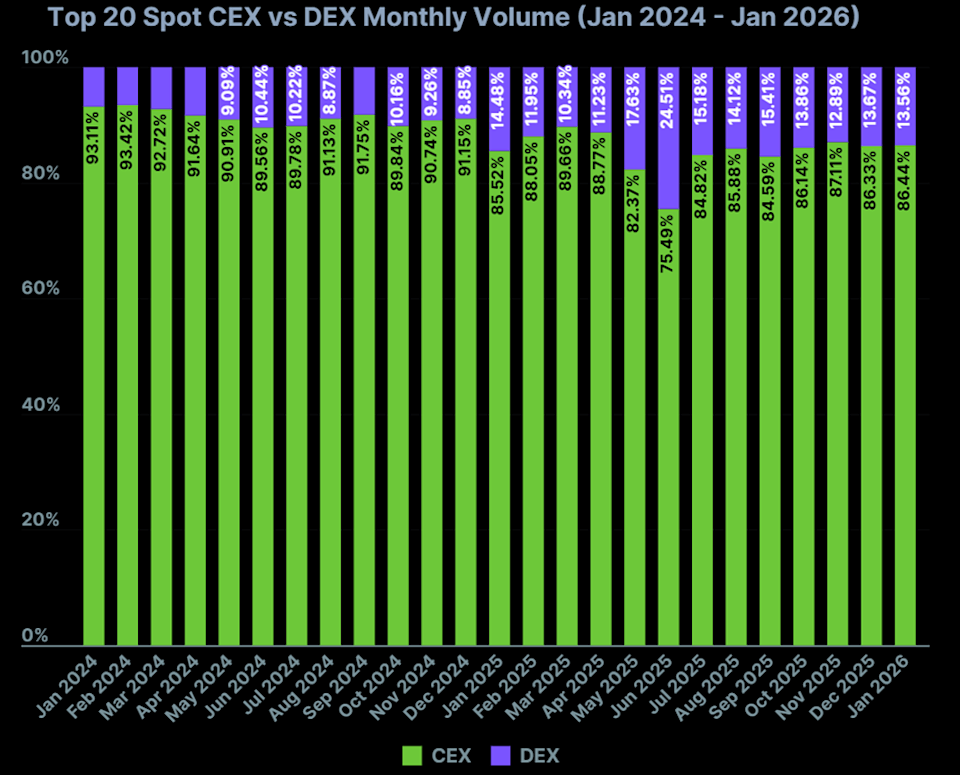
Image source: Coingecko report dubbed “ CEX & DEX Trading Activity Report 2026”
The ratio of DEX-to- CEX perpetual trading has expanded significantly since 2024, with estimates showing an increase from roughly 6% to as high as 18% at peak periods. Analysts describe the trend as a structural shift rather than a short-term spike, as decentralized platforms move beyond niche usage and compete more directly with centralized exchanges in leveraged trading.
Improved execution quality has been a key driver of adoption. Onchain orderbooks, upgraded oracle systems and low-fee structures have reduced latency and slippage, making DEX trading more competitive. Some platforms offer taker fees as low as about 0.035%, alongside revenue-sharing and token buyback mechanisms designed to improve user returns.
Liquidity incentives have also played a major role. Airdrops, points programs and liquidity provider rewards have drawn traders seeking yield opportunities and self-custody. New entrants such as Aster and Lighter have used these strategies to compete directly with centralized exchange promotions, accelerating capital inflows into decentralized markets.
At the infrastructure level, blockchain upgrades have reduced friction for high-frequency trading. Solana’s Alpenglow consensus overhaul is designed to deliver transaction finality in roughly 100 to 150 milliseconds, a substantial improvement over prior confirmation times. On Ethereum, upgrades such as Pectra and planned improvements including PeerDAS aim to enhance scalability, reduce fees and improve interoperability across layer-2 networks, making onchain trading more efficient.
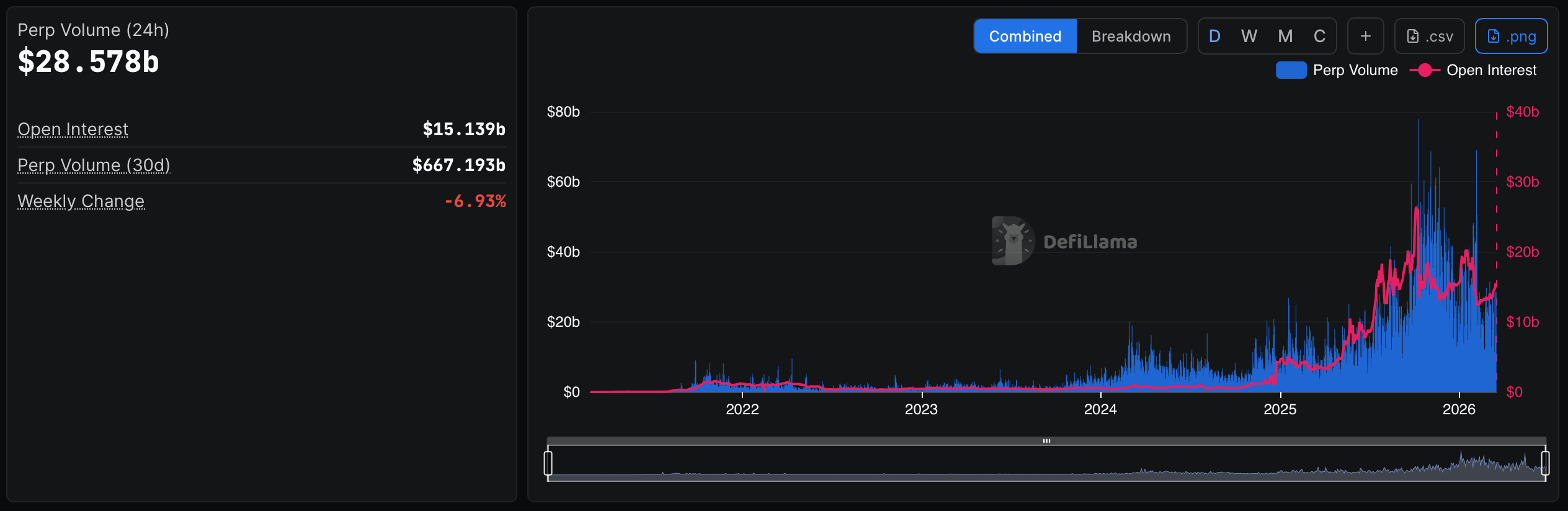
Source: Defillama.com
Leading platforms continue to consolidate their positions. Hyperliquid recorded approximately $2.9 trillion in trading volume in 2025 and has maintained a dominant share into 2026, while Solana-based protocols such as Drift and Jupiter Perps have benefited from performance improvements tied to network upgrades.
Despite rapid growth, centralized exchanges still account for the majority of derivatives trading volume, holding an estimated 80% to 90% market share. However, the steady rise of DEX participation suggests that onchain perpetuals are becoming a core component of digital asset market infrastructure rather than a fringe alternative.
- What are perpetual futures on decentralized exchanges?
Perpetual futures are leveraged crypto contracts traded on DEXs without expiration dates, allowing continuous long or short positions. - Why are traders moving from CEXs to DEXs?
Traders are shifting due to lower fees, improved execution, self-custody of assets and incentive programs like airdrops. - How large is the DEX perpetual trading market in 2026?
DEX platforms processed about $739 billion in January 2026 alone, representing roughly 19% of total perps volume. - Which platforms lead onchain perpetual trading?
Hyperliquid, Aster, Lighter and Solana-based protocols like Drift are among the leading platforms by volume.
免责声明:本文章仅代表作者个人观点,不代表本平台的立场和观点。本文章仅供信息分享,不构成对任何人的任何投资建议。用户与作者之间的任何争议,与本平台无关。如网页中刊载的文章或图片涉及侵权,请提供相关的权利证明和身份证明发送邮件到support@aicoin.com,本平台相关工作人员将会进行核查。


