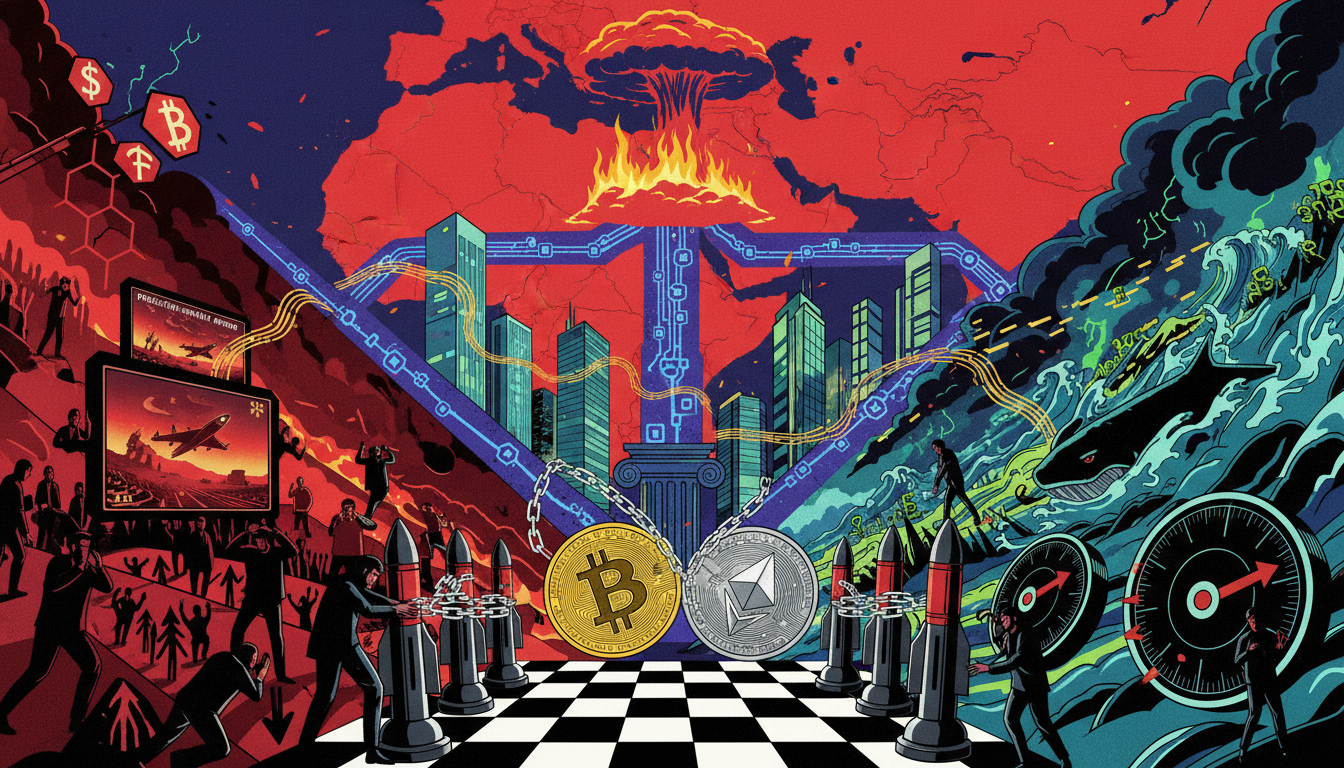
As of March 21, Beijing time, the trading volume of altcoins in the crypto market has drastically declined from previous peaks, with trading enthusiasm significantly cooling off. At the same time, capital and attention are rapidly concentrating on leading assets like BTC: Binance's altcoin daily trading volume is about $7.7 billion, while other major exchanges combined account for about $18.8 billion, in stark contrast to the hundreds of billions during peak periods. Against the backdrop of shrinking risk appetite, a critical question is posed to investors: is the "halving" of altcoin trading volume merely an intermediate stop in a risk retreat, or is it quietly freeing up a better position for a mid- to long-term redeployment?
From Hundreds of Billions to Tens of Billions: Altcoin Trading Volume Sudden Chill
The data from March 21 indicates that the trading volume in the altcoin market has significantly dropped from its previously frenzied range. Currently, Binance's altcoin daily trading volume is approximately $7.7 billion, while other major exchanges combined reach about $18.8 billion, which has notably "shrunk" compared to the high-energy phases. Based on this range, the current overall trading activity of altcoins is far from the most volatile emotional phase.
Looking back at the peak period, according to several data sources, Binance's daily altcoin trading volume once fluctuated between $40 billion and $50 billion, with total trading on other major platforms reaching $63 billion to $91 billion. This indicates that the current total trading volume of altcoins has roughly decreased by an order of magnitude compared to the peak phase, and the trading frequency and capital game intensity among market participants are rapidly downgrading.
Considering that Binance accounts for about 40% of global altcoin trading volume, this change in trading volume from "hundreds of billions" (in dollar totals) to "tens of billions" is not just noise from a single platform but a concentrated representation of the entire crypto market's systematic cooling of risk appetite. In other words, the liquidity that once engaged in high-frequency games in the altcoin sector is actively or passively withdrawing from long-tail assets.
CryptoQuant analyst Darkfost pointed out that based on historical experiences, high trading peaks for altcoins often correspond to stage tops and are a typical signal of concentrated FOMO release. When volume and sentiment rise together, it is often a "final struggle" of capital at high positions; whereas, the current decrease in trading size reflects this judgment — the frenzy period has passed, and the chips in the game are being reshuffled.
Gold Plummets While Bitcoin Holds Steady: Subtle Reordering of Safe Haven Roles
At the macro level, recent pressures from geopolitics and monetary policy intertwining have become important backgrounds for capital style switching. Influenced by the escalation of the situation in the Middle East and rising expectations of interest rate hikes by the Federal Reserve, traditional safe haven assets like gold have shown a significant adjustment this week, plummeting over 10%, which has impacted gold that relies on narratives of "store of value/safe haven" rather heavily. Once the safe haven property is questioned by the market, some capital begins to reassess its asset allocation framework.
In contrast to gold, during the same period, BTC's price performance remains relatively stable, not exhibiting a sharp drop similar to gold. Amid the overall contraction of risk appetite and significant cooling of altcoin trading volumes, BTC's resilient performance strengthens its market positioning as a "mainstream asset" and "liquidity leader," also promoting some capital to view it as a candidate for a new round of safe haven and asset hedging.
The macro pressure is not only reflected in commodity and interest rate expectations, but the U.S. stock market has fallen for four consecutive weeks, and the pressure on tech stocks has also weakened the attractiveness of traditional risk assets. After the capital premium in tech stocks has been compressed, the part of the capital that was originally willing to bear higher volatility starts to look for new risk compensation and hedging targets on the global asset map. This cross-market risk preference shift resonates with the trend of funds concentrating on leading assets like BTC within the crypto market.
In an environment where traditional safe haven assets are under pressure, BTC is viewed by some funds as a "new safe haven vehicle" is not coincidental. On one hand, its market capitalization and liquidity scale are sufficient to support large capital inflows and outflows; on the other hand, the independent trading cycles and decentralized attributes of the crypto market give it the potential to exhibit low correlation or even inverse volatility in certain macro risk scenarios compared to traditional assets. This adds a macro dimension of support to the narrative of "altcoins retreating, funds clustering into BTC."
On-chain Whales Rebalancing: Signals from XAUT to WBTC
From the capital behavior perspective, the rebalancing actions of large addresses on-chain are providing more samples for the market style switch. According to multiple data sources, some large on-chain participants have shown selling XAUT and increasing WBTC holdings: one end is a token linked to gold prices, the other end is an asset pegged 1:1 to BTC. This shift from "gold pegs" to "Bitcoin pegs" in asset allocation represents a repricing of risk perceptions and safe haven preferences.
In addition to individual on-chain behaviors, certain products at the intersection of traditional and crypto finance have also quietly adjusted their holding structures. For example, the XRP Spot ETF saw a net inflow of $1.9782 million; even though the overall trading volume of altcoins is cooling, a few mainstream assets are gaining incremental subscriptions at the institutional product level. This indicates that during risk contraction periods, capital is not entirely withdrawing from the crypto space, but shows a preference to flow towards a few core assets with higher liquidity and certainty.
By juxtaposing the large holders' rebalancing and the trading volume changes at the exchange level, a relatively clear main line can be seen: on one hand, the daily trading volume of altcoins on Binance and other major platforms has dropped from $40-50 billion / $63-91 billion at its peak to $7.7 billion / $18.8 billion, with the trading activity of long-tail assets clearly receding; on the other hand, new funds on-chain and in ETFs are gathering more around BTC and a few leading cryptocurrencies, reflecting the capital logic shifting from long tails to heads.
It should be emphasized that these cases of large holders and individual ETF products can only serve as sample signals for trends and do not directly represent changes in the overall market structure of capital. Investors should be cautious of the cognitive trap of "point replacing surface" when interpreting such data: individual large trades may carry specific institutional or strategic backgrounds and should not be simply linearly extrapolated to represent a consistent behavior of the entire market, but rather assist in judging the broader direction when combined with various indicators such as trading volume and price performance.
Volume Bottoming: A Risk Retreat or A Starting Point for Reallocation?
From historical experience, in every notable cycle of the crypto market, high trading peaks often correlate to stage tops. When the daily trading volume of the altcoin sector surges to hundreds of billions and sentiment indicators and social enthusiasm amplify simultaneously, it is typically a moment of concentrated FOMO release and large inflows of leveraged short-term funds. At this time, although price elasticity is high, risk compensation and pullback space are also rapidly accumulating.
Conversely, when the market cools from "boiling" to "cooling," trading volume and search interest slide towards lower levels together, and many analytical viewpoints point out that: this current slump in volume and interest is often accompanied by more attractive mid- to long-term allocation windows. The reason lies in the fact that after a significant turnover of chips at high levels, short-term floating chips are gradually washed out, and remaining holders are more likely to be long-term and less sensitive to price changes, laying the foundation for the subsequent market restart.
At this current point, the shrinkage of altcoin volumes resembles a process of speculative retreat and "high certainty repricing" of assets. Long-tail assets experience the greatest pressure during liquidity tightening, while leading assets like BTC, with stronger liquidity and narrative foundations, have absorbed some of the withdrawn chips and risk budgets. This structural migration does not imply that altcoins will forever be devoid of opportunities, but in the short term, the main battleground for capital and liquidity has evidently shifted from broad nets to a few core assets.
It should be reminded that bottom signals are never simple conclusions that can be drawn solely from trading volume. The contraction of volume indeed lowers emotional exuberance and reduces short-term selling pressure, but whether a true cyclical bottom can form also depends on a multitude of variables, such as the macro environment (like interest rate expectations, geopolitical risks), on-chain capital behaviors (net flows of large holders and institutional addresses), and the structural performance of mainstream assets. A singular dimension judgment of "volume contraction equals bottom" overlooks the linkage between environment and narrative, leading to an underestimation of risk.
The Next Step After Capital Clusters into BTC
Combining the current data and behavioral signals, a relatively clear pattern can be outlined: the overall trading volume of altcoins is significantly cooling, dropping from the daily average of hundreds of billions on Binance and other platforms to the current level of tens of billions; at the same time, capital and attention are concentrating towards BTC and a few leading assets, whether it is through price resilience, ETF net inflows, or large addresses pivoting from XAUT to WBTC, all providing different dimensions of evidence for this capital clustering trend.
Based on this, there are roughly two main paths for future evolution: first, if macro risks marginally ease and the liquidity environment improves, capital may descend back into the altcoin sector after BTC completes a round of "safe haven and pricing," initiating a new wave of style rotation and risk appetite recovery; second, if macro uncertainties remain high, institutions and large capitals may continue to reinforce their preference for leading assets, further exacerbating the Matthew Effect within the crypto market, with long-tail projects’ survival and valuation space being compressed in the long run.
For investors, strategies should shift from "picking stories" to "looking at patterns." On one hand, it is important to closely monitor potential turning points in macro risks (such as changes in interest rate expectations, stabilization of U.S. stocks and tech stocks), as well as the changes in capital proportions of mainstream coins like BTC in overall crypto market capitalization and trading, to assess whether the market is in a safe haven contraction phase or entering a new risk appetite recovery cycle. On the other hand, in terms of positioning structure, it is advisable to moderately increase the weights of high liquidity and high certainty assets to capture the direction of capital clustering, rather than blindly attempting to "bottom fish for a rebound" in long-tail assets where trading has drastically shrunk.
Moving forward, market participants need to continuously track several key indicators: changes in trading volume (especially the relative volume of altcoins to BTC), ETF net inflows/outflows, and rebalancing actions of large on-chain holders and institutional addresses. Only when multiple dimensions resonate in the same direction can the trend of capital concentrating on BTC be confirmed or revised. For funds that are still on the sidelines, understanding and tracking this main line of capital migration is itself the most critical "fundamental skill" in this cycle.
Join our community for discussions and to become stronger together!
Official Telegram community: https://t.me/aicoincn
AiCoin Chinese Twitter: https://x.com/AiCoinzh
OKX benefits group: https://aicoin.com/link/chat?cid=l61eM4owQ
Binance benefits group: https://aicoin.com/link/chat?cid=ynr7d1P6Z
免责声明:本文章仅代表作者个人观点,不代表本平台的立场和观点。本文章仅供信息分享,不构成对任何人的任何投资建议。用户与作者之间的任何争议,与本平台无关。如网页中刊载的文章或图片涉及侵权,请提供相关的权利证明和身份证明发送邮件到support@aicoin.com,本平台相关工作人员将会进行核查。