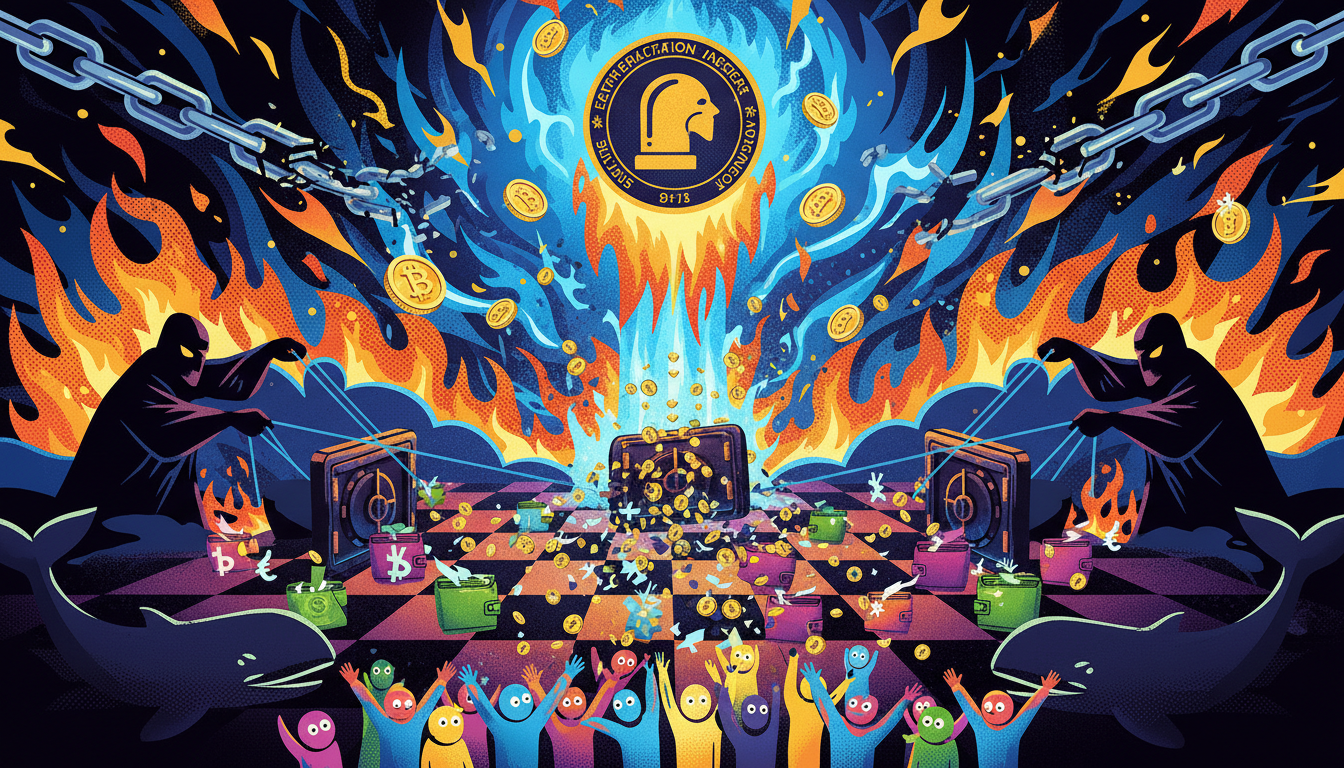
On March 22, 2026, Eastern Eight Time, around the Resolv abnormal minting incident, the DeFi protocol Fluid experienced a complete loop from security shock to crisis response in a short period: automatic limits were triggered, USR market trading was urgently suspended, the official voice promised that "user funds and protocol security are the top priority," and further provided a clear commitment of "full compensation for user losses." This series of actions not only interrupted the spread of panic but also brought the protocol's risk pricing and trust foundations back onto the table. Almost simultaneously, two vastly different whale forces on-chain began to hedge market sentiment within the same time window: on one side, address 0xC551 accumulated purchases of 8,662 ETH over a period, with a single increase of 1,979 ETH (approximately 4.14 million USD) against the trend; on the other side, the SKY whale transferred 50 million SKY (approximately 3.8 million USD) to Binance with a return close to 58%, choosing to lock in profits during the turbulence. When technical security incidents and Middle Eastern geopolitical tensions overlapped, the real question became: at a time when trust wavered and emotions amplified, what future path was the so-called "smart money" betting on.
Limit Triggering and Emergency Circuit Break: How Fluid Proved Its Security Mechanism During the Attack
The abnormal minting related to Resolv was first detected on-chain, triggering Fluid's internal preset risk control logic. According to public information, the technical details of the incident have not been disclosed, but it can be confirmed that Fluid's automatic limit mechanism was quickly triggered after the abnormal behavior was identified, capping potential losses and throttling them. Subsequently, the protocol further upgraded its response, choosing to suspend the trading of USR market transactions closely associated with the event, effectively implementing a "circuit breaker" on a critical liquidity channel to prevent risks from spreading more widely. Automatic limits were the first buffer at the machine level, while trading suspension was a proactive cut-off by the governance layer against systemic risk, and together they formed the main structure of this defense line.
After the mechanical actions, there was a standardized external communication pathway: first, an announcement confirmed the existence of the abnormal and attack events; then, the decision to suspend USR market transactions was clearly disclosed; and at a highly sensitive time point in public opinion, the core statement "user funds and protocol security are our top priority" was thrown out, accompanied by the specific promise of "full compensation for user losses." This sequence of design first stabilized the existing quantity with the fact of "circuit breaking," and then used the expectation of "compensation" to appease potential outflows, attempting to lock in uncertainty within a controllable range in a short period.
The statement "user funds and protocol security are our top priority" in the DeFi context is the most frequently quoted, yet also the most easily questioned phrase. First, it indeed reflects a priority ranking: when the design of smart contracts and governance tokens is predicated on continuous operation, maintaining fund security is both a commercial logic and a survival bottom line; secondly, from historical experience, such statements often carry a strong public relations undertone—before transparent loss data and clear technical reviews are lacking, users find it difficult to rebuild trust based solely on a statement of values. Therefore, Fluid's real exam after the security incident is not whether it said this phrase, but whether it can continuously align this commitment in terms of technical audits, remedial mechanisms, and compensation execution thereafter.
More challenging is that at this current stage, the specific technical implementation and path of the Resolv attack have not been made public, and Fluid has not disclosed more detailed internal risk control logic. Therefore, the market can only reprice the protocol based on the visible "results and attitudes":
● On one hand, automatic limits + trading suspension + full compensation commitment presents a relatively complete closure of the chain of events from "prevention to stem bleeding and then to appease," which helps suppress extreme running away emotions;
● On the other hand, the existence of a technical black box means that external analysts find it difficult to evaluate the probability of similar risks reoccurring in the future; the risk premium cannot completely return to the level before the incident, but rather simply shifts from "survival risk" to "governance and transparency discount." What Fluid is striving for at this moment is more of an observation period, rather than an unconditional return of trust.
Commitment to Full Compensation: Trust Repair Still Lacks Half the Answer
According to reports from various media outlets such as Rhythm and Jinse Finance, the key commitment given by Fluid after the incident is to provide full compensation to affected users. In the DeFi world, the immediate effect of this statement is evident: it directly weakens users' extreme fear of "asset zeroing" on a psychological level, slamming the brakes on potential runs. In traditional financial crisis management, deposit insurance and bottom-line clauses are essentially made to interrupt "self-fulfilling panic expectations." This time, Fluid attempted to replicate a similar mechanism logic on-chain—even if actual compensation has not materialized, the clear commitment of full compensation itself can buy the protocol precious windows of time.
From industry experience, when a DeFi protocol announces compensation, common funding paths behind it include: using the protocol's treasury or insurance fund, initiating a governance proposal to authorize the minting of new tokens for compensation, introducing external financing or strategic investments to fill the gap, and even using a portion of future transaction fees or profits for installment compensation. However, in this incident, there have been no authoritative disclosures about how Fluid specifically plans to raise the compensation funds or how its internal balance weighs the interests between existing token holders and affected users, and the external party is unable to make responsible inferences without grasping internal information. This information gap is the "other half of the answer" in trust repair.
Compared with similar past incidents, "full compensation" itself carries a certain rarity. Many protocols choose partial compensation, extending the timeline with installment compensation, or issuing new tokens to "anchor losses," diluting the gap through inflation and future growth. These types of plans essentially compromise between "protocol survival" and "full compensation for users." Fluid's choice to release the full compensation signal at the first opportunity not only raised its own subsequent execution pressure but also placed itself at a higher moral and governance standard within the industry discourse—once fulfilled, it would be a positive exemplar; once delayed or executed with a discount, it could face stronger backlash from trust.
Thus, what truly decides the success or failure of this crisis public relations is not a singular announcement but rather a series of quantifiable indicators that follow:
● Speed of compensation rollout: The time difference between commitment and actual arrival will directly reflect Fluid's fund organization ability and execution efficiency;
● TVL recovery situation: The total locked value of the protocol serves as the most intuitive "voting result," answering whether users are willing to continue to entrust their assets to Fluid post-event;
● Changes in user structure: If the subsequent TVL recovery primarily comes from new funds while old users continuously withdraw, it indicates that the crisis public relations only "exchanged a batch of participants" rather than truly repairing the trust fractures of the original community. Only when the three data points—compensation progress, TVL flow back, and old user retention—form positive feedback can the narrative of this full compensation be deemed to stand firm.
ETH Whales Buying on the Dip: Betting on Long-Term Narratives Amidst Bloodshed
At almost the same time that Fluid's risk control defense line was forced to be revealed, the operational trajectory of the on-chain address 0xC551 provided another way to respond to risk. According to on-chain analytical data, this address accumulated purchases of 8,662 ETH within the past month, amounting to approximately 18.05 million USD, with the last single addition made within a period of heightened volatility by sweeping in 1,979 ETH, valued at about 4.14 million USD. In terms of timing, this is not an emotional All-in, but rather a "patient accumulation" behavior with a clear cost range and position management rhythm, absorbing market selling pressure in batches during repeated price fluctuations.
If we overlay timelines with market volatility, this whale's strategy appears to be leveraging the short-term pricing deviations brought about by security incidents and macro noise. The Fluid event intensified concerns about DeFi security, while the situation in the Middle East stirred risk aversion in traditional markets; under the dual pressure, core assets like ETH were inevitably sold off, and the uncertainty premium amplified in prices enhanced the "safety margin" for countering funds. Comparing the total cost of 18.05 million USD against the current market value volatility range, the logic of this placement is not concerned with one or two days of retracement but instead betting on ETH's mid to long-term position in technological evolution and institutionalization in the one or two future cycles.
A typical characteristic of these "patient whales" is their willingness to bear short-term floating losses in exchange for a lower average position cost while the key narrative remains intact. When security events trigger panic selling among retail investors, they appear on the other end of the order book, absorbing chips driven not by fundamental changes but by FUD. This hedging is reflected not only in price levels but is also a game of time dimensions: short-term funds require immediate certainty, whereas long-term addresses extend holding periods to dilute short-term noise into "negligible variables."
Thus, when we see addresses like 0xC551 maintaining stable accumulation during the intense occurrences of the Fluid event and geopolitical tensions, in a sense, each purchase of ETH they make is a vote with real currency in favor of mid to long-term narratives—not denying the existence of risks but believing that the time span and depth of those risks are insufficient to alter Ethereum's core role in the upcoming years. This method of betting is less about judging current prices and more about wagering on future structures.
SKY Whales Dumping Assets: Realizing Profits and Amplifiers of Emotion
In contrast to the ETH walсes accumulating against the trend, another typical action of "phased liquidation" has emerged in the SKY market. According to information from PANews and others, this SKY whale had an average position price of approximately 0.048 USD, and when the price climbed to around 0.076 USD, it transferred 50 million SKY to Binance, valuing approximately 3.8 million USD at that time. The book profit from cost to market price is about 2.72 million USD, corresponding to a return of about 58%; this was not a passive reduction of position, but an active realization after time accumulation.
From the data, this resembles a periodic cash-out action rather than a "desperate exit" from complete liquidation of SKY. The whale chose to send a large amount of chips to the exchange near a 60% increase, locking in the phased profits gained from earlier ambushes while also retaining flexibility to rebuild positions in the future as circumstances allow—after all, transferring chips to the exchange only creates conditions for selling, not equivalent to having completed all sales. In the absence of ensuing on-chain transfer details, we can only say this is a highly executable "potential selling pressure."
Placing the actions of ETH whales and SKY whales under the same time frame reveals that the directions are nearly opposite: one side is steadily amplifying exposure on core assets while the other side is actively reducing risk exposure on edge tokens. This differentiation behind is a varying understanding of asset properties and cycle positions. ETH represents infrastructure and mainstream liquidity, with fluctuations under macro events likely to amplify, but the long-term narrative remains relatively solid; SKY, on the other hand, is closer to high Beta storyline tokens, with its ups and downs acting as amplifiers of speculation and emotion, and in rising uncertainty, it is often these types of chips that get "liquidated" first.
A large concentration of chips being funneled into exchanges can also amplify the short-term sentiment toward a single token:
● On one hand, accounts monitoring the chain and social media swiftly exaggerate the narrative of "whales dumping," guiding other holders to expect greater future selling pressure, prompting them to flee in advance, thereby forming a self-reinforcing downturn;
● On the other hand, even if large sell orders in the real order book are absorbed in batches, they will widen the bid-ask spread in limited liquidity types, amplifying price slippage and having a direct impact on decision-making for short-term traders. For whales who have already made substantial profits, this emotional amplification ironically serves as an invisible assistant to increase selling efficiency—they leverage time and chip volume to hedge against "price discounts" caused by short-term volatility.
The Shadow of Hormuz Over the Crypto Market: Emotional Overlap Rather Than Structural Rewrite
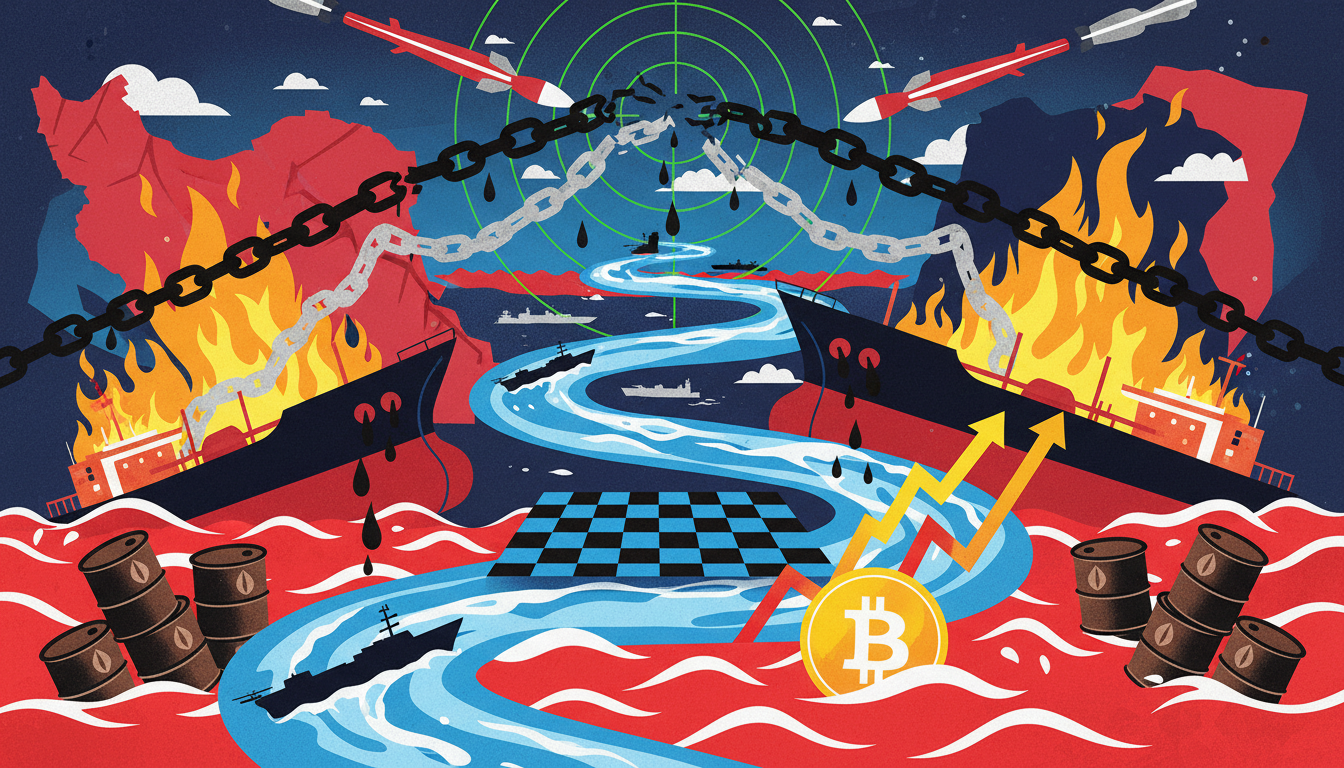
Beyond the on-chain stories of protocol security and whale games, the Middle Eastern situation adds another layer of shadow to this chaos. Iranian parliamentary speaker Ghalibaf publicly stated, "Key regional facilities will face irreversible destruction"; such wording, in the interpretive framework of traditional markets, is often perceived as potential threats to energy infrastructure, transportation hubs, and even military strongholds, directly raising pricing expectations of crude oil and safe-haven assets. At the same time, one of the six ceasefire conditions proposed by Iran relates to the vision of new laws in the Strait of Hormuz—given that nearly one-third of globally shipped oil passes through this passage, any rule change or military friction could send ripples across the oil and shipping markets.
Logically, if the Strait of Hormuz is involved in a stricter legal and military control framework, the first to bear pressure would be shipping costs and oil supply security, subsequently raising inflation expectations and compressing the operational space for monetary policy between easing and tightening. For risk assets, this means potential "double pressure": on one end, increasing financing costs and elevated discount rates, and on the other end, enhanced relative attractiveness of safe-haven assets (gold, government bonds, etc.), resulting in a rebalancing of funds that will inevitably expel some share allocations into crypto assets, especially in high-leverage and high-Beta segments.
When such geopolitical risk narratives overlap with DeFi security incidents like the Fluid event, the crypto market is effectively situated in a "composite panic environment." The former influences overall risk appetite through macro and energy chains while the latter directly hits the internal security confidence of on-chain ecosystems; together they create a backdrop of emotions where "any slight disturbance may be amplified." In this environment, long-tail assets, already experiencing tight liquidity, find it even harder to withstand additional shocks, while mainstream assets encounter increased frequency of volatility amidst the tug-of-war between risk aversion and liquidation emotions.
It is important to emphasize that, at this current stage, despite heated rhetoric, no direct sanctions or regulatory details have yet materialized in the crypto domain. The transmission of geopolitical conflict to crypto markets remains largely at the emotional level and marginal adjustments in asset allocation:
● On one hand, some funds may prefer to withdraw from high-risk, high-volatility on-chain projects in the short term and instead increase holdings in cash or traditional safe-haven assets;
● On the other hand, there exists a force that views crypto as a "sovereign risk hedging tool," especially when regional local currencies and financial systems are under pressure, on-chain assets might experience localized incremental demand. These two forces interact but do not form a one-sided, overwhelming rewrite of on-chain structures; rather, they resemble a reshuffling of risk exposures between different regions and assets. What can truly rewrite on-chain structures is often clear regulatory policies or large-scale fund inflows and outflows, not just geopolitical noise that remains at the stage of military and diplomatic statements.
Aftershocks of the Security Shock: Who is Voting with Real Money
Returning to the Fluid incident itself, this time the Resolv abnormal minting brought about a security shock, allowing the automatic limit mechanism and trading circuit breaker to undergo a pressure test in a real battlefield. From a defensive perspective, automatic limits prevented the unlimited expansion of risks in terms of amounts, while the suspension of USR market trading timely cut off the transmission of panic on the liquidity level, and the public statement of "promising full compensation for user losses" attempted to repair trust fractures on the emotional side. These three mechanisms together constitute a relatively positive DeFi security narrative sample: the protocol is no longer just passively "taking hits," but has demonstrated a certain self-rescue capability. However, at the same time, the non-disclosure of technical details and funding sources intensified market concerns over transparency and sustainability, shifting the risk premium from "will it die" to "can it be clearly communicated and executed in the long term."
In this context, the two crisis response paths taken by ETH whales and SKY whales clearly outline different funding personalities: the former, with an accumulation of 8,662 ETH, 18.05 million USD, chose to expand exposure to mainstream assets in an environment where security and geopolitical noise amplify, willing to endure short-term volatility for a more favorable entry price; the latter, facing 50 million SKY, approximately 2.72 million USD book profit, 58% return, opted for phased realization, removing itself from high-volatility narratives by sending chips to exchanges. This is not a simple opposition of "smart vs foolish," but rather a differentiation of varying risk preferences and time perspectives under the same market sentiment.
In the intertwining cycles of security events and geopolitical tensions, a single narrative is often amplified beyond its own impact. What truly deserves attention is the on-chain behavior as an "immutable voting record": who is withdrawing funds from which protocols, and who is entering which assets against the trend with what scale; which address is continuously reducing holdings after the security incident, and which address is gradually increasing positions with each amplification of panic. Compared to emotive social media and slogan-like announcements, solid on-chain transfers and position changes reveal the true judgments of different participants regarding future paths.
Looking ahead to the next observation cycle, a more pragmatic checklist includes:
● Fluid Compensation Progress—When will the promise transform into actual arrival and whether it will be completed on time and in full;
● USR and Related Asset Liquidity Recovery—Will trading depth and slippage return to pre-event levels, and will TVL see structural recovery;
● Subsequent Movements of Whale Addresses—Will 0xC551 continue to accumulate ETH amidst fluctuations, and will the SKY whale's chips be rapidly digested in the exchange or remain pressed on the sell side for an extended time;
● Whether the Geopolitical Situation Substantially Upgrades—Will there be actual regulations or escalation of conflicts in the Strait of Hormuz, and whether this will translate into significant movements in energy prices, traditional markets, and crypto fund flows.
In this intertwining evolution across four dimensions, what can truly find direction amidst chaos is not the loudest narrative, but rather that portion of capital which reads on-chain data calmly and distinguishes between structural changes and emotional noise.
Join our community to discuss together and become stronger!
Official Telegram community: https://t.me/aicoincn
AiCoin Chinese Twitter: https://x.com/AiCoinzh
OKX Benefit Group: https://aicoin.com/link/chat?cid=l61eM4owQ
Binance Benefit Group: https://aicoin.com/link/chat?cid=ynr7d1P6Z
免责声明:本文章仅代表作者个人观点,不代表本平台的立场和观点。本文章仅供信息分享,不构成对任何人的任何投资建议。用户与作者之间的任何争议,与本平台无关。如网页中刊载的文章或图片涉及侵权,请提供相关的权利证明和身份证明发送邮件到support@aicoin.com,本平台相关工作人员将会进行核查。