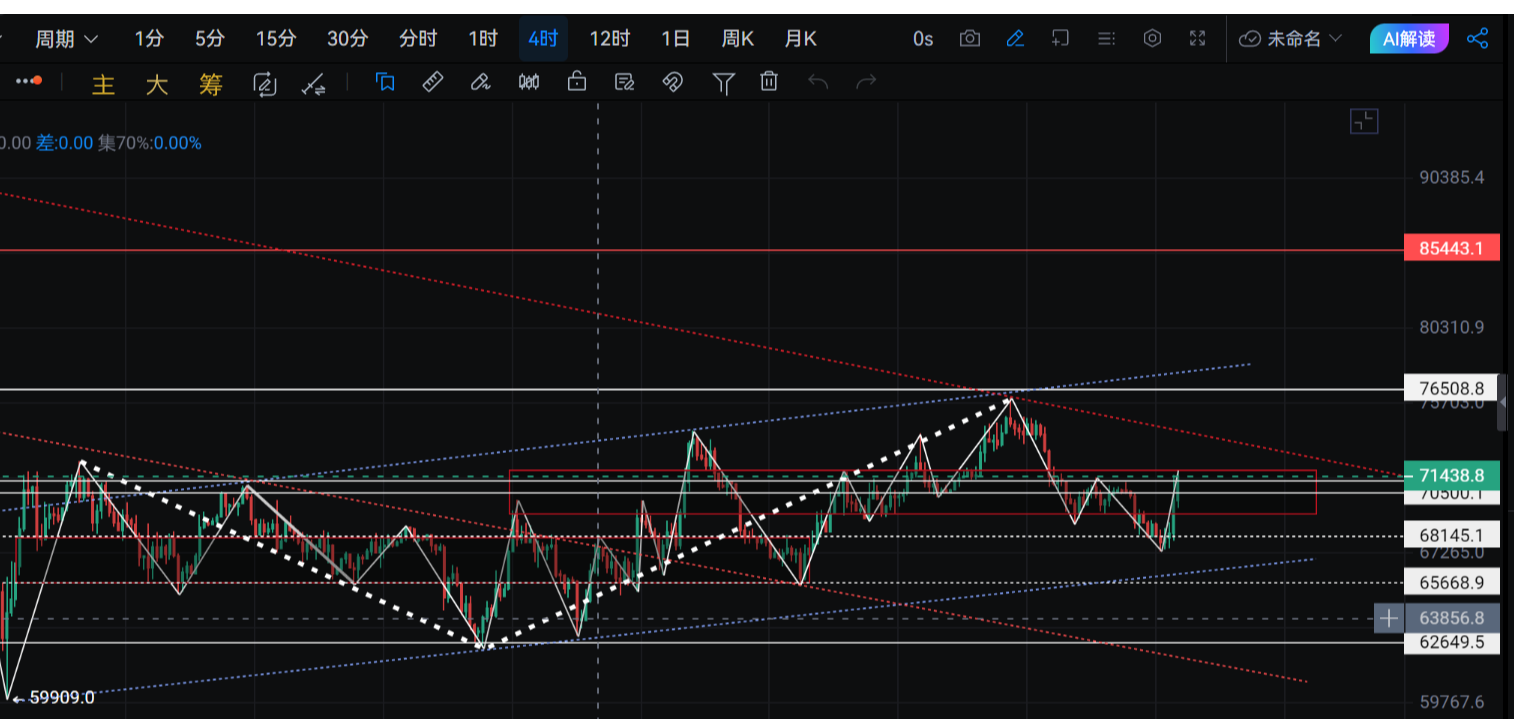
In the East 8 Time Zone on March 23, 2026, as the next FOMC interest rate decision approaches, public divisions among senior officials of the Federal Reserve have been sharply amplified: on one side, there are indications forecasting potential multiple interest rate cuts in the future, while on the other side, the possibility of resuming interest rate hikes cannot be ruled out if inflation rises again. Against this backdrop of macroeconomic noise, the capital flows of Bitcoin, Ethereum, Solana, and the investment products surrounding them are showing distinctly different trajectories: CoinShares data indicates that digital asset investment products overall still achieved a net inflow of approximately $230 million, but the flow statistics around the FOMC meeting showed a drastic difference of as much as $1.04 billion, highlighting that the structural reallocation is much more intense than superficial price movements. At the same time, CZ released a new book, and the meme coin of the same name, Freedom of Money, reached a market cap of about $13.06 million, briefly surging by about 40%, becoming a localized explosion in the sentiment sector. These misaligned funds and narratives intertwine, leading to the core question: amid the cacophony of policy signals, which funds are quietly and rationally shifting to hedge against path risks, and which choose to leverage on memes and high-beta assets to amplify emotions?
Doves call for four rate cuts, while hawks remain firm
Concerning future interest rate paths, a public "struggle for discourse rights" is unfolding within the Federal Reserve. On one side is the dovish expectation: Governor Milan emphasizes that if inflation progresses toward the target, there is space for up to four rate cuts in 2026, directly anchoring the market's imagination of mid-term easing. On the other side, Goolsby, representing the more hawkish voices, repeatedly reminds that should the so-called “second-round effects of inflation” emerge, the Federal Reserve may still be forced to resume rate hikes, refusing to declare victory prematurely at high interest rates. The two paths are nearly opposite in time and direction: one is a “forecasted” series of rate cuts, while the other is a “conditional” resumption of rate hikes, issuing extremely conflicting guidance to the market.
Behind the divisions lies a fundamental judgment difference regarding the causes and persistence of inflation. Currently, the transmission path of oil price fluctuations to core inflation remains a focal point of contention: some decision-makers are more concerned about the rebound of energy prices seeping into services and wages, triggering a “second wave” of inflation, hence supporting the maintenance or even restart of tightening; others believe that previous rate hikes have significantly tightened financial conditions, with demand cooling, and that short-term oil price shocks may not necessarily solidify into high inflation expectations. This technical-level debate, when brought into the public domain, escalates directly into severe divisions over "whether to hike again" and "how many cuts can be planned."
When such contradictory statements repeatedly appear in speeches and interviews, the market's predictability regarding interest rate paths and liquidity prospects is significantly weakened. Risk assets like bonds, foreign exchange, and cryptocurrencies no longer merely place directional bets on “whether rates will be cut this year,” but are forced to face a wider range of potential paths with greater noise: on one end are the imagined ends of multiple rate cuts, and on the other is the tail risk of further rate hikes not being ruled out. The elevation of uncertainty becomes a common background for cross-asset pricing, also laying the groundwork for the structural rotation and reallocation of cryptocurrency funds mentioned later—when the path is more difficult to judge than the endpoint, funds will naturally shift from “one-way bets on bullish or bearish” to more nuanced relative value and channel choices.
Funding flows differ by $10 billion around the FOMC
On such a macro stage with highly uncertain paths, crypto-related investment products provide a more intuitive “voting result.” According to CoinShares data, in the past statistical cycle, global digital asset investment products saw a net inflow of approximately $230 million, superficially indicating that risk appetite remains; however, tracking shows that using the FOMC meeting as a dividing line, the difference in capital flows before and after reaches as high as $1.04 billion, meaning that before and after the meeting, capital underwent extremely aggressive reorganization between different assets and tools. This scene of “overall moderate, structural shock” precisely illustrates that funds did not simply withdraw but rather reshuffled weights internally within crypto.
Diving down to the asset level, Bitcoin related products exhibited the most pronounced long-short divergence: on one hand, Bitcoin is seen as a “macro-like asset,” possessing a safe-haven narrative similar to “digital gold” in a high interest rate environment; on the other hand, the high leverage characteristics of futures and derivatives positions make it highly sensitive to even small changes in interest rate expectations, resulting in both positioning for lower entries and risk management positions reducing holdings at higher levels at the same time. Ethereum, on the other hand, has shown signs of shifting from previous net inflows to capital outflows, as the market opts to temporarily reduce this risk exposure amid uncertain rates, regulations, and technical narratives. In contrast, Solana related products maintained sustained net inflows, forming a stark internal structural contrast.
At the point where the interest rate path remains undecided, why do institutions prefer to operate through such compliant digital asset products? The reason lies in the fact that compliant products inherently embed a framework for custody, information disclosure, and regulatory compliance, making them more suitable as “cross-cycle allocation and hedging tools”: on one hand, institutions can adjust the weight of a single asset without directly exposing themselves to on-chain execution and account compliance risks; on the other hand, they can leverage these products in combination with traditional assets (bonds, stocks, etc.) to construct more sophisticated macro-hedging portfolios. Thus, it might seem like “overall there is still $230 million in inflows,” but in reality, it is a deep reallocation centered around interest rate uncertainty within crypto—capital did not collectively flee risk assets but rather switched vehicles and lanes “within the same track.”
Bitcoin hesitates, Ethereum retraces,
Bitcoin has become the central battleground for capital speculation primarily because it is widely regarded as a macro-like asset, providing a price response directly to interest rate expectations and liquidity tightness. Currently, under high interest rates, every speculation about “whether four rate cuts can happen in 2026” and warnings of “whether one more rate hike is still possible” can quickly amplify into price volatility through futures and perpetual contracts. High leverage positions are concentrated and squeezed in a short time, forcing both long and short sides to stop losses and face liquidation, which further reinforces the market’s impression of “Bitcoin being overly sensitive to every word of the Federal Reserve.” Therefore, within the same time window, we can see both stabilized inflows into structured products and extreme pullbacks in derivatives, forming a mixed landscape of “spot market leaning towards allocation, contracts leaning towards speculation.”
In contrast, Ethereum has shifted from net inflows to net outflows, not due to a single bearish event, but rather a combination of multiple uncertainties: first, the regulatory definitions for various on-chain activities and revenue models are still in flux, making it difficult for institutions to accurately assess mid-to-long-term compliance costs; second, the technological and narrative framework lacks new, sufficiently strong incremental stories in the short term, making it hard to provide clear “excess return logic” to capital amidst macro noise. In this context, the capital's choice to temporarily reduce Ethereum's weight seems more like a discounted treatment of “unclear narratives” rather than a complete denial of the asset’s long-term prospects.
On the other hand, Solana, in the context of favorable high-frequency trading, active on-chain activity, and a more aggressive ecological narrative, is viewed as a high-beta speculative target by capital. The continuous net inflow of funds reflects a distinct preference: under conditions of macro uncertainty and reluctance to significantly expand overall positions, some institutions and aggressive funds tend to “reduce the number of targets, while amplifying individual volatility,” choosing to participate in more flexible public chain assets with more concentrated positions. As a result, the rotation within crypto no longer poses a simple question of “bullish or bearish towards the whole market,” but rather a reconstruction centered on relative value and risk-return ratios within the same asset pool—crypto is treated as an overall risk basket, while the internal weights and structures become the true focus of speculation.
CZ's new book sparks meme coins,
Amid the silent repositioning of structural funds, the sentiment side offers a completely different perspective. Around March 23, 2026, CZ's new book was released, prompting a narrative spread surrounding “Freedom of Money.” The meme coin of the same name, Freedom of Money, surged to a market cap of about $13.06 million in a short time, achieving nearly 40% short-term gains. This price and market cap performance were almost synchronized with the book's release and the fermentation of related topics on social platforms, becoming a typical sample of a “celebrity effect driven + narrative association” market phenomenon.
In a densely macro-noised window, the amplifying effect of celebrity-related narratives on localized sectors is even more pronounced. On one hand, mainstream assets are difficult to show extreme unilateral trends against the backdrop of uncertain interest rate paths and unclear regulatory directions; on the other hand, meme-type assets have low barriers to entry and simple narratives, making them easily attractive for short-term funds to express emotions and pursue elasticity. When new symbols like “Freedom of Money” appear, some market participants are less concerned with fundamentals or long-term value, but more focused on the immediate returns and social prestige brought by participating in the story itself. This self-reinforcing cycle of emotion—price—topic enables localized meme sectors to absorb a huge amount of on-chain liquidity in a short time.
In stark contrast, institutional funds are more inclined to hedge and allocate through compliant products: they primarily use ETFs, trusts, or other regulated vehicles to adjust their portfolios around interest rates and regulatory paths, with little heavy betting on the meme track. Retail and high-risk preference funds repeatedly chase volatility in meme and high-beta assets, exchanging higher price elasticity for “immediate feedback” on uncertainties. Such market activity generally lacks stable fundamental support, essentially competing for spots as emotional outlets—this not only indicates that the crypto market retains a high degree of speculation, but also reveals how easily emotions can be ignited and gathered around a few symbolic assets during periods of macro and policy uncertainty.
Stablecoin legislative position battles, U.S. legislators
Beyond macro noise, structural changes on the regulatory front are also reshaping capital's channel choices. The U.S. legislative process regarding dollar-denominated token assets has entered a critical stage, with relevant texts currently remaining confidential; however, the regulatory bodies and the industry widely expect that once this framework is implemented, it will profoundly rewrite the industry rules for dollar-based on-chain vehicles. Due to specific terms not yet being publicly disclosed, all parties are cautious about excessive speculation concerning details, but there is nearly a consensus towards “clearer regulation and higher thresholds,” which constitutes an institutional restructuring that cannot be ignored for those relying on such assets for cross-border settlement and revenue management.
Among the limited public information, a remark from Senator Cynthia Lummis stands out: any product described similarly to bank deposit interest will not appear in this bill. This short statement clearly delineates the regulatory boundary between yield-generating dollar assets and traditional deposits—regulators do not wish to see high-yield dollar products “dressed in on-chain technology clothes that actually compete with bank deposits for depositors.” This implies that any dollar token structure involving yield commitments or interest distributions will face stricter compliance scrutiny and classification requirements in the future, directly constraining projects attempting to exploit interest narrative differences.
As the regulatory text has yet to be made public and the boundaries are still under dynamic negotiation, institutional funds will naturally tend to rely more on digital asset products through “compliant channels”: rather than leveraging in the gray areas that may be subject to reconstructed rules in the future, it is better to concentrate risk exposures on already regulated entry points with more transparent information disclosure. This tendency, combined with the aforementioned macro uncertainties, jointly drives capital to concentrate towards “regulated, auditable, and disclosable” directions. Thus, what we observe is not a retreat of capital from crypto assets as a whole, but a reordering of channels and vehicles: the closer compliant products adhere to traditional financial infrastructure, the more likely they are to become the preferred “safe harbor entry” amidst the dual uncertainties of interest rates and legislation.
Rate noise hasn't dissipated, but capital has provided answers
Overall, the divisions within the Federal Reserve regarding inflation and interest rate paths, particularly concerning oil price transmission to core inflation, are unlikely to be unified in the short term, indicating that for some time to come, debates over “whether further rate hikes will occur” and “whether multiple cuts can happen” will continue to be focal points in the market. The macro-level noise will not be thoroughly digested due to a single FOMC meeting; rather, it will resonate continuously through various officials' statements and data releases, bringing structural discounts to the pricing of all risk assets.
Capital behavior has conveyed a more honest answer than verbal expectations: on one hand, amidst an overall net inflow of $230 million in digital asset investment products, the flows around the FOMC reflected a difference of $1.04 billion, completing a reshuffling of weights internally within crypto—Bitcoin is pulled between macro attributes and leverage volatility, Ethereum opts for a temporary reduction due to uncertain regulation and narrative directions, while Solana is viewed as a high-beta offensive target attracting continued inflows; on the other hand, retail and high-risk preference funds concentrated their emotional releases on meme and high-elasticity assets, exemplified by the approximately 40% short-term surge of the “Freedom of Money” meme coin driven by CZ's new book, representing a typical emotional outlet.
In the midterm dimension, as interest rates remain high alongside the advancement of legislative negotiations, the main thread of the crypto market is shifting from “betting direction” to “betting structure and channels”: directionally, macro uncertainty and internal regulatory divergences are unlikely to provide absolutely clear unilateral signals in the short term; structurally, the relative pricing between different public chains, various narratives, and assets of different risk levels will increasingly depend on the balances of capital among regulation, liquidity, and expected returns; in terms of channels, the relative advantages of compliant products and traditional financial friendly entrances will become key considerations for institutional placements.
For participants, what needs to be warned against is not a single call for “rate cuts/rate hikes,” but the unpredictability of the policy timetable and the details of terms. A singular call for rate expectations cannot constitute a reliable trading anchor in the current environment; what is really worth tracking continuously is how funds migrate between different assets and channels—they reflect a more prompt and honest collective judgment regarding the macro and regulatory paths. While the Federal Reserve continues to argue about “which way to go,” the capital is quietly repositioning, determining the weights and rhythms of the next round of market trends.
Join our community to discuss and grow stronger together!
Official Telegram community: https://t.me/aicoincn
AiCoin Chinese Twitter: https://x.com/AiCoinzh
OKX benefits group: https://aicoin.com/link/chat?cid=l61eM4owQ
Binance benefits group: https://aicoin.com/link/chat?cid=ynr7d1P6Z
免责声明:本文章仅代表作者个人观点,不代表本平台的立场和观点。本文章仅供信息分享,不构成对任何人的任何投资建议。用户与作者之间的任何争议,与本平台无关。如网页中刊载的文章或图片涉及侵权,请提供相关的权利证明和身份证明发送邮件到support@aicoin.com,本平台相关工作人员将会进行核查。