Written by: ChandlerZ, Foresight News
On March 23, Trump posted on Truth Social, announcing that military strikes against Iran's power facilities would be delayed by five days, citing "very good and productive dialogue" between the two sides over the past two days. Within five minutes of this message being sent, global markets reversed sharply, with Brent crude oil plummeting over 11% to below $100 per barrel, spot gold surging more than $100 back above $4400, and S&P 500 futures jumping.
Bitcoin subsequently surged from around $68,000 to a high of $71,800, with a daily increase of approximately 5%, currently reported at around $70,600. ETH rose from $2,050 to $2,200, currently reported at $2,140. Altcoins also saw a broad rise.
In terms of contract liquidation data, according to Coinglass data, the total liquidation across the network in the past 24 hours reached $660 million, with long positions liquidated at about $289 million and short positions liquidated at approximately $370 million. Of this, Bitcoin had liquidations of about $207 million, and Ethereum had liquidations of about $169 million.
At the close, the S&P 500's gains narrowed from 2.2% to 1.2%. The rebound in the bond market also partially retraced. The market seemed to understand the essence of this message; Trump was eager to cut losses, but the war had not ended.
Trump said "it is agreed," Iran said "fake news," and the market only believed it for one hour
Trump posted around 7 PM on the 23rd, stating that the U.S. and Iran had engaged in "very good and productive dialogue" aiming for a "complete resolution of Middle Eastern hostilities," and the plan to strike Iran's power facilities had been postponed by five days.
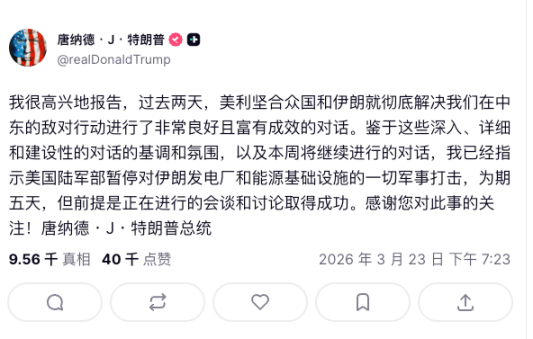
According to AXIOS, Trump told reporters that his envoy had conversations with a senior official in Iran's leadership, claiming the two sides had reached consensus on many issues. An Israeli official revealed to Axios that U.S. envoys Witkoff and Kushner had spoken with Iranian parliamentary speaker Ghalibaf. However, Trump did not disclose the identity of the interlocutor from Iran, stating he did not want them to be killed, but he mentioned that the U.S. and Iran shared positions on many key issues.
Trump remarked, "I believe that the person we are facing is the most respected figure currently, but not the supreme leader; we have not yet received his message," and stated that dialogue between the two sides would continue by phone, with a possible face-to-face meeting afterward. An Israeli official revealed that the mediating country was trying to convene a meeting in Islamabad, with Ghalibaf and other officials representing Tehran, and Witkoff, Kushner, and possibly Vice President Vance representing the U.S., potentially taking place later this week.
Subsequently, Iran's responses came one after another, with none aligning with Trump's version.
Iran's foreign ministry was the first to respond, stating that Trump's remarks "aim to lower energy prices and buy time for his military plans," asserting that the war was initiated by the U.S. and that requests for dialogue should be directed to the U.S. Iranian state television headlined that "under Iran's decisive threat, the U.S. president retreats."
The most damaging rebuttal came from Ghalibaf himself, who said, "There are absolutely no such talks with the U.S.; the so-called 'fake news' is intended to manipulate the financial and oil markets... until the objective of thoroughly punishing the aggressor is achieved, all Iranian officials will firmly support the supreme leader and the people."
The Iranian Tasnim news agency also denied the news of talks between Iranian parliamentary speaker Ghalibaf and the U.S., claiming that relevant parties were trying to create "political and social rifts" in Iran, describing it as a "colossal lie." A senior Iranian security official characterized Trump's statements as "psychological warfare," stating that it "had long since failed."
Senior Iranian officials asserted that the war would continue until all losses were compensated.
This is the real situation in which the "TACO trade" is failing. Over the past year, every time Trump has pushed radical policies leading to market crashes, he has backtracked. Increased tariffs, threats to annex Greenland, and attacks on the Federal Reserve have all validated the same logic, conditioning traders to reflexively buy on dips.
However, tariffs can be removed with a stroke of a pen, whereas the blockade of the Strait of Hormuz is not a lock that Trump can unilaterally open. Tom Garretson, a strategist at the Royal Bank of Canada, pointed out that the bond market is likely forcing Trump to act; since the outbreak of the war, the yield on two-year U.S. Treasuries has risen by over 0.5 percentage points, pushing mortgage rates and corporate financing costs up. BCA Research's chief strategist Marko Papic stated that "today's statement indicates Trump realizes that the real economy may be falling off a cliff."
Brad Conger, chief investment officer at Hirtle Callaghan, was even more direct, stating, "This is no longer something Trump can decide unilaterally; those who have been encouraged by Trump's responsiveness to market changes have put their confidence in the wrong place."
The U.S.-Iran war lasted four weeks, and Bitcoin has still held above $70,000
Since February 28, when the U.S. and Israel launched "Operation Epic Fury" and Iranian Supreme Leader Khamenei was killed, Bitcoin's trading range has remained between $63,000 and $76,000. After the outbreak of war, BTC rose about 20% at one point, and currently is up about 12% from February 28, while gold has fallen 17% and both the S&P 500 and Nasdaq have dropped over 4%. This marks Bitcoin's first instance of outperforming all traditional safe-haven assets during a single major geopolitical event recently.
Crude oil has risen 53% since the outbreak of war, driving inflation expectations sharply higher, with the market starting to bet that global central banks will raise interest rates. Bonds have been sold off, with over $2.5 trillion evaporating from the global bond market in March, marking the largest monthly decline in three years. Meanwhile, Bitcoin's performance has shown more resilience compared to U.S. stocks and tech stocks.
One of the driving forces behind this is institutional involvement; Coinbase's bitcoin premium index first turned positive on March 2 after 40 days, and U.S. spot bitcoin ETFs have seen net inflows for four consecutive weeks. During three trading days from March 2 to March 4, there was a net inflow of $1.1 billion, making it one of the largest single inflow periods of the entire quarter, with BlackRock's iShares Bitcoin Trust (IBIT) accounting for more than half of the funds flowing in over those three days, attracting about $652 million.
However, entering mid to late March, on-chain data showed significant signs of cooling. Glassnode reported that the weekly net inflow for spot ETFs fell from $791.1 million to $152.6 million, a drop of over 80%; ETF MVRV decreased from 1.27 to 1.12, indicating a contraction in profit margins for institutional holdings and an increase in downside sensitivity. The number of active addresses on-chain has remained around 630,000, at the lower bound of the statistical range, and on-chain capital rotation has noticeably slowed, with capital structures leaning towards defense.
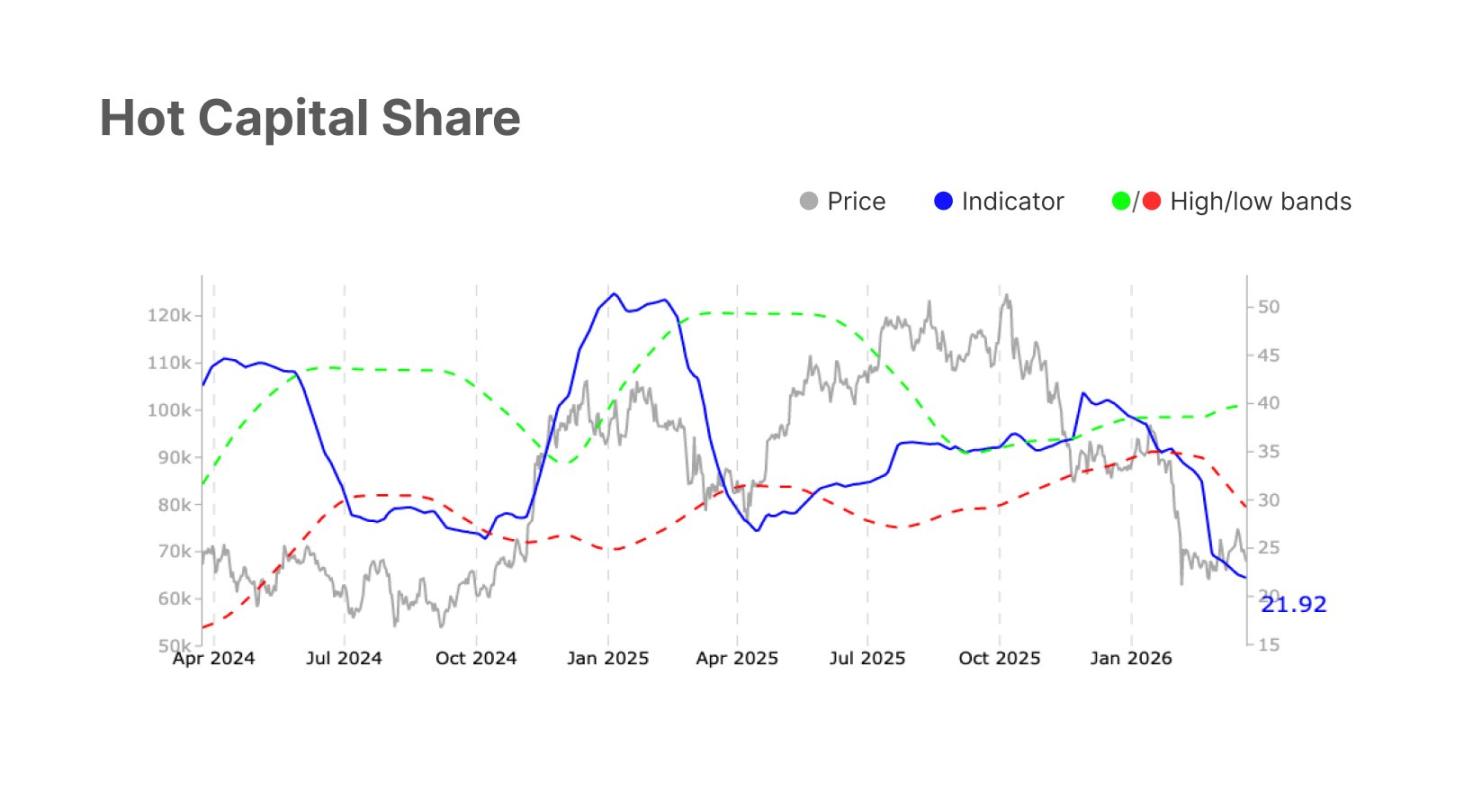
Hot Capital Share (the proportion of recently entered capital) has dropped to 21.9%, while the short-term holder supply ratio (STH/LTH) remains at 16.7%, indicating that the market is effectively dominated by long-term holders, with new capital participation at a low level. The 25-Delta Skew in the options market rose to 14.03%, with bearish option premiums continuing to increase, and hedging demand on the rise.
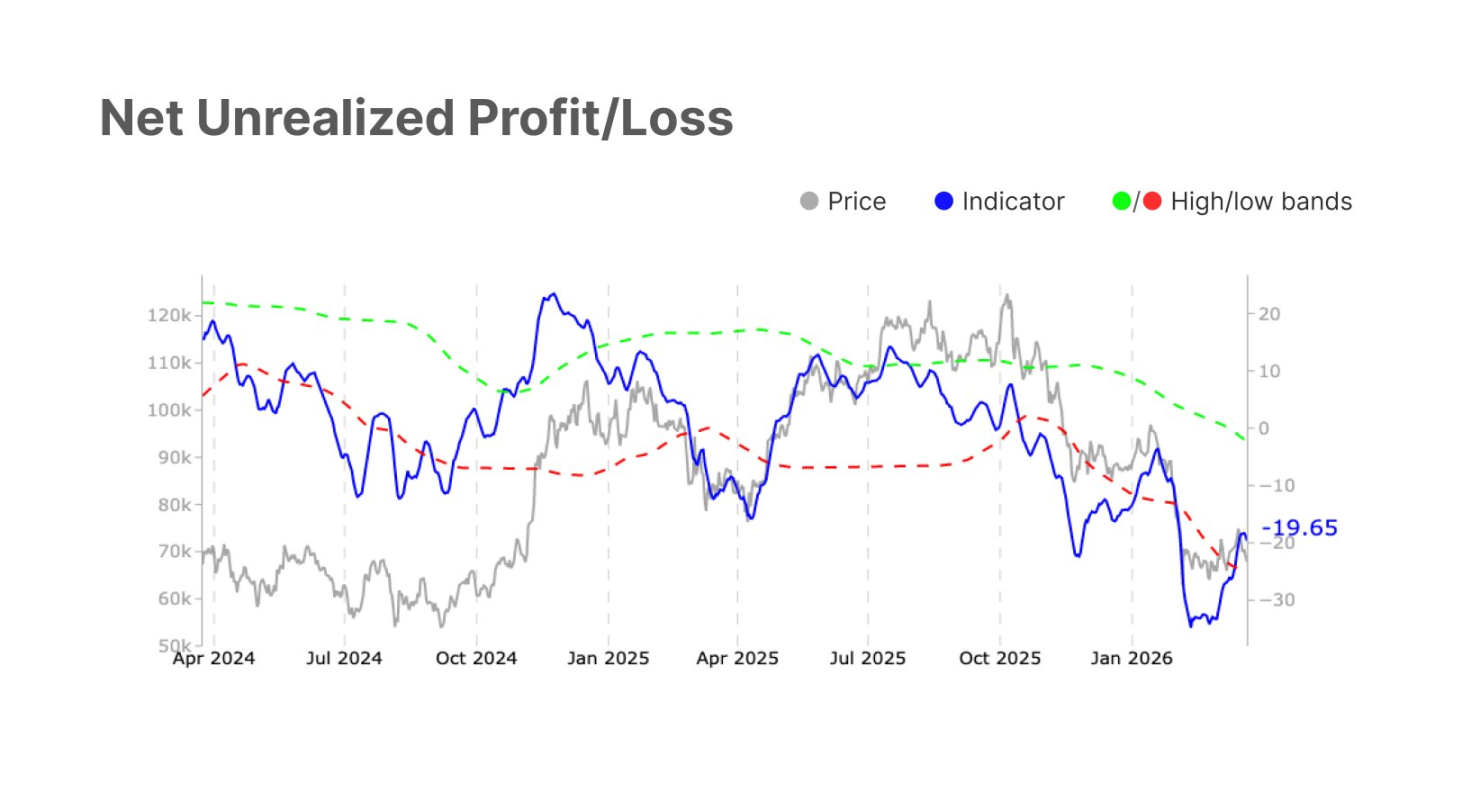
Realized Cap Change narrowed from -1.1% to -0.8%, with the trend of net capital outflow slowing, but still negative, indicating that selling pressure has not fundamentally turned. Glassnode's summary states, "The market is entering a consolidation phase, with activity softening, defensive positioning, and initial signs of stability appearing in both spot and derivatives."
If the Strait of Hormuz does not reopen for a day, nothing has ended
Trump announced a five-day delay, with the negotiation window covering this week. According to Reuters, Vance and envoys Witkoff and Kushner may meet with Iranian officials as early as this week in Islamabad, with Pakistan playing a mediating role.
The market's most critical point of concern is whether the Strait of Hormuz can reopen, a channel that carries approximately one-fifth of the world's oil and liquefied natural gas transportation, which has yet to resume passage. Until then, the one-day retreat in crude oil prices is merely a breather, and the inflation pressure on bond yields will not materially subside, nor will the Federal Reserve have more room for rate cuts. For Bitcoin, geopolitical uncertainty both suppresses its momentum to break above $76,000 and serves as a supportive bottom.
Perhaps in five days, the market will have an answer.
免责声明:本文章仅代表作者个人观点,不代表本平台的立场和观点。本文章仅供信息分享,不构成对任何人的任何投资建议。用户与作者之间的任何争议,与本平台无关。如网页中刊载的文章或图片涉及侵权,请提供相关的权利证明和身份证明发送邮件到support@aicoin.com,本平台相关工作人员将会进行核查。


