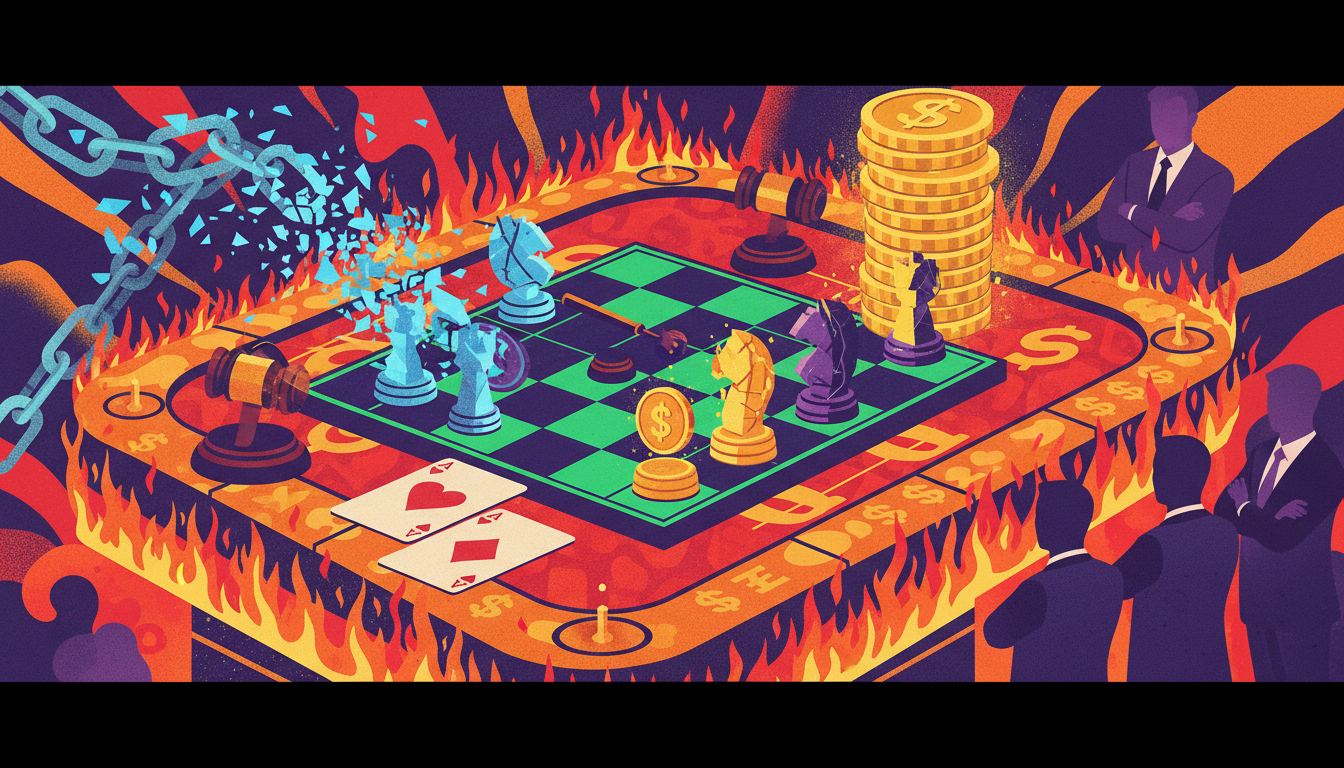
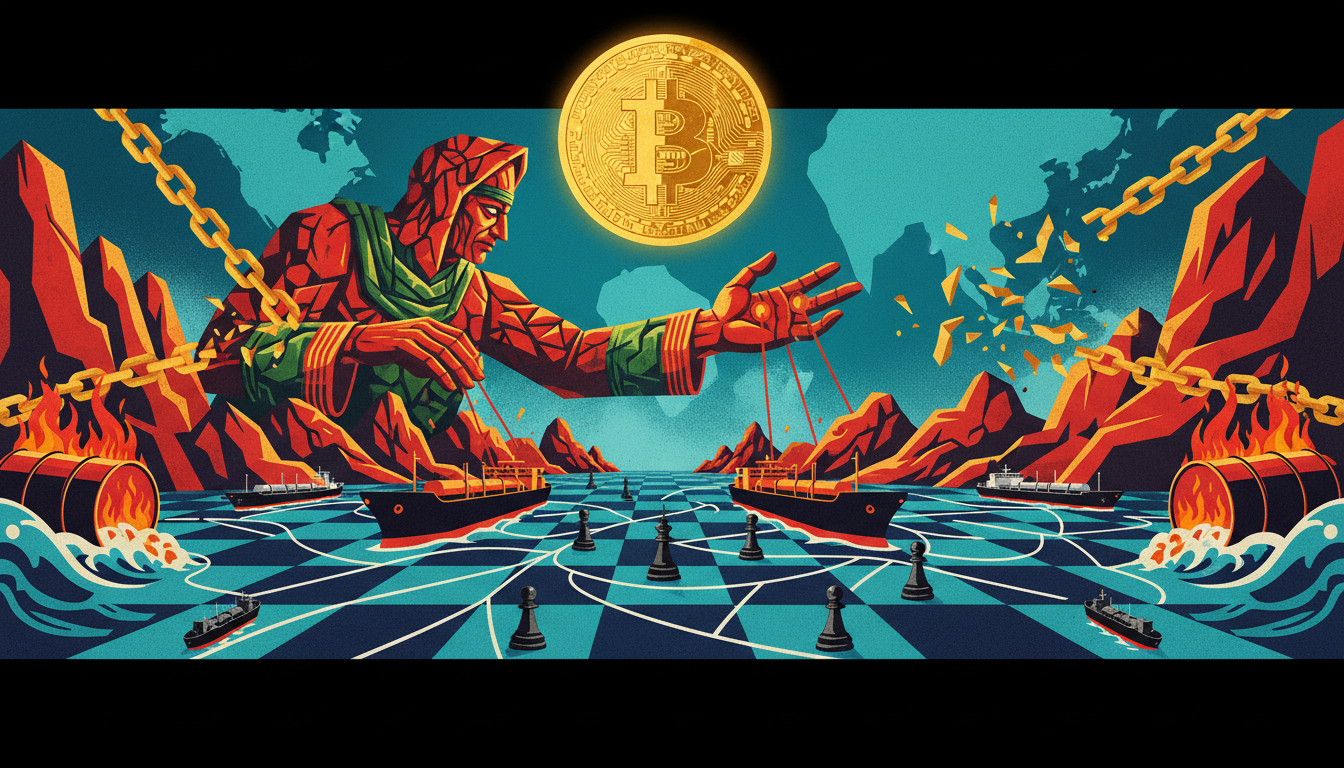
On March 24, 2026, public opinion around the expectations of the US-Iran negotiations suddenly heated up, bringing the Middle Eastern tension back into the spotlight. Reuters disclosed that Israeli officials, based on their intelligence and assessments, believe that Iran is "highly unlikely" to accept the conditions proposed by the United States, but almost at the same time, the Trump administration still signaled through both public and semi-public channels a "determination to push for an agreement." This set of contrasting judgments was quickly translated and amplified by Chinese encrypted media, rolling across platforms like Panews, Jinse Finance, and Rhythm, directly turning a diplomatic expectation news story into a sentiment trigger in the cryptocurrency market. The pessimism from Israel and optimism from Trump were immediately interpreted by the secondary market as scenarios of "risk of negotiation failure" and "reaching an agreement," becoming a ready narrative template for short-term fluctuations in risk assets. Around this main line, what truly needs to be questioned is: in a situation with extremely incomplete information, how does geopolitical uncertainty switch between "risk aversion" and "risk appetite" within a matter of hours or even minutes, driving cryptocurrency assets to oscillate between panic and greed.
Israel sings cold, Trump sings hot: Negotiation expectations are pulled at both emotional ends
From the timeline perspective, the starting point of this round of sentiment is the report released by Reuters on March 24: Israeli officials believe Iran is unlikely to accept U.S. demands. Such statements usually come from background briefings from the security cabinet or high-level diplomatic sources, carrying obvious policy position colors, but in the eyes of the market, it is first understood as "pessimistic expectations from insiders." Almost synchronously, another clue was disseminated through Chinese media such as Jinse Finance and Planet Daily: "Trump is still determined to reach an agreement with Iran". This statement comes from a comprehensive rephrasing of anonymous officials from the Trump administration and public remarks, indicating that Washington is still pushing for some form of negotiation and reconciliation.
It is important to emphasize that the currently publicly verifiable information remains at the level of "high-level assessments" and "media rephrasing." Apart from the summaries of Israeli officials' assessments by mainstream news agencies like Reuters and the organization of several media outlets regarding the Trump administration's attitude, there is no clear, written, and verifiable positive response from Iran regarding specific proposals. Equally important is that, at this stage, no authoritative channel has disclosed details of the potential agreement, and the outside world cannot construct rigorous scenario simulations from dimensions such as the scope of sanctions, nuclear program parameters, and timelines. In such an information vacuum, any imagination about the specific structure of the agreement is merely subjective filling beyond the facts.
It is precisely because of this that this "expectation tear" is understood in the market in an extreme way: one end is "Israel judges that Iran will not accept the conditions," which is equated to "the negotiation is highly likely to fail"; the other end is "Trump insists on pushing for an agreement," which is packaged as "reaching an agreement is just a matter of time." Both directions have each found enough news fragments as emotional anchoring points, leading traders to oscillate rapidly between the most optimistic and most pessimistic. The range of price fluctuations has been artificially widened, real progress has yet to materialize, yet asset prices have already been pre-priced for two opposing stories.
Risk aversion or risk appetite: The dual role of crypto assets under Middle Eastern tensions
In the pricing logic of traditional risk assets, geopolitical conflicts in the Middle East usually follow a relatively stable two-phase model: the initial shock first triggers risk aversion, with funds withdrawing from high-risk assets and flowing into traditional safe havens like the dollar, government bonds, and gold; once the event boundaries gradually become clear and the market understands the bottom lines of war or negotiation, risk appetite will then be repriced, and funds will choose to either flow back or further retract based on re-evaluations of oil supply, regional stability, and global growth. Every sudden fluctuation in the Middle East situation is a rehearsal of this "risk aversion first, then risk appetite" mechanism.
Bitcoin, at such event nodes, has always carried a dual narrative. On one hand, it is seen by some investors as "digital gold": limited in supply, portable across borders, not controlled by a single government, and expected to bear the function of value storage in extreme circumstances; on the other hand, within mainstream asset allocation frameworks, Bitcoin is regarded as a typical high-beta risk asset, first sold off when macro risks amplify and then rebounding first when liquidity recovers. This role duality creates a high path dependency in its performance at geopolitical conflict nodes—dependent on which narrative the market prefers to believe at that moment.
Under the current disturbances of the US-Iran negotiation expectations, the expected market path may also present two stages: the first stage, when mainstream media like Reuters focus their reports and the pessimistic assessments from Israel dominate the narrative, risk aversion selling pressure is more likely to prevail, and risk assets (including cryptocurrency assets) may face the pressure of being "cut across the board"; the second stage, if formal negotiations are initiated, key meetings are arranged, or signals of de-escalation appear subsequently, the market begins to reevaluate the likelihood of conflict escalation, and previously sold-off high-risk assets may become targets of capital speculation again, provided liquidity permits. Whether Bitcoin is seen as a "war-time safe" or a "high-leverage chip" depends on which narrative gains stronger consensus at critical moments.
Chinese media amplification effect: Information is like high leverage
In this round of emotional fluctuations, a noteworthy amplifier is the quick re-tweeting of Reuters' original reports by Chinese crypto media. On March 24, the fragments regarding "Israeli officials' judgment that Iran is unlikely to accept US conditions" and "Trump insists on pushing for an agreement" were published within a very short time by multiple blockchain media such as Panews, Jinse Finance, and Rhythm, creating an "information waterfall effect." For many retail investors primarily reliant on Chinese information, the original Reuters telegram is often not visible; what they encounter are content that has been once or even multiple times rephrased, filtered, and titled.
In this process, titles and second-hand interpretations bear significant rights to recreate. Complex diplomatic assessments and multi-source signals are often compressed into a few-word tags—"positive for Middle Eastern risks," "bleak negotiation outlook," "Trump strongly pushing for an agreement," etc. Each title, unconsciously, edits the judgment filled with conditions and premises into a direct implication for market movements. For short-term traders, such obviously biased labels can easily be seen as "reasons for entry and exit," accelerating the impulse to make decisions within milliseconds.
In such an environment, investors need to deliberately differentiate between primary sources and secondary emotional embellishments: the former are original descriptions and direct quotes from mainstream news agencies like Reuters, while the latter are “versions” after media editing, KOL interpretations, and even social platform re-dissemination. Currently, within the information structure surrounding the US-Iran negotiations, key information such as contract terms and Iranian official statements still have significant blanks, while the media ecosystem naturally tends to fill these gaps with "emotional amplification." Identifying noise and understanding the "leverage multiples" of information in the communication chain is, in itself, part of trading.
Quarter-end overlay with geopolitical risks: Liquidity becomes a hidden variable
This round of geopolitical disturbances does not occur in a "calm" market background. March 24, 2026, is already in the traditional sensitivity period for liquidity at the quarter's end in the cryptocurrency market. Whether it is the quarterly contract settlements in the derivatives markets or the asset net worth assessments and position adjustments of some institutions, these will focus around this time window. Position settlements and rebalancing demands are superimposed, often leading to distortions in the transaction structure, causing volatility that is already easy to amplify to be further exaggerated.
In this already tight liquidity environment, sudden geopolitical uncertainties can technically amplify slippage and settlement risks: When the order book depth is shallow, a slightly larger market order can crash through multiple price levels, triggering a chain of forced liquidations and stop-losses; emotions rapidly fermenting on social platforms and media can also drive unliquidated leveraged funds to voluntarily reduce leverage, increasing selling pressure in a short time. Every downward probe in price could trigger more passive selling, forming a closed loop of "technical-emotion-technical."
In such an overlay environment, a scenario hypothesis framework can be constructed to understand the three potential paths that may emerge in the coming days, without having to fabricate any specific price points or transaction volumes: first, low-volatility oscillation: if subsequent information is limited and the market gradually digests the current messages, prices may bounce back and forth within a relatively narrow range with limited volatility; second, sharp spikes: when local liquidity gaps and concentrated liquidation triggers appear, there might be rapid "spike" downward or upward in individual periods, quickly returning to the original range afterward; third, liquidity stampede: if the geopolitical situation suddenly deteriorates, coupled with large-scale concentrated liquidation of leveraged positions, a multi-level liquidity collapse could occur, with prices deviating significantly from fundamentals and macro logic in a short time. Understanding this as a "menu" of three different paths, rather than an exact script, is a prerequisite for survival in an uncertain environment.
Asset selection under regulatory shadows: The dislocation between the Chinese perspective and the global perspective
Beyond geopolitical risks, the compliance environment is also quietly reshaping funds' asset choices. China's latest revised "Regulations on Integrity in the Work of Leadership Personnel of State-owned Enterprises" explicitly includes "virtual currency and other properties" in the list of prohibited acceptances, directly placing crypto assets within the red line that executives of state-owned enterprises must avoid. Unlike previous statements that were more principled, this document is issued in the names of the General Office of the Communist Party and the General Office of the State Council, indicating that compliance restrictions on such assets are being systematically tightened within China's public sector system.
In an environment where global geopolitical risks are escalating and domestic compliance pressure is high, institutions and high-net-worth individuals seeking exposure to crypto assets will inevitably lean towards indirect and offshore strategies. This may be reflected in circumventing regulatory sensitivities through offshore funds, structured products, compliance custodians, etc., or compressing crypto exposure to the fringes of overall assets to reduce the likelihood of being amplified by compliance scrutiny. The rise of such "shadow configurations" is itself a product of the game between compliance and risk appetite.
In contrast, many overseas markets have already, at the institutional level, regarded crypto assets as a high-risk element in asset portfolios: they can be allocated but require higher risk capital utilization and stricter information disclosure. Under this framework, pension funds, family offices, and hedge funds can allocate Bitcoin and other crypto assets under clear rules, managing them within the same risk spectrum as high-yield bonds and growth stocks. In contrast, the Chinese public sector system chooses to thoroughly isolate crypto assets from public affairs and state-owned enterprise governance through documents, forming a regional dislocation in narratives and compliance environments: the same types of assets are treated as "high-risk investable" in one market and regarded as sensitive subjects to avoid in another.
Trading in the fog: How to coexist with uncertainty
Returning to the expectations of the US-Iran negotiations themselves, it must be emphasized once again: what is currently missing is precisely the "hard facts" that the market pricing relies on the most. Whether it is the content of potential agreement terms or the Iranian official stance on the negotiation framework, to date there is no verified authoritative channel for release. What the market can rely on is merely assessments based on Israeli interests, political signals released by the Trump administration, and media reinterpretations based on this. Under such an information structure, price fluctuations reflect more emotions and strategic expectations than rational discounts of future cash flows and supply-demand patterns.
For investors, the operating thought process in such an environment must shift from "seeking the perfect entry point" to "managing a tolerable risk range." On one hand, position management becomes more important than directional judgment: during high-uncertainty periods, appropriately reducing leverage, controlling overall exposure, and avoiding concentrated exposure to a single event are the foundations for preventing passive exit; on the other hand, reinforcing hedging awareness through arrangements that hedge among asset classes, term structures, and currencies held, can reduce the impact of a single event on the overall net value curve. At the same time, the selection of information sources also needs to be upgraded: strive to trace back to original reports from Reuters, distinguish original statements from second-hand interpretations, and avoid making heavy-decision trades based solely on emotional titles.
Looking ahead at the potential catalysts surrounding US-Iran relations, they can be roughly summarized into three types: first, formal negotiations are initiated, accompanied by the announcement of meeting agendas and timelines, which may reduce market expectations of conflict escalation, allowing risk assets to search for a new balance amidst volatility; second, negotiations break down, if clear signals of a breakdown or hostile rhetoric arise, risk aversion sentiment may reignite, triggering a new round of asset repricing; third, long-term stalemate, where all parties maintain a high-pressure but limited-restrain state, the market progressively "normalizes" the geopolitical risk in repeated tussles, and volatility returns to the mean. For traders, a more practical strategy is not to bet once on a certain plot, but to dynamically adjust positions and risk exposure as information gradually reveals, leaving themselves a way out amid the fog.
Join our community to discuss and become stronger together!
Official Telegram community: https://t.me/aicoincn
AiCoin Chinese Twitter: https://x.com/AiCoinzh
OKX Welfare Group: https://aicoin.com/link/chat?cid=l61eM4owQ
Binance Welfare Group: https://aicoin.com/link/chat?cid=ynr7d1P6Z
免责声明:本文章仅代表作者个人观点,不代表本平台的立场和观点。本文章仅供信息分享,不构成对任何人的任何投资建议。用户与作者之间的任何争议,与本平台无关。如网页中刊载的文章或图片涉及侵权,请提供相关的权利证明和身份证明发送邮件到support@aicoin.com,本平台相关工作人员将会进行核查。