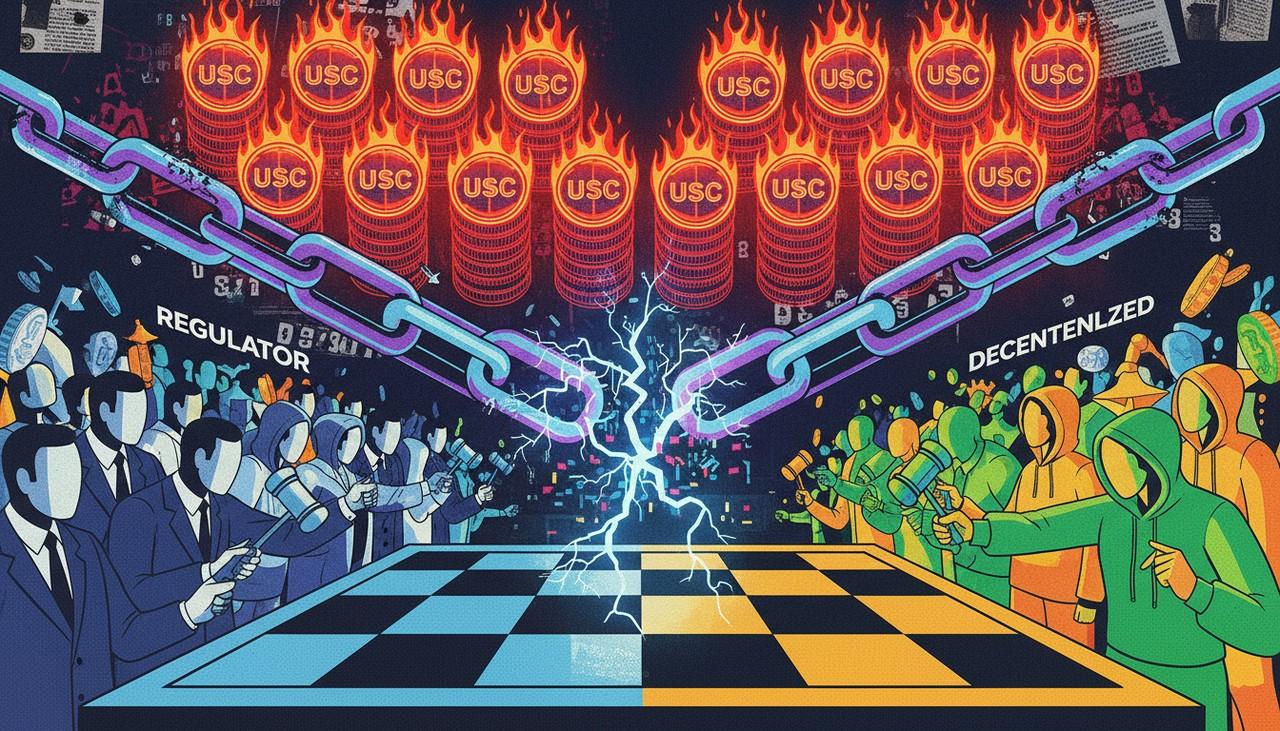
On March 24, 2026, the U.S. Commodity Futures Trading Commission (CFTC) announced the establishment of the “Innovation Task Force” to further advance regulatory fronts based on the original Innovation Advisory Committee. The core function assigned to this new structure is to clarify rules around three main lines: cryptographic assets and blockchain technology, artificial intelligence and autonomous systems, predictive markets and event contracts. One end encompasses on-chain high-leverage derivatives, AI-driven quantitative methods, and rapid expansion of event contracts, while the other end still refers to a rule system based on traditional futures and options, with dislocation and tension between the two continually amplifying over the past few years. At this time, the CFTC revises the regulatory landscape, where the real suspense lies not in “whether to regulate,” but in “how to regulate” — how this step will rewrite the survival boundaries and game order of cryptographic derivatives and predictive markets.
Old Framework Struggles with New Species: Regulatory Gaps of Cryptographic Derivatives
Since the early 2020s, the U.S. derivatives regulatory framework has been repeatedly adjusted: on one hand, compliance pathways for traditional commodities, foreign exchange, and interest rate futures are becoming increasingly mature; on the other hand, futures, options, and swap products related to cryptographic assets have been oscillating within a regulatory gray area. The tug-of-war between the CFTC and SEC over the boundaries of “commodities” and “securities” has kept the regulatory status of cryptographic derivatives in a case-driven, retrospective identification mode, lacking systematic design focused on new technologies. Especially after the explosion of on-chain high-leverage perpetual contracts and structured yield products, the old risk assumptions centered around centralized exchanges and traditional clearinghouses can hardly cover the realities of DeFi and cross-border platforms fully.
In the CFTC's latest published task list for the Innovation Task Force, cryptographic assets and blockchain technology are placed at the top of three key areas, highlighting their priority in the current regulatory agenda. This ordering reflects real pressures: cryptographic derivatives have evolved from marginal speculative tools into important vehicles for global liquidity and risk pricing, with new mechanisms like on-chain clearing, cross-cryptocurrency margins, and oracle pricing allowing the risks of a single contract to spread across multiple chains and markets within minutes. The establishment of the task force essentially acknowledges that “crypto + blockchain” is no longer a subordinate issue but a core variable driving the structural changes in the overall derivatives market.
At the same time, the jurisdictional boundaries between the CFTC and SEC regarding cryptographic-related assets remain vague: some tokens are viewed as securities in one context and as commodities in another; the categorization of certain event-based or index-based contracts as either securities or commodity derivatives often requires “post-hoc qualification” after an enforcement action occurs. This coexistence of regulatory vacuum and overlap leads exchanges, market makers, and on-chain protocols to lean towards bypassing U.S. regulations or adopting complex structures to divide risks when designing new products. The emergence of the Innovation Task Force, while not providing direct answers, sends a directional signal that: CFTC is attempting to proactively build a replicable compliance pathway on frontier issues, potentially encompassing everything from exchange licensing to design standards for futures, options, and swaps, to clearing and margin mechanisms under systematic review.
Innovation Task Force Appears: Who is Steering the Regulatory Narrative
According to public statements from the CFTC, the “Innovation Task Force” is not a completely new creation, but rather a functional upgrade based on the existing Innovation Advisory Committee. Previously, the Innovation Advisory Committee primarily played a discussion and research role, focusing on technology assessments and industry dialogues; the task force, however, is positioned to elevate these frontier topics from the “consultation level” to the central execution and rule design level, becoming a new front node directly under the chair's office. In terms of organizational form, this represents a self-adjustment from “passively reacting” to “actively planning” — no longer merely responding passively during crises and controversies, but trying to proactively define acceptable boundaries for innovation.
This task force is led by the chair's senior advisor Michael J. Passalacqua, receiving public endorsement from CFTC Chair Michael S. Selig, whose convergence of power provides substantial operational space for this framework. In a statement, Selig emphasized that the task force's goal is to “create clearer regulatory rules for innovators”, with emphasis on “clarity” and “innovators,” aimed at conveying a “predictable” signal to the market. Passalacqua, on the other hand, candidly stated that the task force will “advance the innovation agenda in areas such as cryptographic assets, artificial intelligence, and predictive markets”, presenting the three technological fields parallelly and shaping them into the core narrative of CFTC's regulation in the coming years.
Regarding Passalacqua's background, some media and community voices mention potential associations with platforms like Polymarket, but this type of information has only been seen in a few reports and remains to be verified, with no official disclosure addressing this. Under such information asymmetry, a reasonable boundary is to acknowledge the market's sensitivity to conflicts of interest and regulatory fairness, while avoiding amplifying unverified associations into established facts without multi-source evidence. For the CFTC, the task force's ability to earn industry trust will largely depend on whether it can maintain procedural transparency and decision-making interpretability while “advancing the innovation agenda.”
Three Key Battlefields: Crypto, AI, and Predictive Markets
Among the three key areas, cryptographic assets and blockchain are ranked first because they are reshaping the underlying infrastructure of the derivatives market. On-chain perpetual contracts, combination leveraged products, and structured yield certificates realize 24-hour automated match-making and settlement through smart contracts, compressing or even partially replacing traditional margin models and clearing tiers. Once the market experiences significant fluctuations, clearing can spread across multiple protocols and assets within seconds, amplifying systemic risks. For the CFTC, this is not merely an issue of product innovation, but a realistic test regarding clearing responsibilities, risk concentration, and cross-border regulatory collaboration, thus included as a priority topic for the Innovation Task Force, aiming to find a new balance between “not excessively stifling innovation” and “preventing on-chain cascading liquidations.”
Artificial intelligence and autonomous systems form the second battlefield. In the past few years, AI's penetration into quantitative trading, automated market-making, and risk management has significantly outpaced the governance pace of traditional institutions: from high-frequency algorithms to self-learning strategy combinations, and fully AI-driven market-making robots, decision-making power in the market increasingly shifts towards black box models and automated systems. This migration brings dual impacts: first, the difficulty of identifying market manipulation has significantly increased, as traditional regulatory tools based on order books and manual pattern recognition are becoming increasingly ineffective against highly adaptive algorithmic clusters; second, responsibility delineation has become ambiguous. When an AI system triggers a chain sell-off or even engages in “self-betting” under extreme market conditions, it remains unclear who — the developer, deploying institution, or the ultimate beneficiary — should bear the responsibility, as current rules provide no clear answers. Incorporating AI and autonomous systems into the core focus of the Innovation Task Force signifies that the CFTC recognizes that future disputes regarding market manipulation, insider trading, and compliance risk control are likely to occur in mixed scenarios of “human-machine governance.”
The third separately listed area is predictive markets and event contracts, which itself carries strong signaling significance. Unlike traditional futures based on commodities or financial indicators, event contracts center directly around election outcomes, macro data releases, or even social events, with their legality, boundaries, and social impacts filled with controversy. Platforms like Polymarket have repeatedly become the center of regulatory storms over the past few years — what type of event can be “financialized,” and to what extent might it distort public decision-making or provoke moral hazard, currently lack unified standards. By singling out predictive markets and event contracts, the CFTC no longer simply views them as “alternative futures,” but acknowledges their intersecting attributes among public opinion, politics, and capital, requiring a dedicated framework to address.
Moreover, it is noteworthy that the CFTC’s choice to manage cryptographic assets and blockchain, AI and autonomous systems, predictive markets and event contracts in a juxtaposed manner outlines a new regulatory priority and balancing approach: crypto provides new infrastructure and asset forms, AI reshapes the execution logic of trading and risk control, while predictive markets challenge the fundamental question of “what the underlying is.” Together, these point not to a specific type of single product but to the systemic restructuring of the future derivatives market in technological, asset, and narrative aspects.
Rules Yet to be Implemented: Opportunity Window and Uncertain Boundaries
Although the establishment of the Innovation Task Force holds significant narrative implications, from an execution perspective, there is currently a lack of any specific regulatory timeline, budget allocation, and personnel composition details. This means that the CFTC's actions are largely confined to setting direction and categorizing issues, and there remains a considerable distance before forming actionable terms, exemption conditions, or scales of penalties. For market participants, this represents both a source of regulatory uncertainty and an observation window ahead of policy transactions: those who can effectively participate in hearings, submit opinions, and build industry self-discipline during this period are more likely to gain a voice when the rules are finalized.
On the other hand, the collaboration mechanism with federal agencies such as the SEC has not yet been confirmed at the official level. Under the U.S. regulatory dual structure, cryptographic assets, AI systems, and predictive markets almost intrinsically involve cross-institutional jurisdiction: how to define security attributes, coordinate data protection and privacy, and share cross-border information, all require coordination and negotiation among different regulatory parties. The reasonable judgment currently possible is limited to viewing potential linkages as unverified extrapolation directions, rather than established facts — any assertions that “certain institutions will inevitably dominate” or “joint rules will be introduced” go beyond the confines of existing public information.
Until specific rules are refined, cryptographic derivatives platforms, on-chain protocols, and predictive market projects are effectively in a stage where compliance gray areas coexist with trial-and-error spaces. On one hand, regulatory expectations are rising, and crude leverage designs, cross-border evasion, and inadequate information disclosure will significantly increase the likelihood of future accountability; on the other hand, the absence of established rules also suggests that some socially and market-valuable innovations with blurred boundaries may influence the final regulatory tone through pilot operations and data feedback. For example, designs for caps on event contracts, participant qualification restrictions, information disclosure, and conflict prevention mechanisms may gradually take shape through project practice and regulatory dialogue, rather than being dictated from the top down in a single decision.
In terms of future pathways, the Innovation Task Force may weigh among various frameworks such as “principles-based regulation,” “sandbox-style pilot projects,” and “case-driven legislative modifications,” but currently, no public documents point to any definite policy inclination. For the market, the focus should not be on guessing which model will inevitably prevail, but rather observing how the CFTC expresses viewpoints in specific cases, hearings, and public solicitations for opinions: whether it emphasizes risk bottom lines and negative list management more, or whether it prefers small-scale pilot projects in controlled environments to accumulate empirical understanding of new technologies and new products.
Restructuring the Regulatory Chessboard: The New Order for Crypto and Predictive Markets
From a symbolic standpoint, the CFTC's establishment of the Innovation Task Force marks a shift in the regulatory attitude towards the U.S. derivatives and crypto markets from “passively responding to a single crisis or case” to “actively designing a rule system aimed at the new technology cycle.” This is not just a minor adjustment in internal organizational structure, but a rewriting of the regulatory narrative: cryptographic assets, AI systems, and predictive markets are no longer merely seen as “sources of problems,” but are viewed as long-term existences that need to be institutionalized and standardized. For markets accustomed to growing wildly in regulatory blind spots, this signifies that a new round of institutional repricing is about to begin.
In the coming years, crypto exchanges, on-chain derivatives protocols, and predictive market platforms will all face higher compliance pressures: licensing and registration requirements will tighten, product designs will need to be more closely tied to risk disclosures and investor suitability, and standards for defining systemic risk and manipulation risk will become more detailed. However, at the same time, those who are willing to align compliance expectations in advance and participate in co-building rules can also expect to gain structural dividends in the wave of licensing and institutionalization — making it easier to access mainstream capital and more likely to become “model institutions” under the new regulatory framework.
For investors and entrepreneurs, starting in 2026, the CFTC's subsequent hearings, public solicitations for opinions, and potential inter-agency collaborations surrounding the Innovation Task Force will become key indicators for judging the rhythm of the regulatory cycle. Any specific inquiry documents, drafts, or interdepartmental speeches regarding cryptographic derivatives, AI trading systems, or event contracts will generate amplifying effects on market expectations and valuation logic. What truly needs to be watched is making high-leverage bets based on hearsay in a phase of information opacity, rather than preparing compliance and governance capabilities while the rules are still being formed.
In summary, the establishment of the CFTC Innovation Task Force advances the interplay between regulation and innovation to a new phase: from debates over “whether to allow existence” to a reconstruction of “under what rules to exist.” Those who can effectively occupy a voice before the rules are solidified — whether through technical standards, industry alliances, or through open and transparent compliance practices — are more likely to become the true protagonists in the next cycle of derivatives and predictive markets.
Join our community to discuss together and become stronger!
Official Telegram community: https://t.me/aicoincn
AiCoin Chinese Twitter: https://x.com/AiCoinzh
OKX Benefits Group: https://aicoin.com/link/chat?cid=l61eM4owQ
Binance Benefits Group: https://aicoin.com/link/chat?cid=ynr7d1P6Z
免责声明:本文章仅代表作者个人观点,不代表本平台的立场和观点。本文章仅供信息分享,不构成对任何人的任何投资建议。用户与作者之间的任何争议,与本平台无关。如网页中刊载的文章或图片涉及侵权,请提供相关的权利证明和身份证明发送邮件到support@aicoin.com,本平台相关工作人员将会进行核查。