Authored by: Lin Wanwan
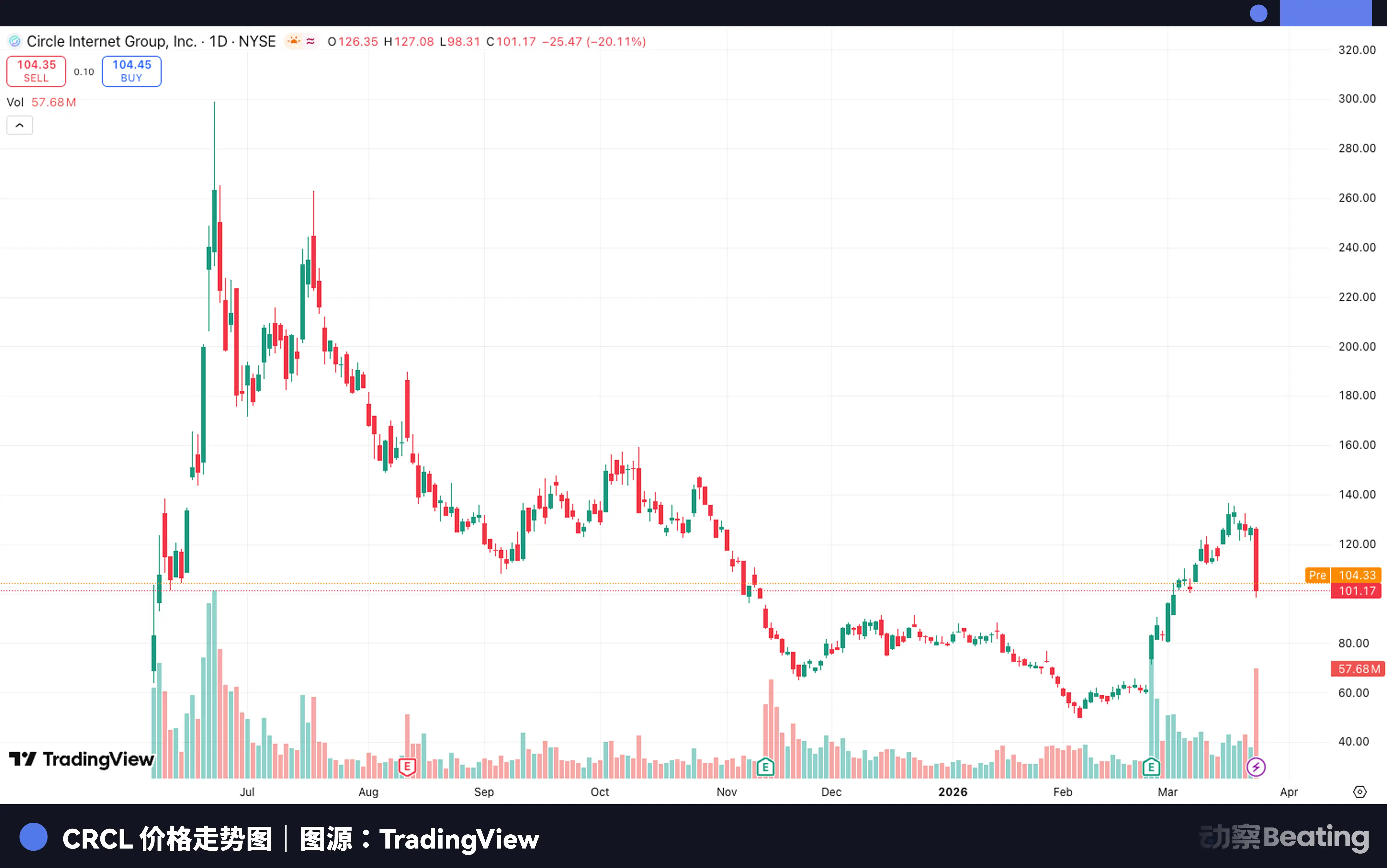
On March 24, 2026, Circle's CEO Jeremy Allaire probably endured one of the most difficult trading days since the company's IPO.
The stablecoin company he co-founded saw its stock price evaporate by one-fifth during the trading session. More than 30 million shares changed hands that day, and the panic was clearly evident on the trading floor.
The cause of all this was a few pages of paper leaked from an office building in Washington.
The $78 Billion 'Water Supply' Business
To understand this crash, one must first grasp how Circle actually makes money.
Many people think that stablecoin companies are tech companies, but what Circle does is more akin to banking. You give it $1, and it gives you 1 USDC token; you can transfer and spend that token freely on the blockchain, while it takes your dollars to buy U.S. Treasury bonds.
The interest from the Treasury bonds is Circle's profit.
How profitable is this business? In the fourth quarter of 2025, just the interest from reserves contributed $733 million.
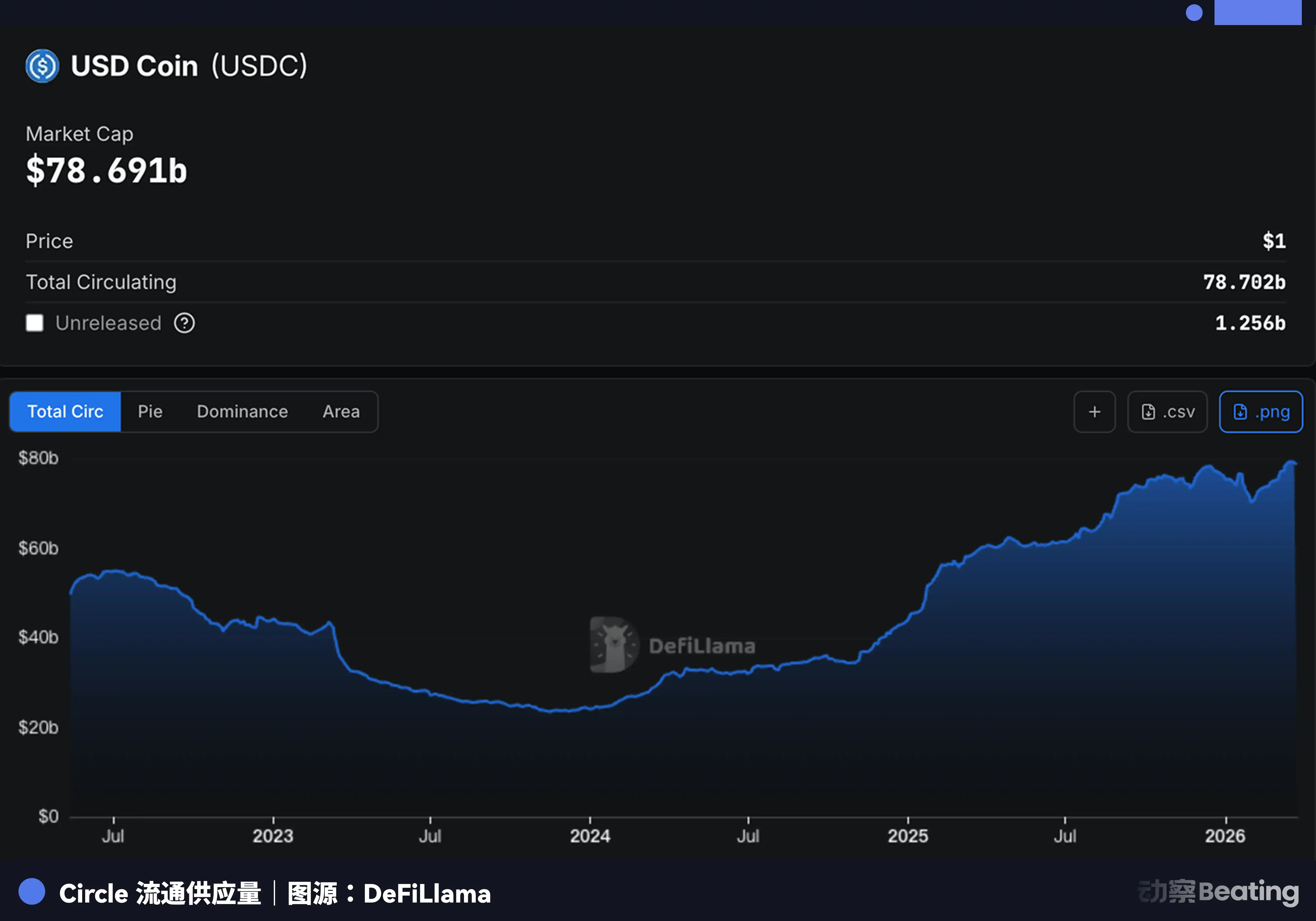
The circulation of USDC skyrocketed by 72% within a year, reaching $78 billion. Circle held a $78 billion pool of funds, with interest flowing in like tap water, continuously.
Just attracting deposits wasn't enough; more people needed to be willing to exchange money for USDC. Thus, Circle made a deal with Coinbase: Circle would share a portion of its interest income with Coinbase, which would then return a 3.5% annual yield to USDC holders. You could put your money in, and it would earn interest without any need to understand blockchain or take any action; the earnings would automatically be credited.
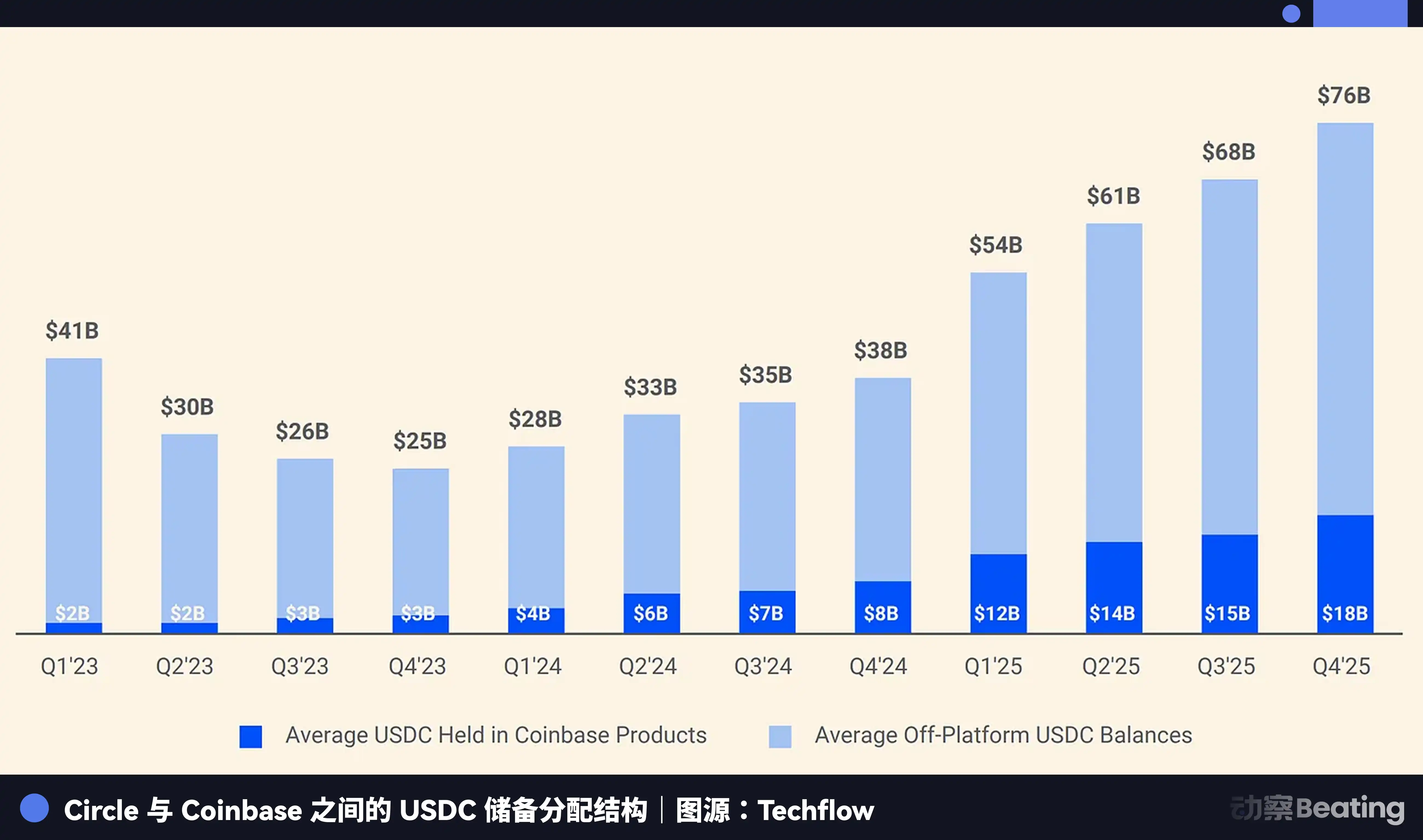
This model formed a beautiful flywheel: earnings attract users, users bring in funds, funds generate interest, and interest feeds back into earnings. The flywheel spun faster and faster, and Circle's stock price surged from around $50 in early February to $135, increasing by 170% in six weeks. Market expectations for the Federal Reserve to maintain high interest rates also helped Circle, as higher interest rates meant more substantial reserve interest.
Then, someone set their sights on this machine.
The Banking Industry's Counterattack
On March 24, the latest draft of the U.S. Senate's CLARITY Act was exposed.
This legislation, fully titled the "Digital Asset Market Clarity Act," was originally intended to establish rules for the crypto market, having already passed a version in the House of Representatives. However, the Senate added a revision in the latest version: it prohibits any platform from providing yields for the passive holding of stablecoins, including all arrangements that are economically or functionally equivalent to bank deposit interest.
In other words, the "earning interest on holdings" scheme is no longer permissible.
This ban strikes at Circle's core. Without the ability to pay yields, no one would have the incentive to hold USDC in the short term, and long term, Coinbase's stablecoin business would shrink. Coinbase had $364 million in revenue from stablecoins in the fourth quarter, which now hung in the air.
The game behind the ban is more interesting than the ban itself.
This struggle over stablecoin yields has actually been ongoing for nearly a year.
The GENIUS Act, which took effect in July 2025, already prohibited issuers from directly paying interest to holders, but the law did not clearly cover related parties and third-party platforms. Circle and Coinbase exploited this gray area: Circle distributed reserve interest to Coinbase, which then issued “rewards” to users, and the money still got credited after a roundabout.
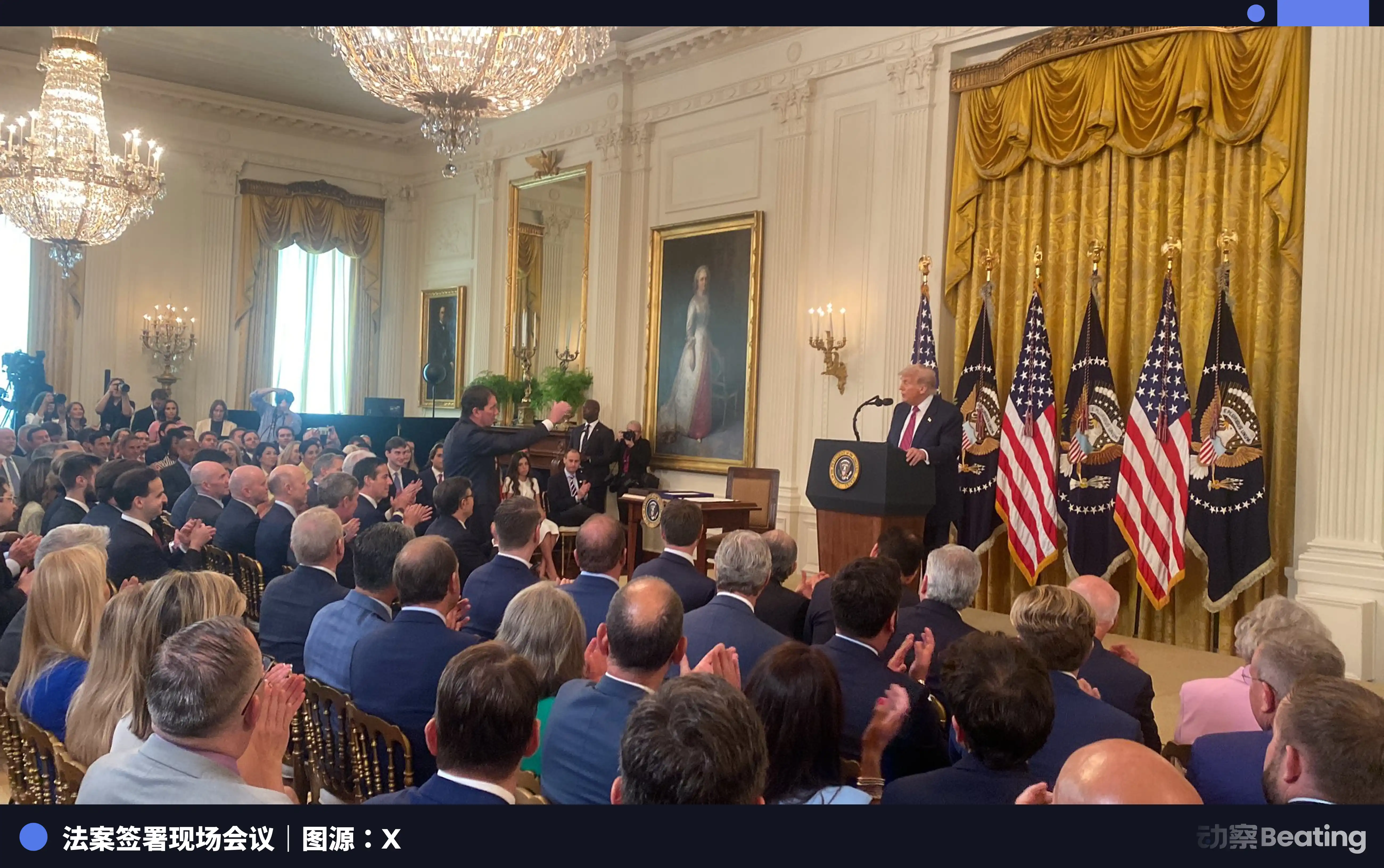
Led by the American Bankers Association, over 40 banking associations soon sent a joint letter to Congress, demanding the closing of this loophole. The yield ban in the latest draft of the CLARITY Act is a direct product of this lobbying.
Driving this amendment is America's traditional banking industry.
The rationale is simple: if Coinbase can offer a 3.5% yield, why would customers keep their money in a traditional bank's checking account? The stablecoin yield business directly undermines the foundation of bank deposits. Reports indicate that bank representatives were arranged to review the draft text on the same day it was released. The crypto industry wanting to take over the role of banks is something that banks would never stand aside and watch while their deposits are drawn away by a lot of code writers.
Members of Congress need to make a choice between two forces, and at least from this draft, traditional forces seem to have the upper hand for now.
Shay Boloor, chief market strategist at Futurum Equities, pointed out a more pressing issue: this ban blocks USDC's path to evolving from a payment tool to a “store of value” product.
That upgrade path was precisely the core logic behind Circle’s stock price surge over the past few weeks. The stock price increased by 170% based on the market's pricing of USDC's future potential. Now that potential has been sliced by the legislative draft, and the 170% increase has ironically become the best short-selling reason.
The stock price plummeted from a high of $125 to around $101, marking the largest single-day drop since its IPO in June 2025. Coinbase also suffered, dropping by about 10%.
Tether's 'Benefit from Your Illness'
As if misfortune does not come alone.
On the same day, Circle's biggest competitor Tether announced that it had hired one of the Big Four accounting firms to conduct a formal audit of all USDT reserves.
This news might have been just a side note in normal times, but at this moment, its impact was magnified tenfold.
The landscape of the stablecoin industry has always been clear: Tether's USDT is the largest by size, yet its reserve transparency is highly questioned; Circle's USDC is smaller in scale but is compliant and solid.
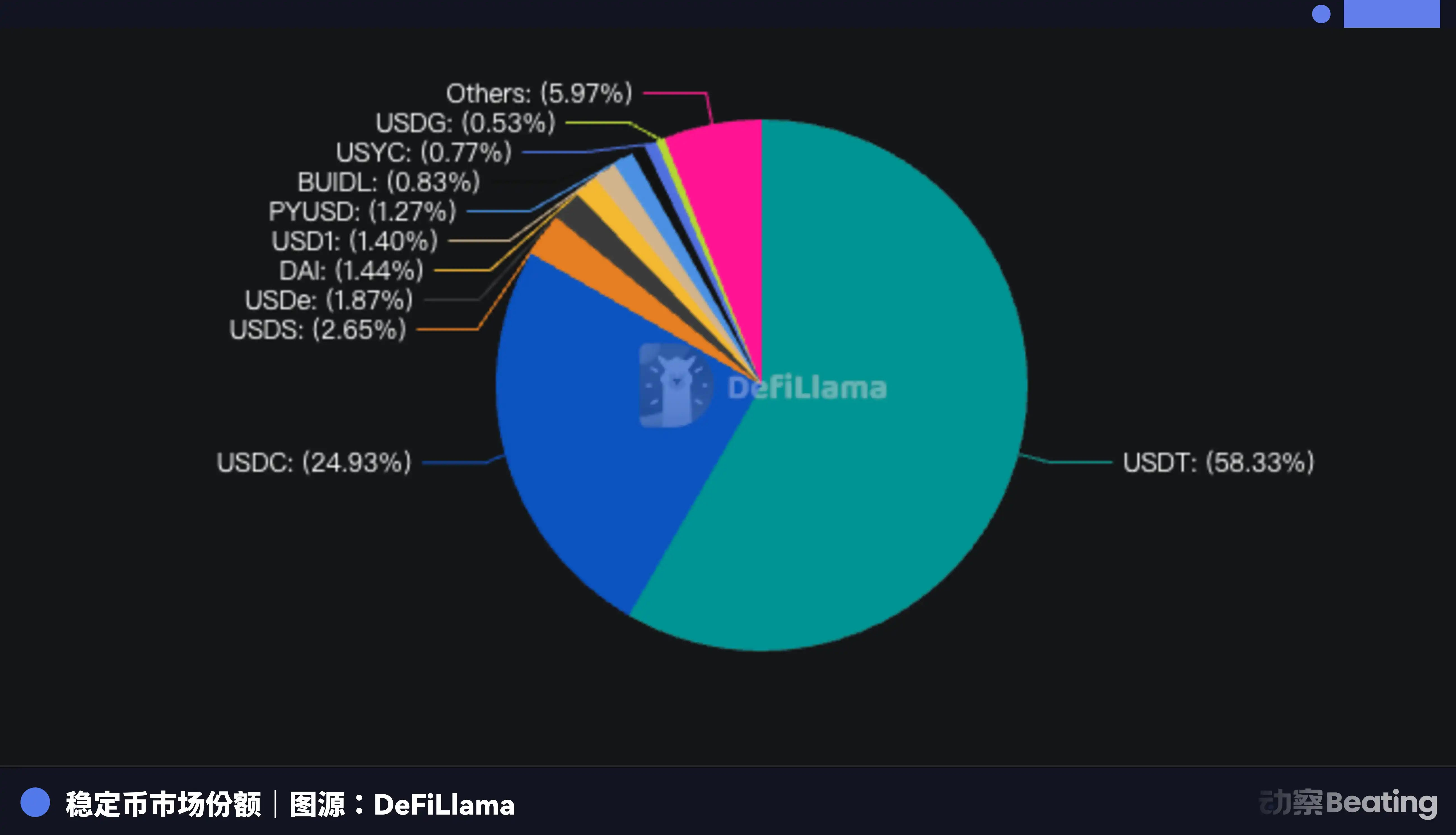
Institutional investors choose USDC largely for a sense of "reassurance." Ultimately, Circle's moat is trust.
Now Tether aims to fill this shortcoming. Once the audit passes, the biggest gap between USDT and USDC will be eliminated. While regulators dig into Circle's moat, competitors are building their own moats.
This two-sided siege, with such precise timing, is hard to call a coincidence. On the eve of a reshaping of the regulatory landscape for stablecoins, Tether chose this window to showcase its sincerity, calculating its moves loudly.
Market participants bluntly stated that if Tether receives certification from a Big Four accounting firm and follows up with a deeper layout in the U.S. market, USDC's share on the institutional side will be further eroded.
The "compliance honor student" image that Circle has worked hard to cultivate over the past few years is turning from a unique advantage into an entry barrier.
Armor and Shackles
However, there are calm voices as well.
Owen Lau, an analyst at Clear Street, believes the market's reaction was excessive. He stated that the actual situation is not as dire as the headlines suggest; it more closely resembles a knee-jerk reaction to complex legislative news.
He has a point; the CLARITY Act is currently still a draft in the Senate, and there is a long negotiation process ahead before it becomes law.
Although the Trump administration is pushing for the bill to pass, the yield restriction clause itself may also become a barrier to the bill's advancement. The yield restriction may be modified or even directly removed in the final text.
The draft also does not take a one-size-fits-all approach: rewards linked to payments, transfers, and promotional activities can still be implemented, it's just that "earning money by doing nothing" is off the table. The SEC, CFTC, and Treasury will further define what constitutes "allowed rewards" within a year of the law's enactment; these details have yet to be written.
If Circle can shift its business model from "holding equals earning" to "using equals rewarding," the game may be able to continue.
Additionally, USDC's growth is not entirely dependent on yield incentives. The world's largest prediction market, Polymarket, runs on USDC; this trading demand won’t simply disappear due to a ban.
Last year, Circle also launched Arc, a Layer-1 blockchain designed for stablecoin financial scenarios, covering global payments, foreign exchange, and asset tokenization, attempting to extend its business from issuing stablecoins to financial infrastructure. USDC isn't going to disappear, but whether it can maintain the growth rate of the past year remains a big question mark.
Looking back, this crash has served as a wake-up call for all crypto companies.
In recent years, the most successful companies in the crypto industry have followed a regulatory-friendly path. Circle is a model student on this path: proactive IPO, transparent audits, and aggressive lobbying, all aimed at proving to Wall Street that it is a financial innovator in a suit. The market has rewarded this, and in less than a year since going public, its stock price has multiplied several times. In the fourth quarter, revenue was $770 million, a 76.9% year-on-year increase, and earnings per share were $0.43, significantly exceeding the market expectation of $0.25. On paper, it appears to be a fast-growing company.
However, the CLARITY Act draft exposes a somewhat uncomfortable reality: compliance means voluntarily placing oneself within the regulatory crosshairs. Tether, staying overseas, isn’t directly affected by this ban; Circle, as a publicly listed company in the U.S., has no choice but to accept scrutiny. Compliance has provided Circle with armor, but it also presents it with shackles.
Negotiations on the bill are ongoing, and the story is far from over.
Yet March 2026 is a day to remember: when the innovations of the crypto world collided with the interests of traditional finance, which way Congress would tilt ultimately depended on whose voice in Washington was louder.
免责声明:本文章仅代表作者个人观点,不代表本平台的立场和观点。本文章仅供信息分享,不构成对任何人的任何投资建议。用户与作者之间的任何争议,与本平台无关。如网页中刊载的文章或图片涉及侵权,请提供相关的权利证明和身份证明发送邮件到support@aicoin.com,本平台相关工作人员将会进行核查。


