Written by: Glendon, Techub News
Yesterday, Bloomberg reported that Tether has pressed the "pause button" on its $20 billion financing plan. Previously, Tether had ambitiously sought large-scale private equity financing, aiming for a valuation of $500 billion, in an attempt to join the ranks of top private companies like OpenAI and SpaceX.
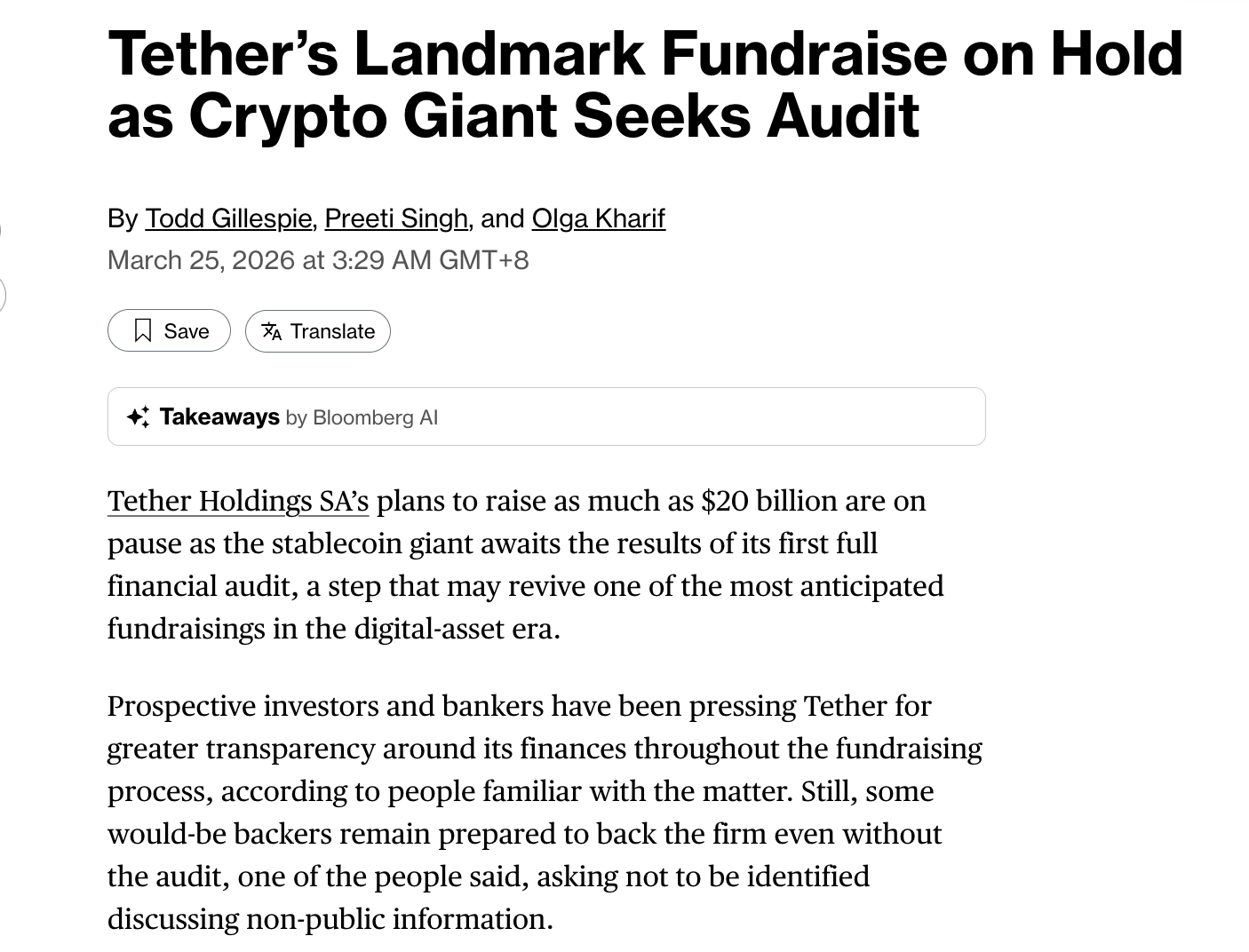
Why did Tether pause this financing plan? It is not due to a lack of funding needs but rather a strategic adjustment made proactively by Tether. In fact, Tether's cash flow is strong, with a net profit of over $10 billion last year and holding about $122 billion in U.S. Treasury bonds, ranking as the 17th largest holder of U.S. Treasury bonds globally. The core consideration for Tether halting financing is to await the results of its first comprehensive financial audit to respond to market skepticism regarding its long-standing lack of transparency. For a long time, potential investors and bankers have urged Tether to improve financial transparency, and Tether's CEO Paolo Ardoino has also stated that completing a full audit is a top priority for the company, with plans to achieve it by the end of 2026.
On March 24, Tether finally announced that it has signed an agreement with one of the Big Four accounting firms to initiate its first complete independent financial statement audit. This audit is considered the largest initial audit in financial market history, covering complex asset structures such as digital assets, traditional reserves, and tokenized liabilities, with a total scale exceeding $184 billion, marking Tether's formal farewell to the "black box" operating model.
Because of this, while Tether's financing process appears to be stalled, it is actually a reflection of market and institutional demands pushing it toward a more compliant path. Importantly, the timing of Tether's announcement of the initiation of the first comprehensive financial audit is quite coincidental, coinciding with the recent disclosure of the "CLARITY Act," a framework for regulating the cryptocurrency market.
The new provisions of this draft clearly define the regulatory boundaries of the stablecoin market: allowing platforms to offer reward programs (such as cash back, trading incentives) based on user activities with stablecoins, but prohibiting paying users returns solely for holding stablecoins, while restricting any practices that equate this program with bank deposits. This provision precisely hits the core business model divergence in the stablecoin market and directly impacts Tether's biggest competitor, Circle.
Although Circle does not directly pay interest to users, its business growth heavily relies on attracting funds through high interest payments (approximately 3.5% annualized) to users via partnership platforms like Coinbase, thereby expanding the circulation of its stablecoins. Therefore, after the exposure of the bill draft, the market quickly reacted. Investors are concerned whether its profit model can be sustained. Coupled with other negative factors, Circle's stock price plummeted more than 20%, marking the largest single-day drop since the company went public in June 2025.
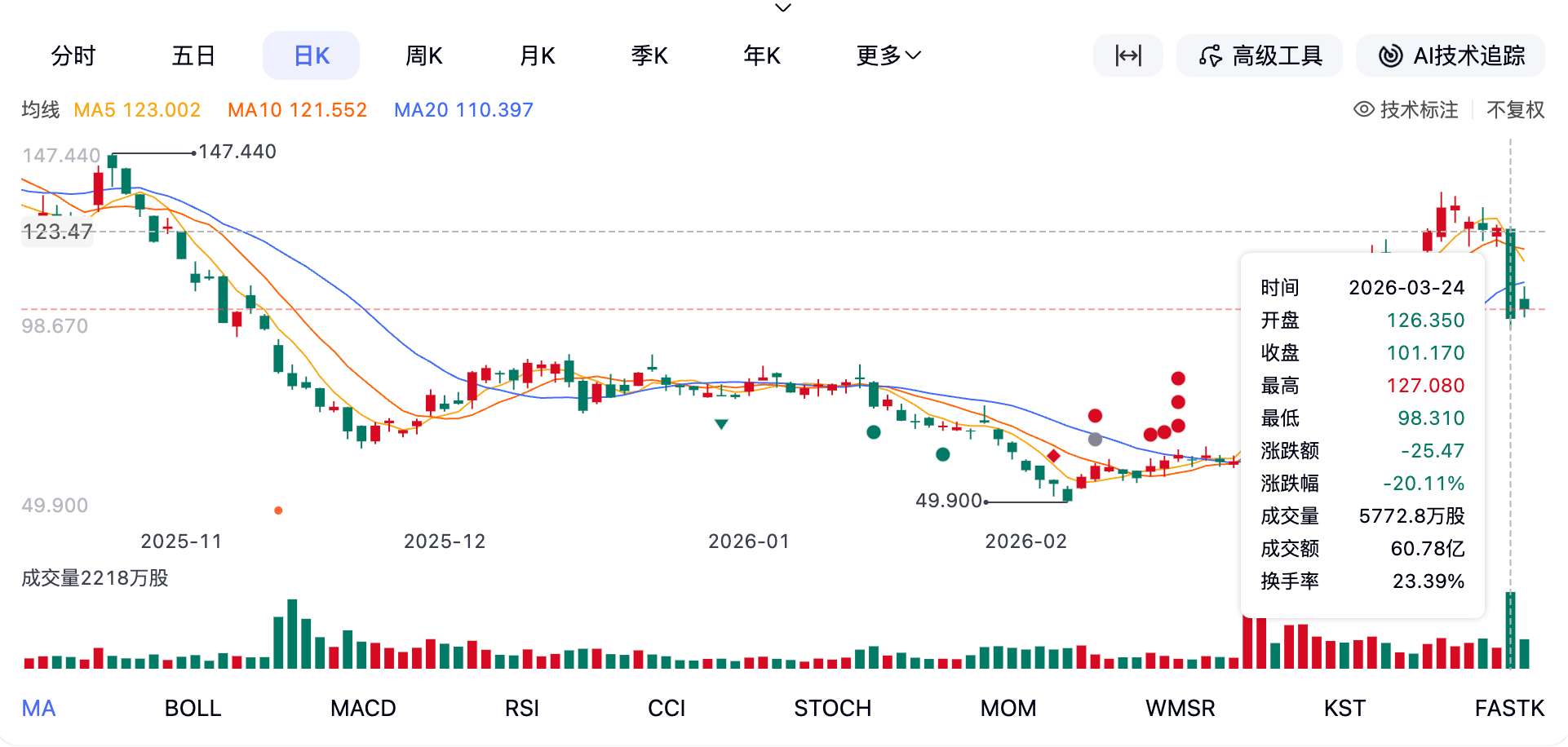
Undoubtedly, the latest draft's content significantly impacts Circle and Coinbase. If the "holding crypto earning interest" model is fully prohibited, it will certainly weaken Coinbase users' willingness to hold stablecoins, which will have a negative impact on the overall circulation size and market demand for USDC, thereby dragging down Circle's minting volume and reserve interest income. Interestingly, sources revealed that although Coinbase and some cryptocurrency companies expressed discomfort with the wording concerning stablecoin earnings in the "CLARITY Act" this week, no one has explicitly opposed it. This also means that the proposal has a higher likelihood of being passed.
However, some analysts believe the market has overreacted, as the bill does not prohibit Circle from earning interest from reserves but only restricts the distribution of returns to users. In contrast, Tether's situation is entirely different.
Objectively speaking, the latest draft of the U.S. "CLARITY Act" has minimal impact on Tether's USDT. On one hand, USDT's core business model does not rely on "holding crypto earning interest." On the other hand, due to its offshore nature and fundamental mismatch with the global regulatory framework, USDT already faces multiple structural limitations on its path to compliance in the U.S. First, Tether is legally registered in El Salvador, with its operational core in Hong Kong. The U.S. "GENIUS Act" clearly places "foreign issuers" under a stricter regulatory framework, requiring their reserves to be 100% composed of U.S. Treasury bonds and cash, and must be regulated by the Office of the Comptroller of the Currency (OCC) in the U.S. While Tether's existing reserves have significantly increased U.S. Treasury holdings, it still holds high-risk assets like Bitcoin and gold, which contradicts the requirements of this act.
Secondly, Tether lacks local financial licenses in the U.S. and cannot directly access the banking system, needing to rely on third parties (like Cantor Fitzgerald) to custody U.S. Treasury bonds. In contrast, Circle has received OCC approval to establish a national digital currency bank. This means that Tether cannot be "natively compliant" like Circle; to meet U.S. regulatory requirements, it must undergo a complete corporate restructuring.
Fortunately, Tether has already made arrangements and launched a compliant stablecoin, USAT, in the U.S. market at the beginning of this year. This stablecoin may become a potential beneficiary of the latest draft of the "CLARITY Act" and is expected to serve as a key breakthrough for overcoming regulatory barriers.
USAT is issued by Tether's newly established U.S. entity, with reserve assets comprising 100% cash and short-term U.S. Treasury bonds, fully complying with the "compliant stablecoin" definitions of the "CLARITY Act." Like USDT, USAT does not offer "holding crypto earning interest" services, naturally avoiding the restrictions on passive income imposed by the act, and does not require adjustments to its business model like Circle. This compliant native positioning allows it to legally access the U.S. financial system, directly serving domestic institutional investors and retail users in the United States.
Earlier this month, Tether released its first reserve report for USAT, which was attested by Deloitte, marking the first time one of the Big Four accounting firms has provided assurance on reserves related to stablecoins and Tether. Now, with Tether starting its first comprehensive audit, it will also provide a new trust endorsement for the market promotion of USAT. Although the audit object is USDT's reserves, once completed and made public, it will prove that Tether has the capacity to meet international audit standards, alleviating institutional investors' concerns about its "financial opacity." Based on this foundation, USAT may leverage Tether's influence to provide U.S. institutions with a pathway to access the Tether ecosystem through federal regulatory tools.
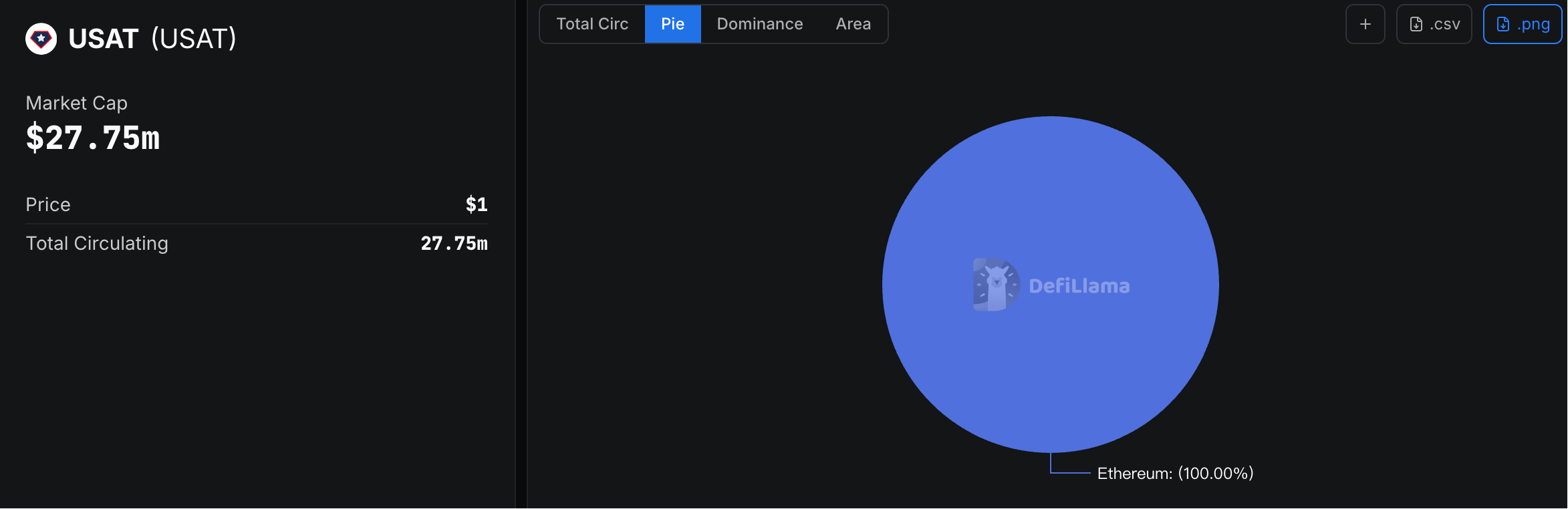
It should be noted that the bill is still in draft form, and there is a high degree of uncertainty about whether it will ultimately be passed and how specific provisions will be defined. From a long-term perspective, Circle has gone public, accepted annual audits from Deloitte, and published monthly reserve reports, maintaining significant advantages in compliance and transparency. According to DeFiLlama data, at the time of writing, USAT's market value is only $27.75 million, which is vastly different from USDC. USAT will undoubtedly face numerous challenges if it aims to compete directly with USDC.
Conclusion
Tether's pausing of its financing plan, launching a comprehensive audit, and the advancement of the latest draft of the "CLARITY Act" all signify that the competition in the stablecoin market for "regulatory compliance" is becoming increasingly intense. Tether's issuance of the USAT reserve report and the initiation of the full audit for USDT also indicate its proactive embrace of compliance. However, Circle, leveraging its first-mover compliance advantage and large market base, remains a strong competitor in the compliance race.
In the future, competition in the stablecoin market may no longer be a simple scale contest, but rather a comprehensive battle of transparency, compliance, and strategic resilience. The subsequent interplay between Tether and Circle will also become a microcosm of the compliance transformation in this arena.
免责声明:本文章仅代表作者个人观点,不代表本平台的立场和观点。本文章仅供信息分享,不构成对任何人的任何投资建议。用户与作者之间的任何争议,与本平台无关。如网页中刊载的文章或图片涉及侵权,请提供相关的权利证明和身份证明发送邮件到support@aicoin.com,本平台相关工作人员将会进行核查。


