On March 27, 2026, Eastern Eight Time, the Iranian hacker organization Handala claimed to have successfully hacked the personal email account of the Director of the Federal Bureau of Investigation (FBI), Kaash Patel, and publicly released some email samples. Existing information shows that the leaked emails span from 2010 to 2019, including both private communications related to personal life and mixed records of work-related exchanges. Officials from the U.S. Department of Justice later confirmed to the media that the breach was true, while the FBI, as the agency involved, has remained silent up to now. This disparity in the pace of information disclosure has quickly transformed what should have been a case of “personal information leakage” into a new frontline of personal data security and the escalation of U.S.-Iran cyber confrontation.
FBI's Top Figure Compromised: The Narrative Beginning Behind the Email Hack
According to the timeline restored from public reports, this incident was first revealed on March 27, with mainstream media like Reuters quoting Department of Justice officials confirming that some emails released by Handala do belong to Kaash Patel’s account. Subsequently, Chinese media outlets like Lydong and Golden Financial spread the news further, adding critical information about the timeline and nature of the leaked emails, causing the incident to quickly ferment within the encryption and cybersecurity community. From “rumors” to “confirmation,” this chain clearly points to one fact: the email defenses of the current FBI director were indeed breached at some point.
From the characteristics of the disclosed email samples, the attackers chose to showcase mostly correspondence from 2010 to 2019, and the content types exhibited a clear mix. Some parts consist of daily social interactions, schedule coordination, and personal communications, while others involve interactions under a professional identity. However, the public information did not point to any specific confidential documents or details of specific actions. Both the Department of Justice and media reports only made general descriptions of “including personal and work emails” to confirm the facts without over-interpreting the still undisclosed contents.
The current multi-faceted landscape consists of three joined pieces: Confirmation of the event's authenticity by Department of Justice officials provides authoritative backing for public opinion; media emphasizing the sensitivity of the timeline and content mixing while restoring through limited samples; the FBI has chosen collective silence, neither giving explanations regarding technical tracing nor making a public statement on the director's personal information security. This information asymmetry forces outsiders to build understanding from existing fragments while amplifying doubts regarding the internal security processes of the core U.S. law enforcement agency.
Decade of Correspondence Exposed: The Cost of Long-term Behavioral Trajectories
The leaked emails stretch across 2010 to 2019, close to ten years, meaning that the attackers hold not just scattered communication fragments, but rather a complete behavioral portrait. Through long-term email exchanges, one can outline a senior law enforcement official’s social network profile: fixed cooperation partners, long-term contacts including colleagues and external consultants, periodically occurring meetings and travel rhythms, and even emotional fluctuations during high-stress and relatively relaxed periods, all of which could be abstracted from changes in communication frequency and targets.
The larger risk lies in the fact that the mixing of personal and work emails dramatically amplifies privacy risks. When private social interactions, family arrangements, and professional decisions exist within the same communication pool, attackers do not need to truly grasp so-called “confidential files” either; they can construct exploitable vulnerabilities through emotional relationships, financial statuses, and daily habits. The accumulated emails over the years provide an exceptionally rich resource for potential extortion, phishing, and social engineering attacks, transforming “knowing who you are” into “knowing what you have been discussing with whom over the last decade”—this shift indicates a qualitative change in risk levels.
For a high-value target like an FBI director, the cascading impacts of long-term data leakage extend beyond personal privacy. Firstly, it may impact decision-making security—if external forces can anticipate her information acquisition paths and decision-making rhythms, they may lay out public opinion strategies or create disturbances in advance on key issues. Secondly, the sense of security and risk exposure for surrounding personnel is also passively amplified; family members, close friends, and regular collaborators may, unknowingly, be included in the attacker’s analytic model. Even without direct technical attacks, this state of “being seen” is sufficient to induce ongoing psychological and security pressures.
Department of Justice Speaks, FBI Remains Silent: The Communication Gap in Washington's Power Center
In terms of the pace of information disclosure, there is a striking contrast between the U.S. Department of Justice and the FBI. The former, through officials confirming the incident to media such as Reuters, essentially assumes the role of “informing the public”; meanwhile, the latter has yet to provide explanations regarding technical details, internal control processes, or follow-up measures. The prompt voice of the Department of Justice serves, on one hand, as a response to media disclosure, and on the other hand, it also curbs the spread of conspiracy theories to some extent. In contrast, the FBI's silence may stem from multiple considerations: internal investigations are not yet complete, concerns over further exposing security structures, or attempts to complete damage assessment away from public view.
When the target of the attack is not an ordinary employee but the FBI director himself, the symbolic meaning far exceeds specific technical issues. Externally, this signifies a collective failure in "personal security practices" at the highest level of the core U.S. security agency; internally, it may trigger a systemic re-evaluation of upper-level information use habits, authority boundaries, and compliance constraints. In the public opinion realm, it is hard for the general public not to bind this matter with institutional credibility—if even the top figure of the FBI cannot protect his own email security, how can ordinary people trust its cybersecurity advice?
From a more macro perspective, the U.S. government’s information disclosure strategy during past cyberattack events typically oscillates between two extremes: either quickly characterizing and loudly accusing rival nations to form deterrence and ally mobilization effects, or choosing to handle situations ambiguously, ceding discourse power to the technical community and media, keeping a low profile under the guise of “investigation ongoing.” The uniqueness of this incident lies in the fact that the confirmation of facts comes not from the attacked agency itself but from another department within the judicial system, which adds a layer of horizontal interface to the information chain and exposes, to some extent, Washington’s lack of a unified and mature discourse strategy when dealing with incidents involving "errors from the power's apex."
Handala Appears in U.S.-Iran Shadow War: Battlegrounds from Servers to Hearts
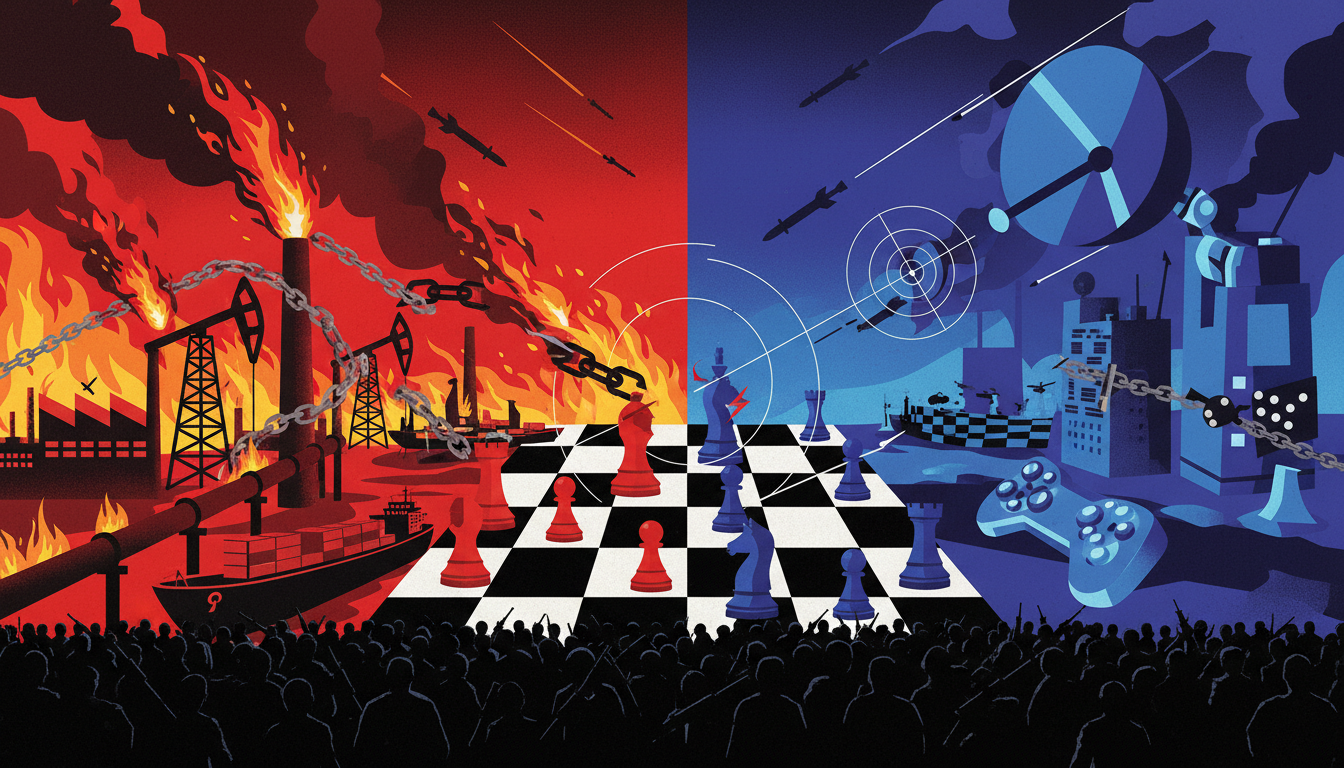
In existing reports, Handala is commonly described as a hacker organization associated with Iran, naturally placing it within the narrative framework of “national-level cybergames.” Whether examining the timing, target selection, or international posturing, Handala appears to be providing a “cyber battlefield sample” for a sustained geopolitical confrontation rather than merely engaging in criminal gang behavior. Media and analytical institutions almost unanimously discuss it within the coordinates of the long-standing tensions between the U.S. and Iran.
Targeting the personal data of a U.S. senior law enforcement official is a highly deliberate arrangement regarding psychological warfare and political signals. On one hand, this attack concretizes the traditionally defined “state-to-state” conflict into precise strikes of “organization against individual,” using public humiliation of symbolic individuals to undermine the prestige of opposing agencies; on the other hand, it sends a signal both domestically and abroad: even at the peak of the power structure, individuals' daily digital lives hold exploitable vulnerabilities. This “shattering of myth” effect is hard to interpret as anything other than a meticulously designed strike in public opinion.
Without speculating on specific motives for retaliation or conjecturing about possible future technical or legal countermeasures from the U.S., one can relatively safely judge that the cyber confrontation between the U.S. and Iran will inevitably continue to escalate around more refined target selections and more complex psychological tactics. Future conflicts may less frequently focus on single infrastructure paralysis or data encryption ransom and instead shift toward targeted information assaults on high-value individuals, creating chain reactions within international public opinion and internal political ecosystems through data leaks, fragmentations, and manipulations.
The Fragile Passwords at the Power Apex: Vulnerabilities in Senior Officials’ Daily Defenses
Using this attack as a sample highlights a longstanding yet often overlooked reality: there are often broad and vague security gaps between senior officials’ personal accounts and formal work systems. For reasons of convenience, trust, or historical habit, they may continue to retain old contacts, forward work-related information, and arrange informal meetings using personal email, leading to behaviors that evolve outside the organization's institutional design, forming what can be termed a true "shadow communication system." Once this part is breached, traditional internal security audits and tracking methods are likely inadequate.
The conflict between traditional security compliance frameworks and modern digital living habits presents a breakthrough opportunity for hackers to exploit repeatedly. On one side are the increasing burdens of multifactor authentication, device management, and access control policies; on the other side are the conveniences of information flow brought about by mobile devices, social applications, and cloud synchronization services. High-level individuals often find themselves at the intersection of these two logics: being both a tightly protected resource and a frequently occurring information node across boundaries. Balancing busy schedules with strict compliance is often left to individuals to "self-manage," but this precisely is the gray area most easily exploited by social engineering attacks and long-term infiltration.
In terms of improvement pathways, protecting such high-value targets clearly cannot remain within the traditional model of “one password + one layer of authentication.” A more reasonable direction includes: implementing tiered protection for communication channels of different sensitivity levels, strictly distinguishing “personal accounts that can be used in public internet environments” and “work accounts that must be accessed in controlled environments”; enforcing multichannel authentication for key positions, binding physical tokens, biometric features, and behavioral attributes into a unified identity system; and utilizing ongoing behavioral audits to provide real-time alerts for abnormal login locations, unusual communication frequencies, and atypical attachment transmits. Only by integrating personal digital habits into institutionalized security design can the “fragile passwords” at the apex of power be genuinely fortified.
From a Stolen Email to the Next Cyber Crisis
Overall, Handala's attack has created overlapping impacts on personal privacy, institutional reputation, and national security. For Kaash Patel personally, the exposure of a decade of communication records brings not only the discomfort of voyeuristic breaches of privacy but also the long-term mastery by external forces over his social network and behavioral habits. For the FBI as an institution, the breach of the director's email is a direct blow to its overarching narrative of security, forcing the outside world to reassess its practical execution capabilities in internal compliance and high-level protections. For the U.S. national security system, this incident provides adversaries with a highly observable "offensive-defensive sample," making it likely that future similar targets and methods will iterate based on this reference.
It is foreseeable that the rules governing information security for senior officials in the U.S. will undergo a new round of adjustments following this incident: stricter isolation between personal accounts and official systems, more specific cross-device access regulations, and more frequent security training and simulated attack drills will all become focal points of discussion. On the level of foreign cyber competitiveness, how the U.S. balances its firm expression of a "zero-tolerance stance" with avoiding escalation into full-blown cyber conflict will also test decision-makers' fine weighing of risks and benefits.
For external observers, it is noteworthy not only whether subsequent official investigations will publicly reveal more technical and procedural details but also whether the U.S. will promote a new set of "cybersecurity norms for senior officials" aimed at allies and adversaries alike. In an era when a national-level hacker organization frequently targets individuals, “a stolen email” often serves merely as a prelude to larger-scale cyber crises. How to avoid sliding into a new round of international cyber arms races under the guise of security will present a common challenge for all relevant countries.
Join our community to discuss and become stronger together!
Official Telegram community: https://t.me/aicoincn
AiCoin Chinese Twitter: https://x.com/AiCoinzh
OKX Benefits Group: https://aicoin.com/link/chat?cid=l61eM4owQ
Binance Benefits Group: https://aicoin.com/link/chat?cid=ynr7d1P6Z
免责声明:本文章仅代表作者个人观点,不代表本平台的立场和观点。本文章仅供信息分享,不构成对任何人的任何投资建议。用户与作者之间的任何争议,与本平台无关。如网页中刊载的文章或图片涉及侵权,请提供相关的权利证明和身份证明发送邮件到support@aicoin.com,本平台相关工作人员将会进行核查。