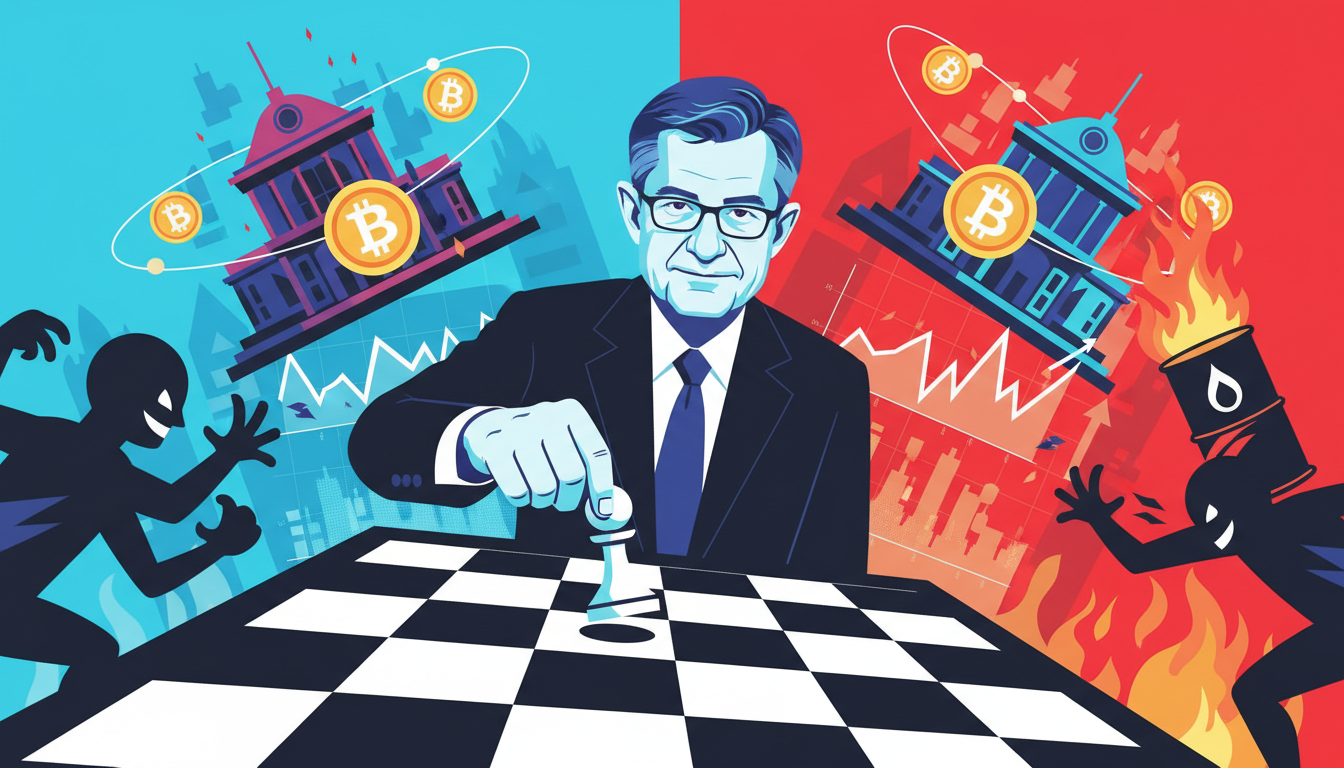
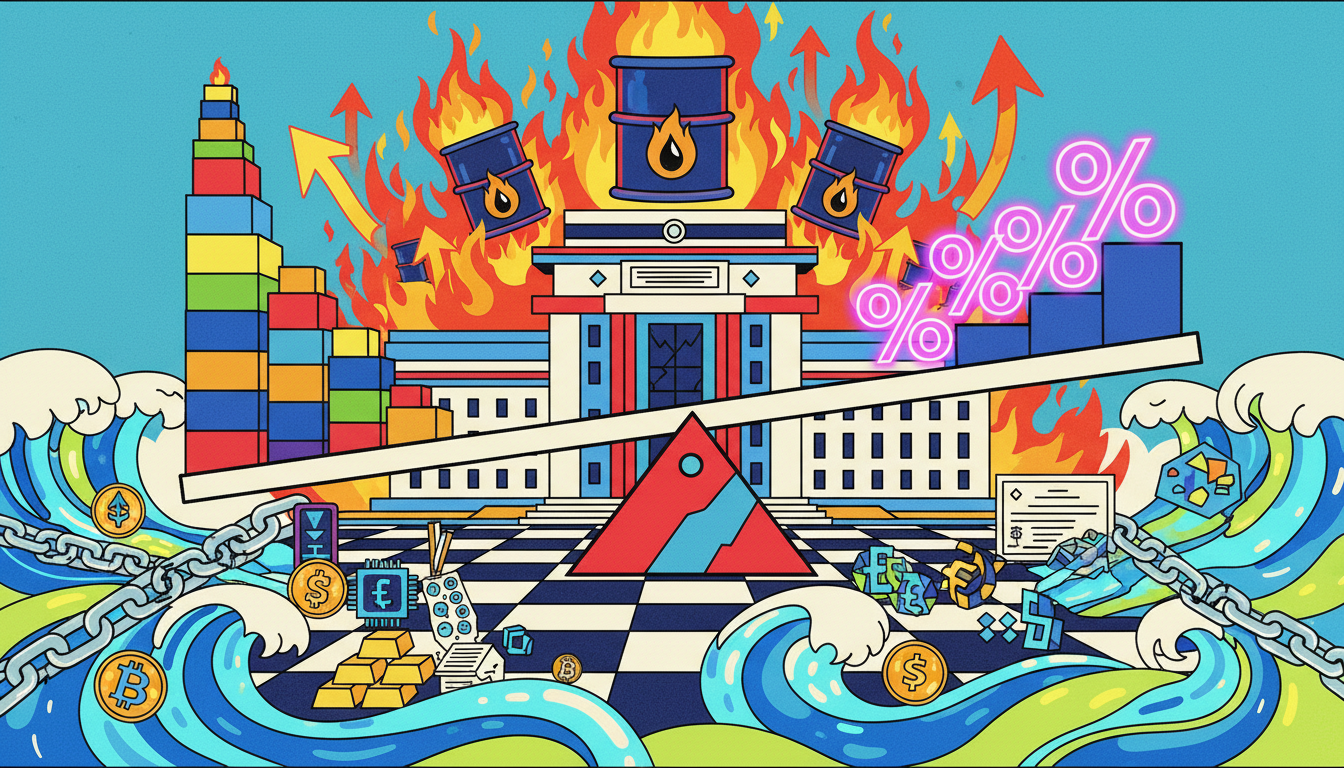
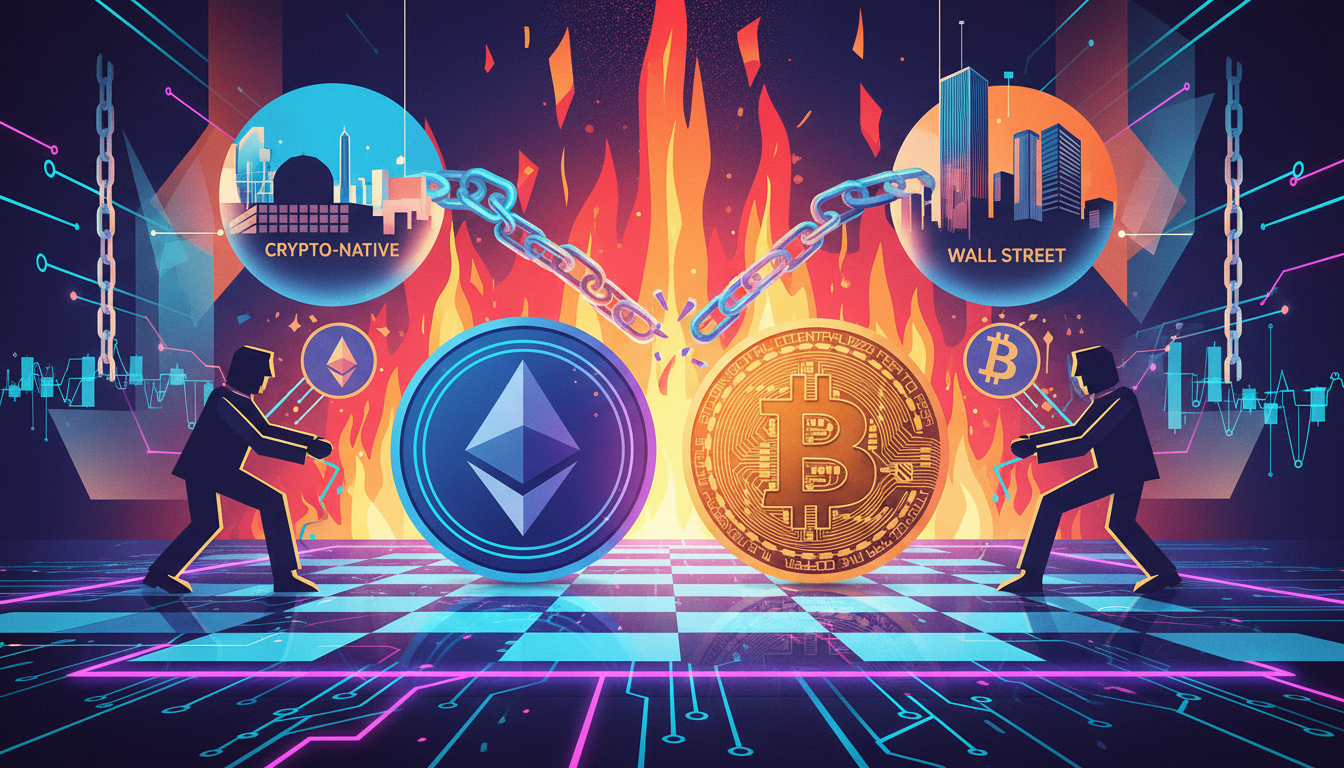
On March 30, 2026, Eastern Standard Time, the statements surrounding U.S. President Trump and the new Iranian regime suddenly intensified: on one hand, the U.S. claimed it was engaged in "serious negotiations" with Tehran, while on the other hand, it publicly threatened to destroy Iran's energy infrastructure, including Halk Island. This contradictory stance of "negotiation" and "attack" has quickly been interpreted by global markets as a signal of escalating geopolitical risks. Meanwhile, the dollar/yen briefly fell 0.5% to around 159.50, while S&P 500 index futures saw a contrary rise exceeding 1%, with traditional safe-haven assets and risk assets fluctuating in parallel, reflecting the tension and wavering of investors in the face of uncertainty. The question then arose: in this round of Middle Eastern games that may be continuously magnified, will funds once again treat crypto assets as a "safe haven" that can be temporarily used for docking, as they did in some past phases?
Negotiation and Threat Coexist: The Escalation of the U.S.-Iran Verbal War
On March 30, multiple channels from the U.S. released signals indicating that the U.S. was engaged in "serious negotiations" with the new Iranian regime, trying to find some sort of calming exit for the Middle Eastern situation. However, almost at the same time, Trump publicly stated his intention to "destroy" Iran's key energy facilities, including Halk Island, which has long been seen as one of the lifelines for Iranian oil exports. The parallel existence of negotiations and threats makes it difficult for the outside world to judge whether Washington is actually laying out diplomatic space or using extreme pressure to raise the stakes. For market participants, the contradictory nature of such policy signals itself constitutes a source of instability.
The Iranian side did not choose silence. According to public reports, the Iranian Foreign Ministry responded immediately, labeling Trump's related statements as "psychological warfare," and attempting to interpret it as the U.S.'s internal and external public relations maneuvering, rather than substantive policy intent. This direct counterattack sharply contrasted the narratives between the U.S. and Iran: one side emphasized a combination of negotiation and deterrence, while the other sought to belittle it as mere rhetoric, as both sides competed for narrative control over the "real tension level" of the situation.
What complicates the situation further is that the complete text of Trump's original statements is hard to find on public channels, and much of the key information comes from secondary sources, requiring tools like Grok to trace back. The opacity and fragmentation of the information dissemination chain makes it difficult for the market to discern which phrasing is an accurate expression and which is an amplified interpretation by the media. This state of unverifiability at the source has exacerbated investors' hesitation and divergence over risk pricing.
Despite this, reports surrounding the expression "destroy energy facilities" have quickly been locked in by the market as a symbolic signal of escalating geopolitical risk. Regardless of whether the conflict will lead to substantial outcomes, as long as this threat is perceived as having a certain probability of occurrence, it is enough for funds to raise safe-haven weights and adjust allocation dynamics in the short term. Thus, a psychological game that initially remained on the level of rhetoric and public opinion has rapidly been translated into risk premiums in exchange rates, stock indices, and even commodities expectations.
The Key Energy Port Named: The Energy Lifeline Pressed
In this round of turmoil, the specifically named Halk Island is particularly sensitive. Public information indicates that Halk Island has long been one of Iran's key oil export terminals and holds strategic significance for its crude oil sales. However, details such as the precise proportion of the island in Iran's overall exports and the daily passage number of oil tankers have not been disclosed, and moreover are clearly labeled as unverifiable, meaning this part can only remain in qualitative terms as a "key node" without the possibility of further detailed quantitative breakdown.
Despite the lack of details, the market often automatically associates expressions like "destroy energy infrastructure" with potential impacts on the global oil supply chain. If Halk Island or similar terminals are affected, it not only signifies a blow to Iran's singular export capabilities but might also trigger amplified concerns over shipping safety in the vicinity of the Strait of Hormuz, thereby affecting a broader Middle Eastern energy landscape. When pricing, funds do not focus solely on a single facility but look at it as a pressure test of overall regional supply stability.
Once Middle Eastern energy passages are perceived as being in a "threatened" state, the risk premium segments in traditional asset pricing models will be rapidly reassessed. For sectors like oil, shipping, and energy stocks, the market will preemptively account for potential supply disruptions caused by geopolitical friction; for the global equity and bond markets, expectations of rising oil prices combined with economic growth uncertainty will alter the balance of yield curves and equity risk premiums. Even if the conflict ultimately does not escalate to substantial attacks, as long as expectations are ignited, asset prices will have to incur additional costs for "uncertain tail risks."
It is important to emphasize that current public briefings have not provided specific price points for Brent Crude or WTI, and the related short-term volatility lacks multidimensional data verification. In such a state of incomplete information, all analyses regarding the energy market must rely more on expectations and sentiment frameworks, and cannot yield precise quantitative conclusions. For investors, the ability to differentiate between "imagined shocks" and "real supply and demand changes" will determine their profits or losses during this emotional amplification cycle.
Exchange Rates and Stock Indices Respond First: The Paradox of Parallel Safe Haven and Risk
In terms of asset response, the first to react were the currency markets and U.S. stock futures. According to single-source data, following the escalation of Trump's related statements, the dollar against the yen fell 0.5%, reported near 159.50, a move interpreted by many traders as a signal of funds temporarily flowing back into the yen, a traditional safe haven currency. Meanwhile, S&P 500 index futures rose contrary to trend, increasing more than 1%, portraying a scenario where risk preference assets strengthened in unison—this structural contradiction of safety and risk starkly highlights the pricing logic rupture currently present in the market.
The strength of the yen is backed by the natural return of preference for traditional safe-haven assets during times of geopolitical tension. For many macro funds, the initial reaction to potential Middle Eastern shocks is still to reduce dollar longs and increase allocations to yen or certain sovereign bonds to hedge against tail risks. However, the simultaneous rise in the S&P 500 futures indicates that another segment of funds chooses to bet that "tightening oil supplies will benefit energy stocks and related sectors' profits," seeing geopolitical risks as a catalyst for sector rotation, which is reflected at the index level as a rally in weighted sectors, driving up overall futures prices.
On a more micro level, short-term trading funds are attempting to find arbitrage opportunities between the narratives of "war concerns" and "tightening oil supply benefits energy stocks." On one hand, they seek to hedge systematic volatility by buying defensive assets and shorting overvalued growth stocks; on the other hand, they attempt to utilize the expected profit differentials brought on by geopolitical shocks by allocating to traditional beneficiary sectors like energy and military, extracting excess returns in the re-pricing process. This narrative hedging structure makes the surface of the market appear "bewildered," but underneath, capital is simultaneously betting on multiple logical threads.
However, it is necessary to clearly note that the current volatility data regarding dollar/yen and S&P 500 futures is limited, and still comes from single-channel initial clues. This means that this round of performance in the currency and stock index markets is more akin to an "initial price testing" at the onset of the event, rather than a confirmed trend signal. Whether the subsequent trajectory will continue depends on whether the geopolitical situation undergoes substantial escalation, whether the energy market exhibits irregularities in volume and price, and whether policy communication can help cool the tense emotions.
Funds Seeking New Ports: Can Crypto Assume Safe Haven Role?
For the crypto market, the Middle Eastern geopolitical conflict is not the first test of the "narrative of digital asset safe havens." Based on past rounds of conflict and financial turmoil, assets like Bitcoin have at times been viewed as "digital gold," providing a path for asset escape and value storage during capital controls and fiat currency devaluations in certain regions; however, at other times, they were treated by the market as high beta risk assets, closely linked to U.S. growth stocks and tech stocks, and being the first to bear the brunt when risk preferences contract. The oscillation of this role has made the proposition of "can crypto serve as a safe haven" an eternally debated topic.
From a traditional financial perspective, re-pricing of the crypto sector has already manifested. According to single-source information, Bernstein recently pointed out that crypto-related stocks are trading at about 60% discount relative to their underlying assets and believe this discount may be close to the bottom zone. This viewpoint does not directly answer "does crypto serve as a safe haven," but provides a sample: in the eyes of mainstream brokers, crypto stocks are undergoing a second valuation process following deep clearing, with the market beginning to reassess their position and risk compensation level within asset portfolios.
If risks in the Middle East continue to rise in the coming weeks, one possible funding pathway is: part of global investors may increase their allocation to crypto concept stocks through the U.S. stock market, indirectly gaining exposure to crypto assets; while another group more familiar with on-chain operations may directly buy Bitcoin, Ethereum, and other mainstream assets in the spot market, building "decentralized asset backups" outside the traditional financial system. This "crypto stocks + spot" dual pathway logic for allocation is not based on a single safe haven motive, but rather treats crypto as an edge case with resilience within a diversified portfolio.
However, it must be emphasized that current public information does not reveal any significant signs of large-scale on-chain capital migration, nor are there any unusually high subscription or redemption data at the ETF level to support claims that a "safe haven tide" has begun. Whether it’s exchange wallet balances, large on-chain transfers, or the net inflow and outflow situation of mainstream crypto ETFs, there currently lacks sufficient hard evidence to validate that "funds are pouring into crypto safe havens on a large scale." Therefore, the judgment that funds regard crypto as a new safe haven can only temporarily be considered a potential behavioral hypothesis rather than an established fact.
The Race of Emotion and Narrative: How Psychological Warfare Amplifies Volatility
The Iranian Foreign Ministry labeling Trump's comments as "psychological warfare" is in itself a re-shaping of market sentiment. For traders accustomed to capturing signals in fragmented information, this label directly impacts their subjective judgments of the credibility of threats: some may think that since it is defined as psychological warfare, the probability of actual attacks is relatively controllable; others may interpret it as "the parties involved are deliberately downplaying the risks," thereby increasing their subjective weighting of extreme scenarios. This divergence is quickly projected into directional bets on different asset prices.
In the information dissemination path, media and social platforms further amplify the intensity and breadth of these expectation divergences. Original information often appears as a highly condensed quote, then spread through various accounts via screenshots, paraphrasing, and emotional headlines, with each round of sharing incorporating new interpretations and value judgments. When Trump's original post itself is difficult to directly verify through public channels, the distortion risk of this chain link significantly rises—what market participants see is often no longer the "original meaning," but rather a version filtered through multiple rounds of emotional distortion.
In the early stages of insufficient data, many short-term traders have to rely more on narratives and headlines for decision-making. News headlines, social media trends, and real-time comments from key opinion leaders often trigger buy and sell orders within minutes or even seconds. In the absence of reliable quantitative support, this "story-driven" decision-making approach can easily lead to prices significantly deviating from fundamentals in a short period, resulting in subsequent overreactions and mispricing being corrected.
The structural characteristics of the crypto market make it particularly sensitive to such narratives of psychological warfare. On one hand, high leverage is a norm: from perpetual contracts in derivatives exchanges to various leveraged tokens, funds can amplify directional risk exposure in a very short time; on the other hand, high liquidity and 24/7 uninterrupted trading provide the perfect stage for instant emotional release. When a certain version of the narrative gains predominance on social media, the price and liquidation data in crypto markets often provide exaggerated and intuitive feedback within hours. Psychological warfare does not need to land on a real battlefield, as numerous simulations of "flash crashes and surges" have already been played out within trading venues.
After Short-Term Emotional Stirring: Response Strategies for Crypto Investors
Returning to this geopolitical event, it can be seen that: the verbal confrontation between the U.S. and Iran, the public naming of key Middle Eastern energy facilities, and the initial fluctuations in currency markets and stock indices indeed form a causal chain, but this link is still filled with uncertainties. Whether negotiations will lead to easing or a breakdown, whether facilities like Halk Island will truly face security threats, and whether global funds choose to gradually increase defensive allocations or regard it as a normal "geopolitical noise," still lacks clear answers.
In the absence of details on oil prices and any concrete evidence of military action, simply attributing the current market response to "the initiation of a crypto safe haven rally" is clearly premature. For investors, a greater risk may actually stem from overly believing in any single narrative—whether the optimistic version of "Trump is just engaging in psychological warfare, there won't be real strikes," or the pessimistic version of "the energy lifeline is pressed, a global crisis is imminent." Once bets are placed on a certain extreme story, position management and risk control can easily be taken over by emotions.
For crypto investors, a more pragmatic approach is to shift focus from emotions themselves to quantifiable indicators: such as monitoring whether the implied volatility curve of major exchanges is steepening, whether the futures premium structure is abnormal, whether large on-chain transfers and net inflows/outflows at exchanges are showing turning points, and whether related ETF fund flows are exhibiting patterns similar to past conflict periods. In terms of leverage and position management, it is advisable to proactively reserve buffer space for extreme tail scenarios, avoiding maintaining overly high leverage during high-volatility phases and reducing the risk of being passively liquidated due to short-term "false breakouts" or "false crashes."
Looking ahead, if subsequent negotiation signals strengthen and military threats dissipate, risk premiums in traditional markets are likely to retreat, and the premium on oil and energy stocks will be compressed again. In this situation, crypto assets are more likely to return to a rhythm dominated by macro liquidity and internal cycles of the industry, naturally cooling the heat of the safe haven narrative. However, if the situation unexpectedly escalates, even if a full-scale conflict does not occur, as long as the safety of energy facilities continues to be questioned, some funds will inevitably seek value anchoring outside fiat currency and the traditional financial system. During this process, mainstream crypto assets like Bitcoin and related stocks may once again encounter a pricing game entangled with dual identities of "safe assets" and "high-risk assets." For crypto investors situated at this crossroad, what truly needs to be contended is perhaps not which side's narrative is more compelling, but who can maintain a clear scale of risk and return amidst information noise and price turbulence.
Join our community for discussions and let's become stronger together!
Official Telegram community: https://t.me/aicoincn
AiCoin Chinese Twitter: https://x.com/AiCoinzh
OKX benefit group: https://aicoin.com/link/chat?cid=l61eM4owQ
Binance benefits group: https://aicoin.com/link/chat?cid=ynr7d1P6Z
免责声明:本文章仅代表作者个人观点,不代表本平台的立场和观点。本文章仅供信息分享,不构成对任何人的任何投资建议。用户与作者之间的任何争议,与本平台无关。如网页中刊载的文章或图片涉及侵权,请提供相关的权利证明和身份证明发送邮件到support@aicoin.com,本平台相关工作人员将会进行核查。