At the end of March 2026, the cryptography technology circle was completely detonated by two heavyweight papers. The industry originally generally believed that the critical point for combating the ECDSA signature algorithm, known as "Q-Day" (the day quantum computing breaks), would be between 2031 and 2038, but recent research indicates that this threat is accelerating exponentially.
When the paper data from Google Quantum AI and the startup Oratomic was presented, not only did Ethereum (ETH) feel a sense of urgency, but even the usually "don't act unless necessary" Bitcoin (BTC) community could no longer escape. Musk even jokingly remarked: "Forget the wallet password, it can be retrieved in the future." Behind this is a life-and-death struggle involving $1.8 trillion in assets.
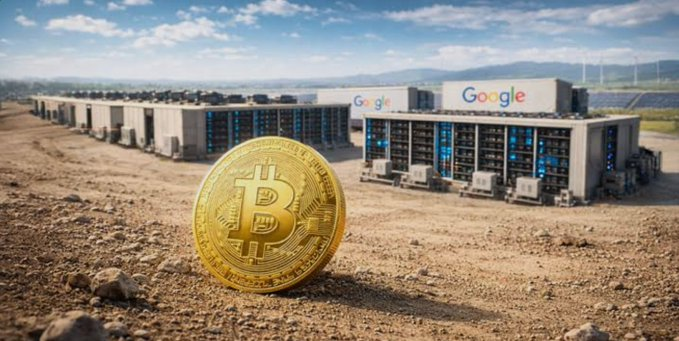
Musk immediately joked on X: "The good thing is, if you forget your wallet password, you can retrieve it in the future." This comment turned pure FUD into a "double-edged sword"—quantum is both a threat and an opportunity to retrieve millions of "forgotten BTC." But for the entire market, this involves a super sell pressure crisis involving 6-7 million BTC (about 25-33% of the total supply), with a total value of $1.8-2.1 trillion if BTC rises to $300,000.
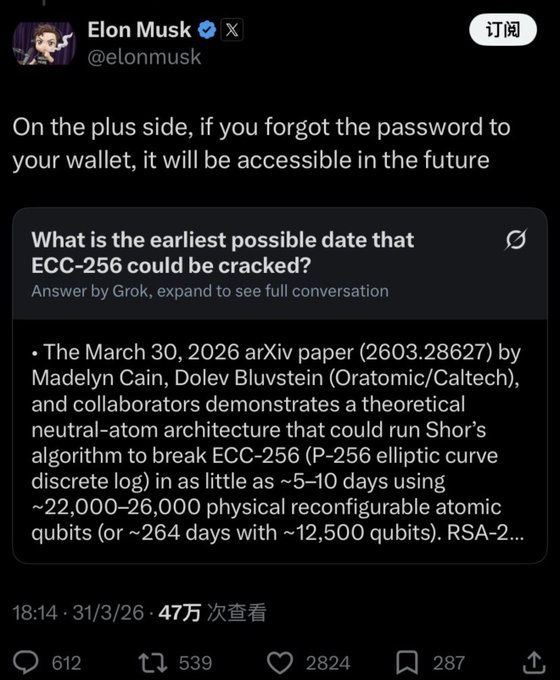
Core of the Paper: The "Hunt" for 26,000 Quantum Bits
The core breakthrough of these two papers is that quantum computers reverse the private key from the exposed public key much faster than expected.
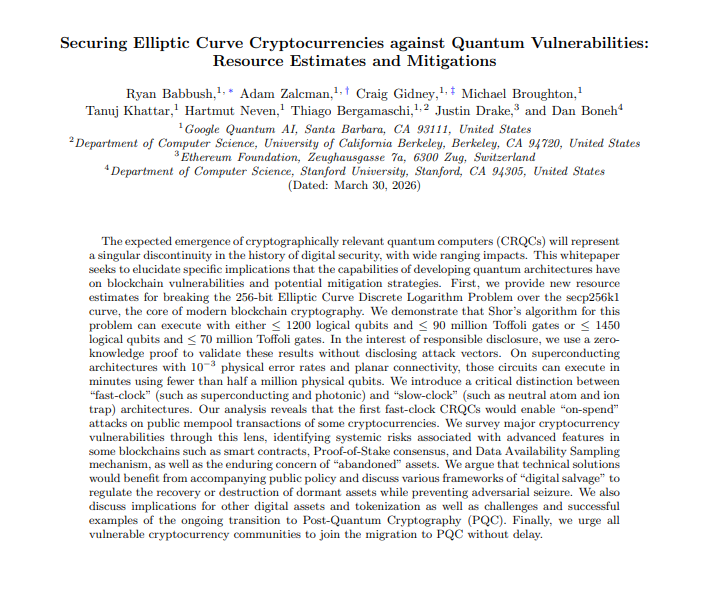
Minute-Level Cracking by Google Quantum AI
Google has conducted deep optimizations on the "Shor algorithm" specifically for cracking elliptic curve encryption, particularly adapting it to the secp256k1 curve used by BTC and ETH.
Core Data: The paper states that if using Google’s superconducting quantum computer, it would take only a few minutes to recover the corresponding private key from an exposed public key.
Oratomic's Composite Breakthrough: 40-Fold Resource Reduction
Another paper from the startup Oratomic is even more astonishing. They achieved a composite breakthrough by combining the unique physical layer technology of neutral atom quantum computers.
Core Data: It requires only about 26,000 physical quantum bits to crack the secp256k1 private key. According to Justin Drake's assessment, this reduces the previously optimal solution by about 40 times. Although neutral atoms operate slowly, requiring about 10 days for a complete crack, this is already a "feasible technical route."
Conclusion: Although the probability of achieving CRQC (cryptography-related quantum computers) in the next 5 years is low, the probability is gradually increasing over time. Previous conservative timeline assessments must be revised.

Musk's Jokes and the Conspiracy of 6 Million BTC Sell Pressure
Musk's joke about losing a wallet is technically valid, but it is economically disastrous.
Whose Money Will Be "Retrieved"?
The main threat of quantum computers currently is to addresses with exposed public keys. This includes:
- All P2PK legacy addresses (the default format from the Satoshi era).
- Any address that has made transfers (thus exposing the public key) but still has a balance.
Scary Scale of Chips
This involves a large proportion of BTC processing: about 25-33% of BTC (approximately 6-7 million coins) are in a quantum-exposed state. This includes:
- Satoshi's 1 million coins.
- Millions of BTC permanently lost in the early days.
If we calculate the value of these funds at BTC reaching $300,000, the total value is between $1.8 trillion and $2.1 trillion. If these coins "belong to whoever takes them," such a massive inflow of BTC into the market would lead to unimaginable consequences.
Faced with this complex governance game, smart traders have started to position in the Aster ETH/BTC exchange rate pair.
Utilizing Aster's 1001x flexible leverage and low fee advantage, you can leverage minimal costs for the premium brought by the safe consensus transfer. At Aster, placing an order means immediate execution without waiting, allowing you to seize opportunities the moment news breaks.
One-click order:
https://www.asterdex.com/zh-CN/referral/9C50e2
III. Governance Dilemma: BTC's "Non-Interference" Principle vs. $1.8 Trillion Temptation
Now, the biggest difficulty for BTC’s anti-quantum route lies not in technology, but in governance dilemmas.
Rifts in Community Consensus
Regarding how to deal with the funds of these 6-7 million exposed addresses, the community has three sharply opposing views:
- Freeze/Burn: Completely remove this portion of chips. But this severely violates the BTC community's fundamental principles: non-interference, non-tampering.
- Whoever takes it is theirs: This would lead to the aforementioned terrifying sell pressure.
- Incorporate into security budget: This is an innovative suggestion, using these tokens as subsidies for the security budget after future mining is completed, thereby solving the two major problems of quantum computing and security budget. However, it is highly likely to encounter fierce opposition from the non-intervention faction.
ETH vs. BTC: The Game of Defensive Certainty
Veteran BTC supporter Nic Carter bluntly pointed out:
- ETH's Positivity: Has listed post-quantum cryptography (PQ) as a top strategic priority before 2029, with a clear roadmap.
- BTC's Delay: Developers generally "deny/delay/perform poorly," with almost no substantive BIP advancement. While BIP 360 has been added to the repository, it merely paves the way for soft forks, and a complete migration plan is still under discussion.
This gap in quantum security may, in turn, become the logic for ETH/BTC strengthening.
The real market reaction under quantum FUD: AiCoin data shows no panic
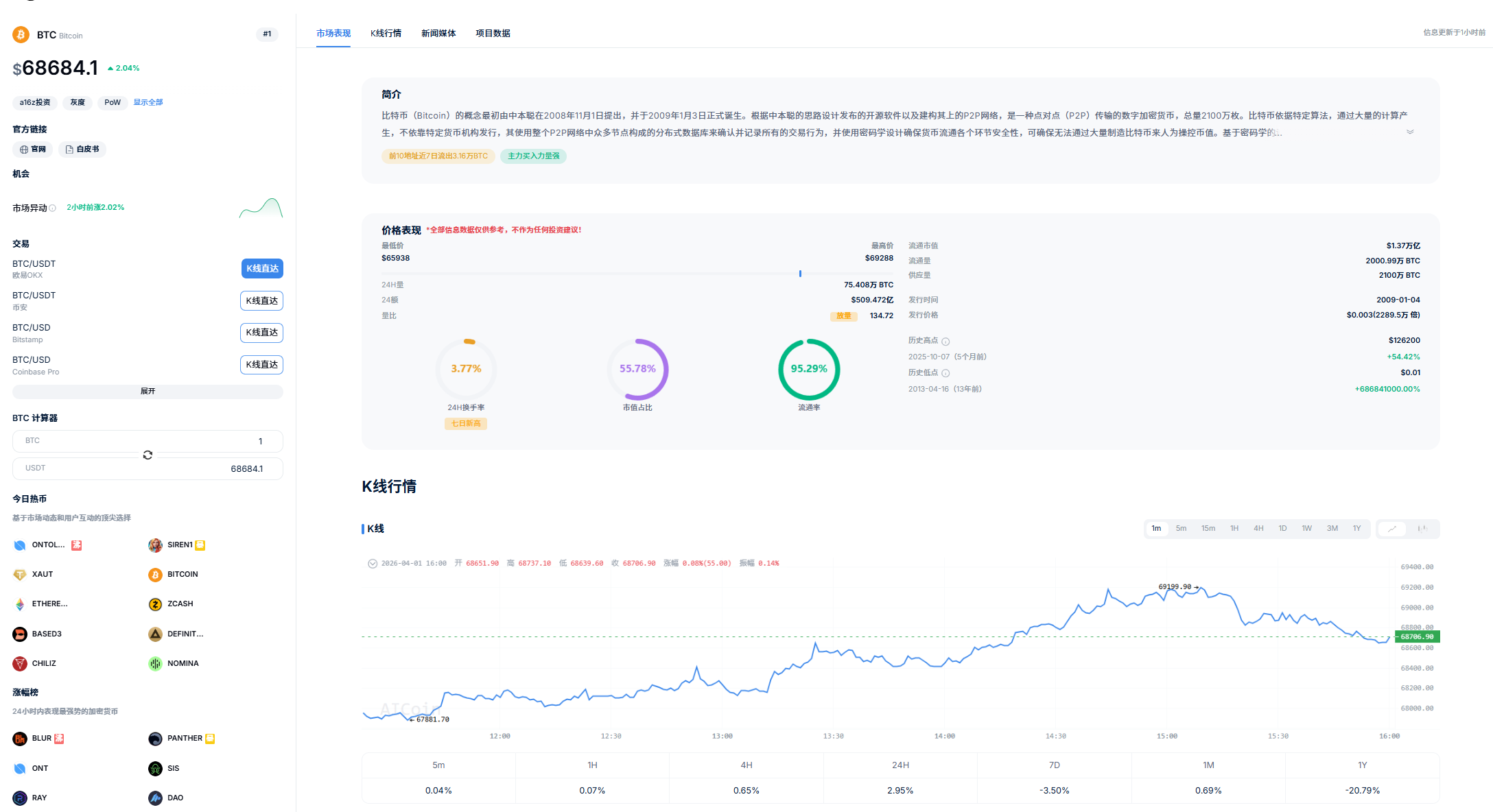
Despite Q-Day alarms trending widely, AiCoin platform K-line data shows that BTC rose and oscillated within 24 hours after the paper's release (current price range of $68,200-69,000, with a 24-hour increase of +2.0%-2.8%).
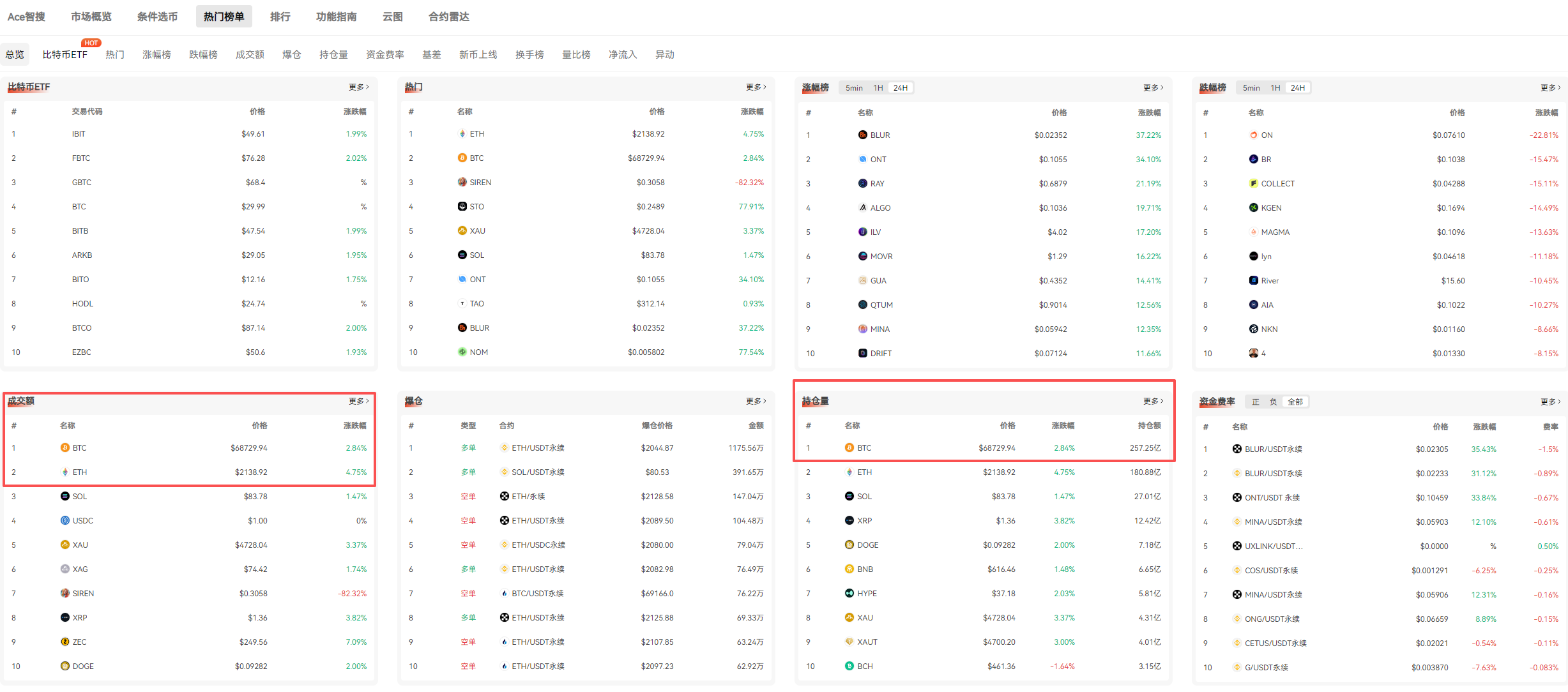
Market turnover exceeded $200 billion, with BTC trading volume firmly in first place.
Net capital inflow remains positive: Enterprise buys from Saylor Strategy, Metaplanet, etc., continue to fill small outflows from ETFs. Liquidation data shows that approximately $313-366 million in liquidations occurred across the network within 24 hours, with slightly more long positions but no chain reaction; strong buying from major players ensued after the high-leverage retail liquidations.
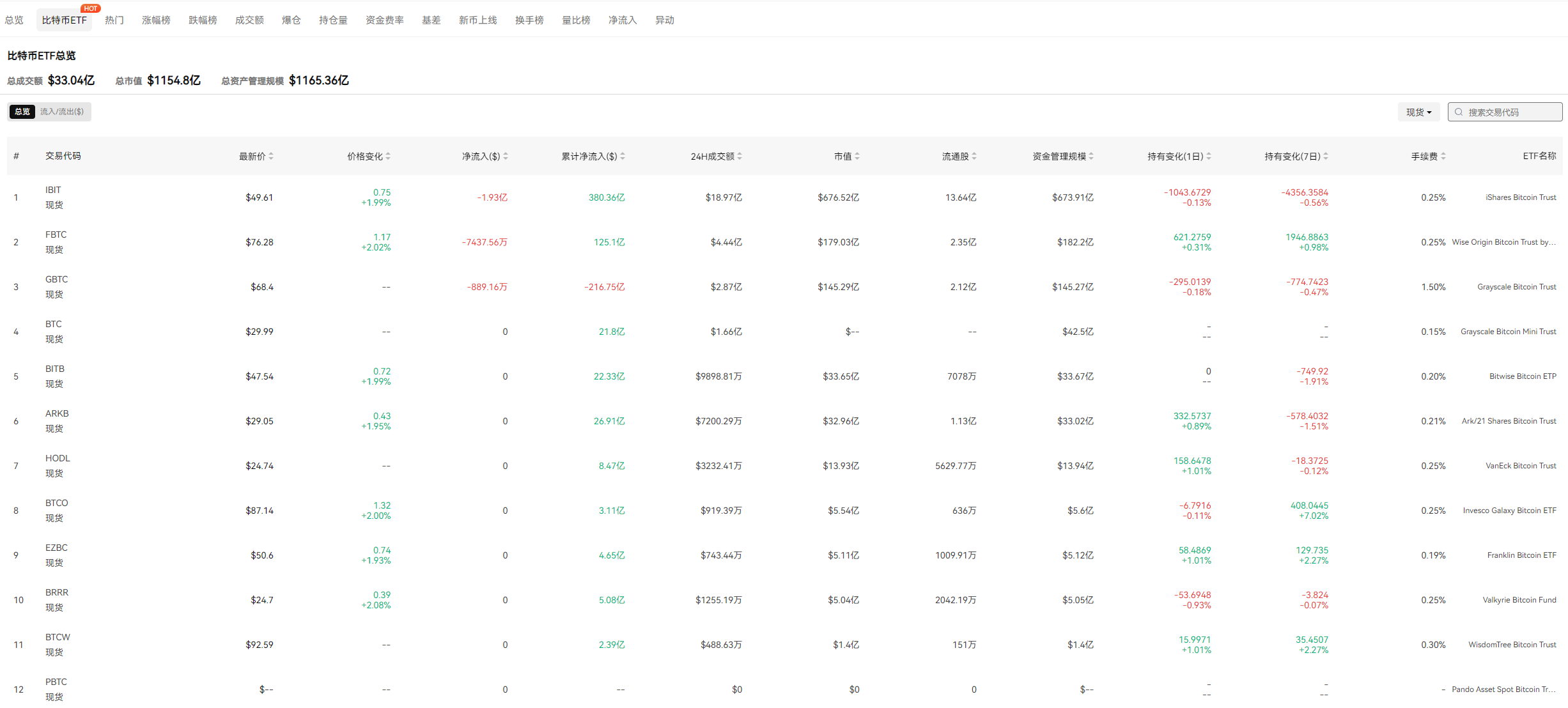
Historical funding rates and long-short ratio data both indicate that the market interprets quantum threats as a "solvable technical issue."
AiCoin’s large order tracking and large order transaction functions are actively monitoring: There are no abnormal activation signs from ancient Satoshi Era addresses; institutional funds continue to position through indirect leverage such as STRC. Contract holding data and liquidation history further confirm—leverage funds are more chasing upwards rather than fleeing.
IV. Survival Tools for Ordinary Investors
Faced with the probability of an early Q-Day, while we cannot change community decisions, we can use tools to protect our assets.
Upgrade Wallet Address
The most pragmatic method is to ensure your BTC is stored in a modern Bech32 address that has never made any transfers. If any transfers have been made, please switch to a new address.
Monitor Data for Abnormal Movements
Before a consensus is reached on a complete anti-quantum migration BIP, monitoring the flow of funds is the only defense line.
We can set alerts for large sell orders through AiCoin’s On-Chain Warning feature. As soon as any movements threaten the 6 million BTC at risk, users will receive push notifications through On-Chain Warning. Before algorithmic security migration is completed, "intelligence advantage" is the first line of defense against quantum threats.
The quantum era is approaching. Is BTC ready?
Join our community to discuss and become stronger together!
Official Telegram Community: t.me/aicoincn
AiCoin Chinese Twitter: https://x.com/AiCoinzh
OKX Benefit Group:
https://aicoin.com/link/chat?cid=l61eM4owQ
Binance Benefit Group:
https://aicoin.com/link/chat?cid=ynr7d1P6Z
免责声明:本文章仅代表作者个人观点,不代表本平台的立场和观点。本文章仅供信息分享,不构成对任何人的任何投资建议。用户与作者之间的任何争议,与本平台无关。如网页中刊载的文章或图片涉及侵权,请提供相关的权利证明和身份证明发送邮件到support@aicoin.com,本平台相关工作人员将会进行核查。