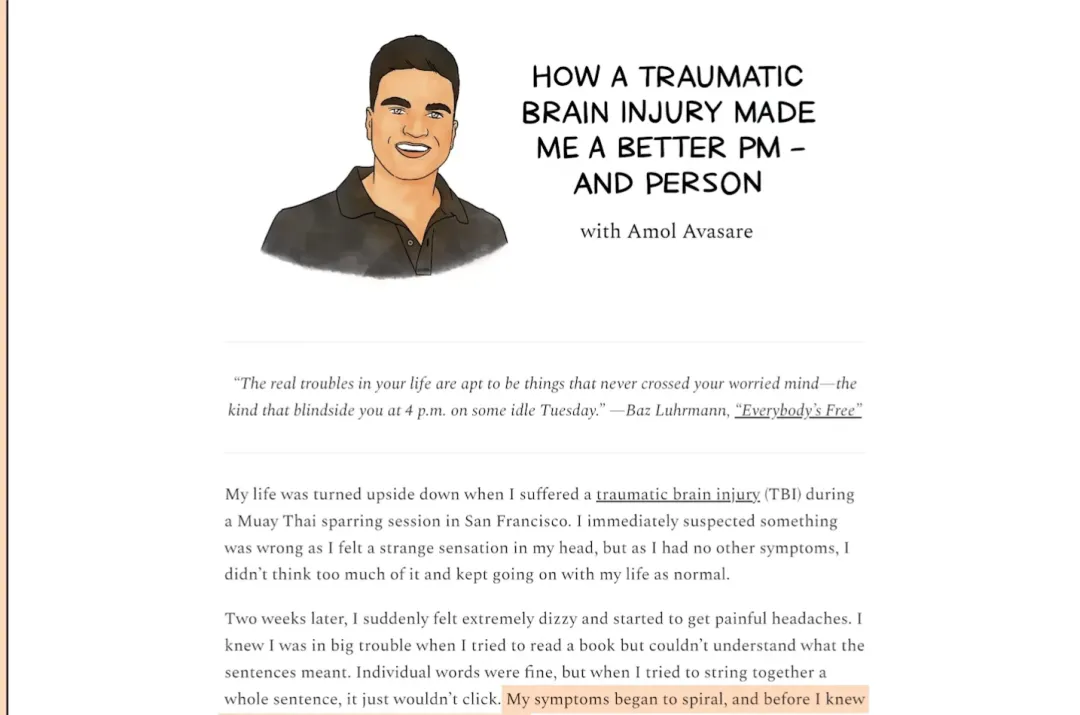
It is now April 2026. Lenny Rachitsky sits in front of a podcast microphone, listening to the numbers reported by Amol Avasare, the head of growth at Anthropic, and is stunned for a moment.
Fourteen months ago, Anthropic's annual recurring revenue (ARR) had just broken $1 billion. That was early 2025. Today, one year and two months later, that number has soared to $19 billion. Atlassian and Palantir have been around for nearly twenty years, and their ARR is stuck at around $4-5 billion. Anthropic is equivalent to conjuring up a Palantir out of thin air every few months.
This kind of growth makes those within the company feel somewhat unreal.
When Amol was still a regular user experimenting with Claude, he looked at this smart but somewhat clumsy AI in terms of its business closed loop and sighed. He was convinced that this group of geeks didn’t have a decent growth team at all. Relying on the intuition he honed from starting his own company, he sent an email to the then product manager, Mike Krieger. Yes, the same guy who casually founded Instagram.
The email didn’t have any pleasantries; it basically conveyed that their product was impressive, but they had no growth strategy and needed to talk.
Mike responded. Amol became the only product manager to break into this fastest-growing company by cold emailing, and he later rose to become the head of growth.
Before the story continues, here are three contrarian insights brought by Amol
• Smart growth is the deliberate creation of precise resistance to filter and understand your users.
• Traditional micro-operations A/B testing has basically become ineffective in the face of exponential AI growth. You either bet on opportunities that can amplify a thousand times in the future, or you do nothing.
• If project development time is less than two weeks, there’s no need for a product manager; let the engineers take responsibility for the results themselves.
The Successful Disasters That Trapped You
70% of the growth experience Amol accumulated in other companies was basically useless here. He spends more than half of his day dealing with what is internally referred to as "successful disasters." The new model is so popular that traffic bursts through the servers or completely overloads existing user pathways.
All the indicators on the screen are green, shooting up to the top right corner, but the entire team's nerves are about to snap.
In this context, the traditional workplace triangle begins to break down. With tools like Claude Code, engineers' output efficiency has multiplied two to three times. Previously, a product manager would interface with five engineers; now the coding output of those five people can match that of fifteen.
PMs are overwhelmed by deliverables and cannot manage effectively. Amol's solution is direct and even somewhat blunt—if the engineering workload takes less than two weeks, the engineer acts as PM. They align with stakeholders on their own and deal with legal disputes on their own.
Since even writing documents and running data can now be replaced by machines, how can human PMs survive?
Amol's strategy is to stop competing for standardized skills and to look for cross-firing points. He seeks out those quirky combinations of experiences he has. Amol has founded companies, worked in investment banking, nearly went into sales, and ultimately blended these into business growth. In this era where large models can write copy for you, only those with some cross-disciplinary wild paths won't be easily cut by algorithms.
Growth Hackers Taken Over by Large Models
Faced with the push from technology, human response times have become inadequate.
They launched a project called CASH (Claude Accelerates Sustainable Hypergrowth). In simple terms, it allows Claude to take over growth experiments by itself.
The system automatically identifies opportunities, proposes hypotheses, modifies copy and UI code, launches tests, and ultimately presents the data results on the table. Amol calculated that the winning rate of this system is already on par with a junior product manager with three years of experience. As long as the brand bottom line is defined, it is a tireless machine.
With even writing documents and running data being handled by machines, what are humans doing?
Amol delegates the filling of reimbursement forms and booking meeting rooms entirely to AI. More intriguingly, he has Claude review the publicly available articles and internal Slack chat records of his direct supervisor, Ami Vora, every week. Then he asks the AI, based on what you know about Ami and my work this week, how do you think she would respond?
He is using large models to gain insights into his boss's temperament in advance. This sounds somewhat absurd but is extremely useful.
The Head That Was Shattered by a Kick
Amol is not the kind of Silicon Valley elite who sails smoothly through life.
In 2022, during an ordinary mixed martial arts (MMA) training session, Amol received a solid kick to the head.
Life was pulled to an abrupt halt.
For a full nine months, he was unable to work. In the first few months, aside from bathing and using the bathroom, his wife took care of everything for him. Just listening to music for 20 seconds would make him nauseous, and just looking at the screen would make the world spin. It took him half a year to relearn how to walk like a normal person. At that time, he even discussed with his wife how to live if he was rendered useless for life.
Rehabilitation from brain injury is an incredibly grueling process. But it was those days spent teetering on the edge of despair that gave him an unusual sense of calm.
Later, after joining Anthropic, faced with growth curves and work noise that could make one anxious, he found that he no longer easily felt anxiety. A person who has lost even basic survival abilities will not be intimidated by several wildly fluctuating data tables.
Because he had lost everything, he began to obsess over limits. Just like Anthropic, which was incredibly poor in its early days without Meta's cash or OpenAI's first-mover advantage, they had to stake everything on B2B and code generation. The road chosen due to lack of money and resources ended up allowing them to avoid meaningless money-burning deadlocks with major companies.
Your Guide to Rehabilitating from Derailment
Finally, here are a few wake-up tips for those in the workplace who feel dragged to the brink of losing control in the AI era.
Learn to leave some money on the table.
Never try to squeeze the last drop of profit. Sacrificing experience or breaking safety lines for a few percentage points of conversion rate is extremely shortsighted. Giving up immediate monetization opportunities for the sake of safety principles, this kind of restraint that pushes money away, has become Anthropic's strongest survival barrier.
Force a power cut.
Even if the company rakes in tens of millions of dollars every day and new models are being announced everywhere, Amol will still forcibly cut the power during the morning and afternoon, spending ten minutes alone in the office’s meditation area.
The world doesn’t lack those ten minutes for you to make a change, but you need those ten minutes to confirm that you are still alive.
After all, even the wildest exponential growth can't endure the sudden rupture of a weak blood vessel in your head.
免责声明:本文章仅代表作者个人观点,不代表本平台的立场和观点。本文章仅供信息分享,不构成对任何人的任何投资建议。用户与作者之间的任何争议,与本平台无关。如网页中刊载的文章或图片涉及侵权,请提供相关的权利证明和身份证明发送邮件到support@aicoin.com,本平台相关工作人员将会进行核查。


