On April 7, 2026, East Eight Time, the struggle between the U.S. and Iran over key proposals entered a new round. Iran reportedly gave a tough response to the latest text from the White House, while the U.S. passively continued to revise its wording at the negotiation table. On the same day, two seemingly unrelated on-chain movements were amplified: on one end, there was a large-scale destruction of wstUSR tokens derived from the USR attack incident, with approximately 32.4 million tokens erased in one day; on the other end, a certain address withdrew 10 million ASTER tokens, valued at around $6.7 million, from Binance. The hardball tactics of geopolitical maneuvering overlapped with large-scale cleanups and transfers in the crypto world, exposing a massive gray area under information asymmetry: are these on-chain actions merely technical operations for security disposal and asset reallocation, or is someone quietly reconstructing risk exposure by leveraging geopolitical noise? Is the market pricing fear, or are participants paying a premium for the layouts of a few "prophets"? This became the core suspense in this narrative.
Tough Response and Escalation of Stone Age Threats in Public Opinion
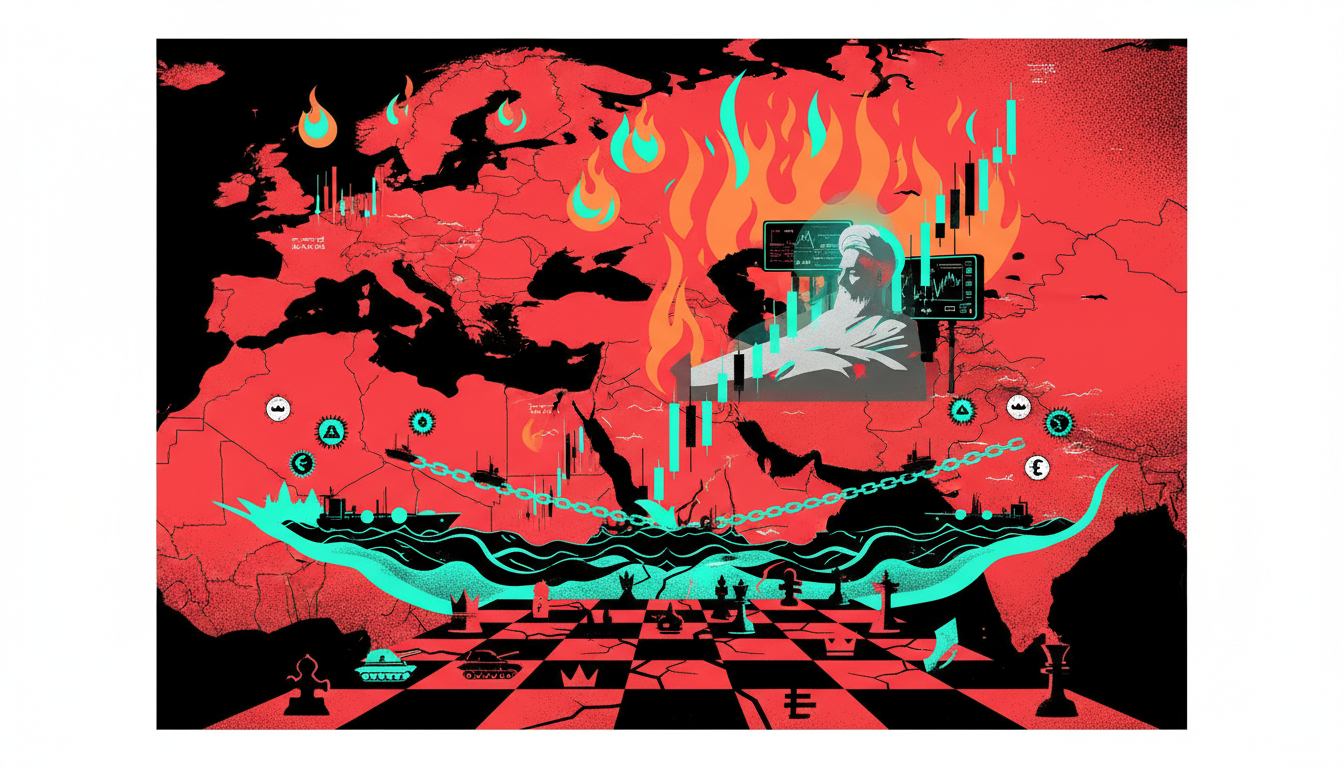
On April 7, according to reports from Axios and other sources, Iran has submitted a formal response to the latest proposal from the U.S., which was characterized as "tough." This statement did not end the negotiations; the White House viewed it as part of a routine negotiation strategy rather than a "table-flipping" maneuver and subsequently continued to push for text revisions, hoping to find new focal points in wording and pace. This approach of maintaining communication while projecting a tough signal outward is, in itself, a typical discourse in great power rivalry.
Meanwhile, in the public opinion arena, an advisor from the Iranian parliament responded to Trump's threats of “sending you back to the Stone Age” through tough remarks surrounding the so-called “ultimatum,” forming a narrative battle aimed at both domestic and international audiences. Both sides are aware that this high-decibel dialogue is more about seizing the narrative high ground than immediate mobilization commands, yet it is enough to stir emotional waves in media headlines and social networks.
It needs to be clarified that the specific terms of Iran's response, the complete text of the original U.S. proposal, and the concrete arrangements regarding the so-called "deadline" have yet to be publicly released, and research briefs clearly prohibit any form of speculation and fabrication. What the outside world can access are only a few fragmented descriptions filtered through secondary channels; without key contextual elements, they can be easily over-interpreted.
Under such an information structure, the seemingly confrontational public statements from both sides actually intentionally retain a large amount of strategic ambiguity: they need to project a "non-compromising" posture domestically while leaving diplomatic maneuverability for themselves. For the market, this ambiguity translates into immense uncertainty—price, positions, and risk appetite often have to be made in forced choices between limited facts and excessive emotions.
Millions of Tokens Erased in On-Chain Cleanup
On the same day that diplomatic rhetoric heated up, a long-tail security incident in the crypto world reached a critical juncture for “cleanup.” Surrounding the previous USR attack incident, the agreement party has reduced approximately 46 million illegally minted tokens through destruction and blacklisting mechanisms, marking a continuous on-chain cleanup process. The most notable action on April 7 was 32.4 million wstUSR being destroyed, with data disclosed by PeckShield indicating that this single destruction event accounted for about 40% of the initial total amount of illegally minted tokens, equivalent to erasing a large chunk of “dirty assets” directly from the total supply.
This scale of destruction is fundamentally an asset write-off completed on-chain. For the liquidity and market-making of the related assets, on one hand, the concentrated marking and destruction of illegal tokens helps to shorten the duration of the attacking shadow and reduces the risk of continued selling pressure in the secondary market; on the other hand, the structure of holdings is reshaped in the short term, and some market-making accounts and strategies need to reassess their inventory and hedging models, potentially leading to abnormal fluctuations in price spreads and depths for a period of time. This is similar to the write-off of bad assets by banks in traditional finance: the “clean slate” on the books, but the market will need time to verify whether confidence has genuinely been restored.
From a broader perspective, during a phase where geopolitical risks heat up and regulators become more sensitive to cross-border capital flows, the handling of security incidents is often scrutinized under the magnifying glass of compliance and attitude. Whether the agreement party can quickly and transparently complete the cleanup, whether it actively collaborates in on-chain evidence collection and blacklist processing, will all affect the outside world's repricing of its governance capabilities and compliance willingness. The large-scale destruction of wstUSR is both a technical “liquidation” and an attempt to reconstruct credibility and regulatory imagination.
Whale Withdrawal of ASTER: Hedging or Layout?
Almost simultaneously with the cleanup of wstUSR, another large transfer captured by on-chain monitoring accounts emerged from a centralized exchange: a certain address withdrew 10 million ASTER from Binance, valued at approximately $6.7 million at the time. This transfer is large enough to alter the supply structure of certain pools, but it is important to emphasize that current intelligence about the identity and future moves of this address comes from a single source and lacks broader cross-verification.
In terms of timing, this large withdrawal naturally triggers associations with “whether there is a geopolitically driven hedging or advanced positioning.” Particularly during periods of heightened market sensitivity to “smart money,” any migration coinciding with geopolitical time windows will be interpreted within political and macro coordinates. However, the on-chain data only tells us that funds have “moved,” without directly revealing their motives.
If we break down possible paths, this large ASTER withdrawal could correspond to several strategies:
● The first is over-the-counter hedging or asset restructuring; after funds are withdrawn from the exchange, they may enter an OTC counterparty or structured product to hedge against other position exposures, which is relatively common when macro uncertainty rises.
● The second is cross-chain migration or staking for mining; some holders may transfer chips from the exchange to the chain when specific interest rates or incentive windows open in exchange for locked profits;
● The third could be short-term event-driven speculation, betting on a specific narrative or technological upgrade, allowing for more flexible position adjustments on-chain.
All these paths currently lack additional on-chain verification, making it unreasonable to assert them as “insider-driven.” Large single-point transfers are statistically not uncommon, but amid frequent geopolitical shocks, they tend to be amplified as “high-sensitivity indicators,” with market participants more willing to believe they are some sort of leading signal. This psychology itself can alter liquidity and volatility structures.
Strategic Ambiguity and Information Asymmetry Amplifying Volatility
From a macro perspective, geopolitical negotiations such as the U.S.-Iran situation inherently rely on strategic ambiguity for bargaining: ambiguous red lines, ambiguous timelines, ambiguous bottom lines, allowing opponents to probe uncertainly and enabling allies to maintain unity amidst incomplete information. However, this ambiguity, once filtered through the media and transmitted to retail and institutional investors, results in entirely different interpretations of the same event. The media often chases the most sensational phrases like "Stone Age" and "ultimatum," while institutions pay more attention to the original wording and accompanying actions from primary sources, whereas retail participants encounter mainly emotional fragments that have undergone multiple rounds of retelling on social platforms.
Layering this logic onto the blockchain allows us to outline a complete transmission chain: official rhetoric—media interpretation—on-chain behavior—price volatility. The high-profile clashes between Iran and the U.S. in public forums are translated by media into headlines of “negotiation breakdown risk” and “military escalation expectations”; meanwhile, the cleanup of wstUSR and the large transfers of certain big players in ASTER, as cold hard on-chain facts, are rapidly stitched into the geopolitical narrative by the crypto community, forming inferences that “some are withdrawing early/some are seizing the opportunity to position”; ultimately, these inferences evolve into short-term liquidations, increased hedges, or counter-trend buying in the secondary market, pushing prices away from fundamentals.
The blockchain world is extremely transparent in data—each transaction can be traced—but it is highly ambiguous in identity and motives. This “semi-transparency” structure particularly amplifies information asymmetry and herd effects during periods of geopolitical sensitivity. Some participants only see address labels and follow suit, ignoring the time span, historical behavior, and aggregate risk, while others search for “conspiracy theory” evidence in scattered on-chain fragments, exacerbating narrative polarization.
For readers, a direct operational insight is: one must actively distinguish between verified information and unverified fragments, separating “what we actually know” from “what everyone is guessing,” avoiding being captured by a single narrative—be it “total war is imminent” or “smart money has fully positioned itself.” In terms of strategy, the graded management of information sources can determine the shape of the final return curve, more than just comparing a single news event or a single large transfer.
Examining Narrative Premiums and Risk Layers from TAO's Gamble
Against the backdrop of high geopolitical noise, the market is not solely focused on the clouds of war and cleanup. KOL ampera boldly claimed that Bittensor (TAO) will enter the top 10 in crypto asset market capitalization by 2028, while Multicoin Capital co-founder Kyle Samani publicly stated his willingness to bet $1 million on this, with such long-term technological narrative gambles still drawing significant attention. They represent an entirely different risk curve from the short-term panic driven by geopolitical events.
As U.S.-Iran negotiations repeatedly falter, and oil prices and safe-haven assets become headlines, long-term narratives around TAO, focusing on AI and decentralized computing power, can still leverage a portion of fund risk appetite. This is because the latter offers a “growth story” spanning several years, with its volatility driven more by technological progress, ecosystem expansion, and the evolution of capital narratives rather than the tactics of single negotiation nodes. For certain funds, in a phase of heightened macro uncertainty, there may be greater willingness to bet some chips on a long-term track with “relatively low geographical correlation” to hedge against the path dependency of purely macro trading.
When comparing panic trading driven by short-term geopolitical shocks to medium- and long-term bets on narratives, the gamification of these two narratives in fund allocation is clearly different: the former emphasizes liquidity and responsiveness, favoring spot and derivatives that can be quickly entered and exited; the latter emphasizes time and compounding returns, placing greater importance on technological moats and the depth of consensus. Geopolitical noise often squeezes short-term risk appetite but does not completely extinguish the imagination for long-term narratives, especially when these narratives have already accumulated certain technological achievements and community foundations.
This also leads to a more practical question: under the shadow of macro risks, is it still necessary to reserve chips for long-term narratives that have a foundation in technology and consensus? The answer is not a simple yes or no, but one must clarify the boundaries between “tactical positions” and “strategic positions” at the portfolio level. Tactical positions can be moderately swung and protective hedged around geopolitical nodes, while strategic positions should maintain a relatively stable holding logic for a few selectively identified long-term narratives, avoiding being frequently swayed by short-term news flows.
Understanding On-Chain Signals Under Geopolitical Shadows
In summary, on April 7, the tough negotiations between the U.S. and Iran over key proposals, the concentrated destruction of wstUSR following the USR attack, the large withdrawal of ASTER, and the million-dollar gamble surrounding TAO, while seemingly dispersed across different dimensions, share a common thread: how narratives shape funding behavior in a highly uncertain macro environment, and how on-chain data starkly presents these behaviors. Tough statements and strategic ambiguity make it difficult to precisely quantify geopolitical risks; on-chain cleanups after security incidents attempt to rebuild credit at the protocol level; large holders adjusting their positions and long-term technological bets rearrange the risk-reward structure at different time scales.
In such an environment, it is crucial to emphasize information boundaries. Core details regarding the specific terms of Iran's response, the contents of the U.S. original proposal, the so-called “deadline,” and “10-point response” do not currently exist in publicly accessible, authoritative, and complete text support, and have been explicitly listed as areas where speculation or fabrication is prohibited by research briefs. Statements and ceasefire arrangements in diplomatic contexts that remain unverified should also be strictly categorized as “noise not yet incorporable into trading logic,” rather than core bases for position decisions.
It is anticipated that in the coming weeks, U.S.-Iran negotiations will likely continue to dance between advancing and retracting, while the market will periodically experience emotional shocks framed as “risk of negotiation breakdown” or “calm in sight”; on the chain side, further cleanup and aftermath surrounding existing security incidents will still be observed, and additionally, more large transfers and structural adjustments will persist under the dual motivations of hedging and speculation.
For investors, a more viable action path is to use cross-validation of on-chain data and multi-source information to build their own “filter”: first confirm the facts, then discuss interpretations; first distinguish between structural behaviors and noise behaviors, then talk about tactical responses. Reducing dependence on single narratives and single information sources, lowering the frequency of decisions swayed by emotions and headlines, often determines the slope of long-term curves more effectively than “catching the next big trend.”
Join our community to discuss and become stronger together!
Official Telegram community: https://t.me/aicoincn
AiCoin Chinese Twitter: https://x.com/AiCoinzh
OKX benefits group: https://aicoin.com/link/chat?cid=l61eM4owQ
Binance benefits group: https://aicoin.com/link/chat?cid=ynr7d1P6Z
免责声明:本文章仅代表作者个人观点,不代表本平台的立场和观点。本文章仅供信息分享,不构成对任何人的任何投资建议。用户与作者之间的任何争议,与本平台无关。如网页中刊载的文章或图片涉及侵权,请提供相关的权利证明和身份证明发送邮件到support@aicoin.com,本平台相关工作人员将会进行核查。