On April 7, 2026, at 8 AM Beijing time, one of the key regional officials in the U.S. monetary policy system — New York Fed President John Williams — publicly spoke out against the backdrop of escalating tensions in the Middle East. On one hand, he provided a relatively optimistic and clear baseline forecast: an inflation rate of about 2.75% in 2026, GDP growth between 2% and 2.5%, and a stable unemployment rate; on the other hand, he emphasized that “the current position of monetary policy is just right,” suggesting that there is no pressure for the federal funds rate to quickly shift from its current level. This stance of “fire abroad, soldiers remain still” sharply contrasts with the market’s tense interpretations surrounding oil prices, safe-haven assets, and the future path of interest rate cuts. The core of the conflict lies in: when war may affect inflation and growth expectations, why does the Federal Reserve still adhere to the existing policy framework, while various parties, including prediction markets, bet on changes in advance? This divergence between the official baseline and market pricing constitutes the main tension for the upcoming macro narrative and asset volatility.
Geopolitical Impacts of Warfare on Hark Island
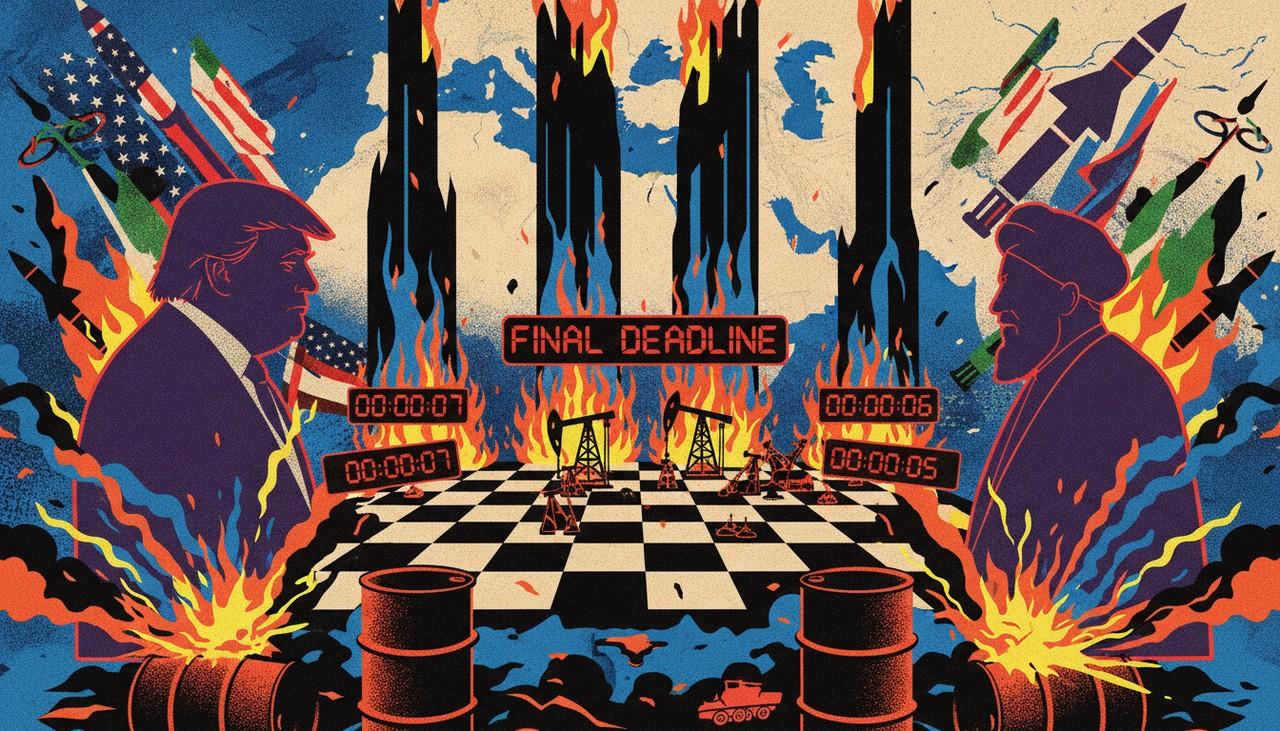
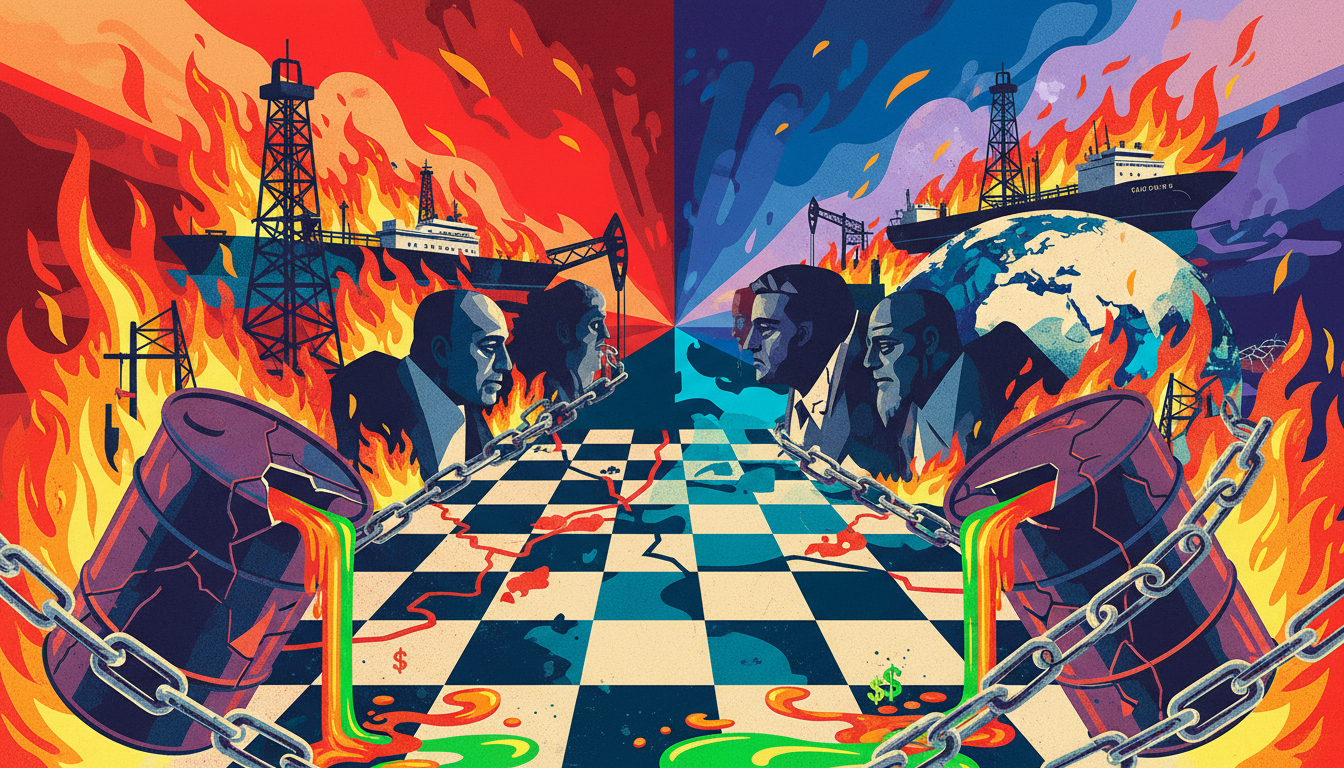
The current stage of this game is not limited to Washington and New York. A key action on the front lines of the Middle East is the U.S. military strikes on Iran’s Hark Island, targeting over 50 facilities. The symbolic significance of Hark Island in the global energy supply chain goes far beyond a mere isolated oil and gas facility: it is one of the critical nodes for Iran's oil exports, impacting the overall expectations regarding the safety of the Strait of Hormuz, shipping routes, and regional production capacity resilience. When missiles and drones strike such a location, the market's first thoughts are not about macro models, but rather about the potential new risk premiums related to oil prices and shipping costs.
In terms of transmission pathways, the impact of the Middle East situation on U.S. prices often first manifests in overall inflation, rather than immediately piercing through core inflation. Rising oil prices can elevate transportation and logistics costs through gasoline, diesel, and aviation fuel, which then adds to the retail price of goods; similarly, increased shipping costs can quietly lift the prices of imported goods. These impacts resemble a round of “cost-push” pressure rather than a broad price spiral caused by overheating demand. For this reason, current discussions about whether “war will push inflation an additional 0.1%-0.2%” remain at the level of scenario assumptions, lacking precise quantitative data that could be seriously incorporated into a policy reaction function, and can only be regarded as a risk awaiting validation rather than a certain path. What truly causes market anxiety are questions around two time dimensions: how long will the war last, and how will Iran respond? This determines whether oil prices will spike in the short term before retreating or enter a prolonged high plateau; it also lays the groundwork for the subsequent analysis of ceasefire predictions and policy path mismatches.
Inflation at 2.75% and Employment Stability as Policy Bottom Line
Against the backdrop of such external shocks, Williams still provided a relatively stable baseline: U.S. inflation of about 2.75% in 2026, GDP growth of 2%-2.5%, and an unemployment rate roughly maintaining current levels. This set of figures comes from a single source and is not a consensus forecast validated through multiple parties, but it is sufficient to reflect the New York Fed's internal assessment of economic and price trends at this point. More importantly, he set the tone for these predictions with the statement that “the current position of monetary policy is just right” — effectively telling the market that as long as inflation and growth roughly follow this trajectory, the Federal Reserve is more inclined to remain still rather than being easily swayed by the fires in the Middle East.
Behind this stance is the Federal Reserve's long-standing institutional distinction between overall inflation vs. core inflation. Overall inflation is repeatedly disturbed by supply-side shocks from energy, food, tariffs, etc., while core inflation more accurately reflects endogenous demand and wage-price spirals. When Hark Island is bombed and oil price sentiments heat up, decision-makers will prioritize two questions: first, how long can this round of oil price increases last, and second, whether it will propagate into broader inflationary inertia through wage negotiations and service price increases. As long as the latter has not been disproven, the Federal Reserve has reason to view the short-term oil price shock as “noise” rather than an immediate reason to change course.
Supporting this “wait-and-see without rushing” approach is the data buffer on the employment side. According to a report, ADP employment data shows that the U.S. private sector is adding about 26,000 jobs per week (also a single source). This is not an explosive sign of prosperity, but it sufficiently indicates that the labor market still maintains a certain level of resilience: unemployment has not surged sharply, and wage pressures have not spiraled out of control. For the Federal Reserve, this means there is no need to rush into easing due to a collapse in growth, nor does it need to be forced into further tightening due to extreme labor tightness. With war burning in the distance and domestic data remaining within baseline tolerance ranges, the “wait-and-see” approach becomes a defensible strategic choice.
The Hidden Lines of Inflation from Oil Prices to Tariffs
The conflict in the Middle East has brought oil prices back into focus, but there remains an older yet more stubborn pipeline in the current U.S. inflation story: tariffs. Over the past few years, multiple rounds of tariff measures have raised the marginal costs of goods exported to the U.S. from economies such as China, with some companies forced to pass those costs on to end consumers, leading to a slow yet persistent increase in prices. Unlike the high-frequency and intense variables of oil prices, the impact of tariffs resembles a layer of “background noise” applied to the price system, easily overlooked in wartime narratives, yet statistically substantial enough to elevate the overall inflation baseline.
When this old pipeline overlaps with new geopolitical risks, inflationary pressures no longer become solely a story about oil prices, but evolve into a composite structure of “cost-push + expectation amplification”: rising energy prices, shipping disruptions, and the maintenance or escalation of tariffs mean that companies, under multiple cost pressures, find it challenging to fully absorb the entire shock merely by squeezing profits — they can only partially pass it on to consumers. The market’s pessimistic expectations regarding the direction of war and tariffs will again amplify in asset prices and wage negotiations, creating a form of self-fulfilling inflation pressure. Against this backdrop, the Federal Reserve’s choice to emphasize core inflation and wage growth essentially seeks to filter out such short-term, policy-driven noise, avoiding frequent pivots in high-frequency volatility.
However, if tariffs become long-term or even “entrenched” in political struggles, the situation becomes more nuanced. Even if the fires in the Middle East eventually die down and oil prices retreat, those price increases embedded in tariff schedules and corporate cost structures will be difficult to reverse quickly in the short term. Overall inflation may then experience a high plateau period — ceasing to escalate uncontrollably as in 2021-2022, yet stubbornly remaining above target levels. For monetary policy, this means that interest rate paths might remain relatively tight for a longer duration, instead of returning to the comfort zone of the past low-interest-rate era.
Timing Mismatches between Polymarket Bets and Central Bank Baselines
As macro officials discuss inflation and GDP for 2026, the market on the other end has already been using real money to price a shorter-cycle war path. On the decentralized prediction platform Polymarket, the cumulative trading volume for contracts related to U.S.-Iran ceasefire has reached $107 million, with participants wagering on “when will the ceasefire occur” and “whether it will escalate.” Such public opinion markets do not regard long-term equilibrium, but are more concerned with whether key nodes triggering odds shifts will appear in the coming weeks or months.
This trading rhythm creates a natural mismatch with the statements made by officials like Williams, who rely on medium to long-term data indicating “the conflict is controllable and the economy is resilient.” Prediction markets favor binary outcomes and short-term turning points — ceasefire or escalation, sanctions or concessions; while central banks focus on inflation trends and financial conditions — whether prices are gradually returning near targets, and whether credit and asset prices remain orderly. Faced with the same Middle Eastern conflict, the former asks “what will happen next week,” while the latter is concerned with “what will happen over the next two years,” which inevitably leads to entirely different responses in terms of intensity to the same information flow.
In an era of highly fragmented information, such disparities can form reverse feedback loops. Prediction market prices may be cited by the media as quantitative indicators of “collective expectations,” resulting in a cycle of price-opinion-emotion: slight changes in contract odds can be amplified by social platforms into narratives like “hope for ceasefire has greatly increased” or “risks have suddenly escalated,” subsequently affecting the short-term fluctuations of safe-haven assets, stocks, bonds, and cryptocurrencies. For the Federal Reserve, this environment of public opinion indirectly shaped by prediction markets becomes one of the background noises of expectations they need to manage. It may not immediately change the dot plot but could influence decision-makers’ judgments about “whether financial conditions are overly tight or loose,” thereby marginally shaping the tone of policy communication.
The Hidden Line Linking Speculation on Cryptocurrencies to National Security in China
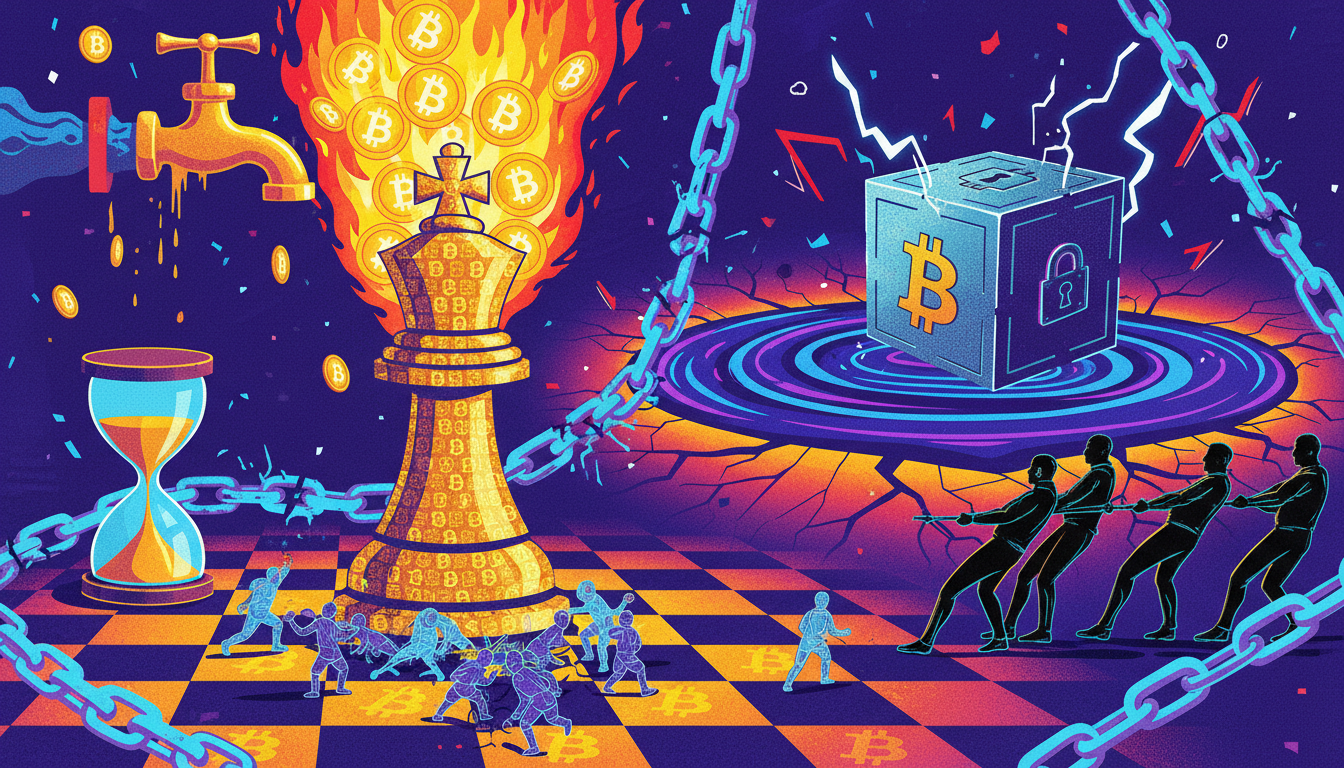
While the U.S. discusses warfare and inflation, Chinese regulators are also reshaping their risk narrative. Recently, China’s national security department publicly warned that the so-called “hoarding cryptocurrencies to get rich” and other forms of speculation are suspected of illegal financial activities, directly linking such speculative activities in cryptocurrencies with national security risks. Compared to traditional expressions of “preventing financial risks,” the emergence of the “national security” label signifies an upgrade in the regulatory perspective, from pure investment risk management to heightened vigilance against the systemic shocks that cross-border information and capital flows may bring.
On the surface, this might seem unrelated to U.S. military actions in the Middle East and discussions about inflation, but in the context of global capital flows, they share an underlying theme: capital seeking escape routes amidst safe-haven assets, speculation, and regulatory gaps. On one side, the Federal Reserve is striving to maintain a relatively stable monetary environment to prevent war sentiments from excessively penetrating into core inflation; on the other side, China is reinforcing the narrative of binding finance with national security, tightening the space for high-leverage speculative activities in cryptocurrencies. Therefore, the cryptocurrency market naturally becomes a frontier area where geopolitical tensions and policy divergences intersect.
This does not mean that we have mastered detailed data on how cross-border capital rotates between dollar assets and cryptocurrency assets. On the contrary, what can currently be observed are mainly signs at the macro-emotional level: some investors, concerned about the purchasing power of fiat currency and the escalation of geopolitical conflicts, tend to increase their allocation to “non-sovereign assets”; however, under high regulatory pressure, such behaviors may be forced underground or redirected to markets with more lenient legal jurisdictions. Due to the lack of systematic and verifiable statistics on capital flows, these observations often remain qualitative, making it difficult to be directly incorporated into any country’s policy reaction function, yet they genuinely exist on the risk narrative map in the minds of traders.
Warfare, Interest Rates, and Market Bets: Who Will Dominate the Future
Overall, the current landscape is a subtle triangular relationship: on one end is the Middle Eastern conflict, continually heightening uncertainty, including strikes on over 50 targets at Iran’s Hark Island and its impacts on oil prices and shipping expectations; on another end, officials like Williams from the Federal Reserve still adhere to a baseline of inflation and economic stability within controllable ranges, predicting 2.75% inflation in 2026, growth of 2%-2.5%, and stable unemployment rates while emphasizing that “the position of monetary policy is just right,” refusing to be “captured” by short-term wartime situations; the third end consists of various bets from Polymarket to global asset markets, attempting to anticipate ceasefires, escalations, or shifts in policies through price movements.
Between these three, the differentiation between overall inflation and core inflation, the overlapping effects of tariffs and energy prices, and the timing mismatch between prediction markets and central bank forward guidance together weave a complex network of policy games. Oil prices and tariffs can elevate overall inflation, but as long as core inflation and wage growth do not create a self-reinforcing spiral, the Federal Reserve has reason to remain still; prediction markets can engage in intense betting on ceasefire timing but find it hard to directly shake decision-makers’ judgments regarding the macro trajectory for 2026. This “short-term price volatility, long-term baseline caution” misalignment is the underlying hue of the current macro and cryptocurrency trading environment.
Looking ahead, the evolution of warfare, the progress of ceasefires, and the central point of oil prices will determine whether the Federal Reserve continues to patiently wait at the current interest rate levels or is compelled to adjust its pace at some point. However, in the absence of reliable information and complete context, precise predictions of the timing of interest rate cuts or hikes are inherently irresponsible speculation. For both cryptocurrency and macro traders, understanding how central banks internally weigh “short-term war impacts vs. medium- to long-term inflation trends” is more important than betting recklessly on the outcomes of the next interest rate meeting: they are more concerned with core inflation and financial conditions rather than every fleeting spike or drop in oil prices. Only by aligning their trading frameworks with this policy thinking can they aim to stand on the advantageous side of information and timing amidst the back-and-forth between geopolitical risks and policy pricing.
Join our community to discuss and grow stronger together!
Official Telegram community: https://t.me/aicoincn
AiCoin Chinese Twitter: https://x.com/AiCoinzh
OKX benefit group: https://aicoin.com/link/chat?cid=l61eM4owQ
Binance benefit group: https://aicoin.com/link/chat?cid=ynr7d1P6Z
免责声明:本文章仅代表作者个人观点,不代表本平台的立场和观点。本文章仅供信息分享,不构成对任何人的任何投资建议。用户与作者之间的任何争议,与本平台无关。如网页中刊载的文章或图片涉及侵权,请提供相关的权利证明和身份证明发送邮件到support@aicoin.com,本平台相关工作人员将会进行核查。