Written by: Web4 Research Center
"Colleague.skill" explodes GitHub—what we see these days is not just a celebration
GitHub stars sparkled rapidly in the late night. On March 30, 2026, a project named "colleague.skill" was like a spark dropped into a pile of dry firewood. According to the Star growth curve published on the GitHub platform, the project garnered over 6,600 stars within five days of launch, and after ten days this number soared to over ten thousand. The project profile page boasted a highly shareable slogan: "Transforming the cold farewell into warm Skills, welcome to join cyber immortality."
Developer Zhou Tianyi, an engineer at the Shanghai Artificial Intelligence Laboratory, took just 4 hours. The code itself is not complex, the logic is even plain—inputting colleagues' Feishu chat records, DingTalk documents, and email correspondence, it can generate an AI Skill that mimics speaking style, understands coding standards, and even perfectly replicates the "throwing the blame" gesture when making mistakes.
As the news spread, the comment section was instantly flooded with two opposing voices. One, excited to the point of trembling: "From now on, I won't have to write nonsense in handover documents when leaving." The other, a mix of anger and fear: "Are we signing the souls of the living into labor contracts?"
A larger ripple came from an industry rumor. In early April, a tech media outlet reported that a game company in Shandong used communication data from an employee who had left to train an "AI avatar," trying to have that avatar continue responding to work messages in the company's internal communication groups. Although the details of the report have not received an official response from the company involved, the implications pointed out have been enough to make every professional feel a chill down their spine.
This is not merely a programmer's self-entertainment. When skills can be packaged into files, the underlying logic of collaboration is being rewritten.
1. Not alchemy,just compressing "rules of the game"
Many people find "colleague.skill" mysterious, like some kind of cyber sorcery. But in the eyes of those in the tech circle, its principle is rather straightforward. It does not retrain a large model, nor does it distill some extraordinary new intelligence.
It is essentially a highly precise job description.
In jargon, Skills are based on the open standard released by Anthropic at the end of 2025. You can think of it as a structured folder: there’s a YAML-written introduction that tells the AI Agent when to open it; there are Markdown-written instructions that tell the AI Agent how to speak; it might even include a few reference screenshots or scripts. When a user’s question falls within the jurisdiction of this Skill, the AI Agent will temporarily load this manual and act accordingly.
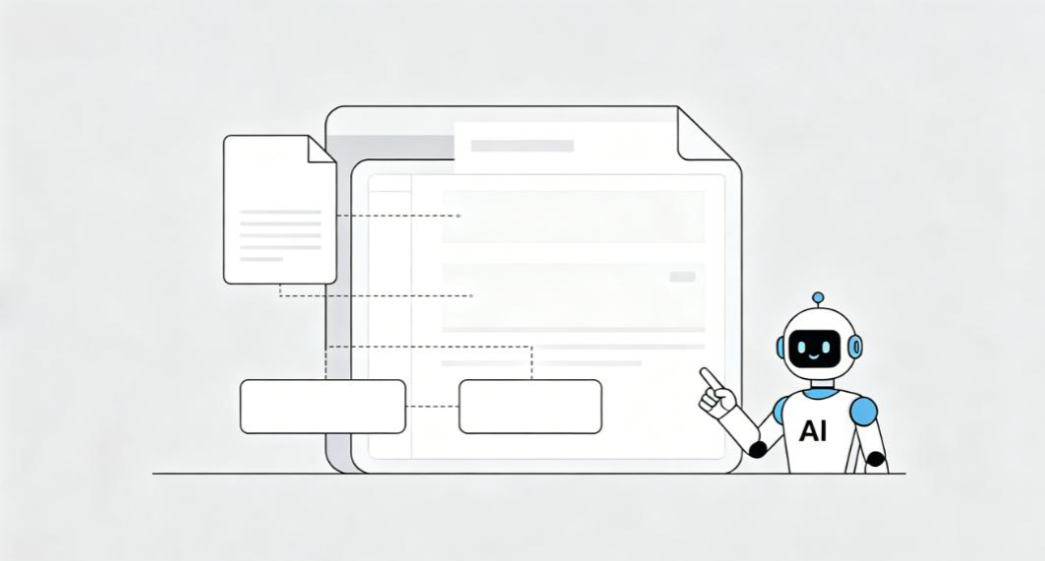
Skills do not create any new reasoning ability. They do not involve knowledge distillation in the sense of deep learning and do not change model parameters. If a large model is a jack-of-all-trades graduate who knows everything but lacks any depth, Skills are the manuals you hand it. No matter how detailed the manual is, the jack-of-all-trades remains the same jack-of-all-trades.
Given this, why has "colleague.skill" triggered such a strong reaction? The answer lies not in the disruptive nature of the technology itself, but in how it has pushed a trend that is already occurring in front of everyone in a highly shareable manner. Technology is never magic; the magic is the narrative wrapped around the technology.
The real cleverness of "colleague.skill" lies in its capture of the most costly expense in workplace collaboration—the depreciation of tacit knowledge. In the past, when old Wang, who could handle difficult clients, left the team, not only did he take his employee badge with him, but also a unique secret of "first sending three sad face emojis before mentioning the business". This secret was never written in the employee manual; it was boiled down through countless late-night teamwork and shared frustrations.
Now, this tacit understanding that was boiled down is compressed into a package with 4 hours of code. Human experience has, for the first time, become as plug-and-play as software plugins.
In other words, this is not about AI getting smarter; rather, it is about the things in human collaboration that are "understandable but not articulable" being standardized and packaged for the first time. The key issue is shifting from "how powerful are model capabilities" to "how collaboration structures change."
From this perspective, the Web4 Research Center believes that this is fundamentally not AI imitating humans, but AI serving as a new type of collaborative cache. It caches high-frequency, low-creative communication processes, so you don’t have to type fifty characters on WeChat every time you want to ask a question that has already been answered a hundred times.
2. When everyone starts to have their own API interface
At this point, we must step back from this specific project to observe the iceberg under the surface. Why has the concept of "colleague" sparked public opinion?
Because "colleague" represents an ancient production relationship—employment, collaboration, and competition. The emergence of "colleague.skill" just happened to step on the most sensitive point of the new context of Web4.
In the narratives of the past few years, Web3 has tried to solve trust issues using tokens and smart contracts, enabling collaboration on a code-is-law level. However, Web3 has overlooked a brutal reality: most human production activities do not happen on the chain, but occur amid Feishu documents, WeChat voice calls, and smoke-filled conference rooms.
The evolution path of Web4 is precisely to penetrate this layer of fog. According to the explanation from the Hong Kong SAR government at the first Agentic AI forum held this March, Web4.0 is an "autonomous network" centered on AI Agents, where the core is human-set goals, and agents collaborate to execute. Within this theoretical framework, AI is viewed as a potential collaborative subject rather than merely a tool, marking a shift from "humans operate machines" to "humans set goals, agents collaborate to execute."
To put this in simpler terms: in future companies, you'll need to interact not only with real people but also with a bunch of Skill files that reflect those real people.
Imagine this scenario. At three in the morning, you want to retrieve a technical specification that only little Li from the adjacent team knows about. Previously, you would have to hold on, wait for dawn, send a WeChat message, wait for replies, form a group, and explain the background. But with the advent of Skills, you only need to invoke "Little Li·Code Review Mode.skill" in the system, and the AI Agent will review the code according to Little Li's usual strict standards.
Little Li is asleep, but his collaborative persona is working for you.
This is an extremely bizarre form of asynchronous collaboration. Humans are not replaced, but the immediacy of humans has been decoupled. In the context of Web4, individuals are no longer the physical beings that must appear on time on the assembly line; they are more like super nodes equipped with API interfaces, capable of asynchronously outputting their professional judgments.
This is the root of why "colleague.skill" makes us feel both uneasy and excited.
3. Whose copy of the soul does it belong to?
After the excitement, the sword hanging over everyone's head is sovereignty.
Since everyone's communication style, decision-making logic, and even ways of casting blame can be packaged into a Skill file, whose file is it? Is it yours, who produced this data, or does it belong to the company that pays your salary and provides the servers for these chat records?
The legal answer is cautious. According to the Personal Information Protection Law of the People's Republic of China, handling personal information must have clear and reasonable purposes, directly related to the processing objectives, and must adopt methods that have the least impact on personal rights. Personal information processing must obtain the individual's consent. The behaviors of importing chat records into Skills without a colleague's permission carry clear legal risk boundaries.
Developer Zhou Tianyi is clearly aware of this powder keg. He has established an extremely strict localization mechanism in the project documentation: data is processed entirely on the user's own computer, with no uploads to the cloud, and all caches are physically cleared upon deleting the Skill. This serves as a technical self-verification of innocence and a kind of reluctant compromise.
Because everyone knows that once this technology moves from "local version" to "networked version," once enterprises require "Zhang San's sales script.skill" to be forcibly deployed to all company AI Agents, that so-called "local processing" hard boundary will instantly collapse. According to typical cases of public interest litigation for personal information protection released by the Supreme People's Procuratorate in January 2026, personal information protection is moving from legislation to enforcement, from principles to practice. In this trend, any AI application involving personal data will face increasingly strict legal scrutiny.
Deeper conflicts lie in property rights. Previously, your chat records were just a pile of redundant logs in the server; now, they have become high-value corpora that can directly enhance productivity. Your chat style, decision-making habits, and collaborative tacit understandings are transforming from a lubricating oil that isn’t counted in KPIs to a kind of digital production material that can be packaged, called upon, or even potentially traded. But under the current property rights framework, the legal certainty and transferability of this asset still lack clear institutional support.
If you are unaware of how your soul's copy is being used, then you have, in fact, exited this round of technological dividends.
4. When experience can be priced, who pays for tacit understanding?
At this point, a deeper question arises. If Skills become units of productivity, then the question is not just "who can use them," but "who can benefit from them."
Let’s widen the lens a bit. A top salesperson spent ten years honing a unique communication method with clients that helped the team secure countless orders. In the past, the value of this method could only be reflected through his salary, bonuses, and position, making it an asset tied to a specific physical person that could not be detached. But if one day, this method is distilled into a "Salesmaster.skill" that can be invoked by other colleagues, learned by new employees, or even authorized for use by partners, the logic of value distribution will be fundamentally changed.
Does this Skill belong to the individual salesperson, or does it belong to the company that hired him? If it belongs to the individual, can he take this Skill file when he leaves? If it belongs to the company, does the company have the right to deploy this Skill to other employees without his consent? If in the future Skills can be invoked, billed, or even traded, then tacit knowledge will first enter a pricing system. And whoever holds the pricing power will grasp the most core productive material in the Web4 era.
This is not distant science fiction. In the official Skill ecosystem of Anthropic, the most used Skills are concentrated in highly standardized collaborative aspects such as document processing, code review, and meeting summaries. When the collaboration experiences of these aspects are solidified, they inherently carry measurable and distributable economic attributes.
Thus, the real flashpoint for "colleague.skill" is not how human-like it is but the unintentional touch of an issue that has yet to be seriously discussed. In an era where collaboration is mediated by AI Agents, how will the value of individual experiences be recognized, protected, and distributed?
This is precisely the issue domain that the Web4 Research Center seeks to continuously track. The evolution of technology will never stop to wait for the system to catch up, but those who remain clear-headed amid the technological wave can at least ask the right questions first.
5. Projects will perish, but habits will be reborn
Having discussed so many risks and games, let’s extend our vision a bit.
The specific project "colleague.skill" is likely to be submerged by new hot topics in a few months. Like countless blockbuster projects that once topped the GitHub Trending charts, it will fade into silence.
But it will be like a meteor, burning itself up in the atmosphere yet sowing a trace element into the soil.
It will change a habit. In the future, when we hand over work, in addition to providing a cold Word document, we might habitually attach a folder called "handover.skill." Newcomers will no longer need to spend three months deciphering the unwritten rules; they can directly load this Skill, and the AI Agent will tell them: who to look for with problem A, what tone to use for report type B, and how to elegantly retaliate when department C throws shade.
This will lead to an extremely interesting reversal. In the past, we often said AI lacks common sense and social graces. But precisely because the AI Agent can strictly execute the instructions within the Skills, it has instead become the most rule-abiding collaborator. It won't behave strangely because it's having a bad day, nor will it lower standards because of personal relationships.
Humans are responsible for creating chaos and breakthroughs, while AI Agents are responsible for maintaining order and legacy.
The endpoint of technology is not to create an all-knowing AI god, but to distill the most precious certainties from our human collaborations into rules that machines can faithfully execute.
Skills forcibly clarify what was once a chaotic interpersonal understanding into computable instruction sets. This certainly carries risks; the risk lies in our potential over-reliance on this coded relationship, forgetting the warm nuances that cannot be defined in YAML format between individuals. But this is also an opportunity. If we can clarify property rights and delineate boundaries, this technology will, for the first time, turn the phrase "standing on the shoulders of giants" from being just a slogan into a reality.
4 hours of code have triggered millions' imaginations about the future workplace.
The deepest metaphor of "colleague.skill" is not how much AI resembles humans, but that human experiences can, for the first time, be plugged into another system like a USB drive.
It reminds us that as the doors of Web4 slowly open, what is truly scarce is no longer computing power but a clear awareness of one's digital sovereignty.
Don’t let your tacit understanding become someone else's free plugin.
Guard your folder.
免责声明:本文章仅代表作者个人观点,不代表本平台的立场和观点。本文章仅供信息分享,不构成对任何人的任何投资建议。用户与作者之间的任何争议,与本平台无关。如网页中刊载的文章或图片涉及侵权,请提供相关的权利证明和身份证明发送邮件到support@aicoin.com,本平台相关工作人员将会进行核查。


