Author: Web4 Research Center
On April 20, local time in the United States, Apple Inc. released a brief statement on its official website. Tim Cook, 65 years old, will step down as CEO effective September 1, 2026, with Senior Vice President of Hardware Engineering John Ternus taking over as CEO, while Cook will transition to the role of Executive Chairman of the Board. After the announcement, Apple's stock price fell slightly by less than 1% in after-hours trading.
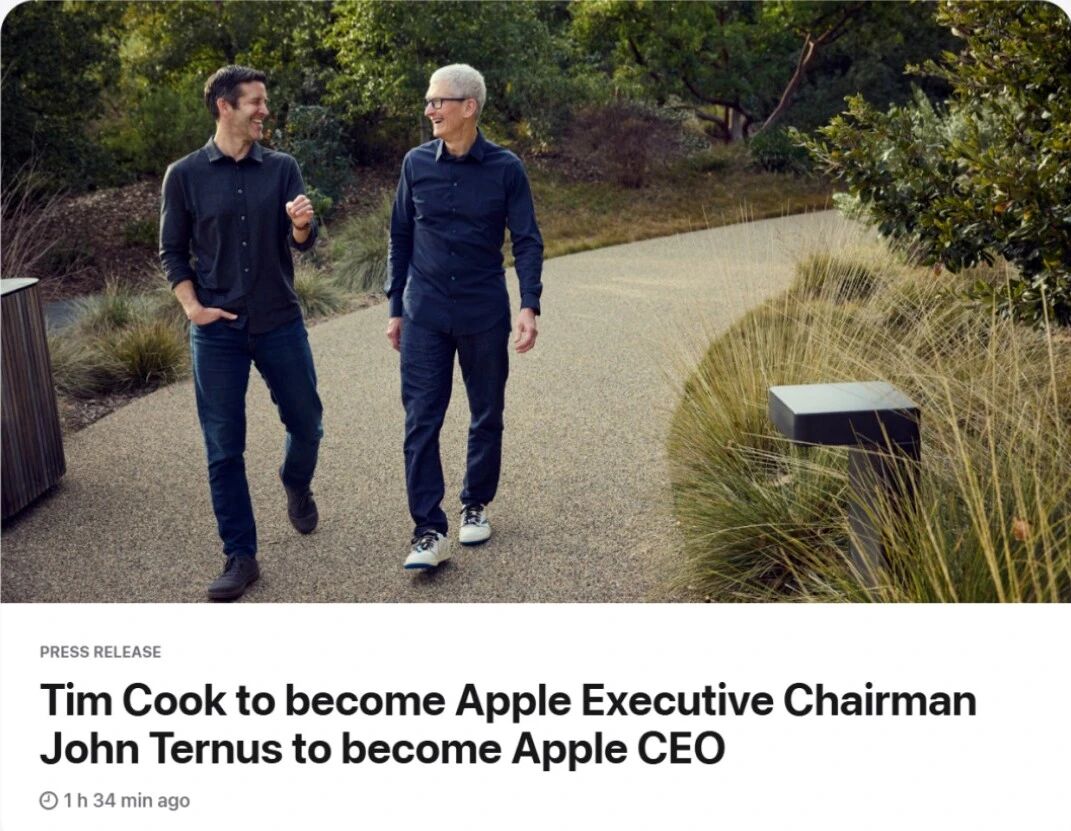
A fluctuation of less than 1% is like a pebble swallowed by the sea. The market seems to have long been prepared for this news.
This marks the first CEO transition at Apple since 2011. Fifteen years ago, Cook took over the reins just before Steve Jobs passed away, and no one could predict the direction Apple would take. Fifteen years later, he hands over a report card etched with a figure: a $4 trillion market value. From $350 billion to $4 trillion, an increase of more than 10 times.
But beyond the numbers, there are deeper questions worth asking. As the Web4 Research Center focuses on the forefront of AI and blockchain, we are more concerned not with the business story of this transition itself, but with the implications: how will the competitive landscape of the AI era be rewritten behind the power shift at the world's largest tech company? And will the hidden cryptographic undertow lurking within the Apple ecosystem encounter new variables under the new leadership?
Let’s start with the successor.
I. The Cook Era, a Glorious Reflection
Looking at the data from Cook's tenure, it is hard not to be shocked. Apple's market value swelled from about $350 billion to $4 trillion, with annual revenue climbing from $108 billion in fiscal 2011 to over $416 billion in fiscal 2025, nearly quadrupling. The number of active devices worldwide exceeded 2.5 billion, and retail stores surpassed 500. The New York Times unequivocally stated: this marks the end of one of the most successful management tenures in American business history.
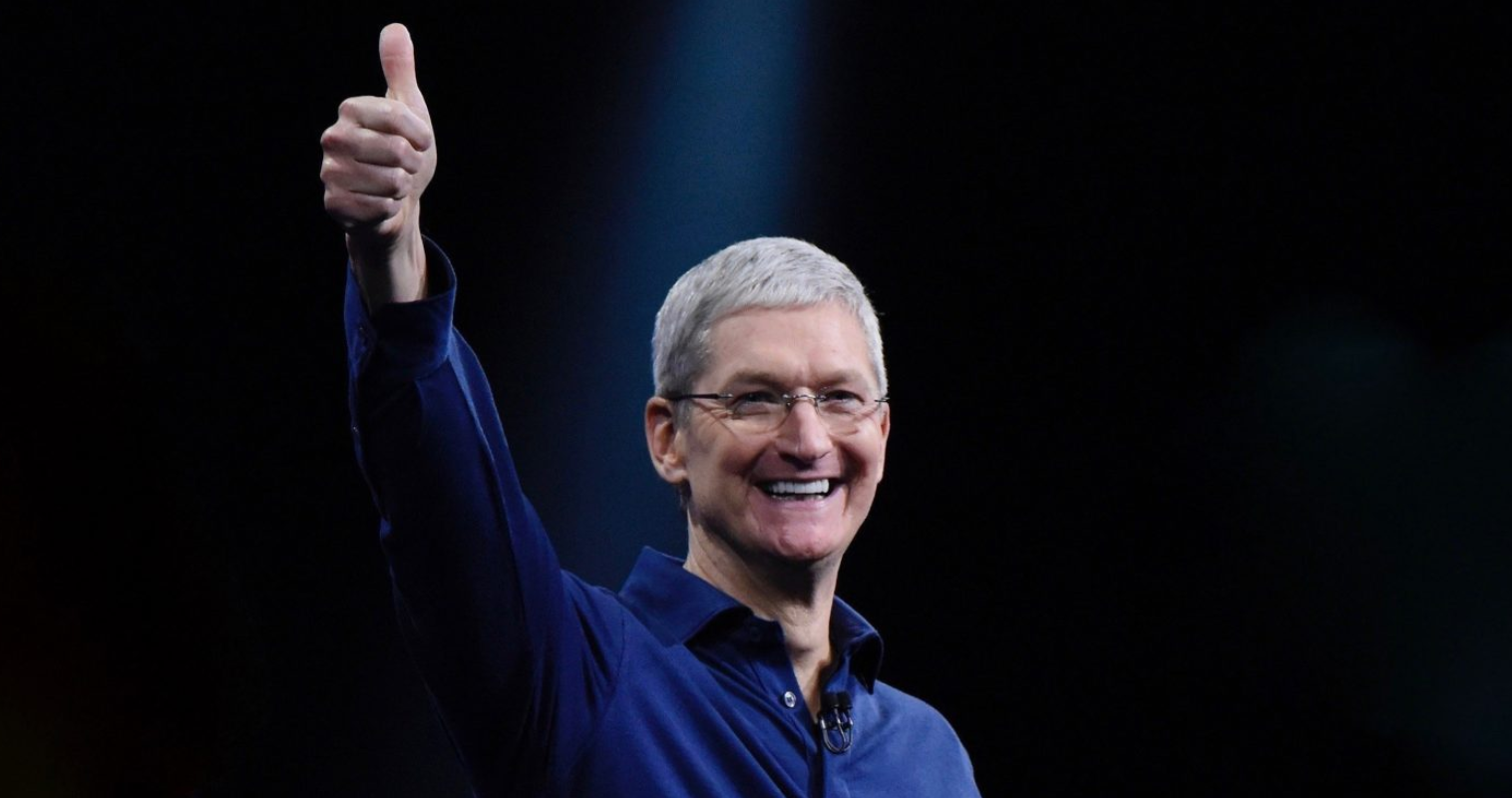
These figures form a mirror reflecting the legacy Cook leaves at Apple. But this mirror has two sides.
From a product line perspective, Apple under Cook launched the Apple Watch, AirPods, and the Vision Pro virtual reality headset, leading the historic transition of the Mac series to self-developed Apple Silicon chips. The services business grew from less than $3 billion in 2011 to over $100 billion, becoming a new engine of profit. These achievements are solid enough.
However, the other side of the mirror is equally clear. The Wall Street Journal pointed out that after the iPhone, Apple's most successful products are the AirPods and Apple Watch, but the scale of those businesses cannot compare to the iPhone. Sales of the Vision Pro were dismal, and the car project was halted. Cook is known as an operations master, but criticism continues that Apple is no longer as disruptive in innovation as it was during the Jobs era. The BBC bluntly stated: Apple's product line has essentially stagnated.
Cook turned Apple into the most profitable company globally, yet did not create the next iPhone.
This statement feels particularly acute today. Because the bell for the AI era has already rung. Forrester's Chief Analyst Dipanjan Chatterjee put it more bluntly: Cook did not bring the company a product like the iPhone that could allow his successor to extend success for another 20 years. This is precisely the most challenging exam question left for the "third generation."
So, who is the one taking on this exam question?
II. Ternus, The Crowning of a Hardware Engineer
John Ternus is 50 years old, about 15 years younger than Cook. When he joined Apple in 2001, Steve Jobs was in the ascent after his return, and as a member of the product design team, he experienced the immersion in Apple's engineering culture. Graduating from the University of Pennsylvania with a degree in mechanical engineering, he has dedicated almost his entire career to Apple over the next 25 years.
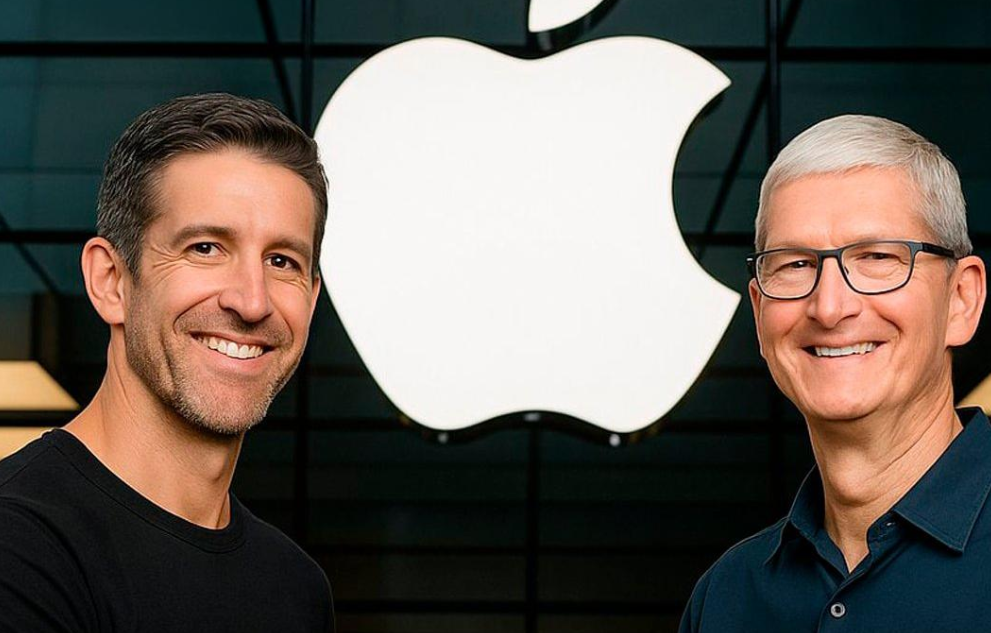
Bloomberg summarized his career style in one sentence: “Ternus’s notable achievements stem from overseeing the expansion of the iPad product line, as well as the development of AirPods and the company’s first generation 5G phones.” Not romantic, not legendary, but hardcore enough.
Internally at Apple, Ternus’s most praised contribution is leading the transition of the Mac from Intel to self-developed chips. The release of the M1 chip in 2020 not only salvaged the Mac series from the declining reputation that began in 2016 but also proved that Apple has the capability to control its destiny at the most critical hardware level. After that, he successively oversaw the hardware engineering of the iPad, iPhone, Apple Watch, and all other product lines.
Fortune magazine made a key judgment: Ternus is a true engineer, and hardware strength is crucial for Apple’s AI strategy. Apple’s hardware is the key to consumer acceptance of AI. “By elevating a chief product architect, Apple bets that the ultimate winners in the AI era will be those companies that control the final and most valuable link of the user experience.”
This hides the deeper logic behind Apple’s leadership change. Cook was a genius in supply chain management, building the world’s most efficient supply chain system, reducing inventory cycles from months to days, allowing Apple’s profit margins to lead the industry by far. Ternus, on the other hand, is a hardcore engineer, and his entire career has been about answering one question: how to make all components work together in the most elegant way.
From “operations-driven” to “engineering-driven,” this is a clear signal Apple is sending.
Business Insider’s commentary hits the nail on the head: Apple chooses not to compete with Google, Meta, or OpenAI in a money-burning race for AI models, but rather to wait until its competitors have fought each other to exhaustion, and then collect rent from 3 billion iPhones. The success or failure of this strategy hinges not on whether Apple can create a large model better than GPT, but on whether Apple can produce the hardware best suited for the AI experience. Ternus’s mission is clear: to utilize Apple’s unparalleled hardware layout to build the indispensable infrastructure for the AI era.
What does this mean? It means that the path Apple is betting on for AI is not a parameter race in the cloud but a redefinition of the experience at the terminal. As AI models increasingly converge, what truly determines user choice is whether the device in hand can make AI feel "subtly present." This is exactly the core competency Ternus has accumulated over 25 years of hardware engineering.
At this point, the main line of AI becomes clear. But beneath the surface, there is a more concealed line.
III. Apple’s Gravity in the Crypto World
In November 2021, Cook publicly acknowledged for the first time that he personally held cryptocurrencies during an event. In September 2025, he confirmed again that he personally held Bitcoin and Ethereum, stating it was for diversification of his investment portfolio and in-depth research considerations.
However, he simultaneously drew a distinct line: Apple will not invest in crypto assets and will not accept cryptocurrency as a means of purchasing products. The personal is personal, and the company is the company, with a clear distinction.
However, beyond that line, the relationship between the Apple ecosystem and the crypto world is far more complex than it appears. According to research data from Counterpoint Research, globally, as much as 41% of first-time crypto users completed their initial funding recharge through Apple Pay. In 2025, Mesh published a case of integrating stablecoin payments through Apple Pay, enabling merchants to accept Bitcoin payments and settle in USDC. In April 2026, Exodus rolled out similar functions in five states in the US.
Apple has not actively stepped into the crypto field, but its payment network has become an indispensable infrastructure in the crypto world. It resembles Sisyphus in Camus’s writing: the crypto industry pushes the boulder up the mountain day after day, while Apple’s slope happens to be the smoothest one.
After Cook transitions to Executive Chairman, he will still maintain significant influence on crypto-related policies and regulatory relationships worldwide. His personal attitudes toward crypto assets, coupled with the factual infrastructural status of Apple Pay as a foundational channel for crypto payments, constitute a stealthy undercurrent. No one knows when this undercurrent will surface, nor whether Ternus, a pure hardware engineer, will someday revisit Apple’s relationship with crypto assets.
But one thing we know: Apple’s App Store continues to charge a 30% service fee on digital goods (including NFT and in-app purchases related to crypto). Regardless of whether the management cares about digital assets, this vast ecosystem itself has already formed an irreversible gravitational connection with the crypto world.
Apple adopts the most conservative posture while building the most不可忽视基础设施。
IV. AI and Crypto, Apple’s Dual Foreshadowing
Now, let’s take a look at AI and crypto together.
Cook's departure, on the surface, is a smooth power transition for Apple. But from the perspective of Web4, this transition at least sows two layers of foreshadowing.
The first layer is the path selection of the AI strategy. Ternus takes over an empire valued at $4 trillion, but this empire has not gained an edge in the AI race. Voices criticizing Apple for lacking cutting-edge AI technology are rampant. Apple’s response is not to join the arms race for large models but to bet on a deep integration of hardware and AI. In the AI era, software defines experience, but hardware determines boundaries. This is precisely the core competitiveness of Ternus’s 25-year engineering career.
The second layer is the silent infiltration of the crypto ecosystem. Apple has never written cryptocurrency into its financial reports, but it has become one of the largest channels for crypto payment inflows globally. As the legislation for stablecoins in the US continues to advance and the EU’s MiCA framework lays compliance paths in 27 countries, Apple’s traditional reason for rejecting crypto assets—“regulatory uncertainty”—is gradually losing its validity. Cook’s personal holdings and the factual infrastructural status of Apple Pay form two anchor points in Apple’s crypto story. This story currently lacks an official version but has enough rich material.
Though these two lines may seem parallel, they intersect around a common theme: Apple is evolving from a product-centric company to a super platform with an ecological moat. AI is the soul of the ecosystem, while crypto is its lifeblood. The soul needs hardware to carry it, while the lifeblood needs a network to circulate. Ternus is responsible for the former, and Cook's successors will continue to address the latter.
V. The Intersection of Rationality and Poetics
In the Chinese tech circle, some compare Cook to the Sisyphus pushing the stone uphill in Camus's writings. After Jobs left, the boulder Cook took over was too heavy: the outside world always measured him by Jobs's standards, while he never attempted to be the second Jobs. He simply pushed the supply chain, optimized profit margins, and elevated market value day by day, until he pushed the boulder to the peak of $4 trillion. He did not create an entirely new world, but he built the most solid fortress on the ruins of the old world.
Now, the boulder has been handed over to Ternus. What he needs to do is not continue pushing the same stone, but to determine what the next mountain at the peak will look like.
OpenAI CEO Sam Altman posted a tribute on X: “Tim Cook is a legend! Thank you so much for everything he has done.” Oculus founder Palmer Luckey also posted a tribute, intentionally writing his name as “Tim Apple”—a meme left after Trump mispronounced Cook's name in 2019. At that time, Cook calmly changed his Twitter surname to the Apple logo.
An ordinary person from a remote town in Alabama, majoring in industrial engineering, has led the greatest enterprise in the world. This is not the legend of a genius, but the epic of a diligent person.
But this epic has turned the last page.
Cook has stepped down, and the $4 trillion milestone is etched there.
Will Apple's next four trillion be marked in the same way?
Apple's leadership change, along with the dual foreshadowing of AI and crypto, has only just begun to unfold.
免责声明:本文章仅代表作者个人观点,不代表本平台的立场和观点。本文章仅供信息分享,不构成对任何人的任何投资建议。用户与作者之间的任何争议,与本平台无关。如网页中刊载的文章或图片涉及侵权,请提供相关的权利证明和身份证明发送邮件到support@aicoin.com,本平台相关工作人员将会进行核查。


