Original Title: Trump Extends Iran Ceasefire, Blockade as Peace Talks Stumble
Original Author: Courtney Subramanian and Jennifer A Dlouhy, Bloomberg
Original Translation: Peggy, BlockBeats
Editor's Note: U.S. President Donald Trump announced an indefinite extension of the ceasefire with Iran before the ceasefire agreement was set to expire, while continuing to maintain a maritime blockade in the Strait of Hormuz. Trump stated that the U.S. would extend the ceasefire until Iran submits a new proposal, "and regardless of the outcome, the negotiations will reach a conclusion"; he also emphasized that without this blockade, "it would be impossible to reach any agreement with Iran."
From a strategic perspective, the U.S. is trying to apply pressure on Iran regarding nuclear issues and negotiation terms while avoiding the immediate escalation of conflict into full-scale war through the combination of "extending the ceasefire + maintaining the blockade." However, Iran has neither accepted the negotiation terms nor requested an extension of the ceasefire, but rather has maintained a firm response regarding energy exports and military posture, leading to a deadlock on the core issue of "whether to talk and how to talk."
What's even more concerning is that this standoff has started to spill over into global markets. As a key passage for global energy transport, the blockade and repeated reopening of the Strait of Hormuz not only exacerbates oil price volatility but also amplifies the uncertainty of energy and shipping systems. In the short term, the extension of the ceasefire provides some buffer for the market; however, in the medium to long term, in the absence of a clear negotiation framework and basic mutual trust, this passively sustained ceasefire resembles a fragile balance that could be broken at any time.
When diplomatic paths continue to be obstructed and military deterrence escalates, the next phase of this conflict will depend on whether both sides return to the negotiating table or slide into a more severe confrontation.
The following is the original text:
U.S. President Donald Trump announced an indefinite extension of the ceasefire with Iran before the ceasefire agreement was set to expire; meanwhile, after the planned peace negotiations between both sides broke down, the U.S. continued to maintain a maritime blockade in the Strait of Hormuz.
Trump stated on his social media platform Truth Social that Pakistan, as a mediator, requested that the U.S. delay launching a new round of strikes. The U.S. will extend the ceasefire until Iran submits a new proposal, and "regardless of the outcome, the negotiations will reach a conclusion." In another post, he stated that without this blockade, "it would be impossible to reach any agreement with Iran—unless we blow up the remaining parts of their country, including their leaders!”
U.S. Vice President JD Vance originally planned to travel to Pakistan to restart negotiations with Iran, but the Tehran representatives refused to attend, stating that the conditions proposed by the U.S. were "unacceptable." Iranian semi-official media Tasnim reported that currently there is "no realistic possibility" for Iran to participate in negotiations.
A White House official confirmed in a statement that the vice president's scheduled visit on Tuesday will not take place.
This statement sharply contrasts with Donald Trump's remarks earlier that day. At that time, in an interview with CNBC, he stated that if Iran did not meet its conditions, "I expect bombings to occur," and noted that the U.S. military "is eager and ready to act at any time." In a phone interview on Monday, Trump also mentioned that if an agreement is not reached, he is "extremely unlikely to extend" the current ceasefire status.
Following the news of the ceasefire extension, oil prices rose for the second consecutive day. Brent crude oil prices increased nearly 9% over the previous two trading days and are currently around $98 per barrel. Oil prices fell below $60 a barrel in January, and in March, peaked at $119.50. The average retail price of gasoline in the U.S. is currently around $4 per gallon, compared to about $3 before the war began on February 28.
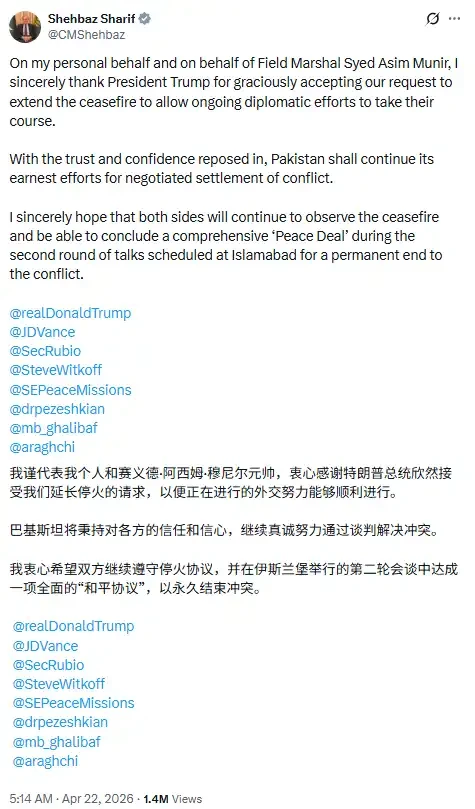
Pakistani Prime Minister Shehbaz Sharif issued a statement thanking Trump for extending the ceasefire, "to buy time for the ongoing diplomatic efforts, allowing them to proceed smoothly."
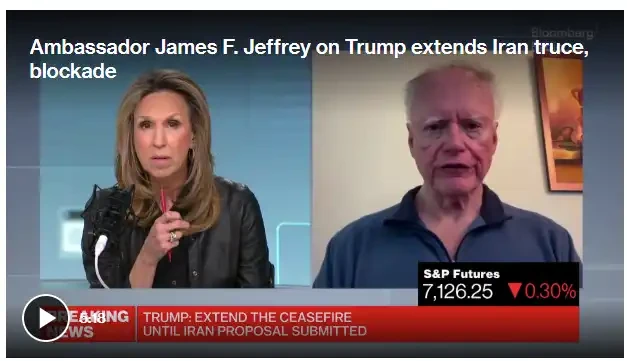
Former U.S. Deputy National Security Advisor and current Distinguished Fellow at the Washington Institute Philip Solondz, James F. Jeffrey, appeared on Bloomberg Businessweek Daily to discuss the ceasefire extension, engaging in dialogue with hosts Carol Massar and Tim Stenovec.
He posted on the X platform: "I sincerely hope both sides can continue to adhere to the ceasefire agreement and reach a comprehensive 'peace agreement' during the second round of negotiations held in Islamabad, thus achieving a permanent end to the conflict."
Senior Iranian officials have not yet responded to Donald Trump's statement during the nighttime hours in Tehran. Iranian semi-official media Tasnim quoted unnamed sources as saying that Iran did not request an extension of the ceasefire. Meanwhile, the media reported that as long as the U.S. maintains the maritime blockade, Iran will not reopen the Strait of Hormuz.
Iran's semi-official Fars News Agency quoted a military statement saying that the Iranian armed forces "are in a state of full combat readiness, with fingers on the trigger."
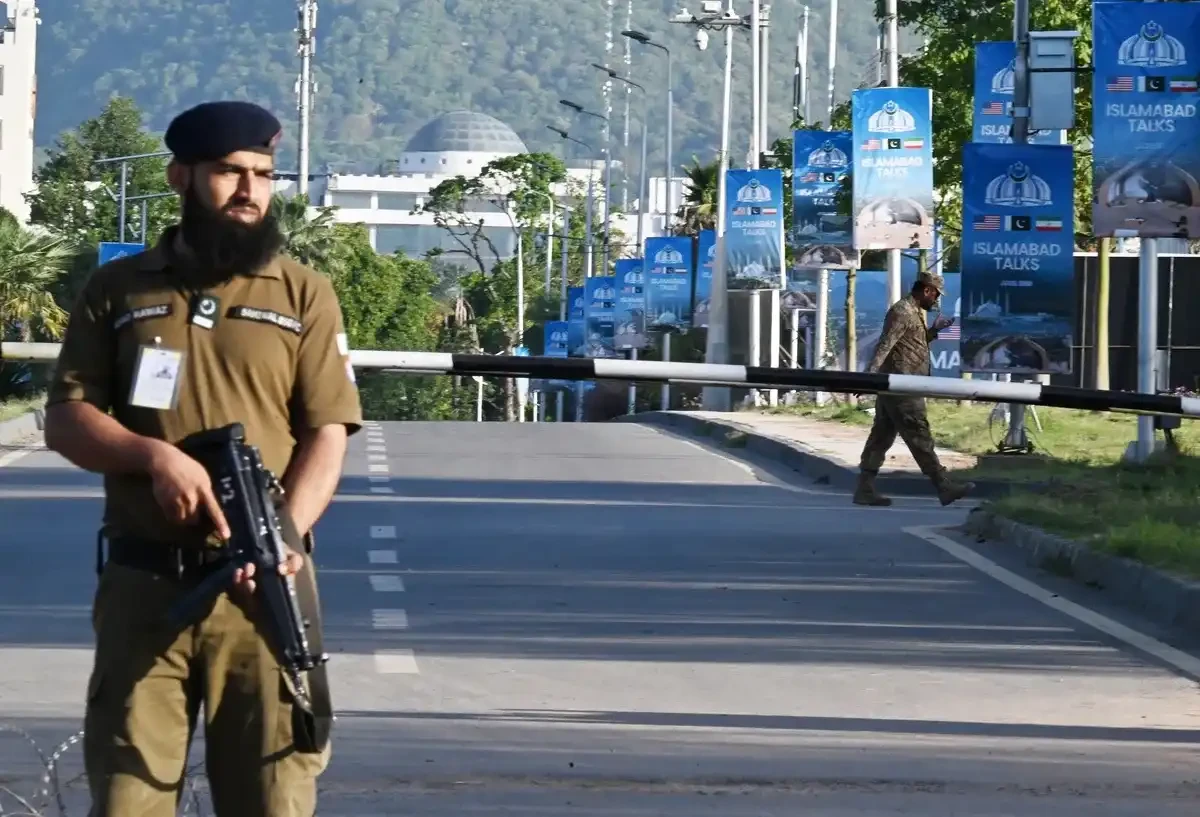
Security personnel guard a checkpoint near the Serena Hotel in Islamabad on April 22. Photo: Aamir Qureshi / AFP / Getty Images.
These developments mark the latest round of tug-of-war between Washington and Tehran since both sides announced a two-week ceasefire on April 7. Since then, both parties have publicly quarreled over the terms of the agreement, alternating between closing and reopening the Strait of Hormuz. Prior to the conflict, approximately one-fifth of the world's oil and LNG exports needed to be transported through this strait.
According to data intelligence company Vortexa, at least two fully loaded Iranian tankers have sailed out of the Persian Gulf this week, breaking through the U.S. blockade. The company's data also showed that Iran still has the capacity to export oil, with at least 34 Iranian-associated tankers and gas transport ships passing through the Strait of Hormuz, navigating through the military blockade.
The British Navy stated on Wednesday that an Iranian gunboat fired on a container ship near the Strait of Hormuz, causing "serious damage" to the bridge, fortunately without causing any casualties.
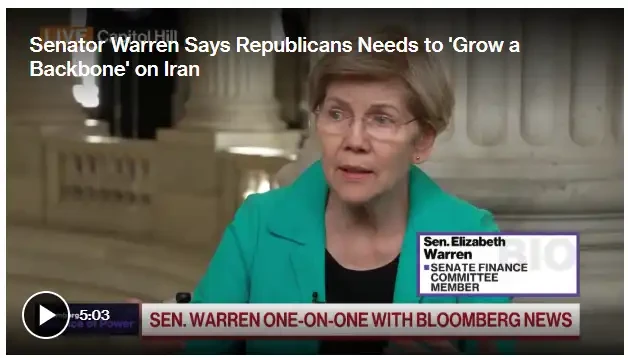
U.S. Senator Elizabeth Warren from Massachusetts criticized President Donald Trump for lacking a clear plan regarding the Iran conflict. Warren expressed this view on "Balance of Power: Evening Edition."
The UK and France are convening military planners from over 30 countries for a two-day summit to discuss how to ensure the Strait of Hormuz remains open. UK Prime Minister Keir Starmer and French President Emmanuel Macron have been leading efforts to coordinate a plan aimed at keeping the strait open after the war with Iran, although they have rejected Trump's request for allies to use military force to reopen the Strait of Hormuz.
Following the initial announcement of the ceasefire, there was a round of negotiations between the U.S. and Iran that ended in failure. U.S. officials stated that Iran was unwilling to accept limits on its nuclear program; while Iranian officials said that the U.S. proposed a series of demands that were unacceptable.
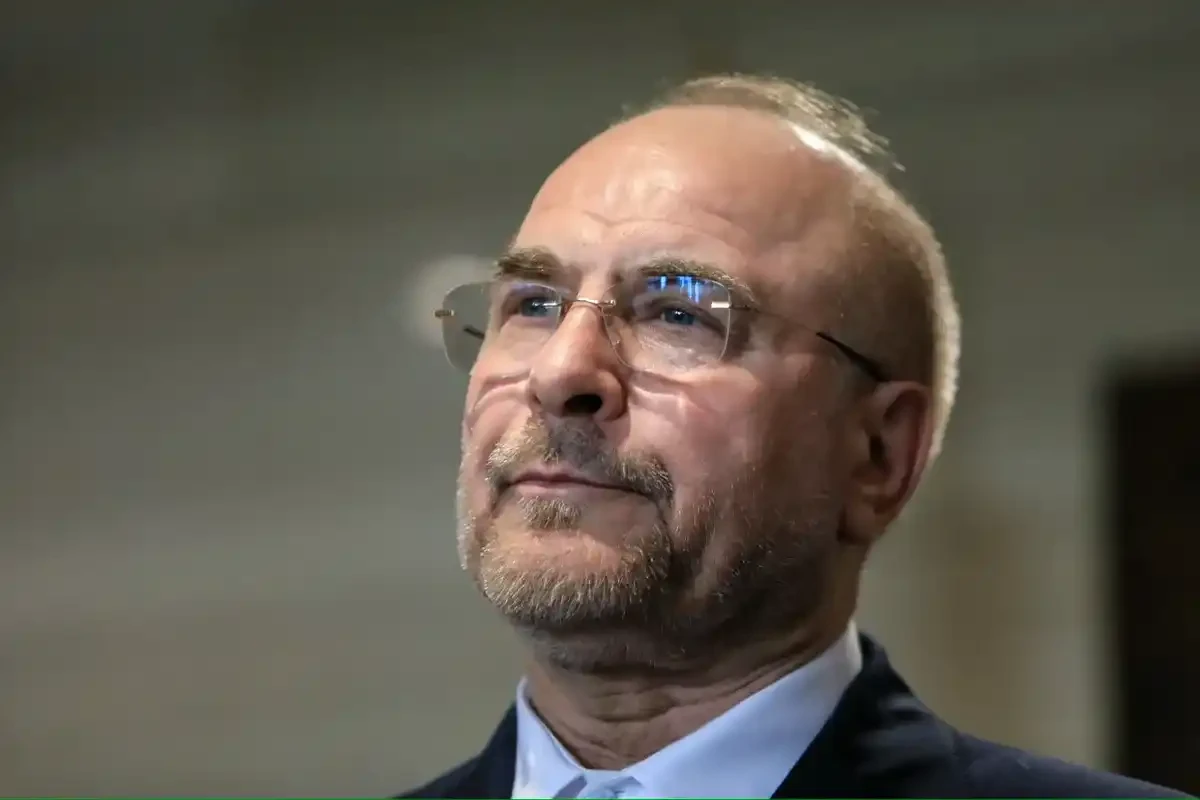
Speaker of the Iranian Parliament Mohammad Bagher Ghalibaf: Source: AFP / Getty Images
Speaker of the Iranian Parliament Mohammad Bagher Ghalibaf led the Tehran delegation during the first round of negotiations. He stated on Monday that Iran would not "accept negotiations under the shadow of threats."
Although the extension of the ceasefire may temporarily ease investor sentiment, the path to a lasting agreement to end the war is still fraught with uncertainty. This conflict, now in its eighth week, has resulted in thousands of deaths and triggered a global energy crisis, putting greater pressure on both sides to find a "way out."
Donald Trump demands that Iran abandon its attempts to develop nuclear weapons and hand over its nuclear materials. Tehran denies such intentions and refuses to hand over its enriched uranium.
Middle East Institute senior researcher Alex Vatanka stated that Trump has, to some extent, "boxed himself into a corner," as he does not actually wish to return to military conflict.
"He has made a strategic mistake, believing that raising his voice to pressure the Iranians would be effective," Vatanka said, "this approach does not work with this regime. Compared to open pressure, low-key pressure is often more effective."
免责声明:本文章仅代表作者个人观点,不代表本平台的立场和观点。本文章仅供信息分享,不构成对任何人的任何投资建议。用户与作者之间的任何争议,与本平台无关。如网页中刊载的文章或图片涉及侵权,请提供相关的权利证明和身份证明发送邮件到support@aicoin.com,本平台相关工作人员将会进行核查。


