
Author: Nancy, PANews
In the past few days at the Hong Kong Web3 Carnival stage, the world’s largest cryptocurrency exchange Binance has revealed even greater ambitions. The two leaders, Richard Teng and He Yi, have consistently voiced that Binance is transitioning from an exchange to a financial super app, aiming to serve the daily financial needs of 3 billion people globally.

Behind this statement is the acceleration of the cryptocurrency industry’s penetration into the mainstream world, and user experience is becoming the new dividing line.
From Peter Steinberger and Andrej Karpathy to Elon Musk and Jensen Huang, tech giants have provided similar judgments: traditional apps are nearing their end, and agents are reshaping the software interaction model. This change is essentially rewriting the entrance to the digital world.
Web3 has long been constrained by the entrance issue. Despite the continuous diversification of asset types and the expansion of application scenarios, the industry as a whole has yet to bridge the gap between early adopters and mainstream users, leaving many potential users halted outside the complex on-chain experience.
Now, Binance is attempting to become the super entrance of the Web3 era, significantly lowering the participation threshold and promoting cryptocurrency assets from niche tools to everyday use. This evolution is also driven by the maturation of the cryptocurrency industry, the upgrading of user needs, and changes in the external environment.
Over 700 million users, 65% first-time churn rate
The number of users who have been in touch with cryptocurrency assets has surpassed 700 million. If we rewind to 2021, this number was only about 100 million. In just five years, growth has exceeded seven times.
User curves are on the rise, and ecological boundaries are continually expanding. Tokenization, stablecoins, ETFs, DeFi, prediction markets, on-chain payments, and other tracks are accelerating their penetration into traditional finance, with traditional institutions beginning to appear frequently in the cryptocurrency ecosystem; cryptocurrency assets are also entering the mainstream allocation perspective, while traditional assets like stocks, gold, and foreign exchange are gradually being introduced on-chain.
The boundaries between the cryptocurrency world and traditional finance are gradually blurring, moving towards mainstream infrastructure.
However, growth does not equate to activity. The number of truly active users on-chain ranges from 30 million to 40 million. Beneath the seemingly prosperous industry facade lies a large number of dormant accounts, with no stable usage habits formed and insufficient network effects accumulated.
In contrast, the number of global internet users has reached 6 billion, with cryptocurrency users accounting for only about 11.7%. In terms of retention, the first-time churn rate for Web2 products is usually between 5% and 10%, while for Web3 products, this figure is as high as 65%.
Users come, but they do not stay. This is not due to insufficient market demand, but rather invisible barriers that deter many users.
For most non-technical users, wallet management, private key security, and trading processes remain too cumbersome and error-prone, and the experience has yet to reach the fluidity of traditional apps. Meanwhile, the dual barriers of complex financial cognition and technical jargon further raise the understanding costs, keeping many users at bay.
Risk further amplifies this hesitation. Frequent hacking attacks and fraud incidents lack insurance and fallback mechanisms comparable to traditional financial systems; the high fragmentation of multiple chains and protocols also elongates operational paths, increasing users' cognitive burden and psychological costs.
As a result, most people halt at a superficial level of engagement, deterring even more ordinary users who have yet to enter. Funds hesitate to engage deeply, and users cannot retain continuously, ultimately resulting in serious limitations on the industry’s liquidity and ecological vitality.
In a sense, what Web3 currently lacks is not more new applications or narrative hype, but a reliable, safe, and simple one-stop entrance that allows ordinary people to step in without burden.
This entrance needs to possess three capabilities: first, aggregation, to integrate functionalities scattered across different chains and protocols into a single interface; second, simplification, to transform complex technical processes into understandable and operable product experiences; and third, trust, to provide users with basic safety boundaries and risk expectations.
On this basis, more ordinary users may truly enter and remain in crypto finance, thus promoting financial equality.
Such an entrance is not merely an upgrade of product form but a transformation of how the industry grows. It can open a convenient and safe door for ordinary people while injecting continuous fresh blood and sustained liquidity into the entire cryptocurrency industry.
No longer just an exchange, the “elephant” aims to lead
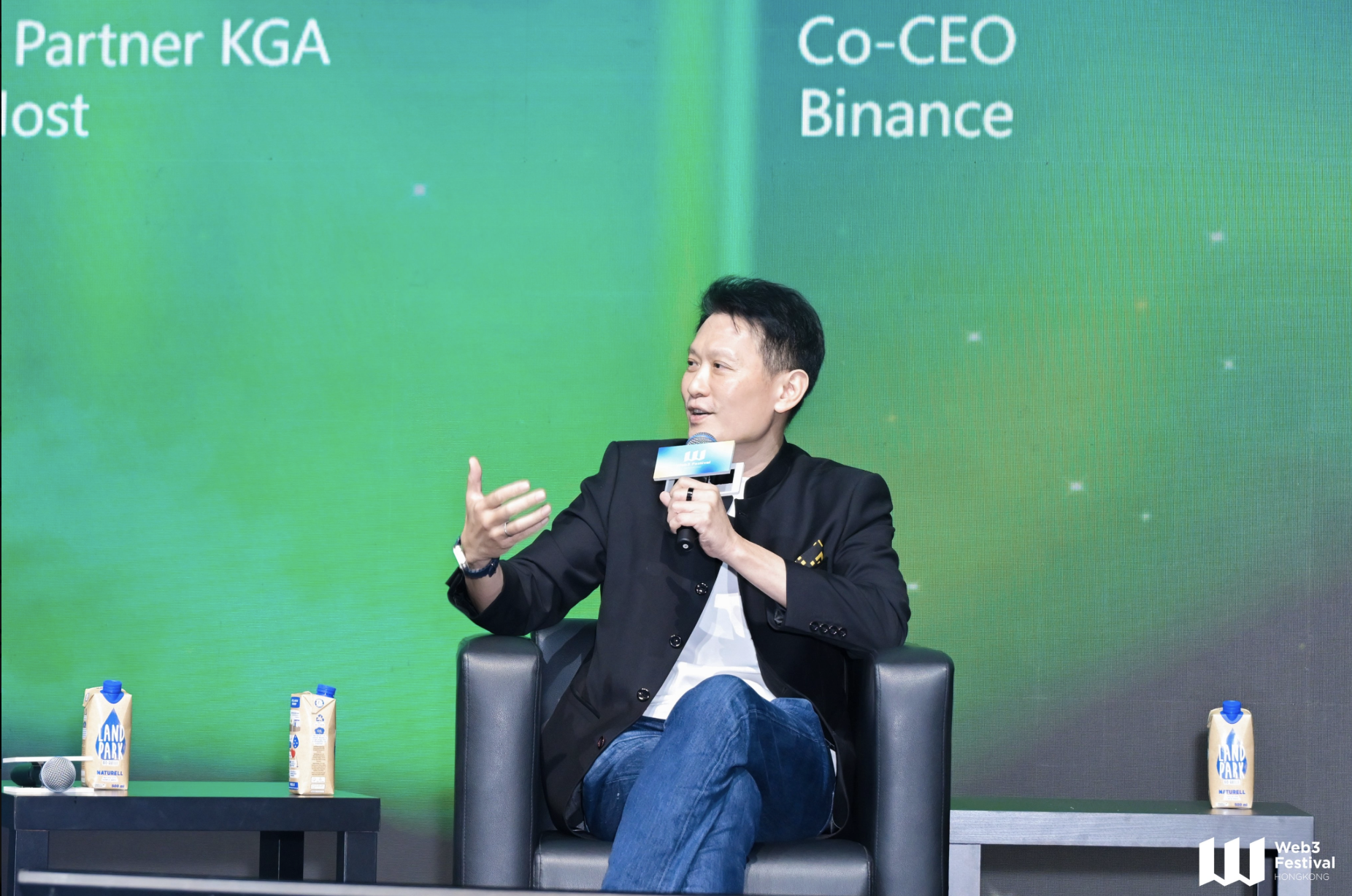
“Cryptocurrency and traditional finance are accelerating integration.” Richard Teng disclosed at the Hong Kong Web3 Carnival that, on one hand, many traditional financial institutions are quickly enhancing their capabilities by acquiring Web3 companies, with banks experimenting with tokenized deposits and considering entry paths in the face of the rise of stablecoins. On the other hand, the Web3 industry is also entering the Web3 territory reversely. For example, as traditional financial infrastructure becomes outdated, stablecoins have become a viable alternative; currencies based on blockchain and cryptocurrencies will become the native currency for AI; Binance is also launching products like precious metals and stock tokens.
He Yi also outlined a strategic vision for the industry's future. The entire world has entered a moment of high-speed transformation that feels like being pushed forward. The AI singularity may quietly arrive on a typical day in our lives; global forex is expected to fully migrate to blockchain, and asset trading will achieve uninterrupted 24/7 operation, fundamentally restructuring financial forms. Binance chooses to embrace the productivity leap brought by AI and actively promotes the deep integration of Crypto and TradFi.
As the world’s largest entry point for crypto assets, Binance is accelerating its transformation from a simple trading matching platform to a comprehensive financial service vehicle. It continuously expands its ecosystem and innovates products to adapt to changing demands, prompting discussions from the outside world. Some view it as a manifestation of ecological integration capability, while others worry that this platform is trying to seize the entire cryptocurrency ecosystem.
However, as cryptocurrency moves to a larger stage, the strategy of the “elephant” Binance is to grow the pie rather than seize existing shares. According to the maturity of different tracks, it has adopted two distinctly different expansion paths, reducing both its own and the industry's innovation risk while allowing greater growth space for the entire Web3 ecosystem.
In the early stages, new concepts and applications often come with high uncertainty and failure rates. If Binance were to directly intervene by creating products, it would not only require significant resource investment but might also squeeze the entrepreneurial space due to the early intervention of a large platform, thus stifling the innovative soil of industry diversification.
Therefore, Binance chooses to invest and incubate through YZi Labs, bringing selected early-stage potential projects into the ecosystem, both helping the projects gain initial attention and liquidity while avoiding self-manufacturing wheels from crowding the ecosystem. Currently, YZi Labs has invested in hundreds of projects, managing approximately $10 billion in assets, covering Web3, AI, and related fields.
When a particular track gradually matures and leading players emerge, Binance shifts from a behind-the-scenes investor to an active participant. At this point, the logic of entry is no longer simple replication but leveraging its own advantages to expand the market scale rather than purely competing for existing shares.
As the largest traffic entry and distribution hub in the cryptocurrency world, Binance has now served over 300 million users worldwide. Behind this lies a long-accumulated security reputation and risk control system, along with continually strengthened user education and product coverage capabilities. Such a low-friction, high-trust entry point is difficult for most vertical projects to replicate in the short term, enabling more ordinary users to complete their understanding and initial experience of new products and concepts in a relatively safe environment, thus bringing new users and liquidity to the entire industry.
For example, in the Perp DEX track, Aster supported by YZi Labs continually expands its market share, triggering a perpetual contract war and further enlarging the overall track share; in the prediction market field, the Binance wallet integrates functions like Predict.fun, allowing users to directly access spot or fund account balance within the app to trade future outcomes in sports, economy, world events, culture, and cryptocurrencies, significantly lowering participation barriers; in the tokenized stock sector, Binance collaborates with Ondo Finance, enabling ordinary users to directly trade over 100 types of tokenized US stocks like Nvidia, Google, Apple, and Tesla through their wallets, even recently launching celebrity-level Pre-IPO assets like SpaceX, OpenAI, and Anthropic; as the integration of crypto and commodities becomes a trend, Binance has also launched trading products for crude oil, gold, silver, and more, surpassing the transaction volume of many traditional commodity exchanges.
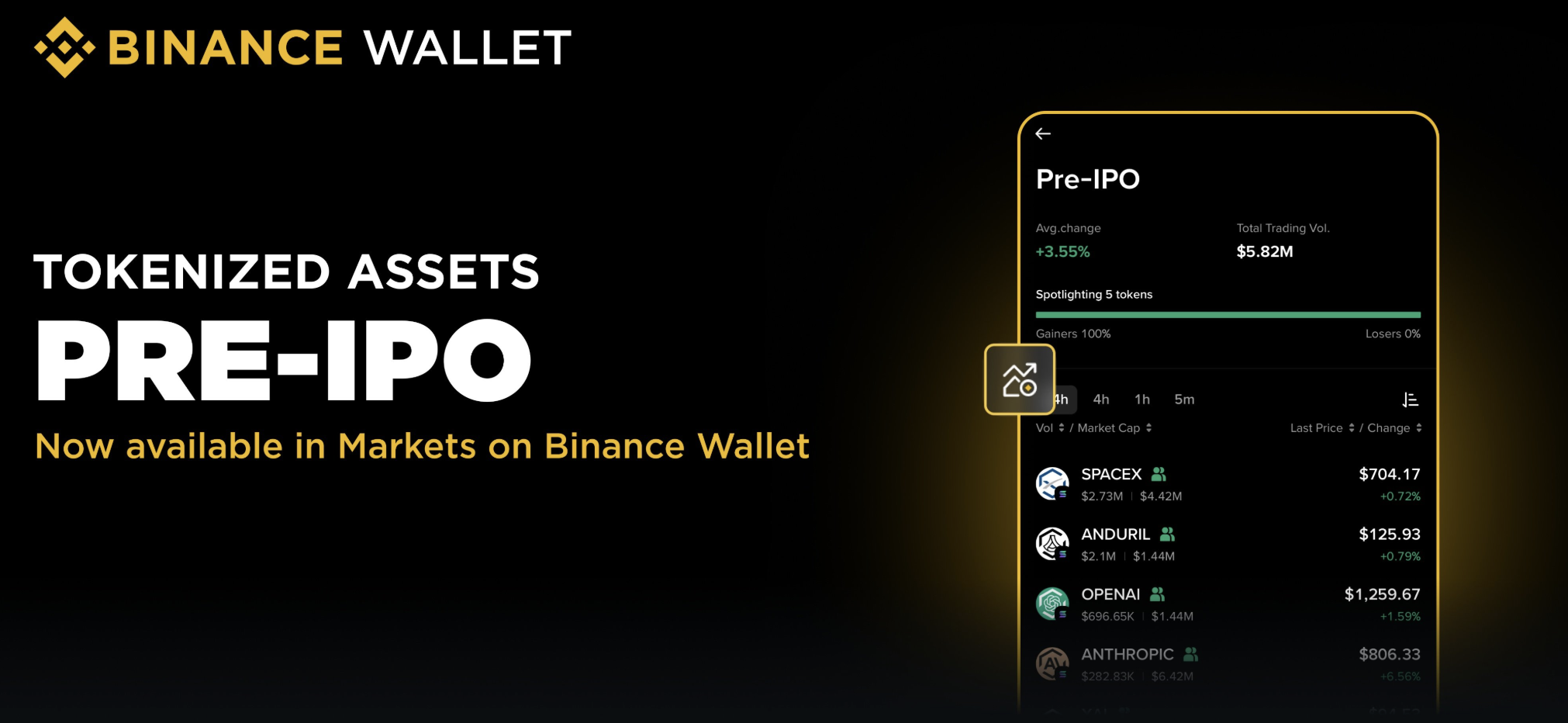
In addition, Binance is also continuously advancing product innovation. For example, its Web3 wallet integrated within the exchange app allows users to perform seamless cross-chain operations without managing complex mnemonic phrases; after its launch, this product successfully captured a share of the wallet market. Additionally, in recent months, Binance has launched several AI-driven features and services, enhancing the intelligence level of cryptocurrency trading and asset management.
Of course, whether users stay long-term ultimately depends on product experience and market competition. Entrances can significantly lower the threshold for initial entry, but long-term use still relies on actual value. Users will always vote with their feet.
Aspiration for 3 billion target users, aiming for global financial infrastructure
The ultimate form of finance has never been about increasing complexity but about increasing inclusiveness. This entails not only Binance’s strategic considerations for its own expansion but also plays a role in promoting the long-term healthy development of the Web3 industry.
“Exchange the World,” this classic slogan of Binance, is not only an ambitious marketing declaration but also an expression of its long-term strategic mission.
It signifies not only becoming a world-class exchange, building the most liquid and reliable trading infrastructure globally but also changing the world through cryptographic technology, lowering financial entry thresholds, and enabling more ordinary people to equitably access financial services.
At the 2026 Hong Kong Web3 Carnival, Binance Co-CEO He Yi clearly outlined Binance's long-term strategy for the future.
She emphasized that technology should not be arrogant, and the real value lies in how better to serve ordinary people. Binance's vision is to become the global financial infrastructure, transitioning to a commercial company serving the public, just as the internet evolved from the geek culture of Silicon Valley to companies like Google and Amazon, becoming a basic service that reaches ordinary people worldwide.
In this narrative, the value of a super entrance lies not in locking in users but in efficiently and safely introducing more people into the Web3 world. Based on an existing base of 300 million users, Binance has significantly raised its target user group to 3 billion, equivalent to covering over one-third of the global population. This upgrade is not merely a pursuit of scale but stems from the belief that if cryptocurrency financial tools are sufficiently mature and inclusive, they should serve a broader audience.
For ordinary people, this means tangible change. No matter which country or income tier they are in, they should be able to equally and conveniently enjoy the financial freedom and efficiency brought by cryptographic technology.
免责声明:本文章仅代表作者个人观点,不代表本平台的立场和观点。本文章仅供信息分享,不构成对任何人的任何投资建议。用户与作者之间的任何争议,与本平台无关。如网页中刊载的文章或图片涉及侵权,请提供相关的权利证明和身份证明发送邮件到support@aicoin.com,本平台相关工作人员将会进行核查。


