Source: Xinhua News
It has been 60 days since the outbreak of the conflict in Iran, and the United States and Iran have fallen into a standoff of “no war, no talks.” Recently, the Iranian foreign minister visited multiple countries to counter the United States' “epic anger” and “economic fury” with a “diplomatic offensive.”
Why have the US and Iran encountered the current stalemate? How long will this stalemate last?
International opinion believes that the US and Iran may be in a state of “frozen conflict,” where the risk of renewed fighting remains high, but neither side is willing to launch a full-scale war. Additionally, the ongoing tension continues to spill over, impacting regional and global security and development. “This war initiated by the US to maintain its hegemony is causing the entire world to pay the price.”
What strategic shift is revealed by Iran's “diplomatic offensive”?
In recent days, Iranian Foreign Minister Amir-Abdollahian has embarked on a multi-faceted diplomatic mission, visiting Pakistan and meeting with Sultan Haitham of Oman. Amir-Abdollahian’s trip to Russia on the 27th was particularly noteworthy.
Russian President Putin spoke with Amir-Abdollahian for an hour and a half in St. Petersburg. Putin stated that Russia will do everything possible to safeguard the interests of Iran and other countries in the Middle East, and fully promote peace in the region as soon as possible.
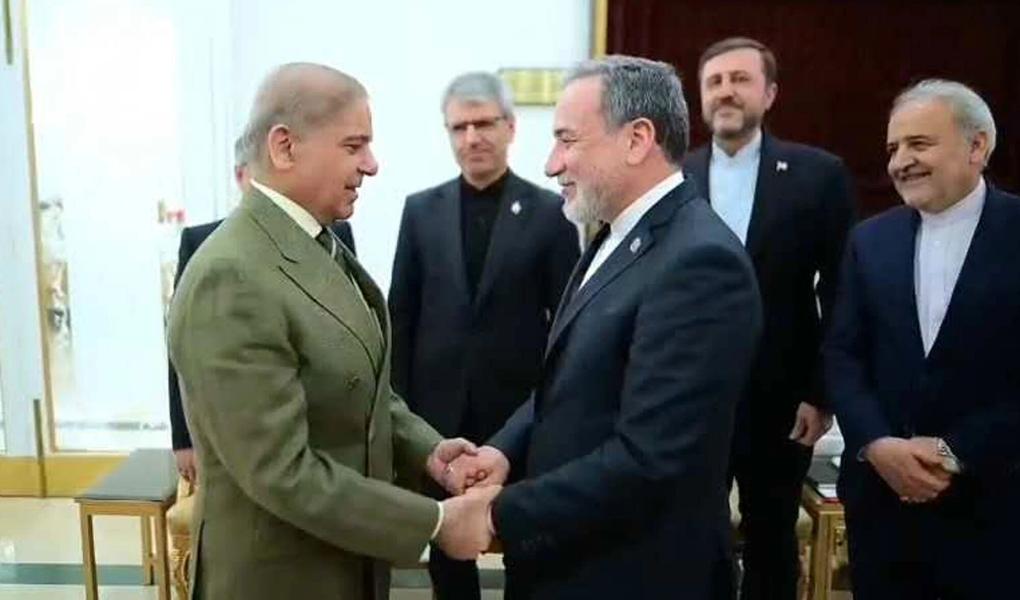
On April 25, Pakistani Prime Minister Shehbaz (left) held talks with Iranian Foreign Minister Amir-Abdollahian in the capital Islamabad. Xinhua News (Photo provided by the Prime Minister's Office of Pakistan)
According to various sources, through Amir-Abdollahian's visit, Iran proposed a “step-by-step” new plan for negotiations with the US: Focus first on the crisis in the Strait of Hormuz and the US maritime blockade; a ceasefire will be extended for the long term, or all parties will agree to permanently end hostilities, and nuclear negotiations will only begin once the strait is reopened and the US blockade is lifted.
Amir-Abdollahian also conveyed Iran's conditions for ending hostilities to Pakistan, including the implementation of a new management system for the Strait of Hormuz, obtaining war reparations, ensuring the US lifts the maritime blockade, and refraining from launching further aggression.
The US confirmed that it received Iran's proposal but did not respond positively. An American official stated that President Trump expressed on the 27th that he “did not like this proposal” because it did not address nuclear issues.
Analysts believe that from the attitudes of the US and Iran, both sides still have a willingness to continue negotiations.
Iran’s new proposal indicates a strategic shift from an initial idea of comprehensive and immediate solutions to a phased, more pragmatic action framework. While maintaining its bottom line, Iran has chosen to engage in multi-faceted diplomacy as a means to probe the US's reactions, aiming to gain the initiative in a new round of negotiations.
Why have the US and Iran fallen into a “no war, no talks” stalemate?
Experts believe that the US and Iran are stuck in a “no war, no talks” stalemate due to three main reasons, and this deadlock may persist for some time.
First, there is a complete lack of political mutual trust. Hasan Ahmadinejad, a professor at Tehran University, stated that Iran has given up hope regarding the US and will not easily accept American negotiation conditions. Amir-Abdollahian's recent visits to Pakistan were more about justifying diplomatic efforts rather than actual negotiations.
Second, opposing negotiation positions. Currently, the US and Iran have unresolved and “irreconcilable” differences on two core issues: the nuclear program and the Strait of Hormuz. Additionally, the negotiation goals of both sides are practically “open secrets.” Al Jazeera reported that under the battlefield disadvantage, the US seeks to use negotiations to “push for changes” and obtain things it couldn’t achieve on the battlefield, while Iran sees negotiations as an extension of warfare and will not easily compromise.
Third, domestic pressure on both sides. Expert Bao Chengzhang from Shanghai International Studies University believes that both the US and Iran are facing domestic pressures. The Trump administration is caught in a dilemma: it does not want to compromise in negotiations nor enter into another war with Iran, and with midterm elections approaching, its policy space is further limited. Meanwhile, in Iran, the new leadership hopes to solidify domestic conditions through a hardline stance against the US, but the ongoing conflict's toll and losses make it difficult to continue fighting.
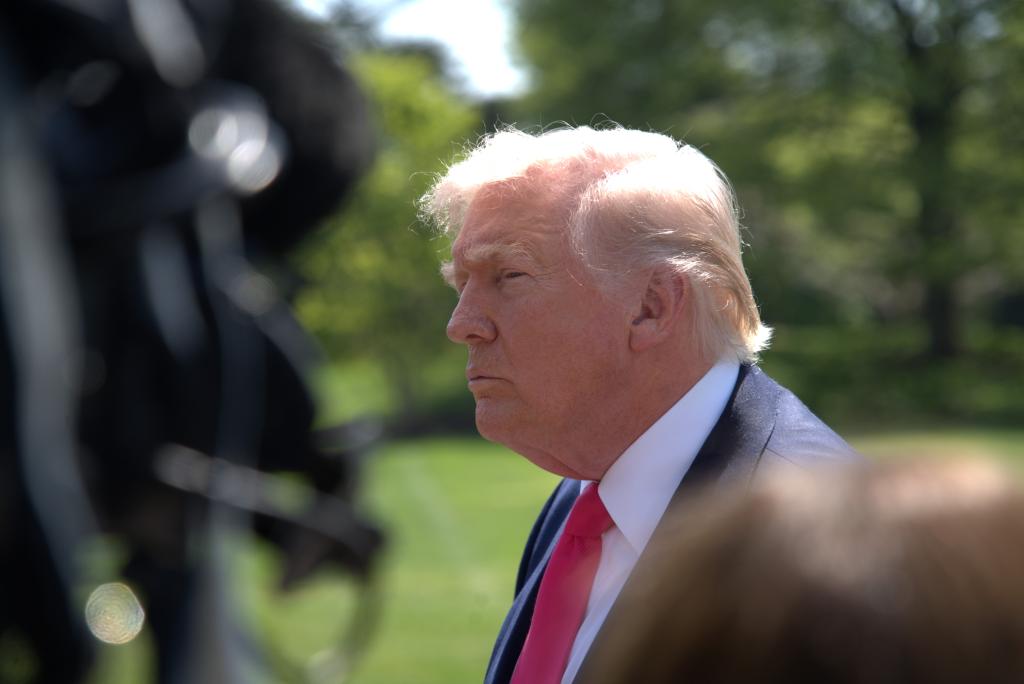
On April 16, President Trump spoke to the media on the South Lawn of the White House in Washington. Xinhua News (Photo by Li Yuanqing)
Analysis suggests that behind the “no war, no talks” stalemate is both sides attempting to use time to gain strategic space. The US aims to “drag down” the Iranian economy through maritime blockades, potentially triggering domestic changes in Iran; Iran hopes to capitalize on economic pressures from fluctuating oil prices and political pressures from the US midterms to “bring down” the Trump administration.
If there are no major unexpected developments, this standoff may continue. Australian scholars believe this deadlock may evolve into a state of “frozen conflict,” meaning the roots of the conflict remain unresolved, low-intensity clashes may break out at any time, but it will not escalate into “full-scale war.”
How the conflict lasting 60 days is impacting the world
The war initiated by the US and Israel has lasted two months, causing increasingly profound effects on the Middle East, the world, and even “our lives.” American media states, “The whole world is paying the price for the war initiated by the US.”
--- The Strait of Hormuz may bring “irreparable impacts.” The strait has fallen into a “dual blockade” mode between the US and Iran due to the conflict, continuously impacting the global energy market, obstructing trade and supply chains, putting pressure on food systems, shaking global financial environments, and triggering inflation risks in multiple countries. Consequently, several institutions have lowered their global economic growth forecasts for this year.
Articles in Nikkei Asia state that this is “the most economically destructive conflict in half a century,” shaking multiple pillars of the global economy, and its effects will last for years and cannot be quickly reversed.
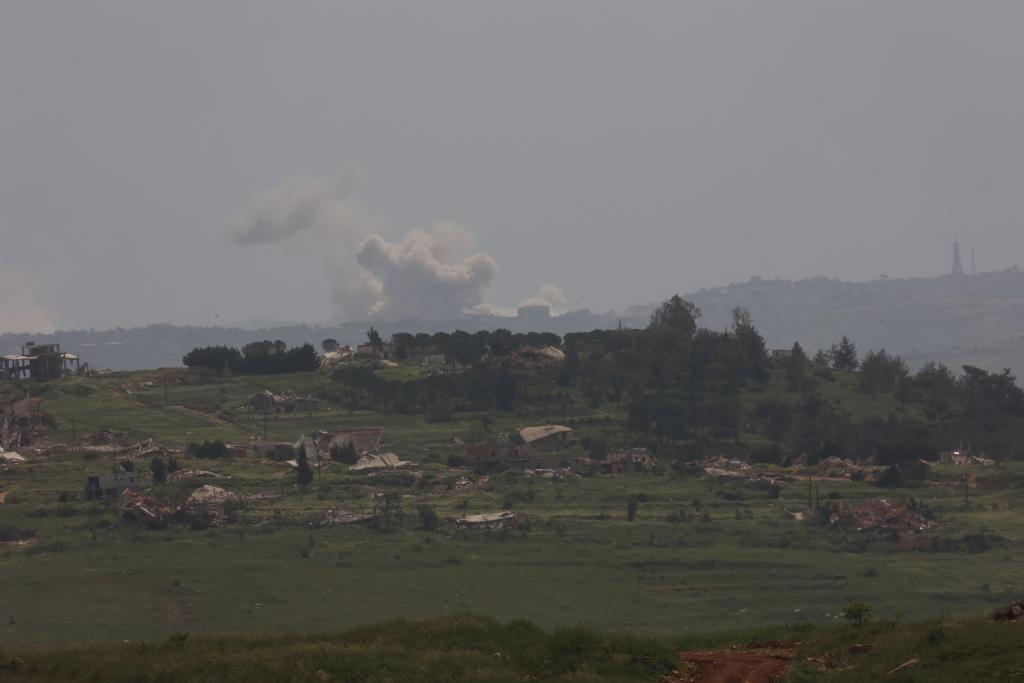
On April 26, thick smoke rises after an Israeli military strike in southern Lebanon. Xinhua News (Photo by Gil Cohen-Magen)
--- The region is caught in a dual dilemma of security and development. The standoff between the US and Israel and Iran may last for a long time, with the risk of conflict reigniting and escalating not being eliminated; simultaneously, more regional forces such as the Houthi movement in Yemen and Hezbollah in Lebanon may become involved, leading to prolonged regional turmoil.
Especially for Gulf countries, the US's “security guarantees” have instead become a “risk factor,” as the ongoing regional turbulence has caused them to lose their “investment position of Middle Eastern stability oasis,” while regional security and development face dilemmas.
--- The international order is under impact. The conflict in Iran illustrates that US hegemonic behavior has formed a dangerously extreme inertia, becoming the root cause of current global turmoil. If power is not restrained, once rules are broken, it will also trigger a “broken window effect,” leading to more frequent and severe forms of dangerous behavior that were once unimaginable, making the world even more turbulent and chaotic.
The Iranian conflict aimed at maintaining US hegemony is triggering a “systemic crisis” in the world; Brahma Chellaney, a professor at the Centre for Policy Research in India, states, “And the world has just begun to pay the price for this.”
免责声明:本文章仅代表作者个人观点,不代表本平台的立场和观点。本文章仅供信息分享,不构成对任何人的任何投资建议。用户与作者之间的任何争议,与本平台无关。如网页中刊载的文章或图片涉及侵权,请提供相关的权利证明和身份证明发送邮件到support@aicoin.com,本平台相关工作人员将会进行核查。


