Author: Xin Zhi Yuan
Historic moment!
Just now, a financial report that can go down in business history, like a deep-water bomb, completely shattered the growth myth of OpenAI.
The historic moment has arrived——Anthropic, the "Avengers" founded by defectors from OpenAI, has officially reached an annual revenue of 30 billion dollars, surpassing OpenAI's 24 billion dollars in one fell swoop.
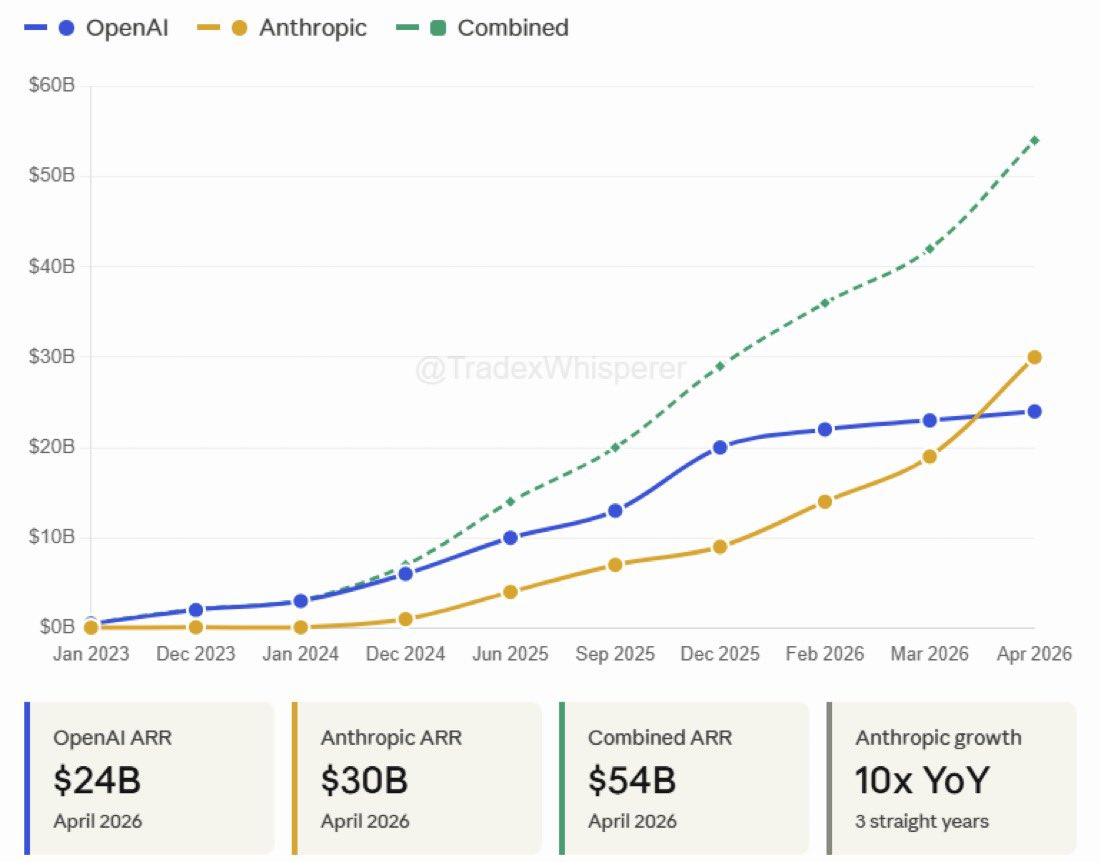
Today, the foreign media WSJ exclusively disclosed a figure that made the entire Silicon Valley gasp: Anthropic's Annual Recurring Revenue (ARR) has broken through 30 billion dollars.
At the beginning of 2025, Anthropic's ARR was only 1 billion dollars. In 15 months, it increased by 30 times.
In 15 months, the annualized revenue soared from 1 billion to 30 billion, a terrifying growth rate that has never been seen in American business history, making even the likes of Google and Meta seem to be crawling.
The fastest-growing company in American business history is not OpenAI, nor is it Nvidia; it is a company that was founded in 2021 by former employees of OpenAI.
The American AI hegemony has officially changed hands!
Now, OpenAI has been mocked by foreign media as "Anthropic's little brother," with both revenue and valuation being surpassed, and internal panic has sparked a "crazy copying" mode.
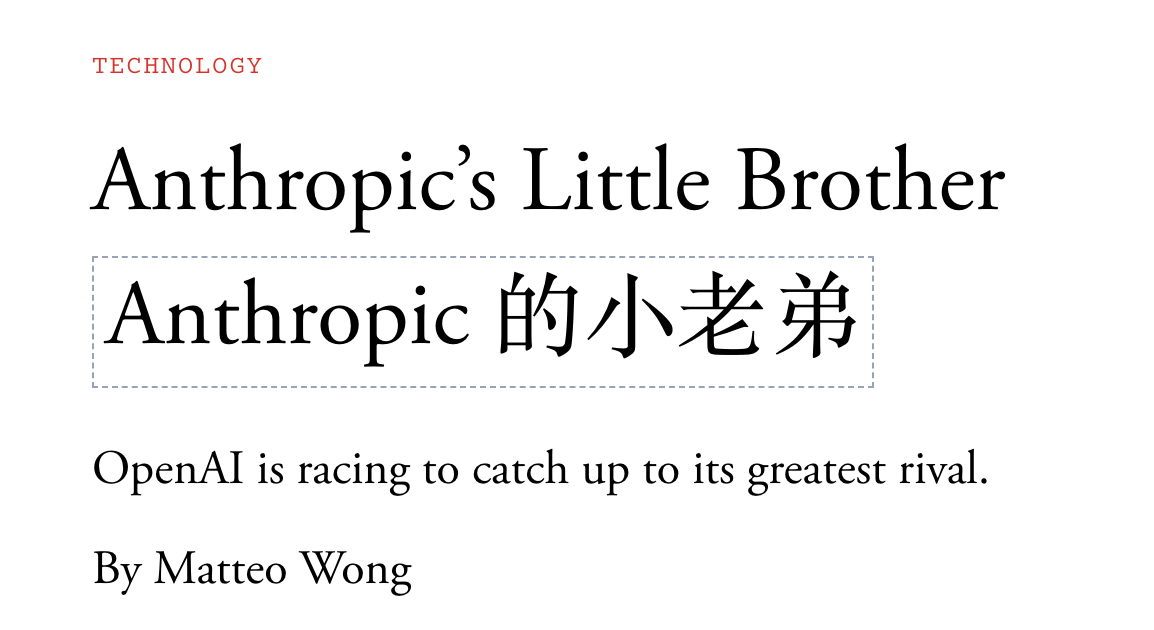
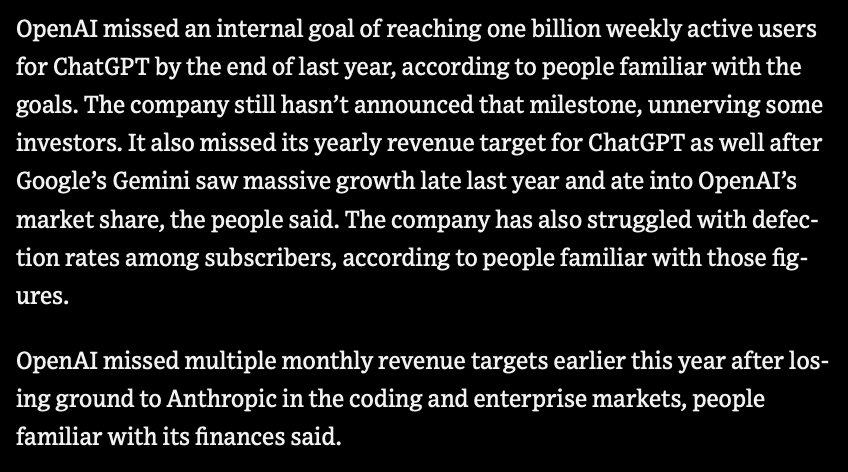
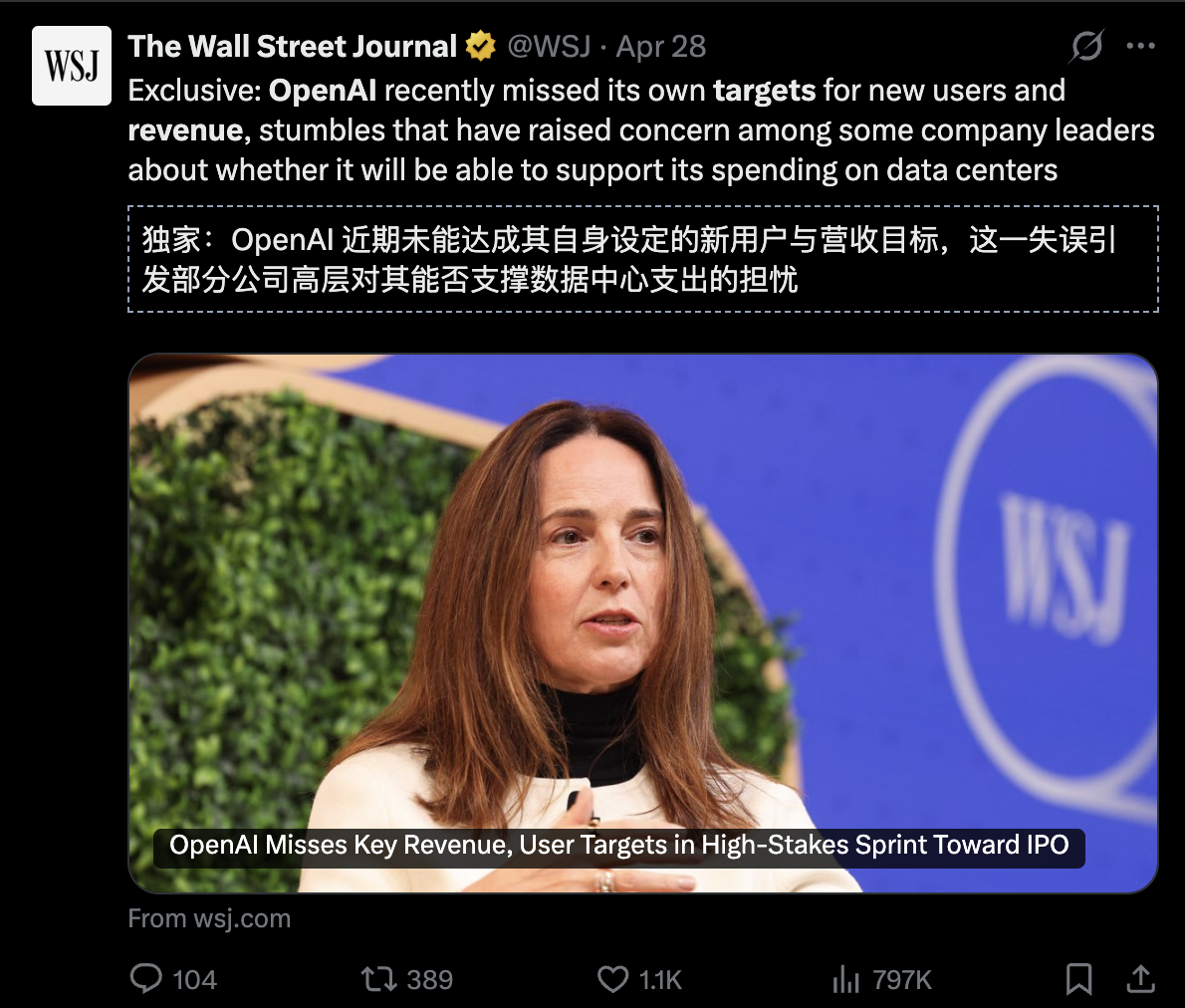
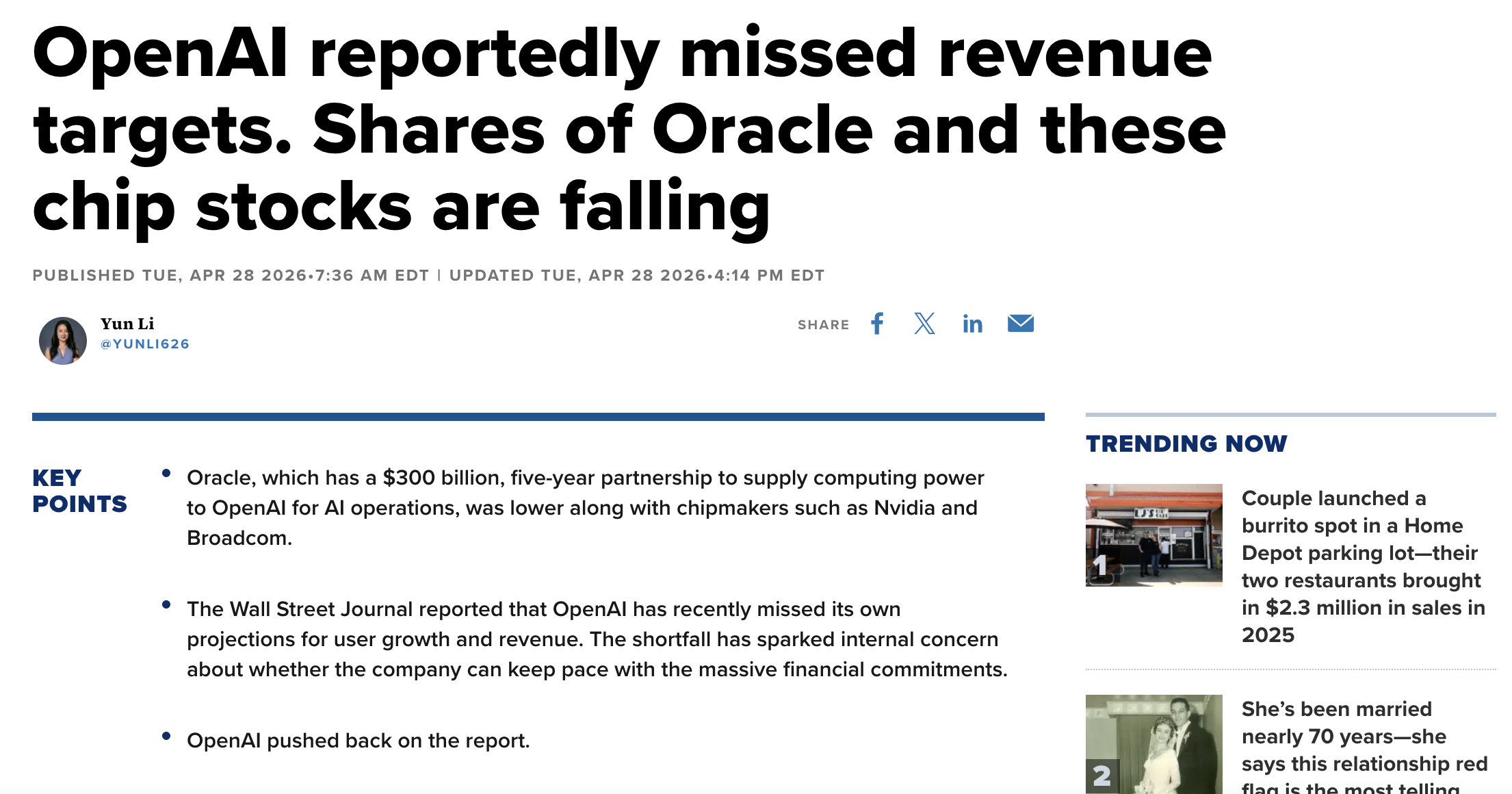
Even more ruthless is that on the same day, WSJ revealed another bombshell: OpenAI has not met its internal target of 1 billion weekly active users, and the CFO expressed concerns about whether they can afford a 600 billion dollar power bill, revealing a divergence of views between the CEO and CFO.
With financing of 122 billion dollars barely dry, the backyard is already on fire.
Now, the dragon-slaying youth has finally become king.
How Anthropic's 30 billion came to be
Moreover, by the end of 2025, Anthropic's ARR was still about 9 billion dollars; by this April, it officially confirmed it had exceeded 30 billion. In just four months, it tripled again.
This acceleration is truly terrifying.
How did Anthropic achieve 30 billion in annualized revenue?
Why does OpenAI, with 900 million weekly active users, get surpassed in revenue by the "latecomer"?
The secret is just three words: enterprise end. Yes, 80% of Anthropic's revenue comes from the enterprise end.
It has 300,000 enterprise customers, eight of whom are in the Fortune 10, using Claude, with over 1,000 large customers spending more than 1 million dollars each year. Moreover, this number has doubled within two months.
The awkwardness for OpenAI is that it has fallen into the most typical "increasing revenue but not increasing profit" trap of the internet era.
Among 900 million users, the vast majority are "moochers," using ChatGPT for homework, writing weekly reports, or even casual chatting; maintaining this traffic incurs astronomical reasoning costs.
This is exactly the difference between two completely different business models: one is a C-end traffic funnel, with many users but a low payment rate; the other is a B-end subscription engine, with fewer users but a high average revenue per user.
Now, the real market results are out——the B-end has won.
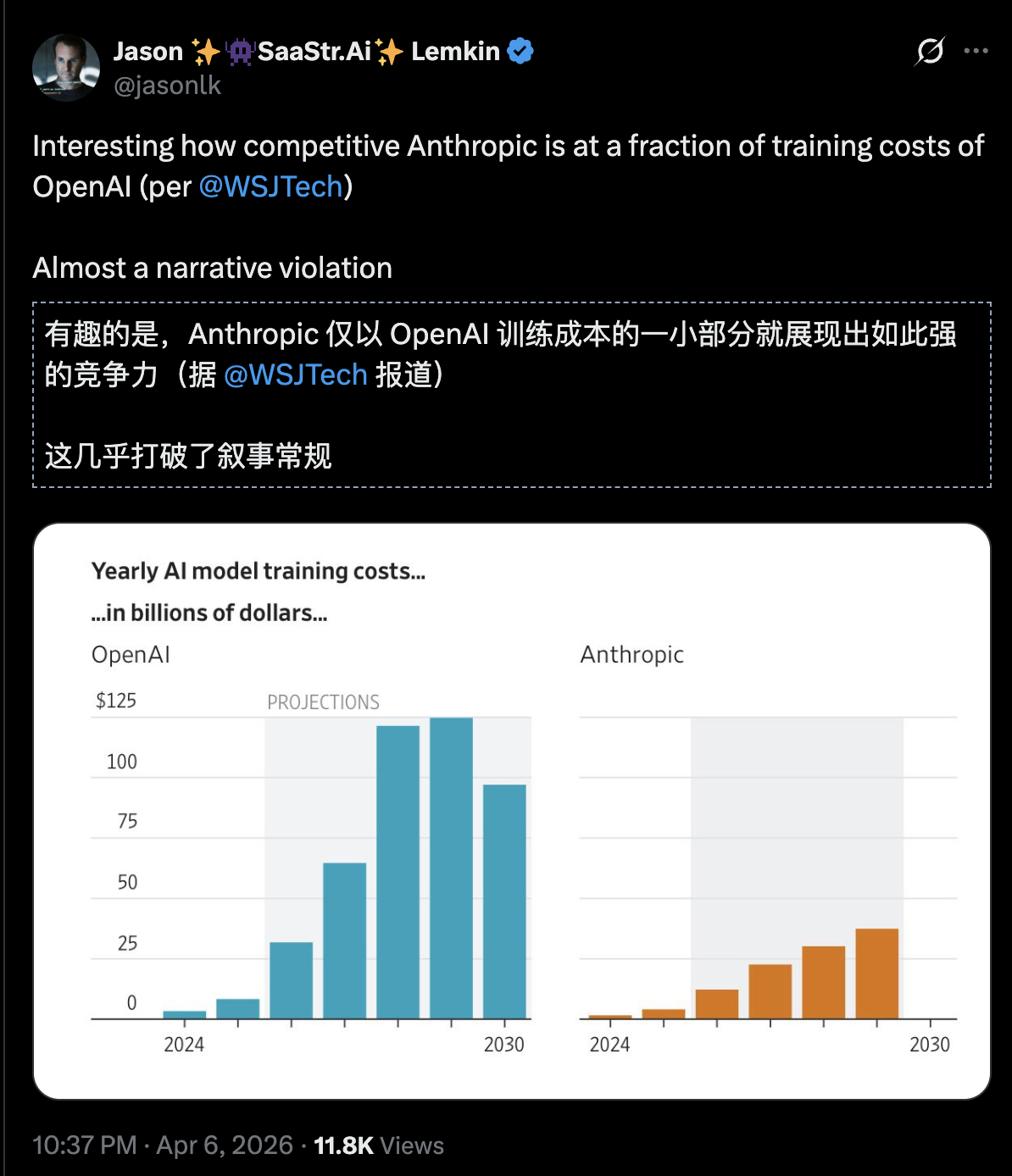
More interestingly, Anthropic's spending method. While achieving this result, Anthropic's investment in model training is only one-quarter of OpenAI's.
In terms of return on investment in technology, Anthropic is not just winning; it is crushing the competition.
While Ultraman is still begging for a "trillion computing power plan," his former subordinate Dario Amodei has quietly slashed OpenAI's backyard with Claude.
Dario Amodei's "defection," Ultraman's nightmare
The most exciting plot in the business world is the "return of the exiled."
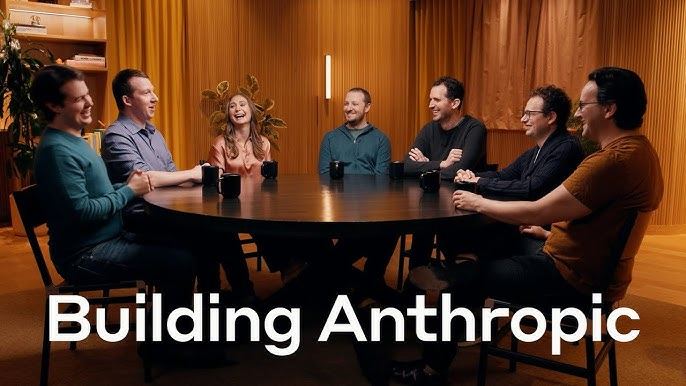
In 2021, due to differences over OpenAI's increasingly commercial atmosphere and safety principles, Dario Amodei left with his sister Daniela and a group of core researchers from OpenAI to establish Anthropic.
At the time, the industry even jokingly called them idealists "committing suicide with sentiment."
Ultraman probably didn't take this matter too seriously at the time.
Four years later, this group of "rebels" gave him the answer with 30 billion dollars in revenue.
As mentioned above, the key lies in their aim at the B-end enterprise market.
B-end cash ability vs. C-end moochers
As of April 2026, over 1,000 enterprise customers pay Anthropic more than 1 million dollars each year. Amazon, Google, Salesforce, Accenture, Deloitte——these giants are not just investors, but also deep-paying users.
Claude Code has become the key weapon. Enterprise developers use it to write code, adjust architectures, and make deployments; this is a direct necessity embedded in workflows. Once B-end customers use it, the switching costs are extremely high and renewal rates are astonishing.
Where does Anthropic truly win?
It has turned "safety" from a marketing label into a commercial barrier. Corporate clients in finance, healthcare, and legal sectors fear not the intelligence of AI but who is responsible when AI goes wrong.
Anthropic's Constitutional AI framework, interpretability research, and commitment to responsible deployment have become hard points on CTOs' procurement lists.
In contrast, OpenAI faces some hard data disclosed by WSJ: ChatGPT has repeatedly failed to meet the internally set target of 1 billion weekly active users, and revenues fell short of expectations for several months.
Backyard on fire! OpenAI's power play
If external competition is a sharp pain, then internal rifts are a fatal wound.
While Anthropic celebrates its victory, WSJ and The Information throw out heavy bombs consecutively——internally, OpenAI is already in chaos!
Divergence among commanders
Ultraman and the company's new CFO Sarah Friar have a relationship that is already tense.
As a top financial expert who came from Square and Nextdoor, Friar's task was originally to safeguard OpenAI's monumental IPO, which aimed for 122 billion dollars and even a target valuation of 1 trillion dollars. But now, this financial leader is on the edge of "going rogue."
In internal meetings, Friar has expressed strong doubts about Ultraman's aggressive plans for power expansion. While Ultraman wants to buy all the graphics cards on Earth, Friar trembles at the bills.
She has privately warned colleagues that if revenue does not accelerate, OpenAI may be unable to pay future power contract fees, thus Ultraman has excluded her from critical infrastructure meetings.
Power black hole
Ultraman signed power contracts worth up to 600 billion dollars last year.
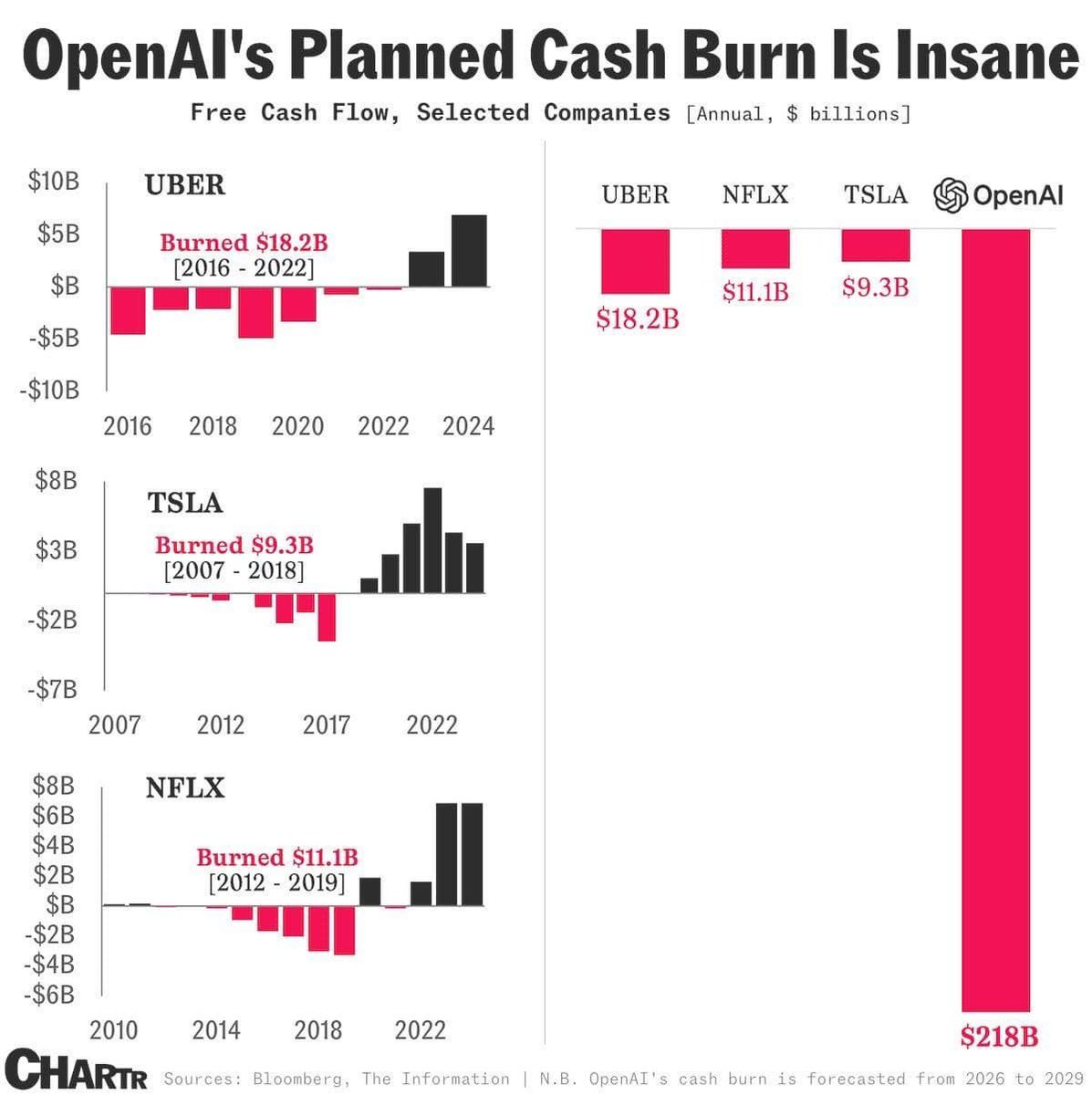
This means that even with the recent acquisition of 122 billion dollars in the largest financing ever, if it continues to burn money at its current pace, this money will only last for three years.
Friar is concerned that if revenue growth cannot maintain an exponential increase (in fact, ChatGPT's weekly activity and revenue have repeatedly missed targets), OpenAI will directly crash into a financial iceberg.
According to forecasts, OpenAI may burn over 200 billion dollars before achieving stable cash flow, with a burn rate unprecedented!
IPO deadlock
Ultraman is eager to ring the bell by the end of this year and complete a historic listing. But Friar has privately revealed to colleagues that OpenAI's internal control system is terribly flawed and not prepared for the rigorous audits of the secondary market.
Now, the divergence between the two has become public; although officials urgently issued a statement claiming they are "completely in agreement," this pale denial seems unconvincing in light of a 1% drop on Nasdaq.
The plummet in the stock prices of partners like SoftBank and Nvidia has already indicated market concerns about OpenAI's stability.
One-quarter of costs, three years of time difference
Revenue surpassing is only superficial. What truly makes it difficult for OpenAI to catch up is the gap in cost structure.
According to internal financial documents and third-party analyses from global SaaS industry authority SaaStr, OpenAI is expected to incur around 121 billion dollars in annual power expenses by 2028, while Anthropic's training costs peak at around 30 billion dollars, close to one-quarter of the former.
What does this number mean?
For the same 1 dollar spent, Anthropic can achieve the effect that OpenAI would need to spend 4 dollars to reach.
When your costs are a quarter of your opponent's, your pricing space, profit space, and survival space are all several times greater than your opponent's.
Profit marathon, who reaches the finish line first?
More fatal is the difference in profit timelines: Anthropic expects to achieve positive cash flow by 2027, while OpenAI's timeline has been pushed back to 2030.
Three years. In the AI industry, three years is an era. It is enough for a company to establish an insurmountable ecological moat and sufficient for a once-unicorn to collapse due to cash flow breakage.
Now, the situation is very clear.
Anthropic: Expected to achieve positive cash flow by 2027. Armed with a healthy B-end payment model and extremely high R&D cost efficiency, it is moving forward lightly.
OpenAI: Profit target set for 2030. It is burdened with a heavy C-end load and astronomical computational debts, struggling as it moves forward.
Anthropic has just announced its computational partnership with Google and Broadcom, further solidifying its infrastructure advantage. Meanwhile, OpenAI's board is questioning whether Ultraman's expansion strategy is sustainable.
Internal panic is spreading: OpenAI's Chief Revenue Officer has directly named Anthropic, warning employees to remain vigilant, "the market competition is more intense than I have ever seen."
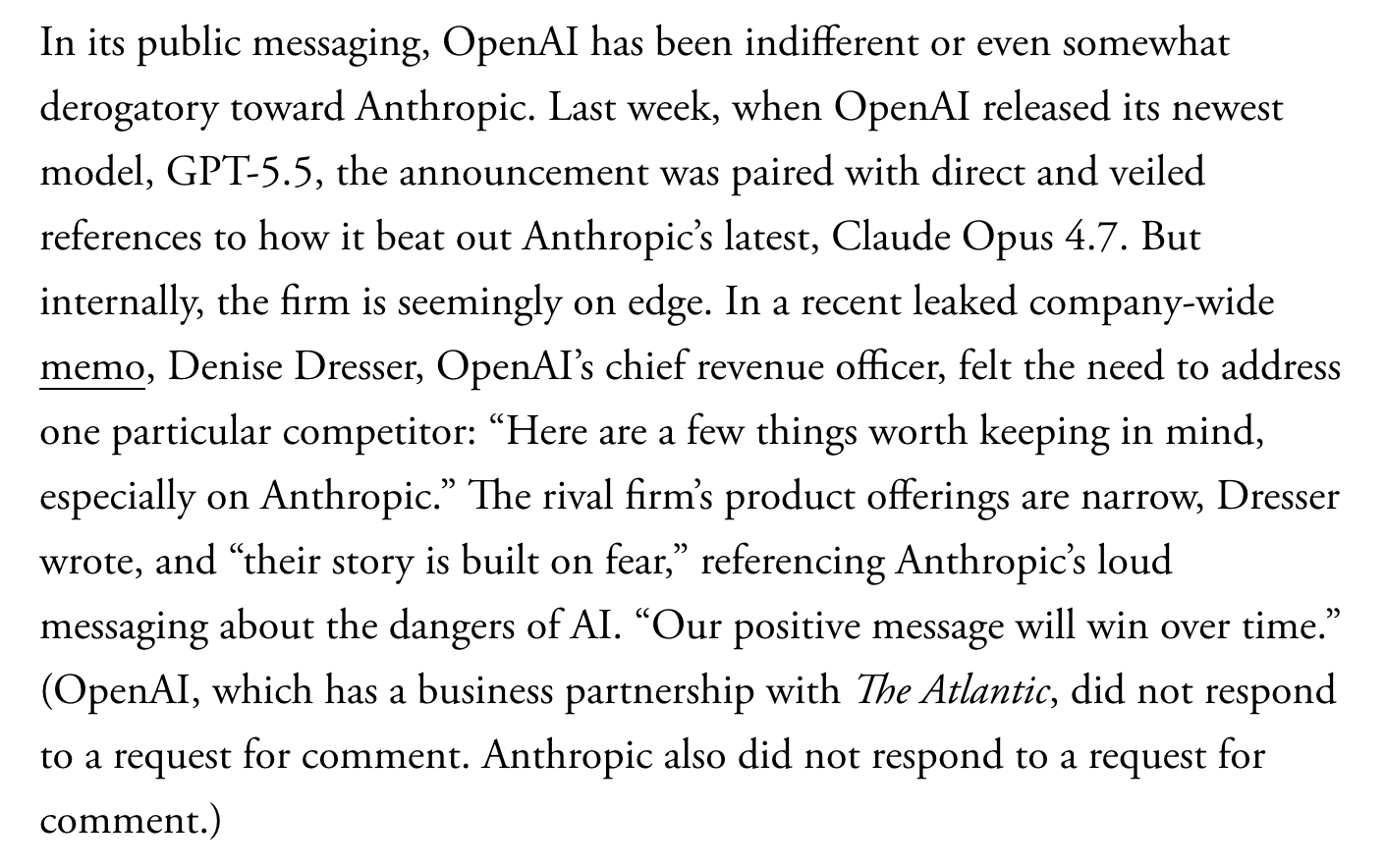
More emblematic is OpenAI's response action——cutting projects like Sora and completely pivoting to B2B, frantically following product lines like Claude Code, taking one step at a time.
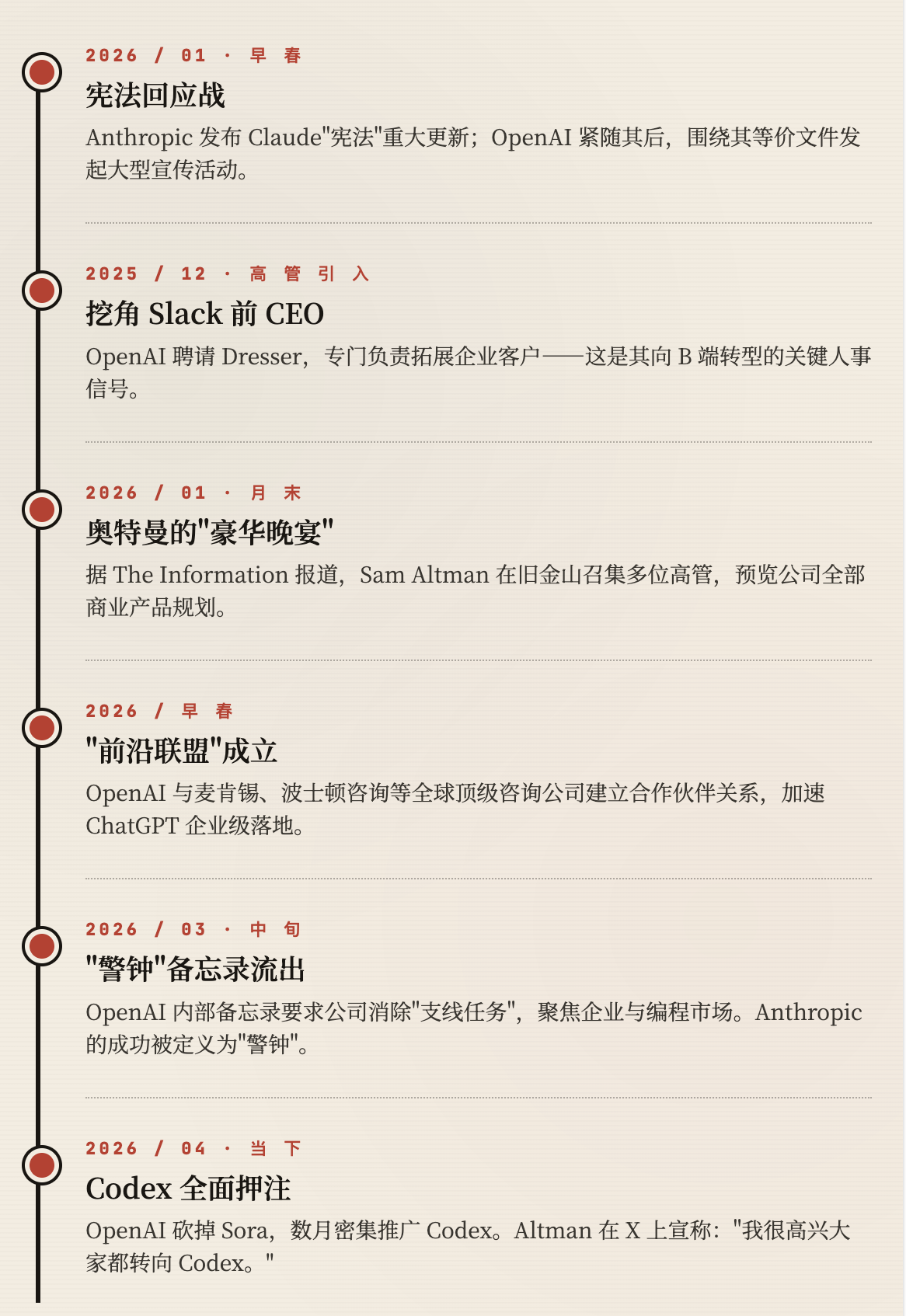
According to related reports by the media "The Atlantic," the information graphics generated by Claude.
When you start mimicking your opponent's strategy, it shows you have acknowledged one thing: your opponent's route is correct, and yours is wrong.
With 122 billion just received, the truth has been revealed.
What is even more intriguing is the timing of this overturn.
Just weeks ago, OpenAI had just completed a shocking round of financing: a total of 122 billion dollars, with a valuation soaring to 800 billion.
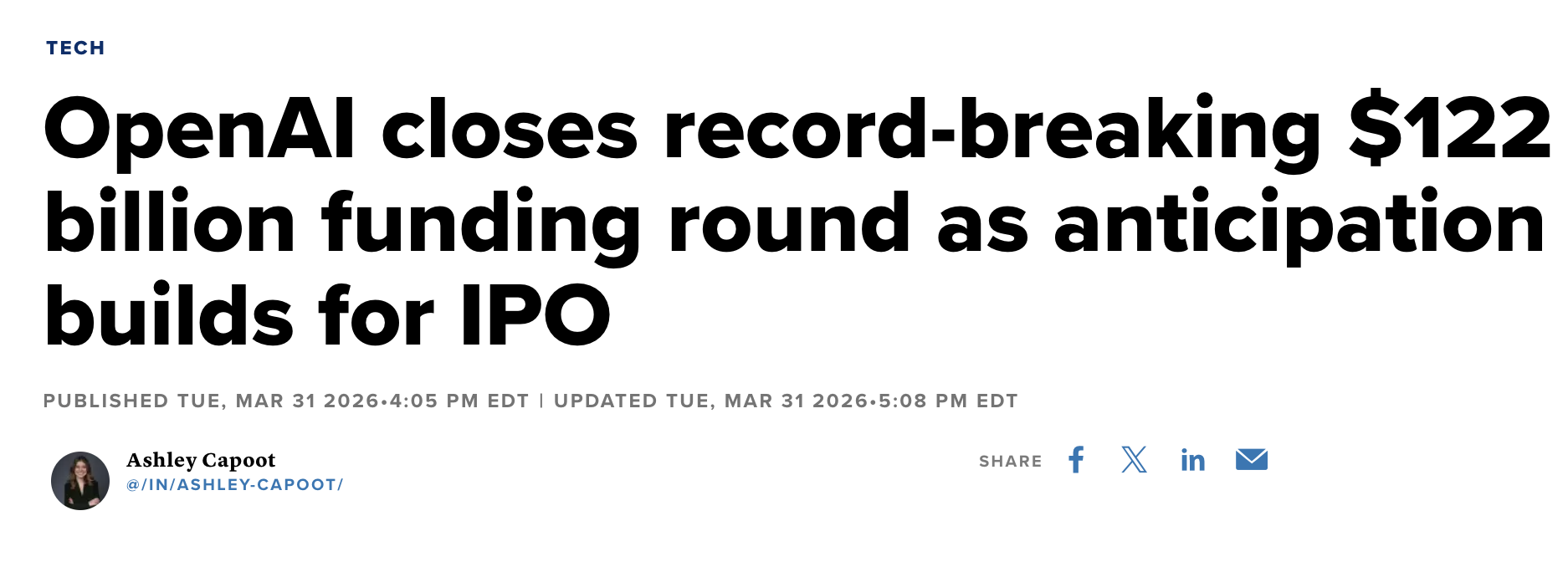
With the ink of the money receipt barely dry, WSJ has pierced a layer of thin plastic.
OpenAI's current annual revenue is about 24 billion, while operating costs are projected to exceed 20 billion. Profit margins are extremely thin, and profitability is a distant prospect.
What truly hangs over OpenAI's head is an even larger bill: the total investment scale of the "Stargate" project reaches 600 billion dollars.
122 billion against 600 billion looks more like a painkiller.
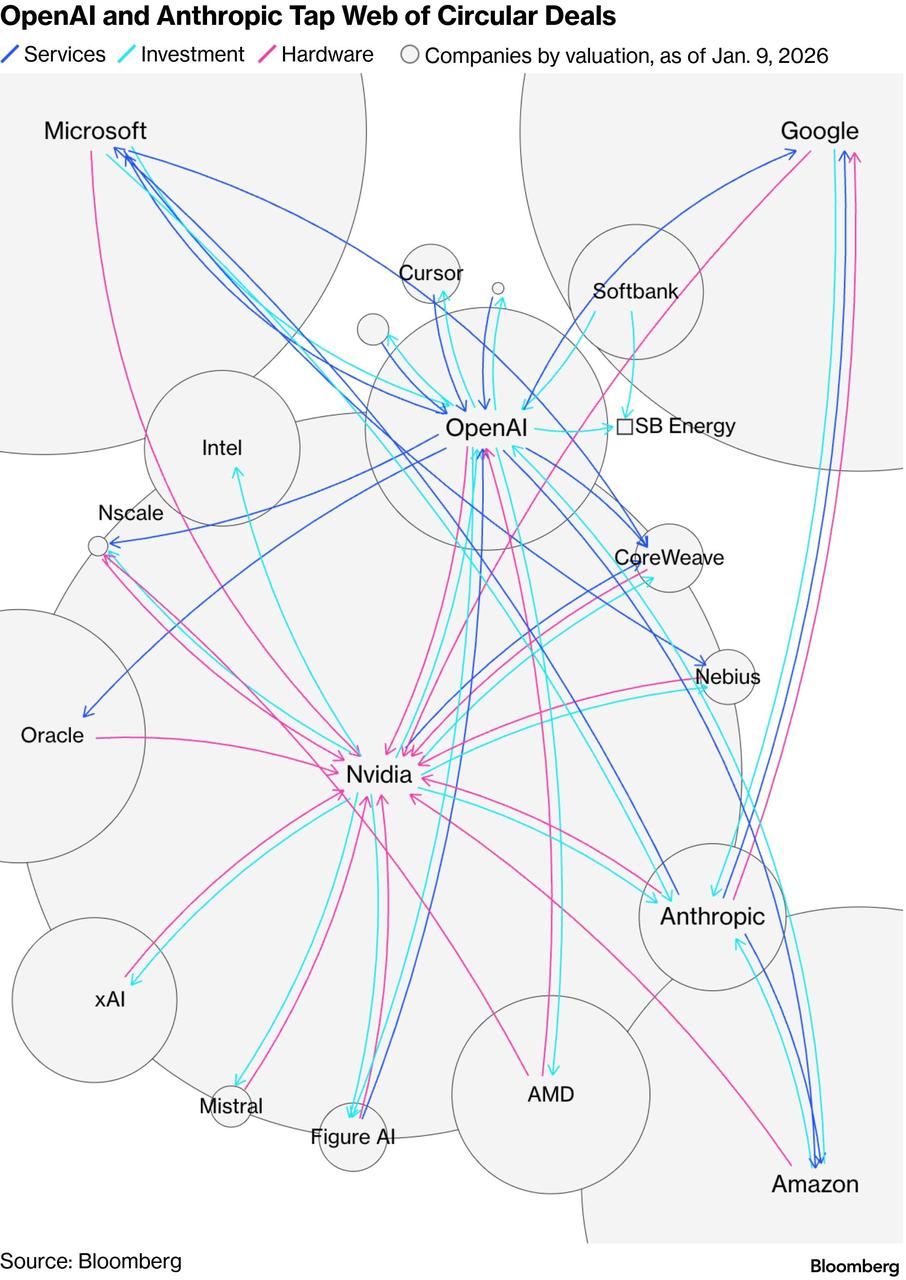
This constitutes a funding cycle that should be watched carefully: chip manufacturers invest money in OpenAI, OpenAI uses this money to buy chips, and the power generated from the chips is used to maintain unprofitable free users, while to maintain growth, OpenAI needs to raise more money.
OpenAI's revenue executives even accused Anthropic's revenue calculation method of being "inflated" in internal memos, but no one denies the fact: Anthropic has indeed surpassed.
This is also the root of OpenAI's internal strife.
Accountants' rationality tells Sarah Friar that the company is heading towards a bottomless capital black hole; while the dreamers' fervor prevents Ultraman from stopping——once expansion stops, the expectation of a 300 billion valuation may immediately loosen.
New players in the trillion club
The capital market's reaction is more honest than any analysis.
Anthropic's secondary market valuation is approaching 1 trillion dollars.
Some early investors in OpenAI have begun to waver——investors are reassessing the rationality of OpenAI's valuation.
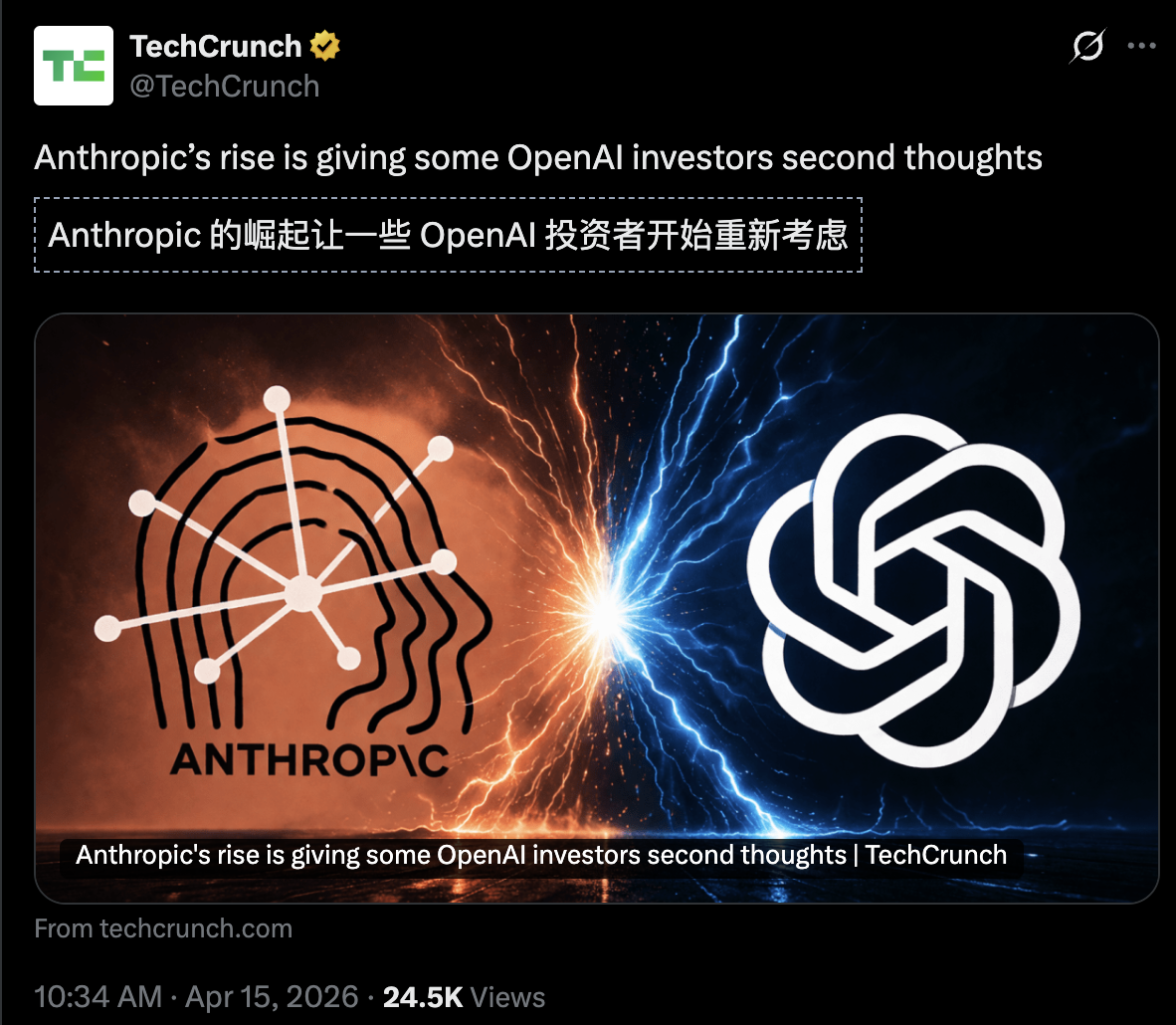
Concept stocks like Oracle and CoreWeave, which are deeply tied to OpenAI, have seen a pullback. The market is voting with real money.
However, the most intriguing aspect of this comeback is not who wins or loses, but the industry rules it reveals.
OpenAI chose the internet approach of "first gather users, then find a business model." Anthropic, however, follows the enterprise software strategy of "first creating product value, then waiting for scale effects."
This rivalry between the two routes is essentially the entire AI industry's answer to a fundamental question: the ultimate commercialization of large models, is it consumer internet or enterprise infrastructure?
Anthropic has bet 30 billion dollars in revenue on the latter. At least for now, the market stands on its side.
One day, OpenAI or Anthropic may conquer cancer and reshape the world, but for now, they still need to pay the bills.
The divine hand of the defector
In 2021, when Dario Amodei left OpenAI, hardly anyone was optimistic about him.
Four years later, Anthropic not only survived but also surpassed.
This raises the question: if Ultraman could return to 2021, would he stop that "defection"?
The answer might be: even if he stopped it, it wouldn't matter. Anthropic's success is not because it poached a few talents, but because it found a path that OpenAI overlooked.
The battle for AI supremacy is far from over. OpenAI still holds the technological trump card of GPT-5, the backing of Microsoft's ecosystem, and the largest AI user base in the world, but the balance of power has shifted.
Ultraman's anxiety is now off the charts. He must deal with legal lawsuits from Musk, appease discontented executives within, and face investors' questioning.
This epic showdown in AI has only just begun. Who will laugh last?
But one thing is certain: the monopoly era belonging to OpenAI has officially ended.
References:
https://x.com/NoLimitGains/status/2049213286311436597
https://x.com/aakashgupta/status/2049032633167085910
https://www.wsj.com/tech/ai/openai-misses-key-revenue-user-targets-in-high-stakes-sprint-toward-ipo-94a95273
https://www.saastr.com/anthropic-just-passed-openai-in-revenue-while-spending-4x-less-to-train-their-models/
https://www.theatlantic.com/technology/2026/04/openai-imitating-anthropic/686975
免责声明:本文章仅代表作者个人观点,不代表本平台的立场和观点。本文章仅供信息分享,不构成对任何人的任何投资建议。用户与作者之间的任何争议,与本平台无关。如网页中刊载的文章或图片涉及侵权,请提供相关的权利证明和身份证明发送邮件到support@aicoin.com,本平台相关工作人员将会进行核查。


