Author: Special Contributor Jin Lu: Tencent Technology
Editor|Boyang
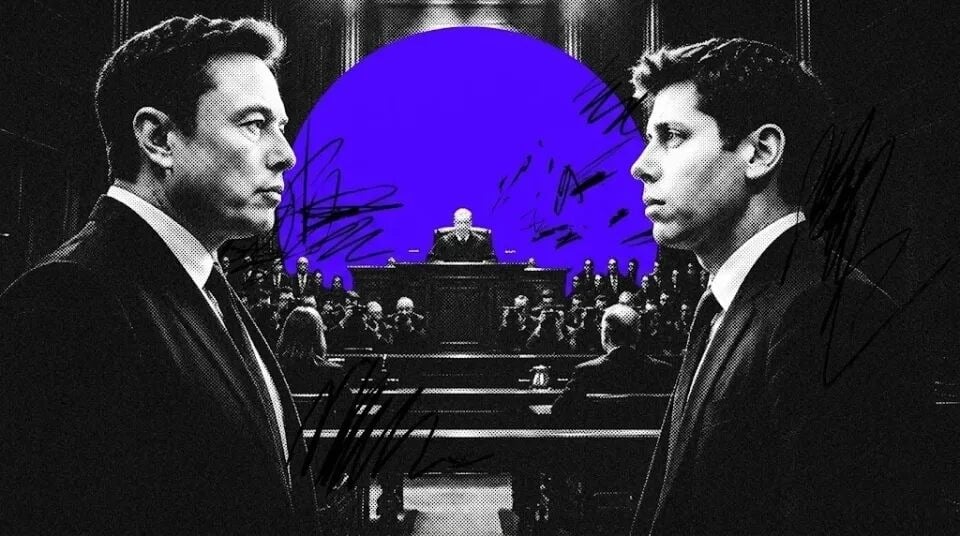
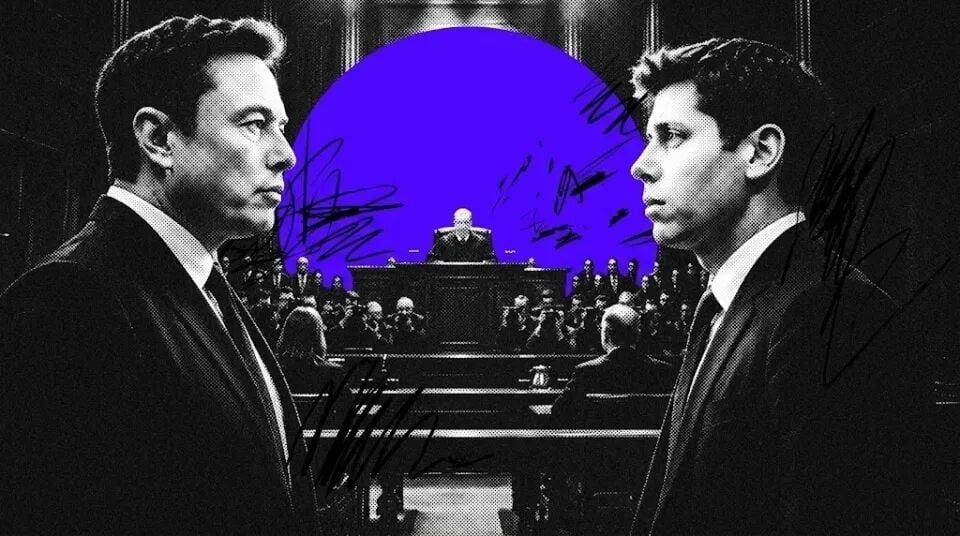
Musk vs. Altman Trial, Image Processed by AI
On April 28, U.S. time, the Musk vs. OpenAI case opened in the federal court of Oakland, California.
Musk, as the first witness, attempted to explain to the nine-person jury why he wanted to establish OpenAI as a non-profit organization. OpenAI CEO Sam Altman and President Greg Brockman were also present in the courtroom to listen.
Ten years ago, they were partners envisioning the future of AI together. Now, Musk demands that Altman and Brockman resign from OpenAI and return all "unjust enrichment" to the OpenAI charity.
At the core of this trial is a tech giant valued at over a trillion dollars and the complete collapse of trust between two former friends.
01 Three Core Controversies
On April 27, the jury for this case was selected. The presiding judge is Yvonne Gonzalez Rogers of the U.S. District Court for the Northern District of California, who previously presided over the Epic Games vs. Apple antitrust case in 2021.
The lawsuit submitted by Musk in 2024 originally included 26 charges, but after preliminary rulings, only two charges remained for trial: breach of charitable trust and unjust enrichment. The trial is divided into two phases—liability phase, which involves the jury's involvement and is advisory; if liability is established, the remedy phase will be addressed solely by the judge.
On the morning of April 28, opening statements took place sequentially. Three legal teams representing Musk, OpenAI (including Altman and Brockman), and Microsoft engaged in a debate over three core issues.
Controversy One: What is OpenAI's mission, and did Musk's $38 million donation carry conditions?
Musk's lawyer, Steven Molo, presented OpenAI's founding charter from 2015 in court. The document states that the organization "is not organized for the private benefit of any individual" and will create "open-source technology that serves the public interest." Molo claimed that Musk's donation of approximately $38 million constituted a charitable trust, requiring OpenAI to permanently maintain its non-profit status.
In his opening statement, Molo raised three questions for the jury to keep in mind:
Does OpenAI have a charitable mission to operate as a non-profit organization, specifically to develop safe, open-source AI for the benefit of humanity;
Did Altman and Brockman violate this mission by establishing a for-profit business;
Did Microsoft know about this mission and assist Altman and Brockman in violating it?
He directly stated, "Without Musk, there would be no OpenAI," and claimed that OpenAI's shift to for-profit operations equated to "violating every promise." "No one should be allowed to steal from a charity," he said.
Musk echoed this stance from the witness stand. "It specifically refers to a charity that does not benefit any individual," he pointed to the founding charter and said, "I could have started it for profit, but I chose not to. I chose to make it something that benefits all of humanity."
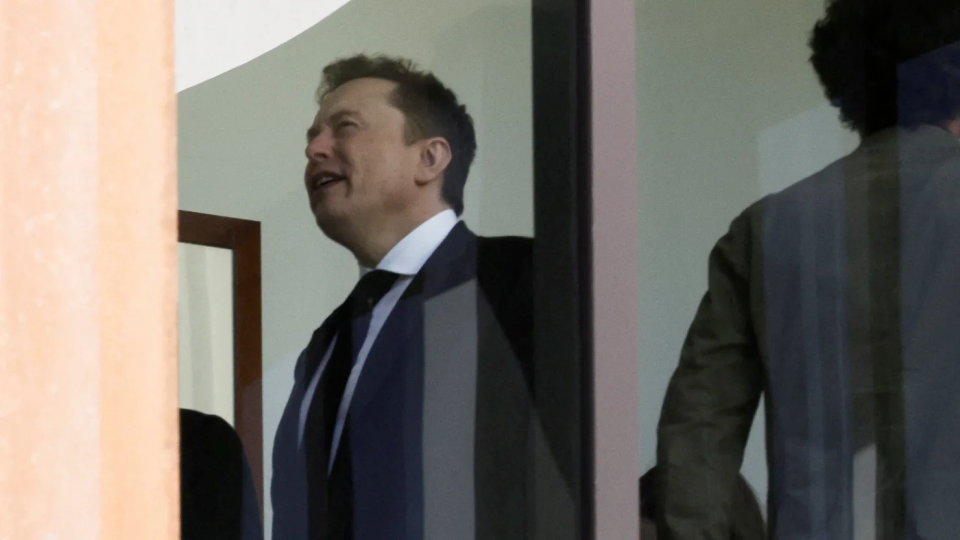
Musk appeared in court as the first witness
Musk characterized the case as a fundamental issue of charitable donations: "Stealing from a charity is wrong. If Altman and OpenAI win, it will open the door for plundering every charity in the U.S." He further warned: "The consequences of this case go far beyond me or everyone here. The entire foundation of charitable donations in America will be destroyed."
OpenAI's lawyer, William Savitt, responded with a completely opposite argument. He told the jury: "The question is whether OpenAI made any specific promises to Musk when he donated. The answer is no." Savitt insisted that the donations came without any conditions. He also revealed that Musk had never fulfilled his entire donation promise, leading the organization to seek additional support.
Savitt also attempted to counter Musk's claims from OpenAI's current structure. He told the jury that despite Musk's accusations, the company had not abandoned its non-profit mission. The non-profit foundation "still controls the organization" and is "doing cutting-edge work to treat diseases and promote economic diversity." He pointed out that Altman has no shares in OpenAI, but claimed that Altman profits through various companies that do business with OpenAI and had previously indicated he might acquire equity in OpenAI in the future.
Controversy Two: Did Musk ever approve of OpenAI's shift to for-profit?
Savitt presented an email from former OpenAI board member Shivon Zilis, addressed to Sam Teller, who once worked for Musk.
The email discussed two restructuring proposals: consolidating everything into a single B corporation (i.e., a public benefit corporation) or establishing a C corporation and a non-profit organization. Savitt claimed that Musk "never expressed the view that OpenAI must remain a purely non-profit organization" and said he "only supported profit-making entities as long as he controlled everything."
Savitt also provided details about equity distribution. Evidence he showed to the jury indicated that Musk's chief of staff had discussed giving Musk a 55% stake in the for-profit entity while giving Altman a 7.5% stake.
Molo preemptively responded to this issue during his opening statement. He acknowledged that Musk did discuss the idea of creating a for-profit version of OpenAI, but emphasized that Musk's condition was always "the non-profit organization must control the for-profit entity." Molo claimed that the idea at the time was for Musk to control the for-profit subsidiary and that the importance of the subsidiary would "diminish over time," merely serving as a way to raise funds in the short term.
Musk himself directly addressed the structural controversy from the witness stand. He admitted that there were discussions within OpenAI about establishing a for-profit entity during the period from 2017 to 2018. He expressed openness to "a small for-profit entity that funds a non-profit organization" but with the condition that "the roles are not reversed"—the non-profit organization must retain control.
He also explained the reason for his eventual departure: when other founders demanded too much equity in the proposed for-profit sector, he expressed in an email to the executive office in 2017 that it was "very frustrating," and he seemed determined to leave. He officially left the OpenAI board in 2018.
Controversy Three: What is the real motive behind Musk's lawsuit?
Savitt explained: "We are here because Musk did not get what he wanted at OpenAI."
He described a timeline: Musk left in 2018 after a power struggle, stating "they will surely fail," but Altman and others "had the guts to move forward without him and succeeded"; the launch of ChatGPT at the end of 2022 sparked a global craze; Musk founded his for-profit AI company xAI in 2023 and subsequently filed a lawsuit in 2024.
Savitt summarized Musk's motive as "sour grapes," stating, "Mr. Musk doesn't like it this way, but that's not a basis for filing a lawsuit." He bluntly stated, "Musk doesn't understand artificial intelligence very well."
Savitt further refined this timeline. He said that Musk only expressed dissatisfaction with OpenAI's pursuit of profit after ChatGPT ignited a global AI arms race, at which point Musk had already founded xAI.
Microsoft attorney Russell Cohen aligned with the OpenAI camp on this point and provided two specific arguments.
First, he cited a post from Musk on X in September 2020—"OpenAI has essentially been captured by Microsoft"—as evidence that Musk was already aware but did not file a lawsuit in a timely manner, arguing for a statute of limitations defense. Second, he revealed Musk's more personal channels of contact with Microsoft CEO Satya Nadella: "Musk knows how to reach Nadella. In the five years since the partnership was announced, Mr. Musk has never picked up the phone and said, 'You can't do this.'"
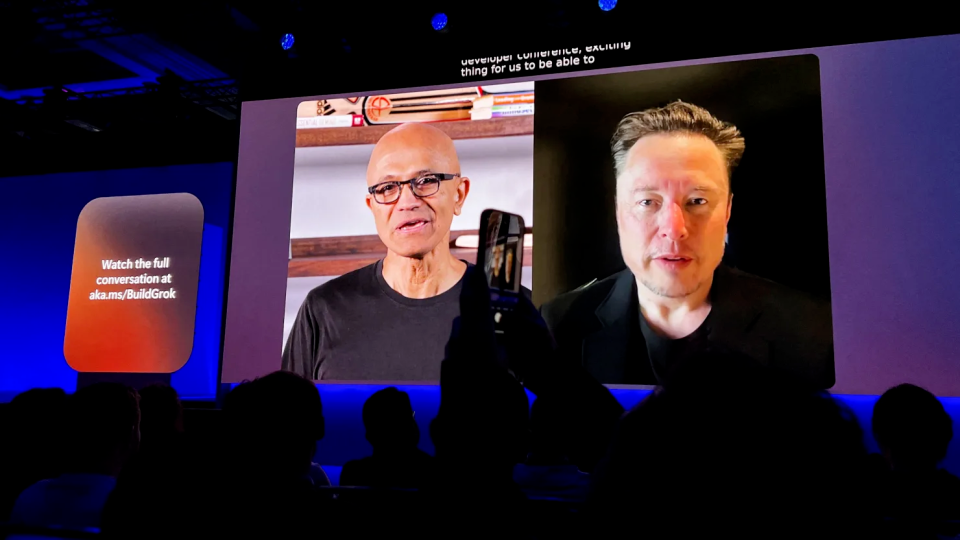
Microsoft lawyer stated Musk could easily contact Nadella
He emphasized that Musk personally holds Nadella's phone number. Cohen concluded that after ChatGPT's success, Musk launched xAI, "then suddenly filed a claim against Microsoft."
Molo, on the other hand, attempted to separate the case from Musk's personal interests. "This case is not about Elon Musk," he emphasized to the jury, but about the defendants "lining their pockets, violating the fundamental principles under which the organization was established." Molo stated that the case is for "the benefit of all humanity," not for economic gain. He urged the jurors to set aside preconceived notions about Musk: "Everyone seems to know Musk and has various opinions about him. Not everyone's opinion is good, nor is it all bad."
Molo also acknowledged that Altman's lack of shares in OpenAI could undermine Musk's claim that Altman was lining his pockets through the non-profit organization. But he argued that Altman profits through various companies that do business with OpenAI and has indicated he might acquire equity in OpenAI in the future.
02 Side Note: Musk Talks About AI Apocalypse
Throughout the trial, many scenes diverging from the three core controversies emerged. These did not involve the nature of the donation, the legality of structural changes, or the motives of the lawsuit, but created a dramatic scene on the first day of the trial.
Musk's self-presentation took up a large part of the proceedings. His lawyer Molo, through a series of questions, painted a complete portrait of an entrepreneur: Musk grew up in South Africa, worked as a lumberjack and waited tables in Canada before coming to the U.S., and carried "$100,000 in student debt" while in college. He simultaneously serves as CEO of Tesla and SpaceX, "working 80 to 100 hours a week," "with no vacations and no vacation homes."
When talking about SpaceX, Musk said the company's goal is to "make life multi-planetary" and described it as "the life insurance for life as we know it." Regarding Neuralink, he stated its long-term goal is "AI safety," and "if we can achieve coexistence between AI and humans, we can achieve an AI that is more beneficial to humanity."
On AI, Musk released a strong risk warning. He compared training AI to raising a child: "Ultimately, when the child grows up, you can't really control that child, but you can try to instill the right values." He predicted the speed of AI development: "It could be as smart as any human as early as next year."
He then concluded: "It could make us more prosperous, but it could also kill us all." He used two movies as metaphors for the two possibilities: "We want Star Trek, not Terminator."
A minor diversion occurred during the cross-examination. When Molo asked, "Who is Shivon Zilis?" Musk paused for a moment, stumbled through a few words, and then laughed, referring to her as his "chief of staff." In fact, Zilis is a former board member of OpenAI and also the mother of several of Musk's children.
Altman was very low-key on the first day of the trial. He did not take the opportunity of the opening statement to speak to the media or the public. The trial records described him only as: "arms crossed, with a worried expression, talking with lawyers and team members"; during recess, "typing on a phone"; and when the judge warned both parties to stop online attacks, he remained silent and simply agreed with the judge's request.
03 The Struggle Outside the Courtroom
Outside the courtroom, public confrontations between both sides also continued.
Before the trial began, Judge Rogers called Musk and Altman to the bench, asking them to stop online attacks on social media and urging both sides to start with a "clean slate," "saying as little as possible" on social media. Both agreed.
Regarding the trial's impact on the industry, AI safety expert Vivian Dong predicted it would "mostly be limited to OpenAI."
"No specific AI safety policy or industry practices are subject to trial," she said, "ordering OpenAI to implement the kind of structural changes Musk seeks in a lawsuit for private breach of charitable trust would be unprecedented." She also added that the officials responsible for overseeing OpenAI's fulfillment of its charitable mission are the Attorneys General of Delaware and California, not Musk himself.
Emarketer chief analyst Nate Elliott offered another perspective: "If Musk wins, it would represent a rare case of tech CEOs being held accountable. This could also mean the end of OpenAI's business and give xAI and Grok a competitive opportunity they currently lack."
After the trial, Musk is scheduled to return to court on April 29, U.S. time, to continue facing direct questioning from lawyer Molo, followed by potential cross-examination from Savitt. The judge has explicitly requested that Musk not speak with lawyers at night.
Subsequent trials will also summon more witnesses. Musk's legal team stated that Musk would subsequently have Jared Birchall testify, who manages his billions in assets at Musk's family office Excession LLC while serving as an executive at xAI and Neuralink.
Expert witnesses for Musk include AI researcher Stuart J. Russell from the University of California, Berkeley, and law professor David M. Schizer from Columbia University.
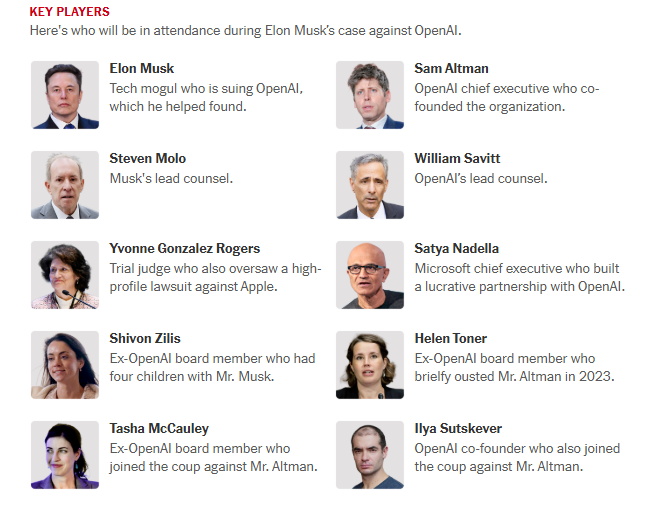
Key witnesses expected to testify include Altman, Nadella, Murati, Sutskever, and others
Additionally, witnesses expected to testify include Microsoft CEO Nadella, former OpenAI CTO Mira Murati, and early key OpenAI researcher Ilya Sutskever. Musk specifically mentioned the difficulty of poaching Sutskever in his testimony—he referred to it as "a huge effort" and "extremely difficult," leading Page to "refuse to talk to me again." He called Sutskever the "most important" researcher contributing to the existence of OpenAI.
The trial is expected to last about four weeks. In the following cross-examination phase, Musk’s testimony regarding founding intentions, the nature of charitable donations, and structural changes will first be subjected to examination by the opposing counsel.
免责声明:本文章仅代表作者个人观点,不代表本平台的立场和观点。本文章仅供信息分享,不构成对任何人的任何投资建议。用户与作者之间的任何争议,与本平台无关。如网页中刊载的文章或图片涉及侵权,请提供相关的权利证明和身份证明发送邮件到support@aicoin.com,本平台相关工作人员将会进行核查。


