Written by: Liu Honglin
I came across an inconspicuous piece of news at night: According to the latest disclosed 13F filing, the overseas fund under Dongfang Hongwan purchased over 30,000 shares of Circle in the latest reporting period, worth more than three million dollars, accounting for less than 0.3% of the entire portfolio.
If we only look at this number, there is nothing particularly special; such a level of position is quite common among many institutions.
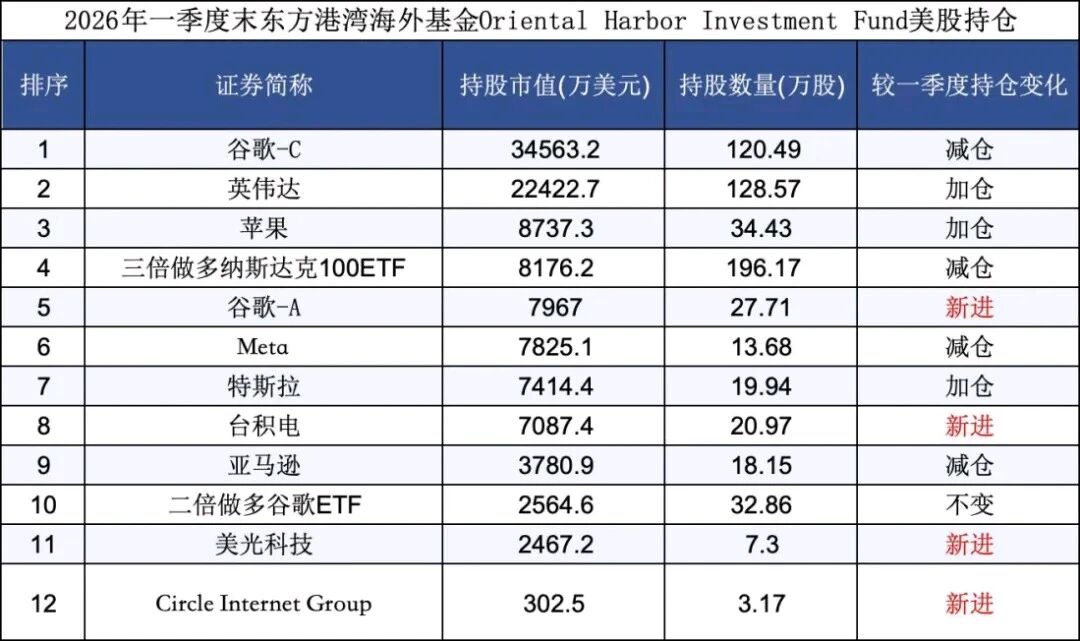
However, the subject itself makes this matter a bit interesting.
What is Circle: The Business Logic of a Stablecoin Issuer
Circle is one of the stablecoin issuers and just went public on the NYSE in 2025. Breaking down its business, it is actually quite simple: users exchange their dollars for USDC, and the company uses this money to allocate to short-term U.S. treasury bonds or deposits it in banks to earn an interest spread.
From this perspective, it resembles a calculable financial business rather than a purely narrative project.
The company Circle itself has also gone through a quite typical process of being "repeatedly priced by the market." It had an issue price of $31 at IPO, market sentiment was once very high post-IPO, and the stock price quickly surged above $200, with its market value once reaching hundreds of billions; however, a noticeable retracement occurred later, resulting in significant volatility.
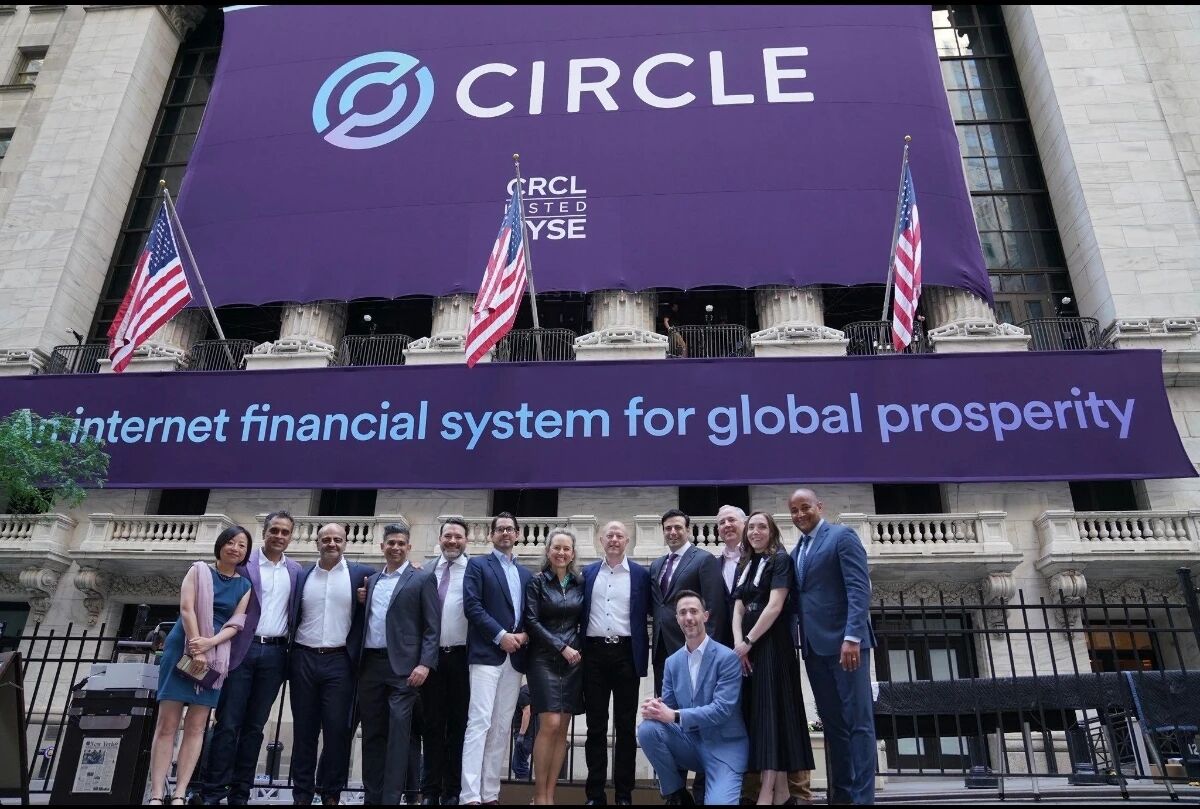
On the surface, it appears that the price is fluctuating, but behind this, the market is repeatedly assessing: how should this company be valued—should it be viewed through the lens of the crypto industry, the financial sector, or a combination of both.
Why Did Dongfang Hongwan Buy Circle?
Therefore, rather than saying this is a "crypto news," it is more accurate to say it is news about Dongfang Hongwan.
If one understands Dan Bin's investment style, it becomes apparent that his path over the years has been rather consistent, moving from consumption, internet to leading technology companies, fundamentally searching for companies with relatively strong certainty that can be held for the long term. His style has also remained quite restrained, especially in those volatile and hard-to-value assets, rarely directly taking large positions.
This is also why, despite the crypto industry being so hot in recent years, you rarely see these funds directly buying Bitcoin or various tokens.
So why this time buy Circle? My understanding is that compared to directly buying coins, companies like Circle have at least a few aspects that traditional funds can accept:
It is a publicly traded company, it has financial reports and disclosures that can be analyzed in familiar ways.
It has revenue, and the revenue logic is relatively clear, mainly derived from interest spreads.
It focuses its business on stablecoins.
In other words, as a traditional investment institution, one can use the established methods to roughly judge whether it is a business worth participating in.
Due to work reasons, lawyer Honglin often communicates with many friends who are involved in investments, and many mainstream funds have been looking at Web3 and researching it in recent years, but very few have actually entered the market on a large scale.
The reasoning is also simple: buying cryptocurrencies directly leads to excessive volatility; purchasing tokens makes fundamental analysis challenging; participating in early projects has too much information asymmetry.
Many times, there is a general consensus in direction but no practical way to participate.
Companies like Circle, to some extent, offer a more acceptable path. You do not need to directly bear the extreme volatility of cryptocurrency prices or judge whether a project can succeed; instead, you can participate in the gradual growth of the entire industry through a company.
The Narrative of Stablecoins is Changing
Looking further, the stablecoin business itself is also slowly changing.
In the past, people used them mainly for convenient transactions or some on-chain operations. But now, some scenarios are beginning to look different—increasingly more cross-border payment scenarios, more online e-commerce, and the use cases for stablecoins are becoming more and more widespread. With the recent boom in AI, people are again focusing on how AI interacts with trading, which directly relates to the logical use of stablecoins since they are inherently a set of tools that can be executed automatically and settled at any time.
Therefore, the business of stablecoins does not necessarily need a grand definition; simply put, the more people use it and the more places it is used, the more it resembles a business that can sustain long-term.
Behind Three Million Dollars is the Pathway for Traditional Funds to Enter
Returning to the theme of the article, this three million dollar position is of course not important in itself.
However, it provides a rather clear answer: when traditional funds begin to seriously look at Web3, their first reaction is not to buy coins, but rather to seek targets that can be understood as "companies."
In other words, they are not participating in an entirely new world; instead, they are first trying to approach this world using familiar methods.
From this perspective, companies like Circle essentially play a "translation" role—connecting on-chain applications with the traditional financial system. You may not understand the entire industry, but at least you can first understand what it is doing, where the money comes from, and what the risks are.
This is actually an aspect that many people underestimate. If Web3 only stays at the level of price and narrative, traditional funds find it difficult to truly enter; but once a batch of companies that can be clearly explained and placed on balance sheets start emerging, the way to participate in this industry will change.
Thus, what Dongfang Hongwan is buying is not necessarily just Circle; it is essentially testing a pathway: instead of directly entering the field as players, they first stand aside to find a position that can be understood and held long term.
As for whether this path will end up being the optimal solution, it is still uncertain. However, it can be confirmed that as more and more money begins to enter Web3 in this way, the industry itself will gradually become different.
免责声明:本文章仅代表作者个人观点,不代表本平台的立场和观点。本文章仅供信息分享,不构成对任何人的任何投资建议。用户与作者之间的任何争议,与本平台无关。如网页中刊载的文章或图片涉及侵权,请提供相关的权利证明和身份证明发送邮件到support@aicoin.com,本平台相关工作人员将会进行核查。


