Author: RWA Research Institute
In December 2009, a 115 kV transmission line crossed the border from Mengla, Yunnan, connecting to northern Laos. This marked the beginning of high voltage interconnectedness between China and Laos. At that time, towers rose in the mountains, delivering electricity from China to villages and factories across the Mekong River. Electricity was sold, but collecting payments proved to be far more complex than erecting the towers.
According to reports from China Electric Power Network, by the end of 2021, the Southern Power Grid had supplied nearly 1.1 billion kilowatt-hours of electricity to northern Laos. However, the cross-border settlement for this 1.1 billion kilowatt-hours involved a long process. The payment instruction was issued to Laos, the funds left a bank in Laos, transited through banks in Bangkok or Singapore, then the next bank would break down the transaction, verify accounts, and finally arrive at the receiving bank in China. The whole process took an average of 3 working days. 3 days, 72 hours. During these 72 hours, the exchange rates fluctuated, intermediary bank fees were deducted at each step, and every handover of funds and information brought unpredictable delays. This isn’t just an issue of one bank’s inefficiency; it is a structural cost arising from over half a century of operation of the global correspondent banking system.
This represents a long-debated yet unresolved issue in the field of cross-border payments.
However, on April 24, 2026, this cycle was broken.
According to reports from China News Service, Southern Power Grid's Lancang-Mekong International Company, in collaboration with the Laos National Transmission Company, successfully collected cross-border electricity payment from the Laos State Power Company using a cross-border digital payment platform based on the digital renminbi. This marked the first implementation of a digital renminbi cross-border bilateral electricity settlement in the country. If this transaction were still to be processed in the traditional correspondent banking model, it would take over 72 hours; this time, from initiation to receipt, the settlement cycle was compressed to less than 5 hours.
5 hours is just an afternoon of a working day.
This is not just a gradual speeding up; it represents a fundamental shift in underlying logic. The relationship between people and money, and how funds flow between countries, is being rewritten by a brand new technological grammar.
1. Why Does a Payment Take 3 Days?
To understand what 5 hours means, one must first clarify how those 3 days were consumed.
The "slowness" of cross-border payments does not originate from the speed of technology transmission itself. The transmission of SWIFT messages between systems now takes place in seconds. What truly consumes time is the institutional design known as the "correspondent bank chain."
When funds need to move from Bank A in Laos to Bank B in China, there is often no direct account relationship opened for the respective currencies between Bank A and Bank B. Therefore, the funds must pass through a series of intermediary banks to complete custody and transfer. In practice, a typical cross-border payment route usually involves 3 to 5 intermediary institutions. Each intermediary bank must complete compliance checks, anti-money laundering screenings, message verification, and fund transfers, and the operational hours of the banks often do not overlap. If the transaction occurs over a weekend or holiday, any hold-up at any link in the chain delays the entire transaction.
This resembles a relay race without a finish line. Before each baton pass, the contents of the package must be re-verified, and the package may be opened, re-packaged, or partially extracted for fees during transitions between different stages. By the time it reaches the finish line, the payee often finds that the amount received is less than expected, without real-time transparent information on which stage took how much.
According to statistics from the Bank for International Settlements, each cross-border payment in the traditional correspondent banking model typically involves 3 to 5 intermediary banks, with a typical arrival cycle of 2 to 5 working days and a comprehensive fee rate reaching 3% to 5% of the transaction amount. This is not an issue of inefficiency at any single link; rather, it is a conceptual design of the entire chain—pursuing global coverage and risk isolation, rather than efficiency and transparency.
The change in the digital renminbi cross-border bilateral model precisely addresses the weakest point of this chain.
2. How Digital Renminbi Bypasses All Intermediaries
The core mechanism used in this electricity settlement between China and Laos is the "digital renminbi cross-border bilateral model." This term may sound somewhat technical, but its logic is not complex upon disassembly.
Traditional correspondent banking models operate through "multiple baton relays," whereas the digital renminbi model facilitates "direct dialogue."
In the bilateral model, the central bank digital currency systems of the two cooperating banks can directly establish a clearing connection without going through any third-party correspondent banks. The technical feature of the digital renminbi, where "payment equals settlement," means that the moment funds are moved out of the payer's digital wallet, final settlement is completed, eliminating the "sent but not received" status.
Luo Lei, Deputy Governor of the People's Bank of China, previously wrote in the Financial Times that the digital renminbi has both account and blockchain models, allowing for both online and offline payments. This "universal hybrid currency capability" in its underlying design gives the digital renminbi significant adaptive resilience in the face of disparate financial infrastructures in different countries and regions. Laos does not need to rebuild an entire payment system; it only needs to connect to the bilateral clearing channel through cooperating banks.
The entire process can be understood with a cross-domain analogy. The traditional correspondent banking model is like 19th-century postal coach relays in continental Europe, where each station requires changing horses, verifying tickets, and reloading parcels, taking letters from Paris to Vienna through four to five relay stations; any error at one station delays the entire journey. In contrast, the digital renminbi's "payment equals settlement" resembles telegrams replacing relay stations: information reaches the recipient directly without needing any intermediaries to physically carry and transport it. Even the fastest horses cannot compete with electrical currents. This is not about improving horse-drawn carriages, but rather about changing the medium.
Of course, this "changing the medium" style of innovation also means that a large number of compliance processes built up in the existing correspondent bank system—anti-money laundering, anti-terror financing, and sanctions screening—must be undertaken by a new technical framework. The digital renminbi offers an answer: the entire transaction process is traceable. Every circulation of the central bank digital currency leaves a clear trace on a controllable and auditable ledger, which embeds compliance checks within the flow logic of the currency itself, rather than relying on the subjective judgment of each intermediary on the chain.
3. Electricity Can Cross Borders, Why Can't Money Move Faster?
While focusing on the technical details, there is a larger question worth pondering: why did this breakthrough occur at the intersection of "Lancang-Mekong" and "electricity"?
The answer lies in a long historical context.
In 2009, the operational launch of the 115 kV cross-border line from Mengla to Namo heralded the beginning of high voltage interconnectedness between China and Laos. By 2022, Chinese and Laotian power companies innovatively established a "mutual assistance" electricity cooperation mechanism—utilizing the China-Laos grid and Southern Regional Power Market to send surplus hydropower from Laos to China during the rainy season, while supplementing electricity supply to northern Laos from China during the dry season. By the end of 2025, the total electricity trade volume between China and Laos exceeded 1.6 billion kilowatt-hours. On April 20, 2026, the 500 kV interconnection project was officially put into operation, raising the bilateral electricity mutual assistance capacity from 50,000 kilowatts to 1.5 million kilowatts, with clean electricity capable of being transmitted annually at approximately 3 billion kilowatt-hours, 30 times that of the original line.
As the physical routes widen, there is no reason for the "routes" of settlement to continue to narrow.
When electrical "hard connectivity" transitioned from 115 kV to 500 kV, resulting in an exponential increase in trade volume, if the "soft connectivity" of cross-border settlement remained stuck in the 3-working day correspondent banking model, it would be akin to driving an outdated tractor on a newly widened overpass. The channels have expanded, transaction volume has increased, but settlement efficiency remains stagnant; this gap must be bridged by the iteration of financial infrastructure.
It is noteworthy that this is not the first appearance of digital renminbi in the energy trade sector. As early as 2024, Southern Power Grid successfully collected payment for electricity trade from Hong Kong, achieving the first digital renminbi cross-border electricity settlement in the Guangdong-Hong Kong-Macau Greater Bay Area through the multilateral central bank digital currency bridge (mBridge). Even earlier, China Petroleum International Corporation completed the first attempt of cross-border settlement in oil and gas trade using digital renminbi through the Shanghai Petroleum and Natural Gas Exchange Center. From oil and gas to electricity, from the Greater Bay Area to Lancang-Mekong, the terrain of digital renminbi in energy trade settlement is rhythmically unfolding.
The 2026 government work report has already listed "expanding the cross-border use of the renminbi" as a key task. On the same day that this electricity settlement between China and Laos was implemented, the Yunnan branch of the central bank also clearly stated that "accelerating the construction of digital renminbi cross-border trade scenarios" is a priority for the year, continually promoting cross-border payment applications between China and Vietnam, and China and Laos. Policy momentum and practical scenarios are forming a confluence.
The rhythm of physical power grids and financial networks is beginning to align. This is the deepest metaphor of this breakthrough.
4. Observing Global Trends from the Lancang-Mekong Region
The Iteration Direction of Payment Infrastructure
If we widen our view from the Lancang-Mekong region, we can see that the global cross-border payment system is undergoing a profound upheaval after many years of silence.
According to people.com.cn reports, by the end of November 2025, the multilateral central bank digital currency bridge (mBridge) had processed a total of 4,047 cross-border payment transactions, with a cumulative transaction amount equivalent to 387.2 billion yuan, among which digital renminbi accounted for approximately 95.3% of transactions in various currencies. During the same period, the digital renminbi had processed a total of 3.48 billion transactions, with a cumulative transaction amount of 16.7 trillion yuan, creating 230 million personal wallets and 18.84 million corporate wallets through the digital renminbi app. These numbers indicate a reality: digital currency is no longer a concept proof in a laboratory but is becoming a financial infrastructure operating at scale.
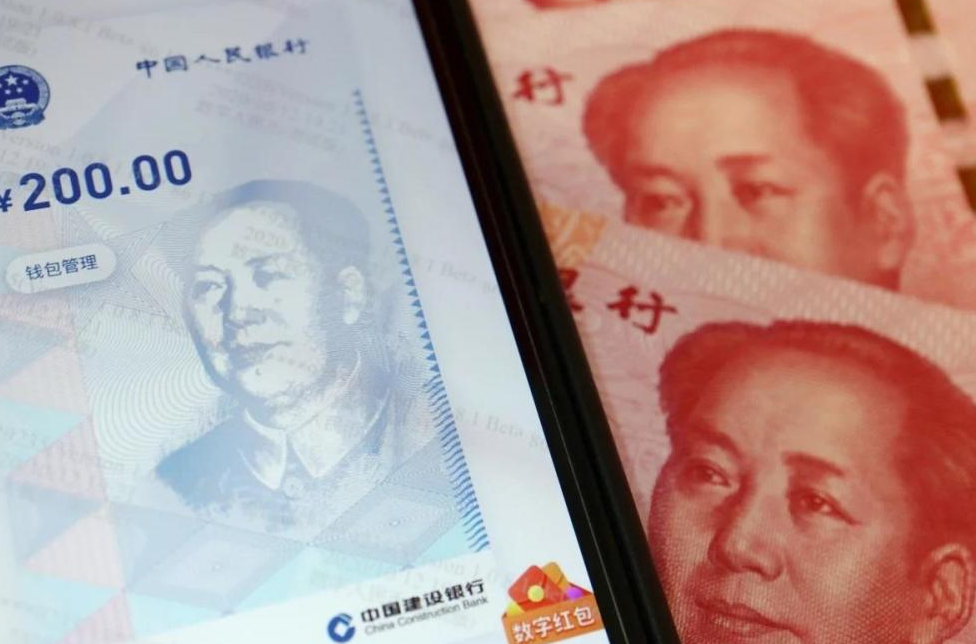
A noticeable trend is that on January 1, 2026, the new generation of digital renminbi measurement framework and management system will officially start implementation, upgrading the digital renminbi app to version 2.0, with wallet balances starting to accrue interest like savings accounts. This means the digital renminbi is evolving from a purely "payment tool" to a more complete "currency form"—with payment functionality and value storage capability, bearing institutional arrangements deeply coupled with traditional bank account systems.
Returning to Lancang-Mekong, according to reports from Yunnan Net, by August 2025, Yunnan had established cross-border renminbi settlement channels with 132 countries and regions, with a cumulative cross-border settlement amount exceeding 934.3 billion yuan, achieving complete coverage with all South Asian and Southeast Asian countries with which it has diplomatic relations. Yunnan has established 14 cross-border electricity interconnection channels.
14 electricity channels, 934.3 billion yuan in settlement scale, and connections with 132 countries and regions.
These are not just flashy numbers; they depict the reality of a regional financial infrastructure merging from "capillaries" into "arteries."
However, it should be fairly said that the breakthrough in this electricity settlement between China and Laos also means new questions have emerged. The digital renminbi cross-border bilateral model addresses the efficiency of one-to-one bilateral settlement, but when this model needs to be replicated in more countries and regions, covering more complex multilateral trade scenarios, the interoperability between different countries' digital currency systems, jurisdiction and privacy protection of cross-border data, as well as the establishment of multilateral legal coordination frameworks are still long-term challenges requiring ongoing efforts. The current dominant share of digital renminbi in mBridge certainly demonstrates technological leadership but signals the need for deeper participation from more countries and regions to ensure that the resilience and inclusiveness of this system can withstand larger scale tests.
This is not a dampener. The fortitude of a bridge comes not from dazzling technologies but from how many times it has withstood flood peaks.
Conclusion: The 30-Year Proposition Behind 5 Hours
Cross-border payments are not related to grand concepts like universal harmony or technological utopia. Ultimately, it is a question of "trust costs." The reason countries need correspondent banks is that direct settlement requires extremely high mutual trust—trust in each other's payment abilities, trust in each other's compliance systems, trust that each other's legal frameworks can backstop when issues arise. The correspondent banking system essentially "outsources" this trust cost to a series of intermediary institutions, each taking a portion of the fee as an insurance premium for trust.
The significance of the digital renminbi cross-border settlement pilot lies in its attempt to use technology to compress this trust cost. Traceable ledgers eliminate reliance on subjective judgments of intermediaries for compliance, the mechanism of payment equals settlement minimizes the risk of funds being in limbo, and direct bilateral settlement eradicates the peeling away of intermediary fees. When trust can be expressed in code, the value of intermediaries is reduced to their brand and regulatory endorsement, losing the necessity for their existence in terms of efficiency.
Of course, we are still far from that ideal state. But the direction is clear.
From the first 115 kV line crossing the border in 2009 to the establishment of the "mutual assistance" mechanism in 2022; from the first digital renminbi electricity settlement in the Guangdong-Hong Kong-Macau Greater Bay Area, to the 2026 launch of the national first digital renminbi cross-border bilateral electricity settlement in the Lancang-Mekong region. In 17 years, from a single line to a whole system.
Electricity has arrived first. Now, money is catching up.
This analysis is based on publicly released information from official institutions such as Southern Power Grid and the People's Bank of China and does not constitute any investment advice.
免责声明:本文章仅代表作者个人观点,不代表本平台的立场和观点。本文章仅供信息分享,不构成对任何人的任何投资建议。用户与作者之间的任何争议,与本平台无关。如网页中刊载的文章或图片涉及侵权,请提供相关的权利证明和身份证明发送邮件到support@aicoin.com,本平台相关工作人员将会进行核查。


