“The delivery gap of AI infrastructure is structural rather than temporary.” At the end of April 2026, as Microsoft, Google, and Meta successively released Q1 earnings reports, Wall Street's focus is shifting from “AI vision” to “AI bills”. According to the latest statistics from Reuters on April 28, the AI investments of the four major tech giants are set to exceed 600 billion dollars, and this unprecedented expenditure is squeezing cash flow and testing the patience of the market.
Just a few days ago, the release of DeepSeek V4 Preview reignited the industry: this model, known for its “extreme cost performance”, not only pushed reasoning prices to the floor but also announced the full arrival of the AI 2.0 era's “reasoning economy”. Under the dual squeeze of extreme hunger for computing power and extreme sensitivity to reasoning costs, decentralized AI (DeAI) is ushering in its “industrialization” singularity.
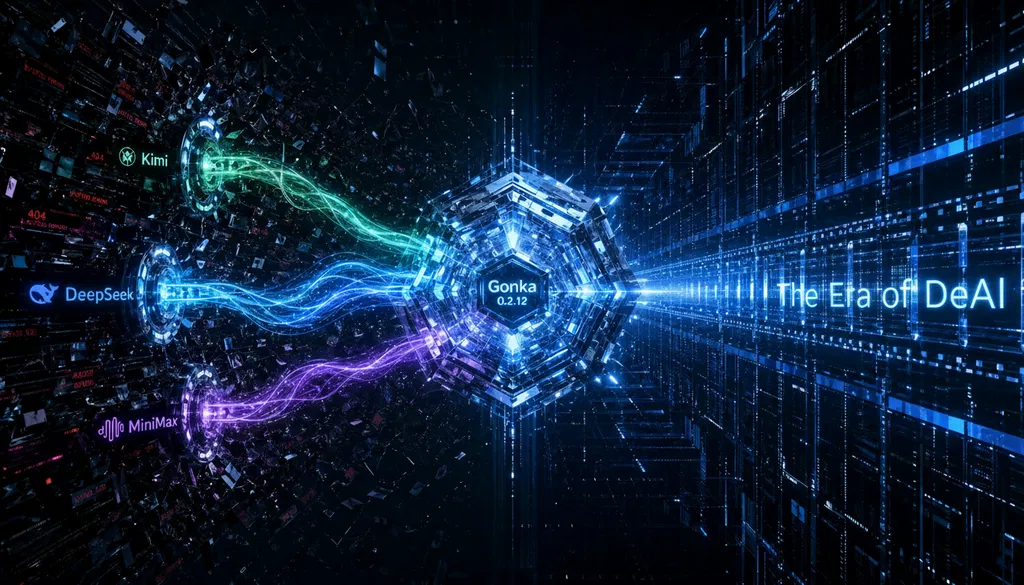
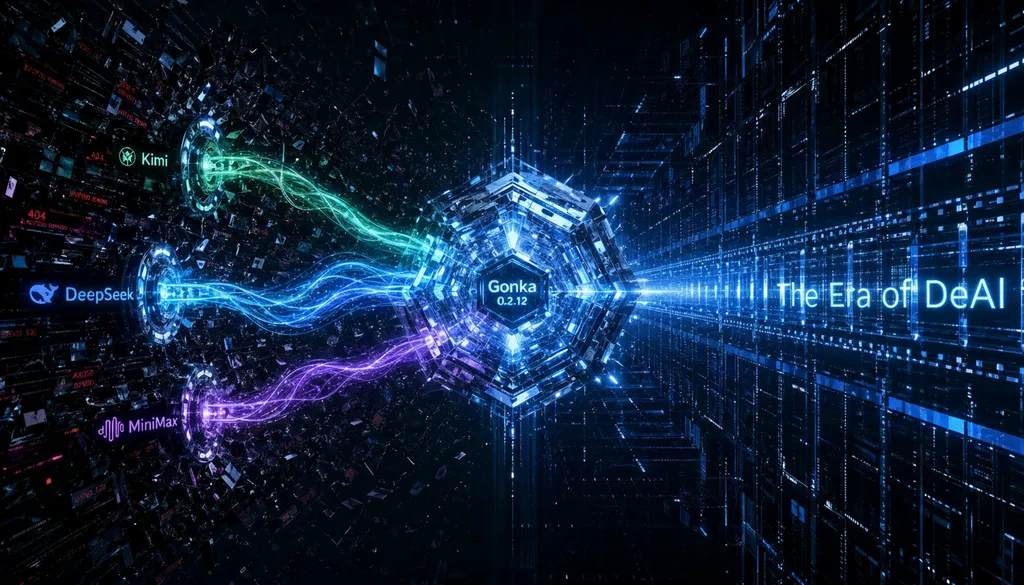
Recently, Gonka Protocol released a milestone version 0.2.12 update. This is not just a technical iteration but a “cleanup operation” aimed at the chaos of DeAI. By reconstructing the Multi-Model PoC protocol, Gonka is achieving “full coverage” of top models like Kimi and DeepSeek while conclusively ending the disorderly old era with industrial-grade standards.
1. April Observations: The “Calculated Siege” of 600 Billion Dollars and the Price War of DeepSeek
In April 2026, two significant events in the AI infrastructure sector occurred that reshaped the landscape:
1. The Tech Giants' “Arms Race” Enters Deep Waters
At the end of April, the financial data showed that Microsoft's annual capital expenditure has been raised from 161.6 billion dollars to 180 billion dollars. S&P Global predicts that the total Capex of global cloud vendors will surge from 379 billion dollars to 622 billion dollars in 2026. This scale of investment reflects that centralized computing power supply is approaching physical limits.
2. The “Reasoning Equality” Introduced by DeepSeek V4
On April 24, the launch of DeepSeek V4 completely changed the rules of the game. It not only approached the performance of top models but also reduced reasoning costs by several times through extreme engineering optimization. This means that future competition will no longer be about “whose model is larger”, but rather “whose reasoning is cheaper and more stable”. In this context, the DeAI network that can provide low-cost, high-flexibility computing power has become an industry necessity.
2. The Efficiency Cleanup: From “Juggling Thousands of Models” to “Industrial-Grade Standardization”
Before version 0.2.12, the DeAI network was often criticized as a “laboratory toy”. Gonka has fundamentally changed this situation through two core operations:
1. Mandatory Model Cleanup: The First Step in Distinguishing Truth from Falsehood
According to the 0.2.12 upgrade announcement, Gonka has adopted a strict “model cleanup” strategy: all models not approved by governance will be forcibly taken offline. The network will focus on benchmark models such as Qwen and the newly approved Kimi 2.6. This seemingly scale-reducing action is actually designed to ensure that every unit of computing power in the network is real, verifiable, and meets industrial standards.
2. vLLM Deep Reconstruction: Breaking Through the “Technical Ceiling” of Cutting-Edge Models
To support cutting-edge models such as Kimi 2.6 and DeepSeek V4 with different architectures, Gonka has completely reconstructed the vLLM framework. Through architectural optimizations, it allows nodes to complete verification while keeping models resident in GPU memory, solving the problem of slow loading times for large models and genuinely achieving commercial-level response speed for decentralized reasoning.
3. The Cornerstone of Trust: Multi-Model PoC and “Voting Power Delegation”
In an unpermissioned environment, trust must be built on extremely high manipulation costs.
1. Solving the “Impossible Triangle” of Verification
Facing massive models like Qwen-235B or Kimi that are hundreds of GB, nodes cannot switch in real time for verification. Gonka 0.2.12 introduces an innovative “voting power delegation” mechanism: during the proof of computing power (PoC) process, nodes use their own voting rights or delegated voting rights to cross-verify participants running the same or different models.
2. Unified Multiplier: Fairly Measuring Every Unit of Computing Power
Due to the different computational units generated by different models on the same hardware, 0.2.12 introduces a “unified multiplier” mechanism. This ensures that regardless of whether miners run Qwen or Kimi, their actual hardware contributions will be fairly reflected, thereby protecting the overall fairness of the ecosystem during the token subsidy phase.
4. The Justice of Hardware: Letting B200 Redefine the Profit Ceiling
Technology must not only resolve trust issues but also correct allocation failures.
In previous versions, due to a lack of targeted optimization, the expensive NVIDIA Blackwell (B200) graphics card performed similarly to the H100. Gonka 0.2.12 has released the true performance of the B200 through targeted optimizations of the Blackwell architecture, allowing its yield to surpass the H100 again. This pursuit of “hardware justice” will attract the world’s top computing resources to converge on Gonka.
Conclusion: “Declaration of Order” in the DeAI Era
Just as early Bitcoin ended the chaos of electronic cash through the PoW mechanism, Gonka 0.2.12 is establishing the same order in the field of decentralized reasoning.
From the 600 billion dollar bill of Big Tech at the end of April to the price war in reasoning opened by DeepSeek V4, the second half of the computational power war has begun. Gonka is telling the market: the era of grassroots heroes is gone.In the long race of AI 2.0, only an “order” based on hardcore technology and tight logic is the sole path for DeAI to move towards large-scale commercialization.
About Gonka
Gonka is currently the decentralized AI network with the most GPUs, providing developers and researchers with access to unpermissioned computing resources, while rewarding all participants through its native token GNK. The project successfully raised 18 million dollars in 2023 and an additional 51 million dollars in 2025. Investors include Coatue Management, investors in OpenAI, Slow Ventures, Bitfury, K 5, Insight, and Benchmark partners. Early contributors to the project include well-known leading companies in the Web 2-Web 3 sector such as 6 blocks, Hard Yaka, and Gcore.
Official Website|Github|X|Discord|Telegram|Whitepaper|Economic Model|User Manual
免责声明:本文章仅代表作者个人观点,不代表本平台的立场和观点。本文章仅供信息分享,不构成对任何人的任何投资建议。用户与作者之间的任何争议,与本平台无关。如网页中刊载的文章或图片涉及侵权,请提供相关的权利证明和身份证明发送邮件到support@aicoin.com,本平台相关工作人员将会进行核查。


