Written by: Discovering Tomorrow's Products
After April 20, those wanting to spend money on Claude are having a hard time: wanting to spend but unable to do so.
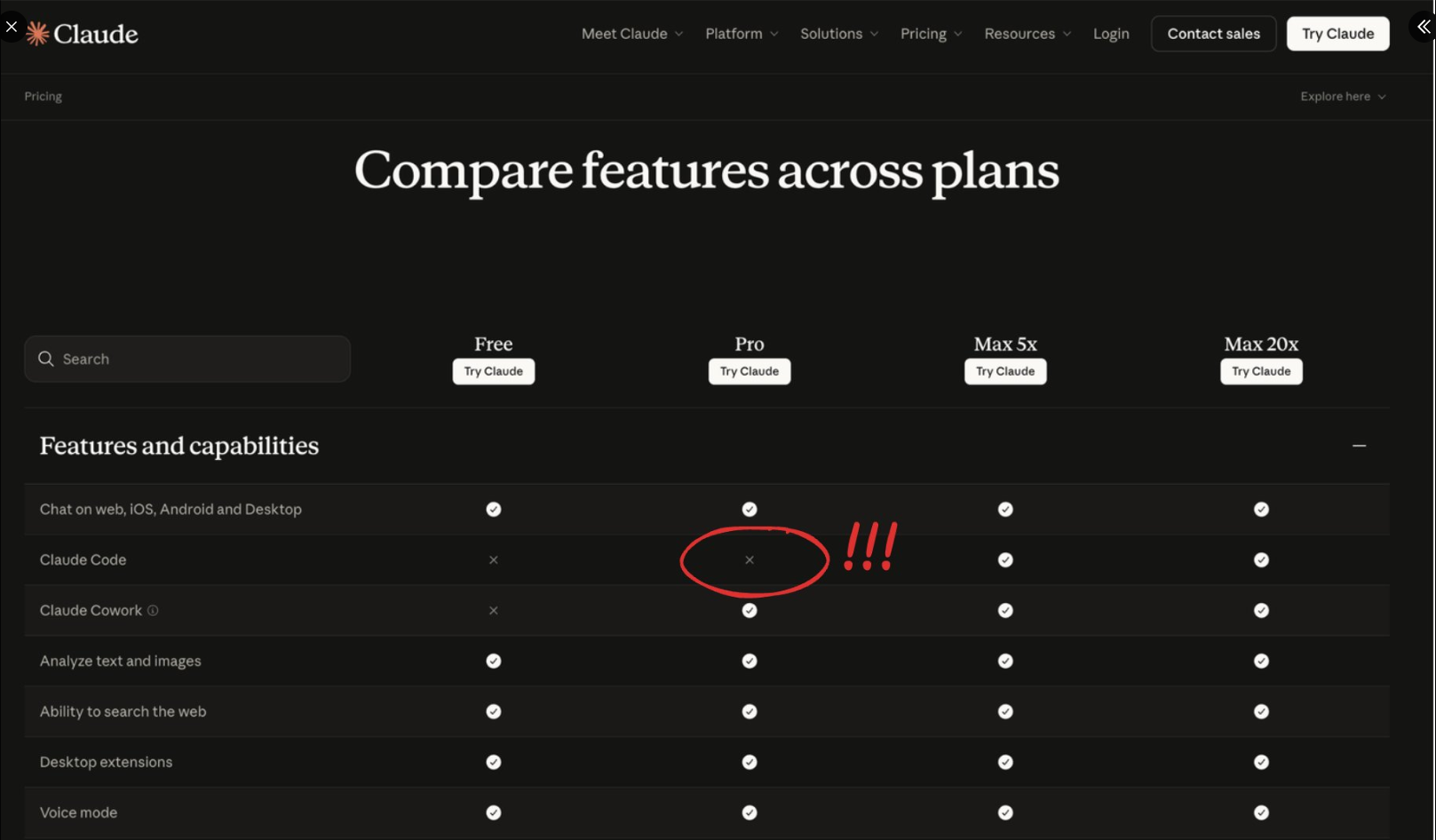
New paying users for the Claude Pro package may not include Claude's strongest programming features, as Code will be "elevated" to the Max 5x package, which costs $100 per month.
Anthropic’s product manager stated that this is a small-scale test for about 2% of new professional user registrants, and existing Pro and Max users will not be affected. The pricing page has also been reverted. They explained that the changes are mainly due to changes in computing power, hence the old pricing is no longer applicable—let's see who will be the unfortunate 2%.
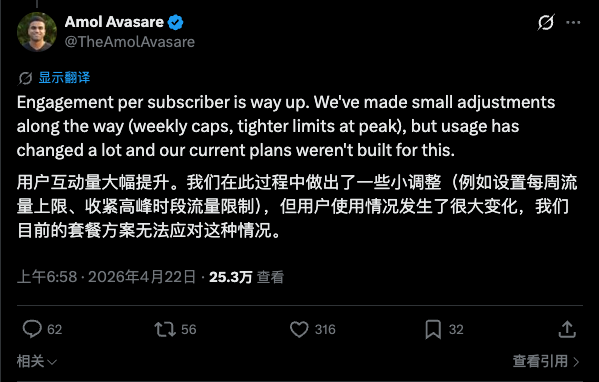
This is not an isolated adjustment; looking back three weeks, Anthropic made significant cuts in April.
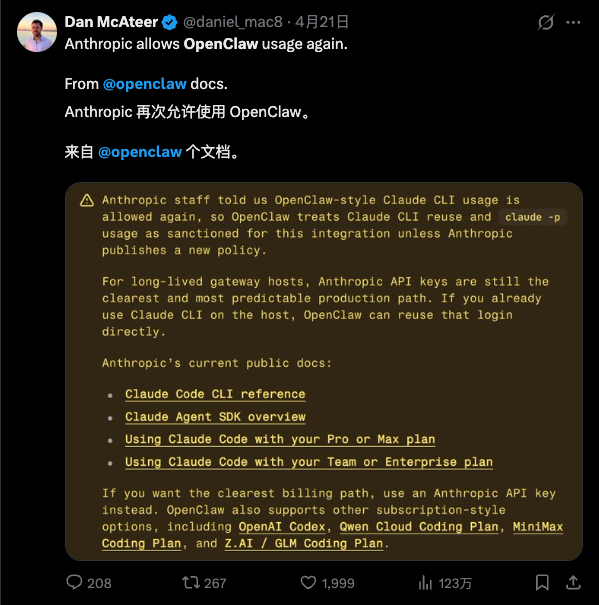
The first cut: Anthropic announced that Pro and Max subscriptions would no longer support third-party agent frameworks like OpenClaw. Previously, many developers used the $20 Pro subscription to run automated tasks with OpenClaw, equivalent to enjoying personal training services for the price of a gym membership. Boris Cherny, head of Claude Code, explained on X that these tools bypassed the prompt cache, and the computing power consumed by each user exceeded what the subscription price could cover, so affected users received a credit equivalent to one month’s subscription fee as compensation. However, the OpenClaw permissions were restored a couple of days later.
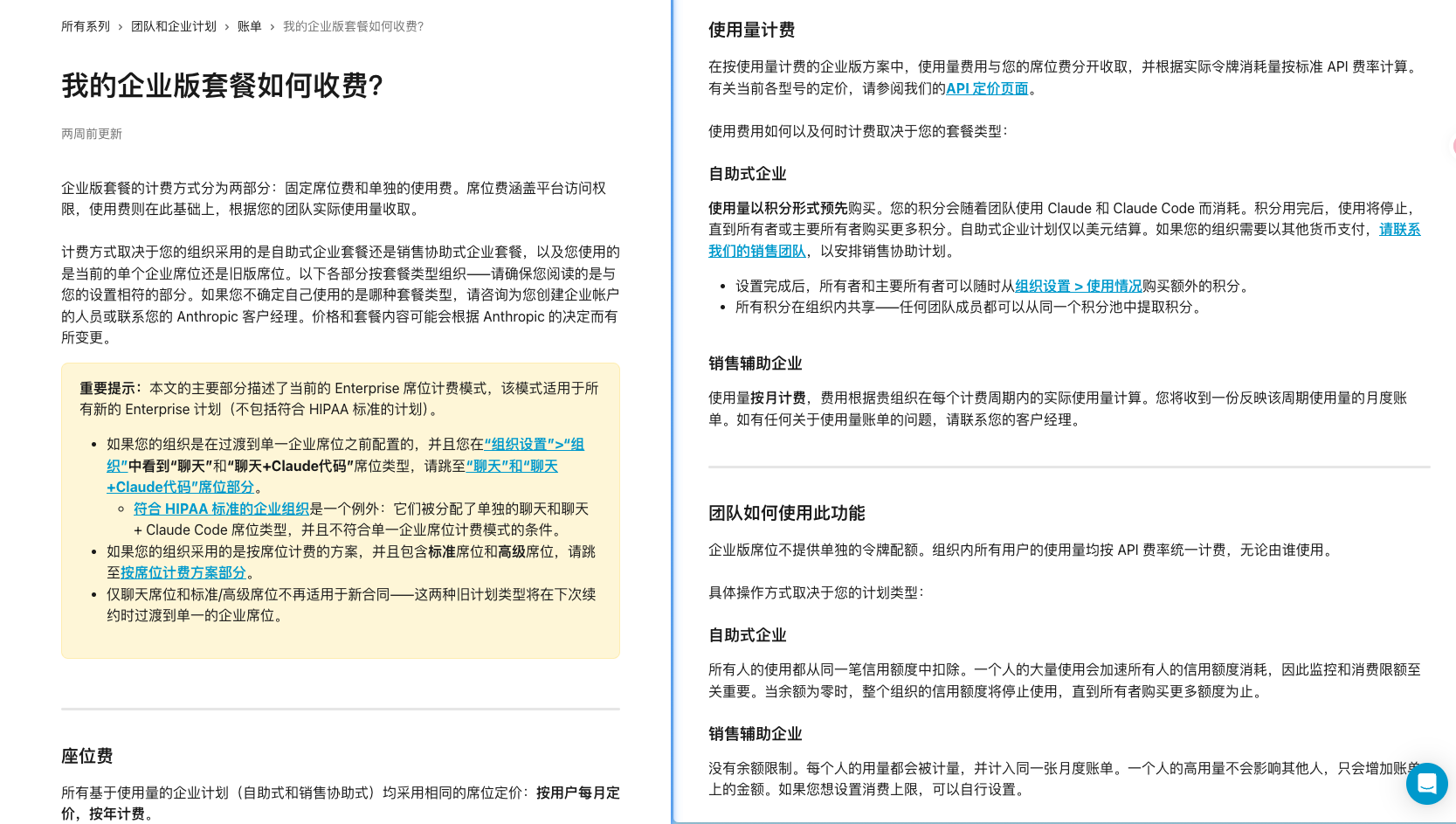
The second cut: The Register and The Information reported that Anthropic is changing the enterprise contract from a fixed $200/person/month (including token quota) to a $20 base fee with pay-as-you-go billing, with all past contracts automatically switching to the new plan upon renewal. The weekly active user count for Claude Code doubled between January and February, and Anthropic's profit margins can no longer sustain it.
Then came the third cut, removing Code from Pro.
After these three cuts, what remains for the $20/month Pro users? Basic features like chat and Cowork, while all substantial functionalities require extra payment.
At the same time, Claude's feature release density is the highest among all AI products.
The most intense feature bombing in history
In the first quarter of 2026, Anthropic released something almost every week: Cowork transformed Claude from a chatbot into a document processing assistant, Opus
4.7, scheduled tasks allowed Claude to automatically run reports while you sleep, Connectors and Plugins connected Claude to Slack, email, Google Drive, and Skills
2.0 enabled users to customize workflow templates; Dispatch enabled remote control of desktop Claude Code via phone; Channels used the MCP protocol to bridge different ports...
However, this intensive release is accompanied by a symmetrical contraction: for every official feature that goes live, a third-party channel gets closed. When Dispatch launched, third-party harnesses like OpenClaw were banned from subscription access. Prior to and following Channels' release, Anthropic modified the ToS to prohibit non-official tools from calling Claude through subscription quotas. New features are not expanding Claude's ecosystem but are consolidating it within Anthropic's own walls.
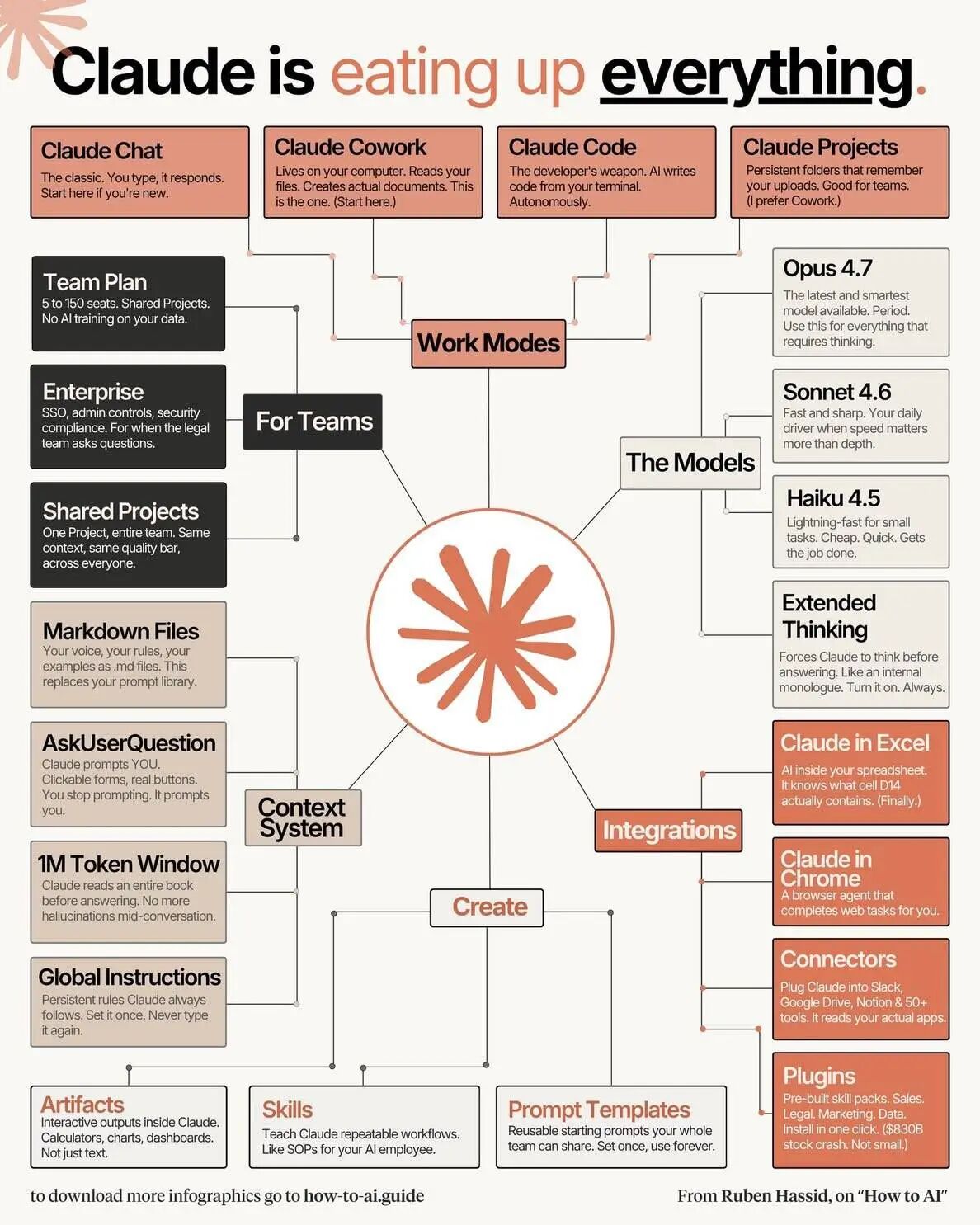
Image source: X user @alvinfoo
The goal is to stuff as many capabilities as possible into one product to create switching costs. When your programming, document handling, automated workflows, and remote control all run on Claude, migrating to GPT or Gemini is not just a matter of "switching a chat window"; you would have to migrate your entire working method.
And once users are locked into the ecosystem, the unified $20 subscription becomes a problem: it cannot distinguish between light users and heavy users. A user asking only a few questions daily pays the same as someone running an automated agent 24 hours a day. There are indeed quota limits, but for Anthropic, the computing power consumed by the latter could be hundreds of times that of the former.
Thus, pricing must be broken down: the base fee retains user identity, while pay-as-you-go billing captures true usage value. Bundled features create lock-in, while unbundled pricing extracts profits.
This logic is not new in the tech industry. However, if you widen your perspective, you will find that its precedents are spread throughout the digital content industry, and each iteration becomes more covert and harder to resist.
Four Cutting Techniques
By Time
The most well-known example is the "early access" offered by long video platforms like iQIYI, Tencent Video, and Youku: VIP members have already paid for their subscriptions but need to pay an extra ¥3 to ¥6 per episode to see the latest episodes of popular dramas earlier than other VIPs.

The same content, the same package; the only variable is time. What you pay extra for is not better content; the drama is still the same, the ending is still the same—you're just seeing it earlier than others.
User outrage arrives swiftly and fiercely. Under public pressure and regulatory intervention, early access was quickly halted. However, the platform did not abandon this path; the failure of early access was due to its blatant nature, making it obvious to users that they were being reaped again. The platform turned to more euphemistic alternatives: super VIP, star diamond members, value-added packages... there’s always a way.

By Completeness
The gaming industry found a smarter approach. In the 2000s, it was a one-time purchase system where what you got was a complete game. Later, DLCs appeared, leading to season passes, loot boxes, and free games with microtransactions.
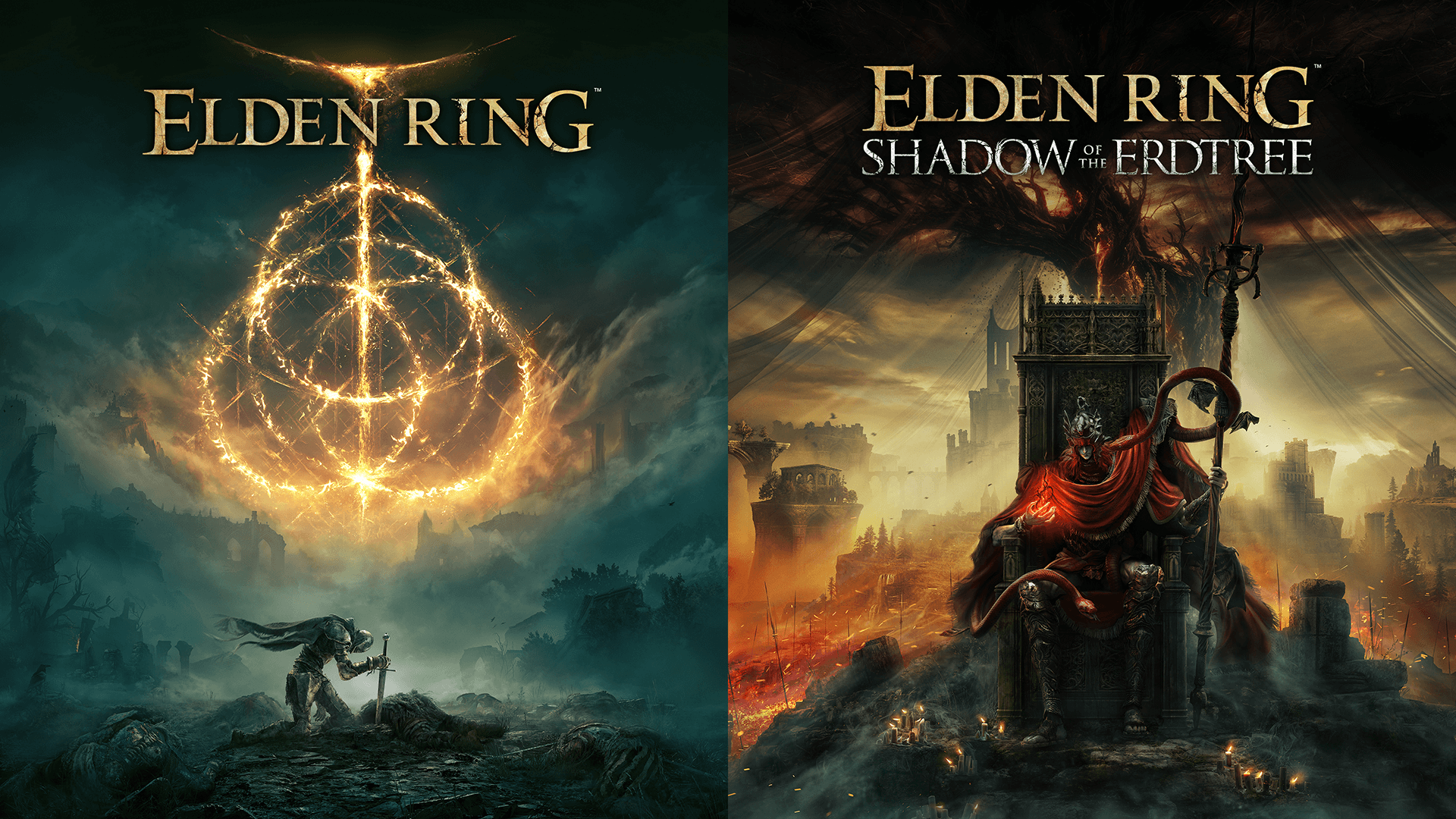
Elden Ring and its DLC Shadow of the Erdtree
This approach relies on conscience; there are products like Elden Ring that users willingly spend money on, and there are others like the former FIFA, now named EA Sports FC, where users bleed money while playing.

The base entry price may not be high, or even zero—mobile game downloads are free—but the total price for a "complete experience" gradually rises, and it's not uncommon for a competitive player to spend thousands or even tens of thousands on skins in a year.
The gaming industry’s approach is clever in that every payment is framed as a "choice" rather than "deprivation." You can play without buying skins, and you can progress without drawing cards. The development team hasn't taken away your things; they've simply placed more items behind a paywall.

Users find it hard to point out "you betrayed me" like they do with early access because, in form, they have never actually paid for the base product. This is why early access was targeted, while game microtransactions thrive.
By Capability
The approach in the software industry is closer to Anthropic’s situation, such as Adobe. Before 2012, designers paid $2600 for a one-time purchase of Creative Suite, which includes Photoshop, Illustrator, Premiere, and numerous other tools. In 2012, Adobe launched the Creative Cloud subscription model, bundling everything for $50/month. Wall Street was skeptical at the time, and the stock price fell in the short term. Three years later, user numbers doubled, and revenue soared from $4 billion to over $20 billion.

The key is in the third step. Once the subscription model was established, Adobe began to create tiers within subscriptions. Firefly AI's generative features were charged by credit, stock materials charged per item, and advanced fonts required additional subscriptions. What you get for $50/month is no longer "everything," but "the basics of everything." Microsoft followed a similar path: Office transitioned from a buyout model to 365 subscriptions, bundling Teams and OneDrive, then separating out Copilot as a $30/user/month paid item.
Adobe and Microsoft were able to reach this point due to deep lock-in. Designers' .psd files and enterprises' Excel templates all incur switching costs, where changing tools almost equals rebuilding an entire workflow.
By Usage
AWS represents the ultimate form of this route. The free tier attracts developers, who then build their tech stacks on AWS, with precise billing based on CPU hours, storage amount, and API call count.

Users find it difficult to estimate their monthly bills and have to use it regardless. This seemingly most "fair" pricing method is also the one users can most helplessly resist. Because you don’t even know what to protest against; every line item looks reasonable, but the total can be overwhelming.
Anthropic's four cuts
From early access to AWS, the four methods appear in different industries and stages, while Anthropic has implemented a major overhaul at once, managing them all.
🔴 Cutting by Time: Max users receive priority responses during peak hours, with new features available first to Max users.
🔴 Cutting by Completeness: After removing Code from Pro, anyone wanting the complete Claude must upgrade to the $100/month Max.
🔴 Cutting by Capability: Opus, Sonnet, and Haiku are tiered in pricing, with tighter quotas for advanced models; the more you use extend thinking, the faster you'll hit the limit.
🔴 Cutting by Usage: The enterprise version fully transitions to pay-by-token billing, with third-party calls charged by API usage.
Anthropic has learned from the experiences of predecessors, stacking these four methods together, each with what sounds like a reasonable justification: banning third parties is due to uncontrolled costs, shifting enterprise versions to pay-as-you-go is fairer, and removing Code from Pro is because programming needs should be priced separately from other needs.
Anyway, there are reasons behind each cut, and looking at them individually makes sense, but when pieced together, the picture looks different. Ed Zitron used a term in his newsletter: enshittification. First, use low-priced subscriptions to cultivate dependency, then gradually unbundle and raise prices.
Does model power really determine everything?
Adobe has spent thirty years establishing barriers through file formats and muscle memory. AWS has taken fifteen years to have entire tech stacks built on it. Anthropic, in less than two years, if calculated from the boom brought by Opus
4.6, has been merely one quarter, and they are already implementing precise cutting techniques.
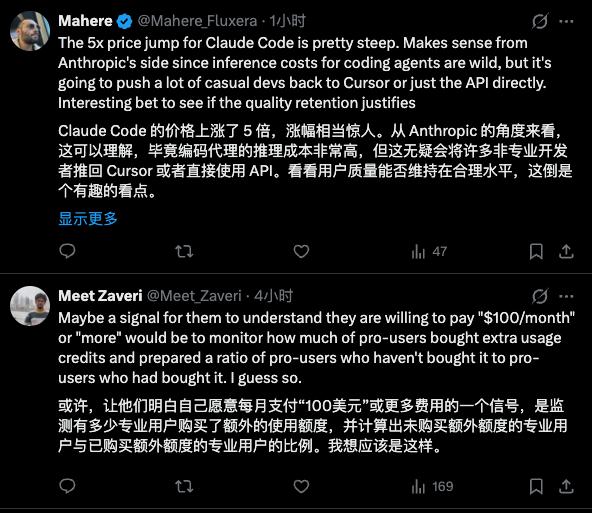
Now, how high are the switching costs for Claude? OpenAI's GPT, Google's Gemini, and domestic players like Zhiyu, Kimi, and Minimax are all surging in the market. The cost for users to switch from Claude to GPT has not yet reached the level where a designer would switch from Photoshop to GIMP.
This also explains why Anthropic has been so aggressively piling on features in Q1: Cowork, Dispatch, Channels, Skills, Computer Use—every feature is a nail driving users’ workflows into place more firmly.
Claude must act before users realize "I can leave at any time," making the cost of leaving high enough to be not worth it. This is the lesson from early access: when the speed of unbundling surpasses the speed of lock-in, users will vote with their feet.
Whether model capability is strong enough to be irreplaceable is a matter of personal opinion. What is more concerning is that once everyone else follows suit, the most widely circulated phrase in user communities is: every company will do this in the future. Domestic players Kimi and Zhiyu have already begun adjusting their computing power pricing arrangements, while OpenAI's Plus, Pro, Team, and Enterprise layers are diversifying more and more.
When all players are accelerating in the same direction, this is no longer a commercial strategy issue for a single company but a paradigm shift in pricing across the entire industry. The business model of AI products is shifting from "selling memberships" to "selling electricity meters."
Pay for what you use sounds fair. But the history of electricity meters tells us that once the meters are installed, the pricing power forever resides with the supplier.
免责声明:本文章仅代表作者个人观点,不代表本平台的立场和观点。本文章仅供信息分享,不构成对任何人的任何投资建议。用户与作者之间的任何争议,与本平台无关。如网页中刊载的文章或图片涉及侵权,请提供相关的权利证明和身份证明发送邮件到support@aicoin.com,本平台相关工作人员将会进行核查。


