On April 30, 2026, the news stream seemed to be deliberately cranked up to the maximum: on one side, the harsh echoes from Tehran reverberated across the Gulf—Iran's Supreme Leader and his advisors publicly emphasized that Iran controls about one-fifth of the world's oil transport routes and massive natural gas transport corridors, issuing warnings like "blockades will plunge hegemonic regimes into a frozen age" and "malicious foreigners deserve to sink to the depths of the water," pushing the imaginative space of geopolitical tension in the Middle East to the extreme; almost simultaneously, the decentralized derivatives protocol Wasabi Protocol came to a halt on-chain, with officials admitting there were issues with the protocol, pausing interactions, and starting an investigation, yet they had not provided an authoritative version of the scale of the losses or the methods of the attack, leaving the market to repeatedly screen, speculate, and debate under the shadows of high leverage, on-chain liquidation, and "is the protocol still safe?".
Meanwhile, thousands of kilometers away in Hong Kong, another narrative was rapidly taking shape: the theme forum held by Google Cloud in Hong Kong in 2026 had just concluded, focusing on AI-driven payments and the agent economy, with discussions on how to seamlessly integrate cloud services, models, on-chain assets, and cross-border payments; on the technical front, DeepSeek introduced its visual primitive reasoning method, which reportedly could compete with GPT-5.4 in counting and spatial reasoning benchmarks, laying the groundwork for future agents that are "able to see, understand the environment, and autonomously trade." On the same day when regulatory and computational narratives were still confined to the conference and papers, crypto exchanges reignited emotions: Bybit prominently promoted its NVDAx financial product with an annualized yield of 555%, and OKX listed its MEGA token at an opening price reportedly around 0.2 USDT, with risk appetite and greed intertwining amidst panic and uncertainty. At a macro level, the metaphors of oil choke points and straits blockades emerged, while at a micro level, there were protocol vulnerabilities, yield figures, and model projects—what follows will attempt to weave this seemingly fragmented news of the day into a single current along the axis from energy corridors to on-chain protocols, and then to the agent economy.
Iran Waves the Energy Club: Warnings on Oil Choke Points
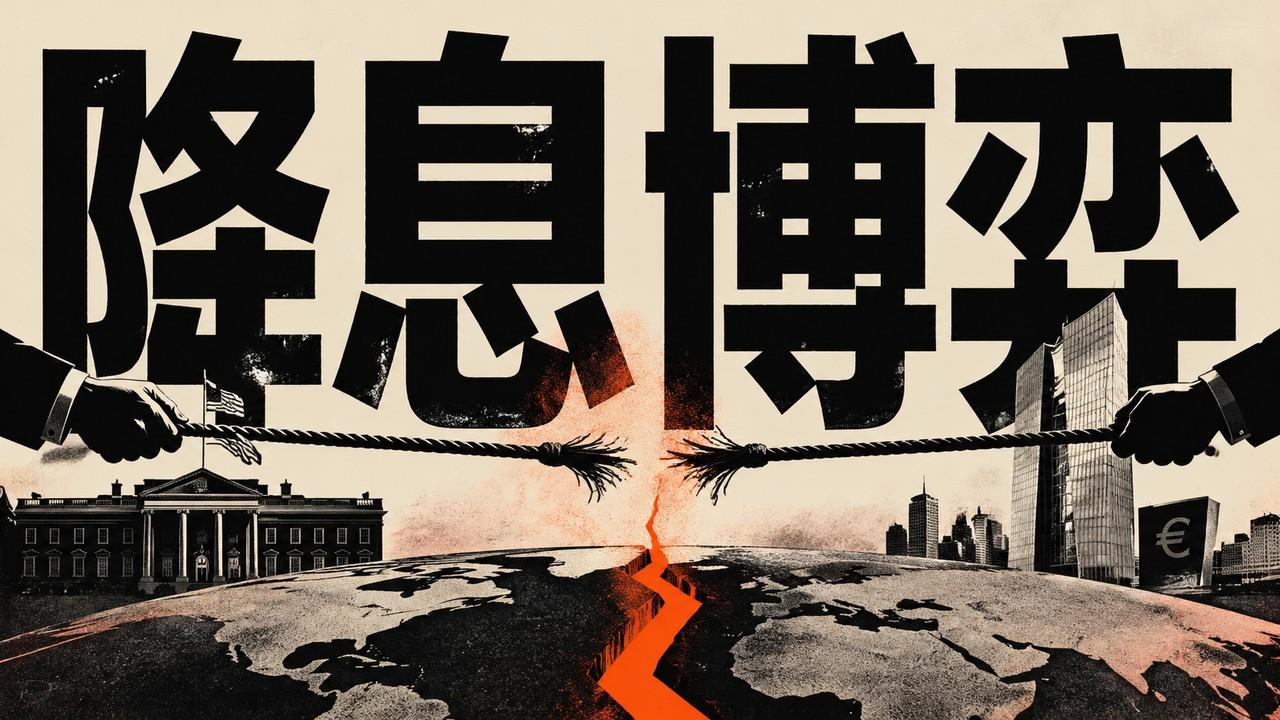
On April 30, 2026, along the same timeline, Tehran issued a gunpowder-laden "notification" to the world. Iran's Supreme Leader's advisor, Mohbeir, openly stated that Iran "controls about 20% of the world's oil transport routes, as well as about 18 trillion cubic meters of natural gas transport routes" (according to a single source), quickly shifting from numbers to threats: maritime blockades would not return Iran to the Stone Age, but would plunge "hegemonic regimes" into a "frozen age." Almost simultaneously, the Supreme Leader of Iran issued an even more explicit warning—that the Gulf region would only have a bright future without the presence of the U.S., "malicious foreigners deserve to sink to the depths of the waters." In the already tense backdrop of the Middle East situation, this sequence of statements was not merely an emotional outpouring but felt more like a signal played repeatedly over a loudspeaker above the Strait of Hormuz: Iran knows it stands at the energy choke point and is willing to remind everyone of that fact.
The strategic value of the Strait of Hormuz and its surrounding waterways, already seen as the lifeblood of the global energy system, is now repeatedly "named" by Iranian officials, making this narrow maritime seam on the map appear more pronounced. The "20%" and "18 trillion cubic meters" mentioned by Mohbeir do not need to be statistically precise to the decimal point; they are enough to serve as leverage in the macro narrative: once terms like "blockades," "the frozen age of hegemonic regimes," and "foreigners sinking into deep waters" are put together, any country or enterprise relying on Middle Eastern shipping routes has to turn a few more pages in its risk manual. Currently, there is no reliable public data to prove that this bout of rhetoric has directly triggered specific fluctuations in oil prices or financial markets, but market participants do not need to wait for prices to swing violently to rewrite scenario assumptions—geopolitical tensions are quietly thickening the expected layers of risk premiums and raising the noise floor of emotional volatility. Economies with deeper energy dependencies and assets more sensitive to leverage and liquidity find it increasingly hard to pretend they cannot hear the echoes from across the Strait.
The Moment Wasabi Shut Down: A Playground of Leverage Exposes Its Vulnerabilities
On the same day that the macro narrative was being steered by the Strait of Hormuz, an important gear of on-chain leverage suddenly shut down. The decentralized derivatives protocol Wasabi Protocol officially confirmed that "there is a problem" with the protocol, choosing to hit the pause button immediately, stopping user interactions, and stating that it is investigating the specific reasons. Aside from this cold announcement, almost nothing is known externally—up to now, there has been no authoritative disclosure regarding the amount of losses, methods of attack, specific affected links, or user fund statuses, leaving the market to fill the vacuum with a narrative of "something went wrong, but we don’t know exactly what it is."
This vacuum is easily filled with rumors. Research briefs have already noted: claims within the community about "about $5.5 million being stolen," "administrator keys being compromised," and "involving Berachain and about $50,000 of user funds," all remain at the verification stage, with differing opinions within the security community regarding the causes of the attack; claims that "some long and short positions were unable to close" also lack official or multiple-source confirmation. Within the current boundaries of facts, the only thing we can confirm is that: the protocol has faced issues and has paused interactions, while all else is unverified speculation. The fissures of information asymmetry are magnified here—market makers and top funds may have greater on-chain monitoring and channels, but retail users can only decide whether to immediately withdraw funds, watch the situation, or take advantage of the situation to leverage a "bottom buy" amid panic based on scattered screenshots and anecdotes.
All this happens at a time when risk appetite is recovering, and on-chain high-leverage products are resuming their crowding, suggesting that the impact on market psychology goes far beyond a single protocol's technical incident. Wasabi's "shutdown" reminds people that the so-called "decentralized derivatives playground" will also exhibit a single point of failure similar to the traditional exchanges' "system maintenance" when critical infrastructure experiences opaque failures, only this time, no one can immediately provide clear balance sheets and recovery timelines. For capital accustomed to cross-chain arbitrage and leveraging back and forth across multiple chains, a sudden halt of one protocol or contract is enough to make one rethink: are they truly using decentralization to spread risk, or are they concentrating their entire position on a few fragile pieces of smart contract code?
Hong Kong Forum Ignites: AI Agents Knock on the Door of Crypto Payments
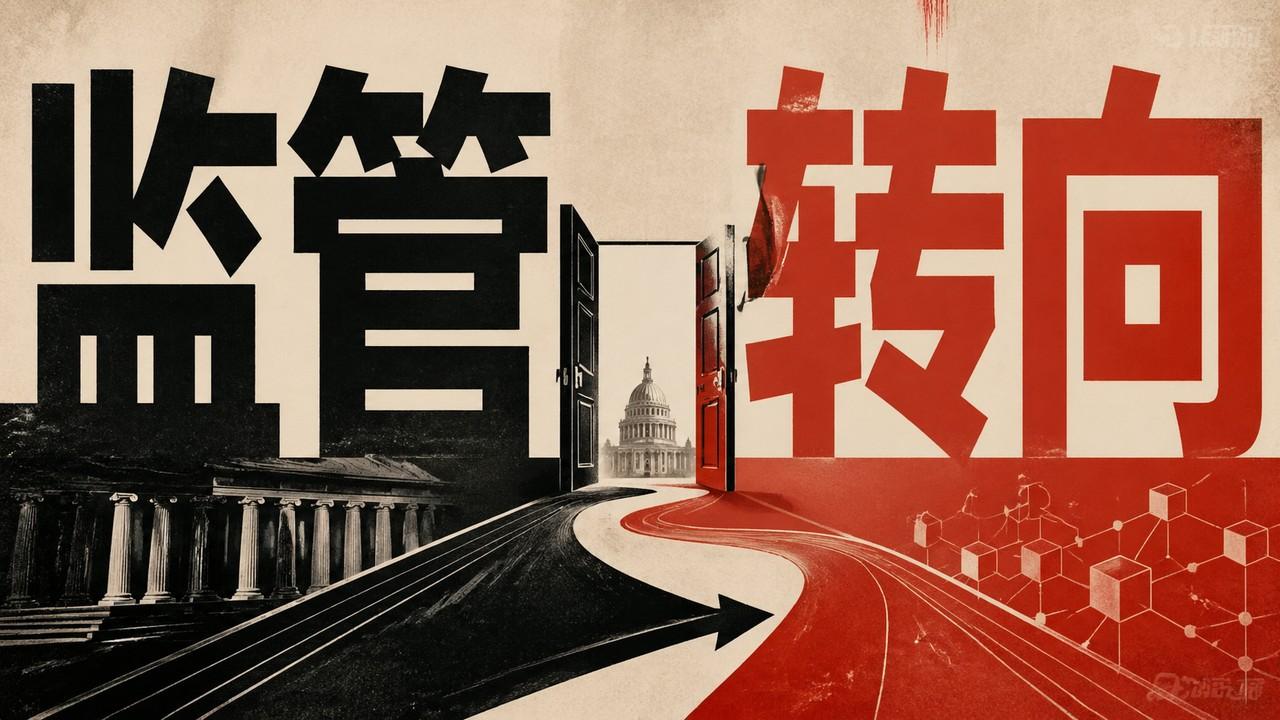
While one end of the protocol remains silent under a "system maintenance" disguise, on the other end, another type of infrastructure is being sketched against the glass curtain wall by Victoria Harbour. The 2026 Google Cloud Hong Kong Forum, centered around on-chain anchored assets, has just concluded, and the standout terms in the official tone are no longer "token issuance" or "liquidity," but rather "AI-driven payments" and "agent economy." Major cloud service providers and traditional tech giants have rarely pulled the topic onto the same axis: when computational resources, model capabilities, and on-chain assets are integrated, who will initiate a cross-border transfer may no longer be humans, but rather a complete suite of agents authorized by businesses and individuals.
Almost simultaneously, DeepSeek launched its "visual primitive reasoning" method—reported to be able to rival GPT-5.4 in benchmarks of counting and spatial reasoning. Its approach is to extract composable "primitives" from more fundamental visual elements, allowing the model to first learn to decompose and reorganize before understanding relationships and constraints in complex scenarios. Technical details have not yet been fully disclosed, but the direction is clear enough: the next generation of agents will not be satisfied with reading text instructions; they will need to "understand" interfaces, invoices, routes, and physical environments, making autonomous decisions based on that understanding—including when to initiate a payment on-chain and how to optimize paths between different assets.
When these two threads are juxtaposed on the timeline of April 30, the picture begins to clarify: on one end, cloud vendors are discussing how to integrate on-chain assets into their payment and settlement networks; on the other end, model teams are providing agents with more reliable perception and reasoning foundations. The product of this overlap is likely to be a daily scenario where multinational companies open up cash flow permissions to agents, allowing them to read on-chain prices, rates, and regulatory rules in real time, automatically routing payments for businesses across multiple jurisdictions; individual users only need to state their intent, "help me transfer this money to a certain place in the fastest, cheapest, and compliant way," with the rest executed dynamically by the agents between on-chain and traditional channels. The synchronous actions of the Hong Kong forum and DeepSeek signify that the combination of AI with crypto payments and on-chain applications has quietly crossed the threshold from "concept demonstration" into the exploratory stage of early implementation and rule formulation.
Crazy Annualized 555% and New Token Launch: Risk Appetite Returns
At the same time that the Hong Kong forum was discussing "how agents can choose the route to pay for you," Bybit put out a more straightforward poster—"Crazy Thursday" NVDAx financial product, promoting an annualized yield of up to 555%. In the cautious spring of 2026, where macro and security narratives lean towards prudence, this number hits like a heavy hammer, directly striking the most primal nerves of the market: as long as the yield seems exaggerated, risk seems to be temporarily set aside. Capital is requeuing in front of high-yield pages, as if the lessons from the last round have been selectively forgotten.
On the other side, OKX listed the MEGA token, with an opening price reported around 0.2 USDT, the new price curve just emerging on the candlestick chart. During the same time window, Wasabi Protocol officials confirmed that the protocol had issues and paused interactions while investigating the cause, yet they had not provided details on losses and attacks. This juxtaposition is highly symbolic: on one end is the launch of new tokens and extreme annualized yields, attempting to twist risk preferences up a notch; on the other end is the on-chain protocol hitting the pause button, reminding everyone that the contracts behind high-yield strategies are uncertain defenses in themselves. Fear and greed have not truly vanquished each other; they merely take turns dominating the emotional dial of the market.
Meanwhile, off-chain, the responses from the payment systems within China are starkly different. The successful renewal of payment licenses for 17 institutions, including Alipay, WeChat Pay, and UnionPay Business, alongside the halting of renewal applications for 3 other institutions, conveys the signal of ongoing tightening and meticulous scrutiny by regulators—who can continue to operate and who must exit is filtered by a set of clear and increasingly stringent rules. In contrast, there is a licensed institution seeking stability in inspection forms and on-site checks, while in the global crypto market, one can boldly post annualized yields of 555% and new token launches with high leverage imaginations. Agents can route funds for users between on-chain and traditional channels, but they are temporarily powerless to reconcile the two fundamentally different risk philosophies: one aims to minimize uncertainty, while the other pursues steeper yield curves amid uncertainty.
The Old Order of Apple Shakes: Are Agent Entrepreneurs Left with Only 18 Months?
As Iran raises the stakes of the energy valve at the Gulf ports, Wasabi presses the pause button on-chain, and giants discuss how to let agents take over payment routing at the Hong Kong forum, Naval pulls the lens back to what seems to be the most stable corner—Apple. According to a single source, he believes Apple is entering a phase of structural decline, as the "safe asset" built over the past two decades from hardware iterations and closed ecosystems begins to face growth limits. At the same time, he marked a cold countdown for SaaS entrepreneurs: about 18 months left to build a sufficiently deep moat to contend with the marginal encroachment of AI agents and platform giants.
Piecing together the fragments of this day reveals that the boundary between the "old order and the new order" has become glaringly clear: on one end, Iran reminds the world with statements like "blockades will plunge hegemonic regimes into a frozen age," still locking traditional energy and geopolitical landscapes; on the other end, DeFi protocols are forced to shut down due to an undisclosed vulnerability, exposing the fragility of high-leverage experiments; moving further back, DeepSeek pushes the limits of visual reasoning toward agents, while 17 payment licenses undergo cautious renewal to reinforce old infrastructures, and trading platforms continue to test the boundaries of risk appetite with a 555% annualized yield and new token launches. For investors and entrepreneurs looking ahead to the next one to two years, the challenge is no longer whether to bet on the new order, but how to select a truly effective moat in the time dimension within the triple layers of macro fissures not closing, technology accelerating forward, and regulatory tightening; not banking on the explosive rise of a single asset, nor fantasizing about a regulatory vacuum, but finding that small piece of defensive high ground that can be long-term called upon by agents and withstand black swan testing amidst computational power, compliance, and product mentality. Eighteen months sounds like a startup cycle but is actually more like a collective repositioning—how long can the old order hold, and can the new order catch the weight of a stall? The answers will be forcibly written in this compressed timeframe.
Join our community to discuss and become stronger together!
Official Telegram community: https://t.me/aicoincn
AiCoin Chinese Twitter: https://x.com/AiCoinzh
OKX Benefits Group: https://aicoin.com/link/chat?cid=l61eM4owQ
Binance Benefits Group: https://aicoin.com/link/chat?cid=ynr7d1P6Z
免责声明:本文章仅代表作者个人观点,不代表本平台的立场和观点。本文章仅供信息分享,不构成对任何人的任何投资建议。用户与作者之间的任何争议,与本平台无关。如网页中刊载的文章或图片涉及侵权,请提供相关的权利证明和身份证明发送邮件到support@aicoin.com,本平台相关工作人员将会进行核查。