Article Author: Prathik Desai
Article Translation: Block unicorn
Over the past year, we have spent a significant amount of time reporting on perpetual contract (perps) trading platforms. Their rapid rise is impossible to ignore. Perpetual futures allow participants to price events shortly after they occur, providing around-the-clock high leverage and ample liquidity. Existing exchanges have never offered such services due to trading time and day limitations. A team of 11 members turned Hyperliquid into the fastest-growing cryptocurrency exchange with annual revenue approaching $1 billion based on this 24/7 trading concept.
In 2025, the trading volume of perpetual contracts is expected to be seven times that of spot trading on average for the entire year. This seems to be a reliable way to build a sustainable business. Thus, the inevitable happened: others began to follow suit.
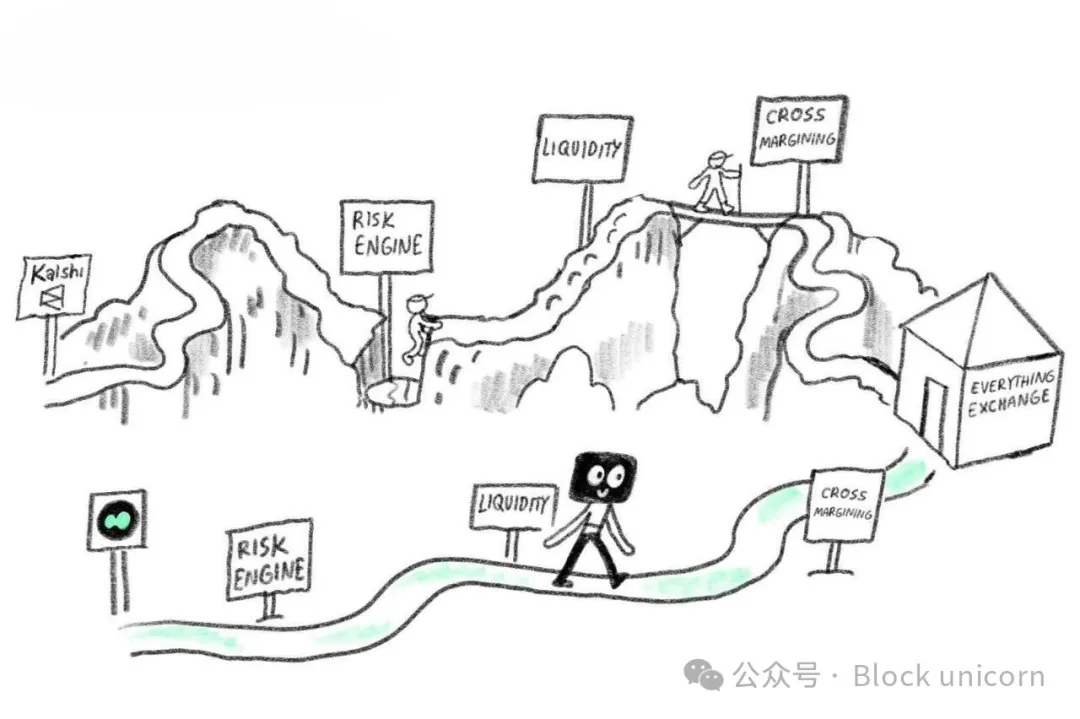
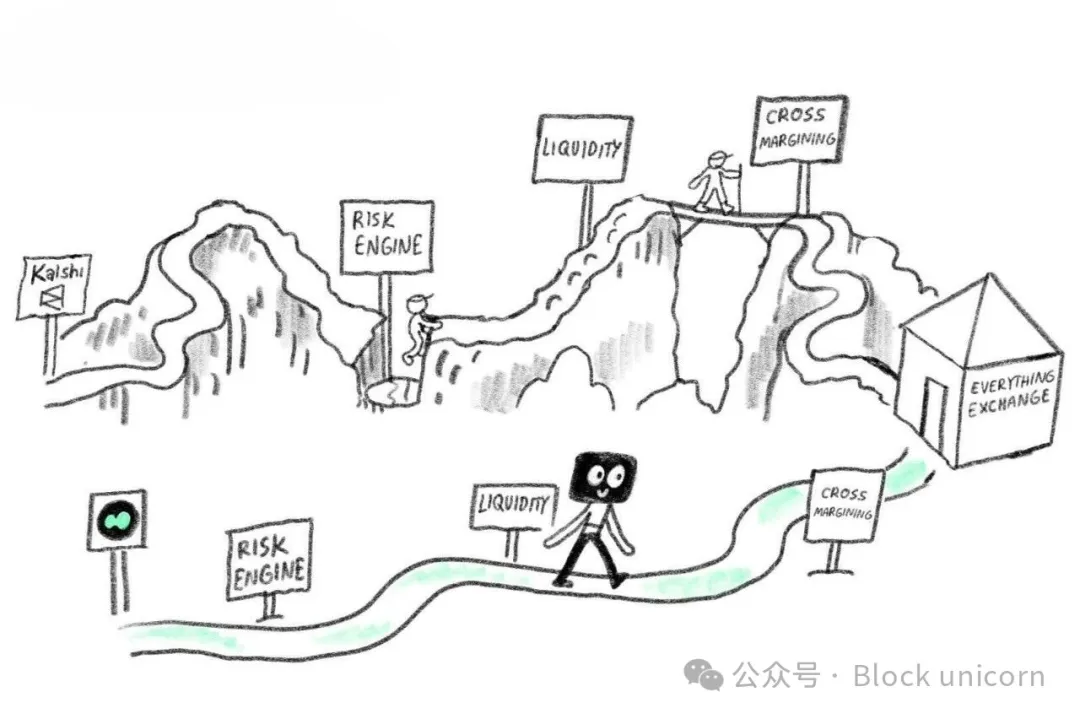
Last week, the two major prediction markets, Polymarket and Kalshi, announced the launch of perpetual futures and cryptocurrency trading within hours of each other. Just a few months ago, Hyperliquid also announced it would launch event contracts. The integration of perpetual contracts and prediction market platforms seems logical. Everyone wants to become an all-encompassing exchange, providing one-stop services that consolidate attention, capital, and leverage.
Three weeks ago, Saurabh wrote in a report on X that Hyperliquid's entry into the prediction market would help the exchange gain control over the financial sphere. But does the reverse hold true? Can the initiatives of Polymarket and Kalshi bring similar returns?
Today, I will tell you all about it.
Why Perpetual Contracts Are Important for Prediction Markets
Prediction markets have a stickiness problem. They tend to be cyclical, with trading volumes reaching historical highs when there are significant events to bet on, much like we see during the U.S. presidential elections, Super Bowl season, or Federal Open Market Committee meetings.
During the November 2024 U.S. presidential election, Polymarket's monthly active user count peaked at 321,500. Three weeks later, this number dropped by 25% to 245,000.
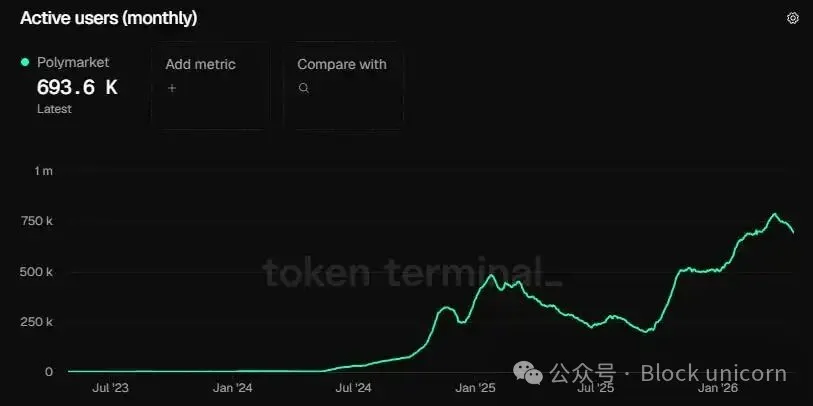
However, monthly user numbers fluctuate due to seasonal factors.
In January 2025, Polymarket's user count peaked at 500,000, then fell below 200,000 in September. This reflects Polymarket's user retention rate.
Data from Dune shows that since 2024, only 8% to 11% of users in each monthly cohort are still trading one year after joining. About 75% of users will churn within 90 days. Users may return for events but do not necessarily find the platform sticky.
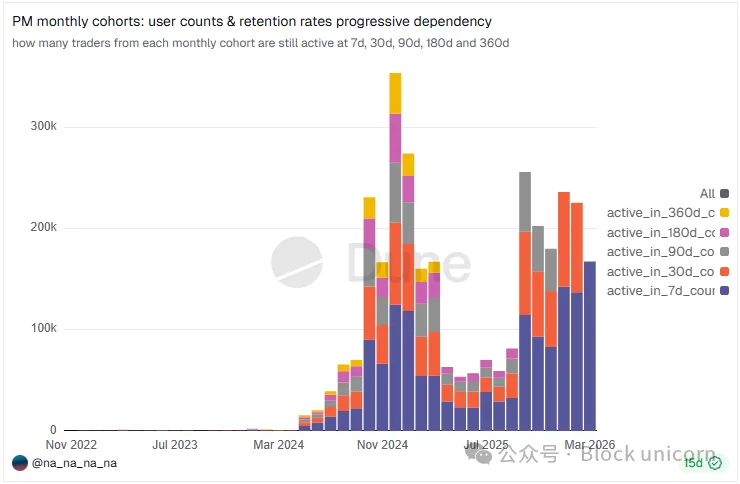
But that's just part of the problem.
Prediction markets also freeze funds until the issues are resolved. In contrast, perpetual contracts (perps) update event prices every second, attracting attention for longer periods and establishing ongoing user interaction. This is also more advantageous for prediction markets, as traders' trading volumes are larger, leading to higher fee revenues.
In 2025, the notional trading volume of malicious traders exceeded $60 trillion, while the notional trading volume of precious metals traders was $28 billion.
Thus, this adjacency expansion of prediction markets (PM) becomes a natural evolution. Platforms that meet some speculative needs often expand their businesses into other areas. They either develop related features themselves or acquire other platforms that have those features. We have witnessed this scenario multiple times: Robinhood expanded from the stock market to the options market and then to the cryptocurrency market, eventually entering the prediction market (PM). Coinbase acquired Deribit for a record $2.9 billion, entering the derivatives trading space. Binance also expanded from providing spot trading to futures trading and ultimately created its own native blockchain.
We often see this in traditional sectors. A company expands its service offerings, hoping to cross-sell new products to the same group of customers. This serves two purposes: to increase average revenue per user (ARPU) and to diversify reliance on multiple revenue sources, thereby enhancing the business's ability to withstand market cycle fluctuations.
In the early 1970s, the Chicago Board of Trade's (CBOT) agricultural futures revenue continued to decline. So, they converted a 4,000-square-foot smoking lounge of their parent company to establish the Chicago Board Options Exchange (now known as Cboe). As both required common infrastructure, they could operate synergistically: risk management, clearing, and a network of professionals knowledgeable about derivatives pricing.
However, there is a significant gap between wanting to operate a perpetual contract trading platform and genuinely having the capability to implement it.
Perpetual Stacking
Operating a perpetual trading platform involves many components. Let's start with liquidity.
The Hyperliquid platform processes over 200,000 orders per second through a fully on-chain order book. The exchange settles daily trading volumes exceeding $6-7 billion, using a bilateral market-making model. Lack of liquidity can lead to extreme volatility, wide bid-ask spreads, and high slippage, making it easier for large whales to manipulate prices.
Next is the risk engine— the core of any derivatives platform. It tracks every transaction and checks the margin requirements for each order. In October 2025, the cryptocurrency market evaporated $19 billion, and the Hyperliquid platform processed billions in settlements without disruption.
Additionally, there is the funding rate mechanism, which ties traders' prices to the spot price of the underlying asset. This mechanism runs continuously by settling small amounts between long and short positions every few hours.
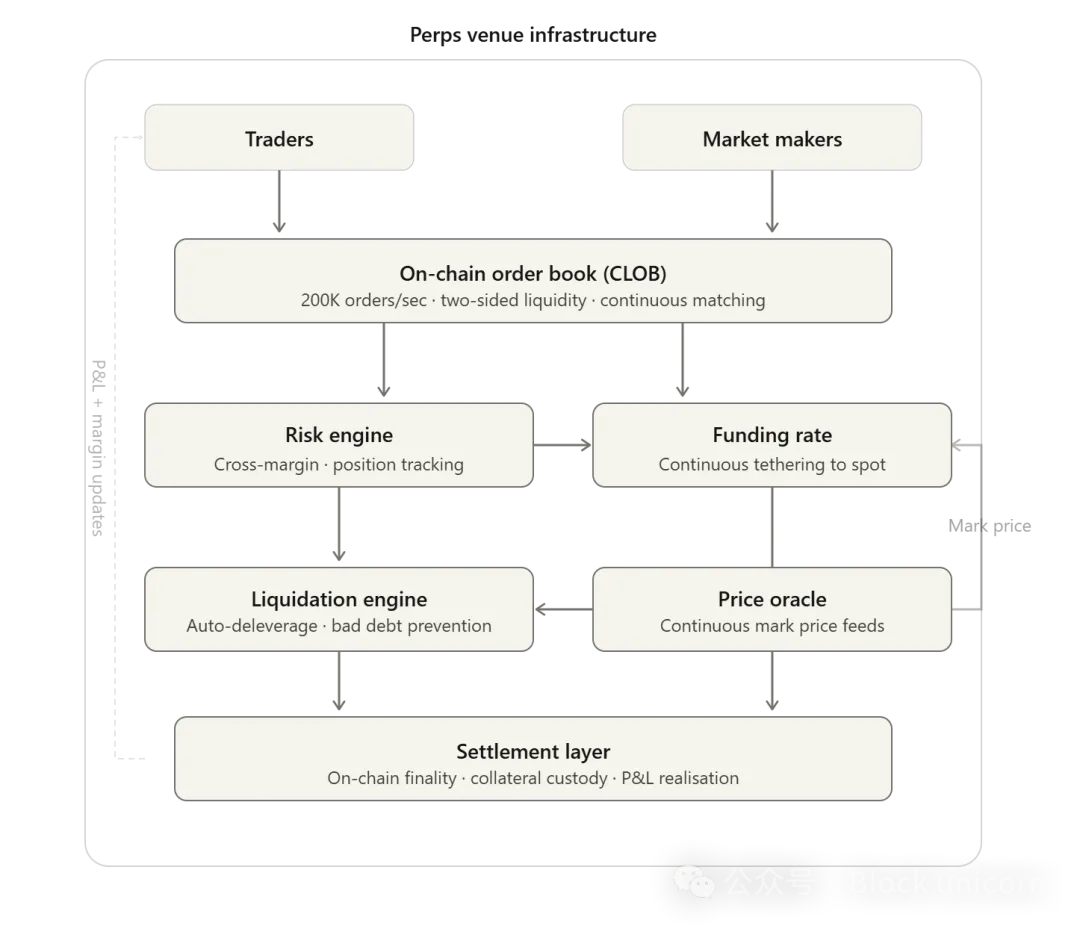
Building the entire tech stack is not the main problem; I believe prediction markets can achieve that. The larger issue lies in stress-testing this tech stack.
Hyperliquid built all these systems and stress-tested them in real scenarios, such as the 10/10 cryptocurrency liquidation event and the Israel-Iran war. Then, after the entire system was ready, it launched event contracts through HIP-4. Kalshi and Polymarket are trying to do the opposite. They operate successful prediction markets that do not require any of the aforementioned systems at all. Now, they not only have to compete with the very successful Hyperliquid, but also with an untested system that cannot cope with the high-frequency activities of perpetual trading for market share.
For prediction markets, many adverse factors make expanding into perpetual contracts more challenging than the reverse.
Hedging Synergies
On the Hyperliquid platform, the risk engine monitors all your positions in all trading varieties, spot, and upcoming event contracts. Saurabh explained this in his HIP-4 report.
It looks at all your positions indiscriminately. Ultimately, the leverage you use and the margin you hold as collateral determine when you will be liquidated. The combination of positions in spot, futures, prediction markets, or any other markets determines how much margin you need to hold.
But Saurabh, aren't other blockchains like Ethereum or Solana also composable? Certainly! On generic chains, each application runs its own risk engine in its respective smart contracts. They cannot atomically view each other's states. So, Kamino cannot see what is happening on Pacifica. Aave cannot see what is happening on Lighter either. All applications are smart contracts on their respective chains. Each application or smart contract has its independent risk engine, and making them aware of each other through the creation of a universal risk engine requires large-scale collaboration.
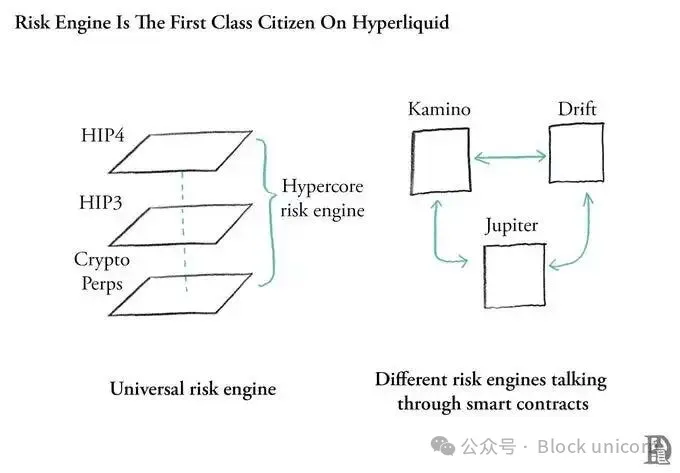
This universal risk engine addresses a core funding problem by optimizing the same funds across multiple trades conducted by traders in the trading venue.
Imagine a trader who goes long on ETH with 5x leverage on the Hyperliquid platform. She is concerned about the Federal Reserve's interest rate decision next week, so she buys a contract for the result "Federal Reserve Holds Rates Steady" at $0.65. Because both positions use the same risk engine, they are both stored in the same margin account. If the Fed unexpectedly cuts rates and ETH's price rises, her long position profits while the result contract only incurs a loss of her initial stake. If the Fed holds rates steady, the result contract pays off, partially offsetting her long position's loss.
That’s why prediction market platforms or hedging trading venues cannot just be additional features. This hedging potential is the very value of HIP-4 on the Hyperliquid platform. Ordinary traders on the platform see the prediction market as insurance in case their existing hedged positions reverse.
Currently, collateral on the Polymarket and Kalshi platforms will be locked until the event resolves. Therefore, unless they provide a unified risk engine in their real-money trading and prediction market venues, they will lose a key factor that keeps traders on the platform. Neither of these platforms have announced a cross-margin system between their prediction market trading and real-money trading venues.
The category segmentation in prediction markets and the average profile of traders further trigger concerns about whether they can replicate successful performances in real-money trading.
More than 80% of Kalshi's total trading volume comes from sports-related trades. For Polymarket, this figure also exceeds 40% in 2025. So how do we build a sustainable pricing mechanism for paid trading platforms around these sports events? This will exclude a significant portion of traders from participating in paid trading.
Moreover, Kalshi's average trader is a retail individual who has never interacted with cryptocurrencies, funding their prediction market accounts through ACH transfers from bank accounts. Therefore, even if I assume that cross-margining is theoretically possible on the Kalshi platform, I doubt whether these traders have the expertise needed to double down on the platform and use perpetual contracts as a hedging strategy.
What Methods Could Be Effective for Prediction Markets?
If Kalshi and Polymarket announce cross-margining, I believe there is one scenario where these bets will work. Their institutional partnerships with major brokers and clearinghouses could facilitate high-value and high-frequency trading activity for event contracts and perpetual futures.
This would enable institutional trading departments to view prediction markets as part of a broader risk management toolkit.
Kalshi and Polymarket both have partnerships that can help them access institutional clients.
Kalshi's collaborations with FIS and Tradeweb data, along with Polymarket's deals with the Intercontinental Exchange (ICE), could help attract institutional clients that value using perpetual contracts to hedge their prediction market positions on the same platform.
This remains an elusive goal requiring many factors in prediction markets to evolve favorably. They need to establish stress-tested infrastructure, secure partnerships, and prove to clients that their platforms can help optimize capital allocation.
But this is a necessary condition for their survival in fierce competition. With distribution channels taken over by Hyperliquid, they have no choice but to seek maximum opportunities elsewhere.
That's all for today, see you in our next article.
免责声明:本文章仅代表作者个人观点,不代表本平台的立场和观点。本文章仅供信息分享,不构成对任何人的任何投资建议。用户与作者之间的任何争议,与本平台无关。如网页中刊载的文章或图片涉及侵权,请提供相关的权利证明和身份证明发送邮件到support@aicoin.com,本平台相关工作人员将会进行核查。


