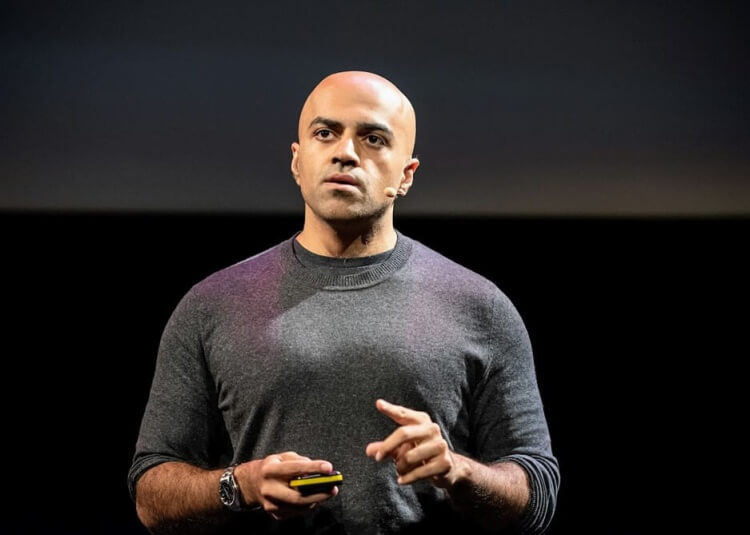
Source: "Miles Deutscher Finance" Podcast
Translation: Felix, PANews
Dragonfly partner Haseeb recently shared his views on the crypto space in the "Miles Deutscher Finance" podcast, providing a deep analysis of where retail investors have gone, why institutional investors dominate, the true face of Bitcoin, quantum risks, and more. Additionally, Haseeb explained how AI agents might fundamentally change the way people use cryptocurrencies and how this could herald the next wave of on-chain applications. PANews has summarized the highlights of the conversation.

Host: Since the events in Iran, the market seems to be pushing higher, and the stock market is also at historical highs. How do you interpret the current market?
Haseeb: The market seems to have stabilized. Since last October, what you see is a complete exit of retail investors. If you ask the founders of exchanges, they will tell you there is nearly no retail activity, just a small fraction of the frenzy during 2020/2021. Retail investors are fickle; if you look at search volumes, exchange trading volumes targeted at retail, app downloads, and other key indicators measuring retail attention, it is clear that they have left the market.
So who is supporting the market? The answer is institutions. If you observe the situation with Bitcoin ETFs overall, as the market declined, the price of Bitcoin ETFs fell by about 7%, but the total amount of funds withdrawn from ETFs was much smaller, indicating that institutions are still here. They form the floor of the market. At this moment, they are the last buyers. Institutions also act as shock absorbers for volatility, which is why Bitcoin has not plunged 70% to 80% like in previous cycles. Therefore, the total scale of ETFs indicates that "smart money" generally believes this space will not die out, but retail has indeed left.
When retail leaves, the crypto market loses a significant portion. Even for crypto ETFs, retail is a huge component of Bitcoin ETF demand. However, what remains are not quick money types interested in speculation; those people have already gone. Now, to understand the market, you need to answer two questions: Why did they leave? When will they come back?
First, why did they leave? Because they lost a lot of money. The market crash was largely suffered by retail. Retail holders of high-leverage positions were forcibly liquidated (ADL), and those holding the crashing altcoins were also retail investors. Institutions do not go long on assets like Atom with leverage. While some market makers and liquidity funds have lost money, it's far less severe than for retail. Secondly, the crypto market is reflexive. The crypto market is highly dependent on momentum. When momentum turns negative, it remains in that negative state, continuing to drop until some positive force pulls it back.
Retail not only left; where did they go? They turned to gold; they are speculative on AI stocks, they are trading oil. They are chasing assets that currently have higher volatility than cryptocurrencies; gold is even more volatile than Bitcoin. Cryptocurrencies are no longer the "most exciting show on television." The appeal of cryptocurrencies to retail was largely due to their extreme craziness and high volatility. If cryptocurrencies become low-volatility assets, their attractiveness to retail investors will significantly diminish.
To some extent, as no asset can only go down and still keep people happy, no one wants to trade an asset that keeps falling. Thus, cryptocurrencies need to start rising again for one of the prerequisites to regain retail attention. We are starting to see signs of this, as the crypto market seems to have bottomed out. Of course, no one knows for certain what the future trend will be; geopolitics is a major factor affecting the direction of all asset classes.
The second point is, currently, AI is highly volatile. You see this in gold and commodities too; their volatility is currently extremely exaggerated. The situation between the US and Iran is gradually easing. If you look at predictions on Polymarket, the market believes the likelihood of continued war by the end of this year is very low, and the likelihood of reaching a comprehensive peace agreement by the end of summer exceeds 50%. Therefore, we are likely to see commodity prices stabilize, and the macro economy tends toward stability. But the stock market may remain volatile for some time, especially if we see major IPOs this year. If Anthropic or OpenAI go public before the end of the year, these stocks will see crazy volatility since retail will finally have a chance to buy them. The same goes for xAI and SpaceX; these are all narratives with extreme volatility that retail investors love to chase.
Host: So what is your outlook for the remaining year? How do you think the market will evolve? We just discussed the volatility in the US stock market. It sounds like you expect more volatility in the US stock market this year.
Haseeb: Yes, I think it will be difficult for cryptocurrency volatility to surpass that of US stocks before next year. My guess is that the crypto market will gradually recover like it is now. But I believe the key will be after the IPOs of these large tech companies next year. At that point, the crypto market is more likely to see a broader recovery and may start to challenge historical highs. Of course, all of this is speculation, and I do not know the exact answers. However, one very clear logic is: cryptocurrencies need to reclaim the title of the volatility king to become a more attractive asset class for retail investors. If cryptocurrencies cannot win back retail purchases, relying solely on institutional capital will not push the market to historical highs. People are excited about institutional capital, and I also believe it is important, but it is more likely to flow into equity companies in the crypto space rather than into Bitcoin, Ethereum, Solana, and certainly not into various altcoins. For the broader ecosystem in the crypto space to perform well, you need retail to return. And to get retail back, cryptocurrencies must be attractive compared to US stocks.
Host: What narrative do you think can bring retail back? Specifically, what is the narrative surrounding Bitcoin? Have you seen any catalysts that could trigger this? Clearly, price increases will create narratives, but there must be something else, because I feel Bitcoin seems to have lost some belief. I still personally believe in it; you can definitely regard it as digital gold, but seeing the recent outstanding performances of gold and US stocks, along with the threat of quantum computing and other factors mentioned in the news, it has indeed lost some belief. Are you still a believer in Bitcoin? Do you think it has a clear path as an asset?
Haseeb: I think people really overestimate the “narrative” part Bitcoin needs. Frankly, I don’t think Bitcoin has that many narratives to tell. People just believe Bitcoin will always exist; it won’t disappear. They see Wall Street becoming increasingly accepting of it. Although the Bitcoin ETF was launched not long ago, it is already one of the most actively traded ETFs globally. There is massive demand for Bitcoin. If you ask, “What is the narrative?” I don’t know if it has anything special for a narrative; it will continue to grow over the next 15 to 20 years. As the baby boomer generation gradually ages and passes decision-making power on capital to Generation X and Millennials, they will find Bitcoin right there. They will accept it directly, viewing it as part of the world, as a financial asset that will not disappear. So I don't know if anything specific will happen in the next two years, I think it will just gradually solidify its position, becoming a more stable and better-understood financial asset.
However, quantum computing is indeed a real risk, especially within the next 3 to 5 years. To reassure people about Bitcoin, you have to see a clear Bitcoin Improvement Proposal (BIP), with the community reaching consensus on it and establishing a migration plan. Once you see this migration plan, it will enhance confidence in Bitcoin. Once the migration is complete, the quantum crisis will be fully in the past. I am quite confident this will happen; you can already see the Bitcoin community starting to address the quantum issue. The ultimate answer is that quantum computing will end up being like the “Y2K” crisis.
(Note from PANews: The most famous global technology crisis event in the computer field at the turn of the century. On the night of December 31, 1999, to January 1, 2000, a large number of outdated computer systems and software around the world could fail, crash, or compute incorrectly because they could not correctly process the "00" year. Ultimately, it passed safely without major disasters).
Quantum computing is indeed a risk, and one day someone will build a quantum computer that can crack ECDSA (Elliptic Curve Digital Signature Algorithm). But the question afterward is: have all blockchains completed their migration? If the blockchain has completed the migration, then this won’t be major news. It becomes Y2K. It’s like people saying, “Oh, this could be a horrible thing,” but “We are prepared; we completed the migration, we know how to fix this bug,” and then the vulnerability is fixed, the crisis ends, and we never talk about it again. This is how the quantum computing situation ultimately plays out. So looking back, we will view the quantum crisis just like we viewed the Bitcoin block size debate: it was merely a past occurrence that no one brings up anymore. Future generations will find it hard to imagine why this was such an important issue back then because to them it is completely not a concern.
Host: Yes. In your previous podcast, you mentioned that exchanges could even block addresses, and there are various mechanisms to prevent compromised supplies from entering the market. But you also pointed out that even if it did impact the market, it would be priced in ahead of time and could instead become a bullish catalyst.
Haseeb: Exactly. Suppose the Bitcoin community establishes a new signature mechanism standard next year and gives everyone three to four years to migrate their keys. After this deadline, old addresses will become invalid, and tokens will be directly destroyed. Then all institutions and most people will have completed their migration. If quantum computers actually appear five years later, that would be a huge positive for Bitcoin: first, the quantum computer was not invented before the complete migration; second, a large amount of un-migrated supply is directly destroyed. In many cases, quantum migration will ultimately become a bullish catalyst.
Host: That's the case for Bitcoin. What about altcoins and general crypto assets? Currently, retail interest is still low; what is your overall assessment of this market?
Haseeb: The beauty of the market is that it's relative. Altcoins have dropped significantly, but they can also rebound sharply. You don’t need every single person in the world to refocus on cryptocurrency for altcoins to rise 30%, 40%, 50%, or even 100% from the low points we touched. So, if we could see a broader macro recovery in crypto, I believe many projects have a lot of recovery potential.
That said, I think it will take some time for retail to regain their interest. Retail places more emphasis on narratives regarding altcoins. Unlike Bitcoin, there is no assurance that altcoins will outperform over the long run. For Ethereum, Solana, and all other projects, you really need to tell retail a story that explains why these are important; because unless you are a project like Hyperliquid that can print money, generate income, and buy back and destroy tokens, almost all other cryptocurrencies do not have that kind of fundamentals. If you look at the Hyperliquid-type tokens that can generate income, they constitute only a tiny portion of the overall market, whereas the vast majority of the market is trading on future expectations. So if you’re talking about future expectations, you have to tell a story about what is going to happen in the future, and this story must be credible to retail investors. I think this is definitely feasible. We have all the raw elements necessary for success. But people must feel excited about the future of cryptocurrency. I believe the core of cryptocurrency has proven its durability and proven that more and more powerful people believe in it. Look at Kevin Walsh's testimony in Congress; he is basically saying: “Yes, I believe cryptocurrency is a part of the financial field and is now firmly rooted; it will not disappear, and it is very valuable to American interests.” You can hardly imagine Yellen or Powell saying such things. We are completely in a different world now, with the Federal Reserve Chair saying such things, and the Fed Chair will remain in this position for a long time to come. Therefore, I think there has indeed been a monumental shift in embracing cryptocurrency among financial institutions. Reports indicate that Meta will launch their own crypto wallet in the second half of the year. All of this points in one direction: cryptocurrency has rooted itself here. But you need some specific narratives to make retail really want to come back.
Host: You mentioned in a tweet that the financial properties of cryptocurrencies are exploding, which is one of your big points this year. You also talked about the demise of non-financial crypto assets. I would love to hear your argument on this and why you think this is such a huge opportunity. I also looked into the investment situation of the Dragonfly fund. Clearly, you have bet a significant amount of money in this direction.
Haseeb: I have always believed that cryptocurrency is fundamentally about money and finance. All large-scale successful projects, like Bitcoin (digital gold), Ethereum (financial smart contracts), DeFi, ICO, RWA, stablecoins, prediction markets, are all related to money and finance. Those narratives about cryptocurrency being used for supply chain tracking, the metaverse, gaming, and social media, are primarily self-indulgent meta-narratives created by VCs and insiders; even Zuckerberg has fallen into the trap. Many VCs poured money into Yuga Labs, Axie Infinity, OpenSea, etc., and we did not participate because those games were not fun and decentralized social was not useful. It turned out I was right, the real product-market fit for crypto is money and finance. This is also why we have been investing in DeFi, stablecoins, exchanges, and other fields close to the core of crypto for so many years; it is also why we still have the power to invest in this space while many deluded VCs get eliminated.
Host: So what are you looking at in the financial crypto space now? Is it prediction markets or AI agents?
Haseeb: We are looking at both of these areas. We are significant investors in Polymarket. Recently Polymarket announced it will launch perpetual contract products because for scalar values (like valuations), existing binary options can greatly dilute liquidity and are inefficient in terms of capital; retail just wants to buy an asset that can go up or down. This is a huge reason why they are launching Perp. On the other hand, the intersection of AI and cryptocurrencies is where I spend a lot of time, particularly in "agent payments." We have looked at many API gateway projects that allow you to use AI agents to perform tasks via API (paying computation fees, solving CAPTCHAs, web searching, etc.), only paying as needed with cryptocurrencies and stablecoins without having to register accounts.
Host: You mentioned on Twitter that "cryptocurrencies are not designed for humans, but for AI agents." How do you view this evolution?
Haseeb: The way nearly all software interacts will change. AI agents will be the first gatekeeper for interacting with software. The user experience of cryptocurrencies is presently terrible; it is not the interaction method humans desire at all. Why do you have to remember a seed phrase of 12 words? Why use a currency that has 15 decimal points? Why should I look at a bunch of incomprehensible smart contracts? But for machines, all of this is perfect. Machines understand APIs and never leak keys in plaintext. Fifteen decimal points mean nothing to AI. Humans cannot read Solidity code, but AI is essentially a mad programmer; it can read and parse smart contracts in half a second and know exactly what it is signing. For example, if a hacker attacks, a human has to check a phone notification and manually go to a computer to withdraw, while your AI agent can instantaneously monitor positions and memory pools in the background. Even before the hacker's funds cross the chain, it can immediately withdraw your assets to a safe address. As long as computing power is sufficient, top-notch cybersecurity models suitable for everyone will soon be available. When all of this happens, due to AI's intervention, cryptocurrencies will become as secure and robust as traditional finance. Why do you trust banks? Because banks have systems that ensure you won’t mistakenly send money to North Korea. In the crypto world, no one is stopping you, but in the future, AI will become that layer of intelligent filtering systems doing the same thing.
Host: Does this open the door for billions of people and AI agents to adopt cryptocurrencies? Do you think this is a major turning point for the industry?
Haseeb: Absolutely. But it won't happen quickly because the current AI agents are not smart enough and can produce hallucinations and spelling errors. But this is just like the development of AI programming tools; it will quickly transform from an uncontrolled "wild horse" into an absolutely safe, crash-free "airplane." Once the model matures enough and completes training in on-chain environments, the public's perception of the dangers of cryptocurrency will be thoroughly overturned.
Host: In that world, who are the biggest benefactors? Bitcoin? L1? Or DeFi?
Haseeb: If a mass influx due to AI agents makes crypto secure, they will definitely buy mainstream quality assets that everyone trusts, like Bitcoin. Some may think applications like Hyperliquid (leverage trading) will benefit, but I rather believe they are on the wrong side. New entrants are not coming to gamble. Those who want to gamble are already gambling. You would never give your AI agent money and say, “Go help me with leveraged trading”; that would be foolish and no fun, just like letting a friend play the slot machine for you at a casino.
Host: But what if you think your agent is better than others? Wouldn't that turn into a financial battle between agents? Also, since the channels for fiat input and output have reduced friction, will it be easier for ordinary people to participate in applications?
Haseeb: First of all, both Hyperliquid and Polymarket now have channels for fiat deposits and withdrawals; many users don’t even know they are using crypto wallets. Deposit and withdrawal friction is not the main barrier preventing people from trading. The real logic is risk preference. People with high-risk preferences have long been looking for ways to be on-chain. What can really lead to a tenfold growth explosion are the ordinary people with low risk preferences. This group currently participates very little in the crypto market. When the market is made completely safe by AI, they will flood in en masse. What will they do when they enter? They will buy stablecoins, buy real-world assets (RWAs, like tokenized S&P 500 indices). Currently, there is almost no "savings" or "passive investment" behavior on-chain. Once long-term passive index investing matures on-chain, this ecosystem will witness a complete explosion.
Related Reading: Dialogue with a16z co-founder: The physical laws of the old world are dead, and crypto is the key infrastructure for AI
免责声明:本文章仅代表作者个人观点,不代表本平台的立场和观点。本文章仅供信息分享,不构成对任何人的任何投资建议。用户与作者之间的任何争议,与本平台无关。如网页中刊载的文章或图片涉及侵权,请提供相关的权利证明和身份证明发送邮件到support@aicoin.com,本平台相关工作人员将会进行核查。


