The hyperscaler era is hitting a geopolitical wall.
For many years the play was simple: centralize compute, optimize globally, and sell across borders. But as global cloud stacks collide with conflicting legal regimes that model is breaking.
Cloud architecture has morphed into a "compliance surface." Between the US CLOUD Act, Europe's NIS2, and China’s Data Security Law, the legal risk of a single global stack is becoming untenable.
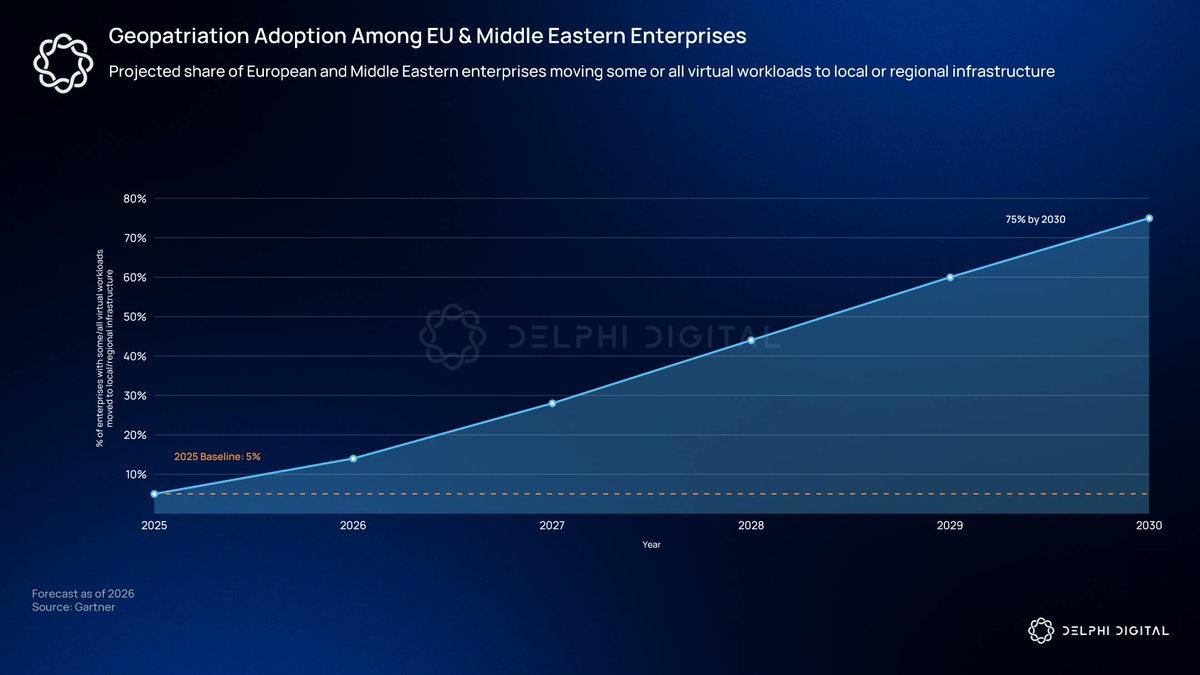
This is driving geopatriation. Enterprises are moving workloads to local or regional infrastructure because the political friction of a US-centric cloud is too high.
There is a downside to this. Sovereign clouds are expensive, slow to scale, and they can’t get their hands on the newest chips. This is the wedge for decentralized compute.
Networks like Akash, Aethir, and Render offer a workaround by aggregating GPU supply across dozens of jurisdictions. They coordinate pricing and routing through market mechanisms rather than rigid hyperscaler contracts.
The winner of the next cloud cycle won't necessarily be the one with the biggest data centers. It’ll be whoever can route compute around jurisdictional friction.
免责声明:本文章仅代表作者个人观点,不代表本平台的立场和观点。本文章仅供信息分享,不构成对任何人的任何投资建议。用户与作者之间的任何争议,与本平台无关。如网页中刊载的文章或图片涉及侵权,请提供相关的权利证明和身份证明发送邮件到support@aicoin.com,本平台相关工作人员将会进行核查。


