Author: 2lambroz.eth, Crypto KOL
Translation: Felix, PANews
Editor’s Note: On April 21, Polymarket launched a perpetual contract market, allowing users to leverage trade on market events, aiming to bring the liquidity advantages of prediction markets to leveraged trading. However, this move seems to touch the "bottom line" of the Hyperliquid platform. On May 2, Hyperliquid officially activated the HIP-4 protocol on the mainnet and launched the prediction market Outcome. In this game between Hyperliquid and Polymarket, who will come out on top? Crypto KOL 2lambroz.eth published an analysis of both sides' strengths and weaknesses, which PANews has compiled; here are the details.
Polymarket launched a perpetual contract market, Hyperliquid launched a prediction market. What exactly happened?
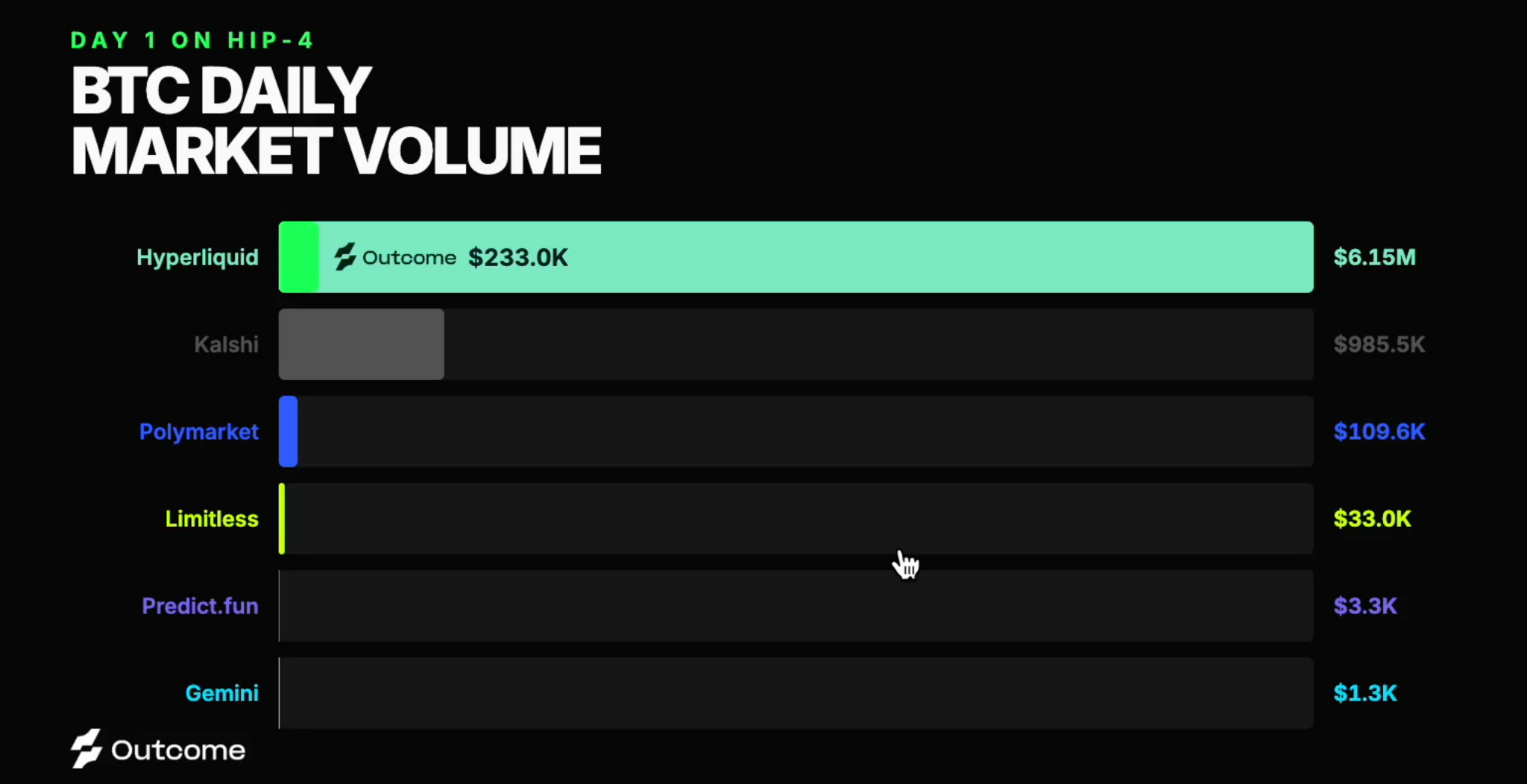
Only 48 hours after launching, the BTC price prediction market on Hyperliquid’s Outcome surpassed $6 million in trading volume, surpassing both speed and volume of the comparable BTC market on Polymarket.
What are the best and worst-case scenarios? Why should you pay attention to it?
The reactions on Crypto Twitter (CT) are somewhat polarized: the Hyperliquid community firmly believes their Outcome will end Polymarket's dominance. However, there are dissenting opinions.
As of now, compared to Polymarket's 38% market share, HIP-4 (Hyperliquid's prediction market protocol) has only captured 0.1% of the prediction market share.
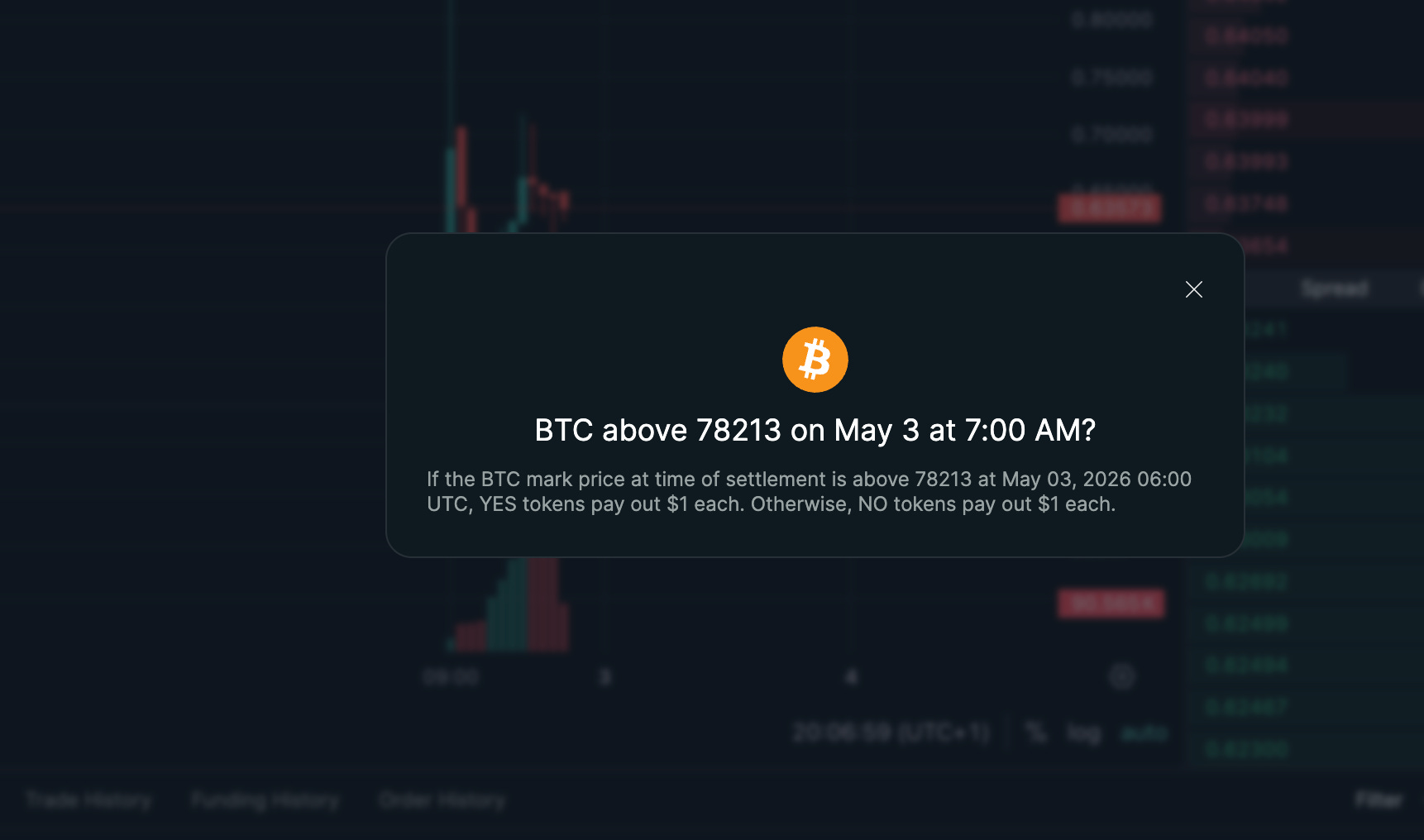
Hyperliquid has been testing its prediction market product HIP-4, which features a zero opening fee structure that allows traders to bet on events using a single margin account with cryptocurrency futures.
Moreover, some claim this is a clever tactic by Hyperliquid to promote the adoption of USDH. Why is that?
- All HIP-4 outcome contracts are priced and settled in USDH (Hyperliquid's native stablecoin).
- You need to use USDH (or spot BTC/HYPE and use combination margin) to trade these Yes/No binary event contracts.
- This creates a mandatory demand for USDH. As the trading volume on the prediction market grows, traders must hold or exchange USDH to participate in this new product.
Best-case scenario
One post pointed out that there is already some overlap between Hyperliquid and Polymarket's user bases.
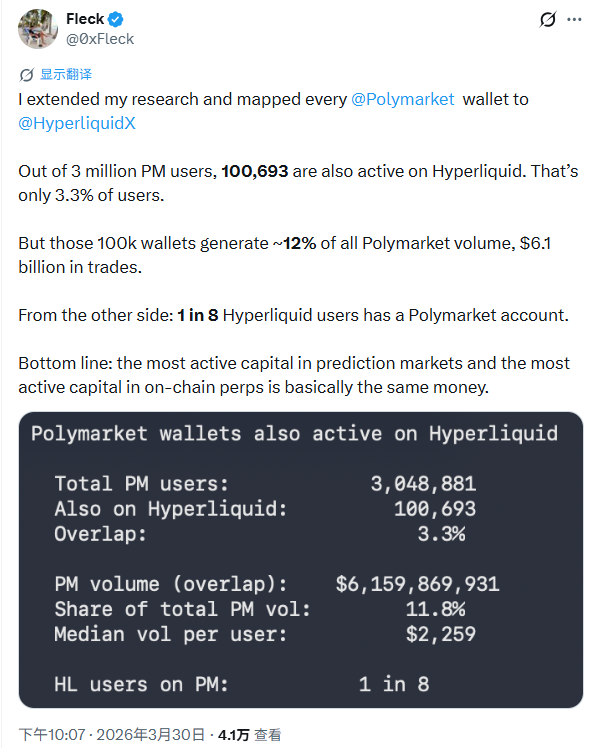
The contents of the above image are as follows:
- From Polymarket: Among approximately 3 million users, 100,693 wallets (3.3%) are also active on Hyperliquid. These 100,000 wallets contributed to about 12% of Polymarket's trading volume (which at the time was $6.1 billion).
- From Hyperliquid: 1 in every 8 users has a Polymarket account.
- Conclusion: The funds most active in the prediction market and the funds most active in on-chain trading are essentially the same group of funds.
It seems Hyperliquid is trying to keep funds within its own ecosystem, allowing clients not to have to move funds out of the platform.
What advantages does Hyperliquid have over Polymarket?
Here are factors that make the Hyperliquid market quite attractive:

On rates, Hyperliquid's market-making fees are 0, while Polymarket's taker fees are 2%.
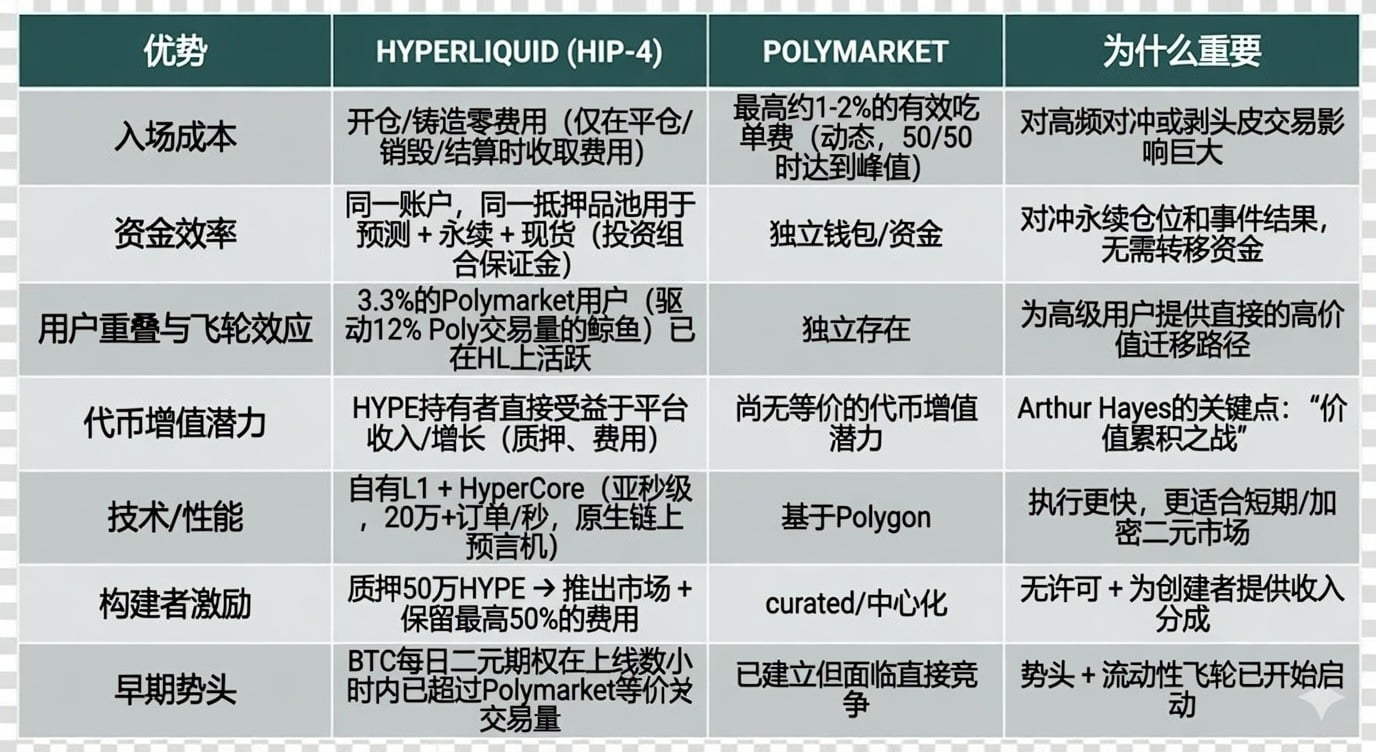
On users, Hyperliquid's advantage lies in being optimized for professional traders and arbitrageurs focused on perpetual contracts, allowing them to seamlessly participate in the prediction market without leaving the platform.
On the community, the Hyperliquid community is already excited about the potential launch of a new points program (Opium).

On user interface: Many have reported its user interface is overly complex compared to Polymarket, but the Hyperliquid team promises more updates in the coming weeks. The HIP-4 API is expected to further integrate into a more streamlined user interface (if applicable).
Trust Wallet's product intern has hinted at this.

Worst-case scenario
The market has had mixed reviews regarding this release.
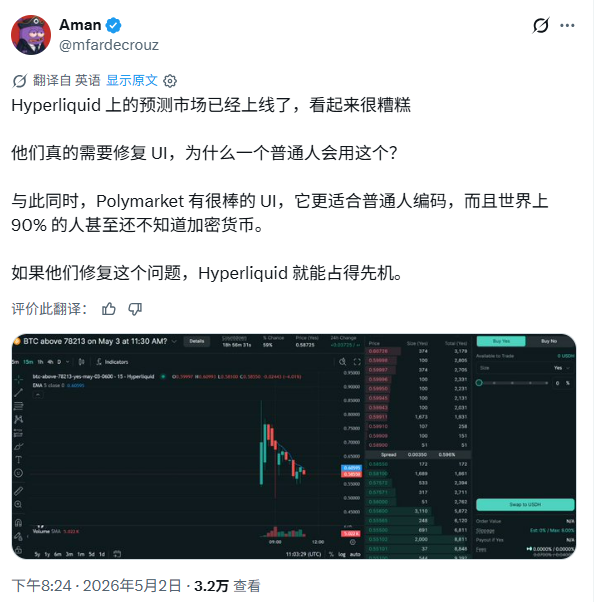
Here are some worst-case scenarios:
User Interface / User Experience and Retail Appeal: The platform still heavily favors "perpetual contract traders." Early feedback describes it as "weak" and "completely incomparable to Polymarket." Most users who casually bet on elections, sports, or culture may still prefer Polymarket for now.
Market Breadth and Content Selection: Polymarket initially launched with binary contracts focused on cryptocurrency (e.g., daily Bitcoin prices). While broader events (politics, sports, macroeconomics) are gradually being introduced, Polymarket has the advantage here.
Retail Scale and Brand Moat: Polymarket firmly occupies mental share in "prediction markets," especially in the cryptocurrency space.
Regulation and Access Limitations: Hyperliquid does not support U.S. users. In contrast, Polymarket has already received CFTC certification and is working to re-enter the U.S. market.
Liquidity Depth Beyond Crypto Events: Thanks to existing perpetual contract liquidity, early open interest (OI) and depth perform well on BTC binary options, but have not yet been validated in macroeconomic or long-tail events in non-crypto areas.
Potential Incentive Expectations: While Hyperliquid's token $HYPE is already circulating, traders are likely to lean towards Polymarket for its token generation event (TGE) expectations.
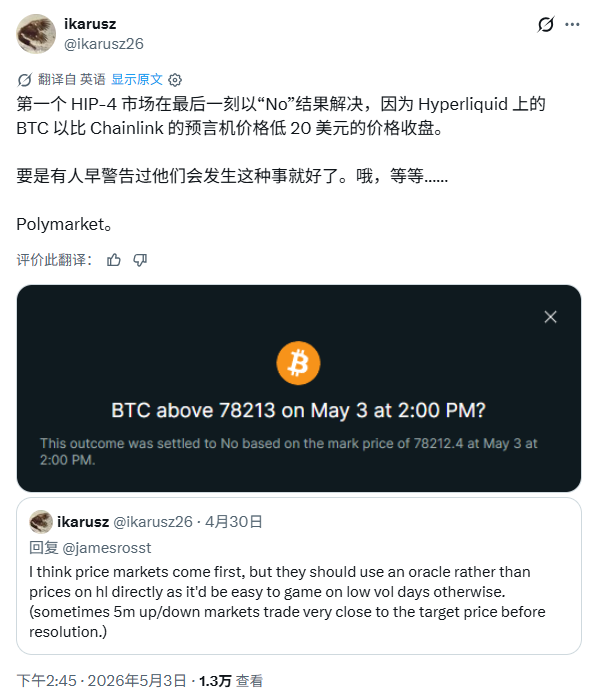
Oracle Risk: Additionally, some posts claim Hyperliquid's oracle may not be accurate enough.
Personal Thoughts
So, what are your thoughts on this contest? There are high expectations for the (not yet officially announced) S3 points program.
However, developments could turn out like this: the points program may lead to a massive influx of "whales" into Hyperliquid, thereby diluting the incentives for real traders.
Currently, the gap remains significant, and we will update the situation in a few weeks.
Further Reading: Can prediction markets win in the race of perpetual contracts?
免责声明:本文章仅代表作者个人观点,不代表本平台的立场和观点。本文章仅供信息分享,不构成对任何人的任何投资建议。用户与作者之间的任何争议,与本平台无关。如网页中刊载的文章或图片涉及侵权,请提供相关的权利证明和身份证明发送邮件到support@aicoin.com,本平台相关工作人员将会进行核查。


