This article took me five days to complete, during which I reviewed a vast amount of materials, outlining the development history of Chinese cryptocurrency exchanges. It aims to revisit the transition of cryptocurrency exchanges in China from their chaotic inception to global restructuring. I believe this is also a narrative intertwined with technological ideals, wealth fervor, regulatory shifts, and global migrations within the industry.
From the founding of BTC China in a Shanghai apartment in 2011, to the rise of Huobi and OKCoin in 2013 as the three giants vied for supremacy; from the time when RMB transactions dominated the global Bitcoin market, to the abrupt end of the golden age of domestic exchanges due to the “September 4th” regulations in 2017; from platforms like Binance, HTX, and OKX shifting to offshore markets, to the compliance restructuring under the era of stringent regulations, the story of Chinese exchanges encapsulates the journey of the entire cryptocurrency industry from chaos to order.
Along this decade-long path, some went from internet cafes and small apartments to the global stage, some reached the pinnacle of the global market amidst bulls and bears, some sold out and left, some retreated to the background, and others found new ways to re-enter the mainstream financial system under heavy regulatory pressures.
Are you ready? Let’s embark on this journey from that nameless Shanghai apartment, retracing the path of wilderness, fervor, globalization, and compliance that belongs to the Chinese exchanges.
01 The Beginning of Wilderness
In the rainy season of Shanghai in 2011, the air was so humid and sultry it felt suffocating. In a less than 20 square meter apartment in Jing'an District, there wasn't even a decent sign. Two peeling computer desks and a second-hand printer that often jammed were all the possessions of China’s earliest cryptocurrency exchange.
Yang Linke smoked a cigarette while staring at the flickering characters on the screen, and Huang Xiaoyu finished the last line of matching code. Two young men struggling at the edge of the internet, neither of whom expected that they were pushing open a wild door that could sweep the world.
At that time in China, no one regarded Bitcoin as a serious business; this string of virtual codes from overseas could only be found in the corners of geek forums. And the story of cryptocurrency exchanges in China quietly started with these two distinctly different young men.
Yang Linke, born and raised in Wenzhou in 1985, never took the conventional path to education. Dropping out in his teens to explore the world, he worked as an internet cafe manager in Wenzhou and Shanghai, spending his days surrounded by the smell of smoke, repairing machines, handling malfunctions, and watching players game—this was his true youth. He later traded virtual items and set up small websites, never making big money but honing his skill of identifying niche demands.
He didn’t understand cryptography and had never been in touch with overseas geek circles. When he first saw “Bitcoin” in a technical forum in 2010, he keenly realized that it was a virtual token that could be transferred online without control. A simple thought emerged in his mind: if someone played it, there would be someone wanting to buy and sell it; if there were buy and sell, there must be a place to facilitate the matching.
At that time, there were hardly any over-the-counter Bitcoin transactions in China; buyers and sellers were posting on forums, transferring funds privately, and manually transferring coins—tedious and risky, resembling the way people would barter on the street before there was a marketplace. Yang Linke saw this unoccupied void but had no technology, no team, and the only thing he could do was find someone who could code to team up with.
The person he found was Huang Xiaoyu.
Unlike the grassroots Yang Linke, Huang Xiaoyu was a relatively well-known technical geek in the community, having honed his programming skills for many years, specializing in website development and backend construction. He was also one of the earliest in China to understand the underlying logic of Bitcoin. Introverted and avoiding the limelight, he was obsessed with code and decentralized technologies. When Yang Linke found him on the forum and bluntly stated, “I do operations, you write the code, let’s create a Bitcoin trading site together,” Huang Xiaoyu almost instantaneously agreed.
Perhaps it was not for making big money, but to fulfill a geek’s obsession—that something so pioneering should have a Chinese-run trading platform.
The two gathered several tens of thousands of yuan as startup capital, rented the apartment office, with no investors, no formal employees, and no compliance procedures at all, coding and adjusting the site during the day and driving traffic to forums at night, surviving on instant noodles, and napping on desks when tired. In June 2011, Bitcoin China (BTCC) officially launched, becoming China’s first cryptocurrency exchange and one of the earliest trading platforms in the world.
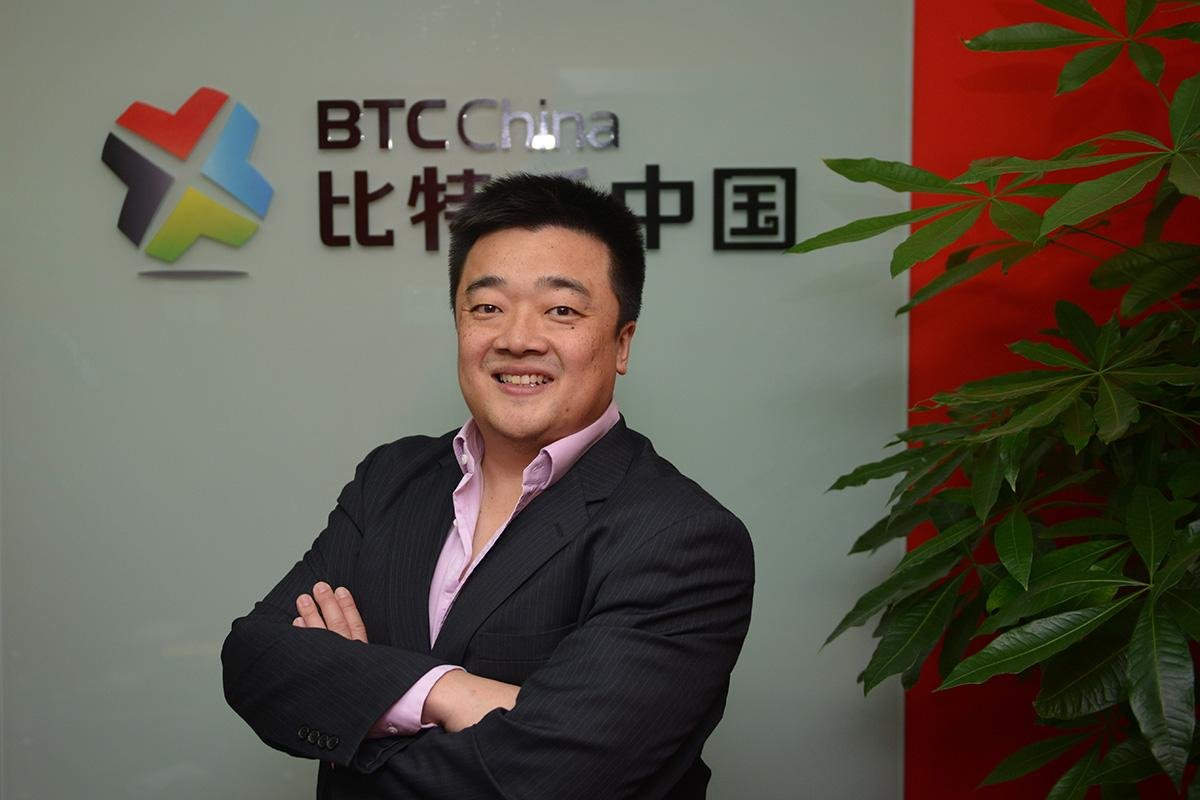
The early BTCC webpage was extremely simple, featuring only the most basic buy and sell orders and price charts, without K-lines, and could only trade Bitcoin. Deposit and withdrawal relied entirely on manual processes; users would transfer money to Yang Linke's personal bank account, and after manual verification, he would credit coins to the users. For withdrawals, users would submit requests, and Huang Xiaoyu would manually transfer coins one by one.
The first batch of users consisted of only a few hundred—programmers, geeks, and overseas students—with daily trading volumes of just a few tens of thousands of yuan. Yang Linke recalled later that at that time, they did not think about making money at all, but merely felt they had done something very cool, like paving the first small road in an uninhabited area.
Two ordinary people, one daring to imagine, the other daring to act, built the first tent of China’s exchanges in the wilderness.
However, this grassroots geek station remained lukewarm after two years of being online, never breaking out of its little circle. Until 2013, an elite from overseas entered the fray, completely rewriting the fate of BTCC, and his name was Li Qiyuan.
Li Qiyuan’s life was worlds apart from Yang Linke and Huang Xiaoyu.
He studied in the United States, graduated from Stanford University, and had worked in Silicon Valley tech companies and on Wall Street, familiar with overseas financial markets, media operations, and business tactics. He was also a staunch believer in Bitcoin and was one of the first to introduce Bitcoin into the Chinese business circle.
In 2013, as Bitcoin's price skyrocketed from $13 at the beginning of the year to $1100 at the end, the first wave of a global bull market swept in, and the demand in the Chinese market exploded. The grassroots model of BTCC could no longer support the influx of users. Li Qiyuan immediately recognized the first-mover advantage of BTCC and decisively joined to lead operations, igniting this geek site into an industry benchmark.
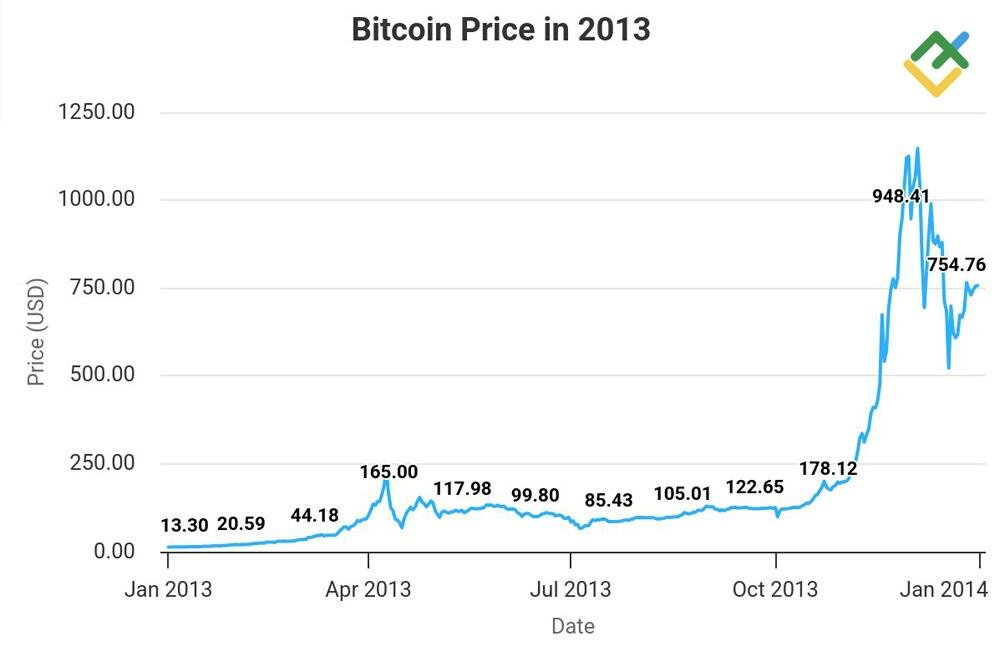
He first ended the homegrown workshop model, registered a formal company, and built a complete team for technology, operations, and customer service. He also engaged with domestic and foreign financial media to bring Bitcoin and BTCC into the public eye, working hard to let ordinary people know about Bitcoin and Bitcoin trading. At the same time, he optimized the deposit and withdrawal processes, improved system stability, and initially established security mechanisms, accommodating this explosive influx of users.
BTCC reached its peak in 2013, with daily trading volume exceeding hundreds of millions, and the user base skyrocketing, becoming the most influential exchange in China and even globally. The original iron triangle formed by Yang Linke, Huang Xiaoyu, and Li Qiyuan firmly established their positions as pioneers of cryptocurrency exchanges in China.
That period was the absolute wilderness era for Chinese cryptocurrency exchanges, with no regulatory policies, no industry standards, no risk control requirements, and no formal payment channels—users’ assets were all in the founders’ personal accounts.
This wild era completed the industry’s core primitive accumulation:
BTCC proved that the early business model of matching RMB + Bitcoin was feasible, expanding the user base from geek circles to ordinary investors, and providing the most intuitive entrepreneurial model for future entrants.
Of course, the wild revelry ultimately sounded the first alarm.
In December 2013, the People’s Bank of China and four other ministries jointly issued a notice on “Preventing Risks Related to Bitcoin,” clearly stating for the first time that Bitcoin was not a currency, but merely a virtual commodity. They also drew a red line, prohibiting financial institutions and payment institutions from participating in related businesses and directly pointing out the fatal risks for exchanges: unregistered, poor security, easily attacked, and operators might run away with funds.
Although this notice did not shut down exchanges, it put the first reins on the industry, which had grown wildly.
Yang Linke understood as he looked at the notice that the days of relying on grassroots workshops and gray areas were drawing to a close. What he didn’t know was that a great struggle for industry dominance was already on the horizon.
In the winter of 2013, BTCC moved out of the apartment and into a formal office building. When the logo lit up, the three pioneers stood at the window, their eyes filled with light.
They went from internet cafe managers, technical geeks, and overseas elites, to the first generation of founders of China’s exchanges, taking the most fundamental step from 0 to 1 in the simplest of ways. However, they did not anticipate that soon two more radical entrepreneurs would break the pattern they had established, pushing Chinese exchanges towards the peak of the global stage.
Li Lin and Xu Mingxing were already sharpening their fists not far away.
02 The Rise of the Three Giants and China's Power Dominating the World
Also in 2013, in Beijing’s Zhongguancun, the entrepreneurial cafes were bright until the early hours.
Li Lin focused on the Bitcoin K-line on his computer, pondering repeatedly. Just coming out of the failed group buying venture, he sensed an unprecedented opportunity.
Meanwhile, in an apartment a few streets away, Xu Mingxing’s fingers were tapping away at code. This technical geek, proficient in high-frequency trading systems, was developing his own trading engine.
These two young men, from completely different backgrounds, with different mindsets and strategies, set their sights on the Bitcoin trading sector in the same year. They did not replicate BTCC's grassroots pioneering path but instead used成熟的互联网玩法 to shatter the initial framework established by Yang Linke and Li Qiyuan, pushing Chinese cryptocurrency exchanges from a small geek circle to the throne of global dominance.
Li Lin, born in 1986 in Shaoyang, Hunan, was a typical veteran of internet products. A top computer student in his school days, he later dove into big firms like Renren and Oracle, mastering product design and user operations. In 2010, he hit the group buying boom and established Mengmai.com, reaching the top ten in China, only to eventually falter in the smoke of the “Thousand Teams Battle.”
This failure enlightened him: small entrepreneurs could only break through by focusing on vertical sectors, essential pain points, and light asset operations.
When Bitcoin skyrocketed from $13 to $1000 in 2013, the domestic demand for trading exploded. Li Lin tried to use BTCC but was left speechless by the terrible experience: the page lagged, the deposit process was cumbersome, and customer service was non-existent. He immediately grasped the key to the industry: China was not lacking in people trading cryptocurrencies; it lacked a user-friendly, fast, and reliable trading platform.
At that time, BTCC had stabilized its footing due to its first-mover advantage but still bore the amateurishness of a geek website. In September 2013, Li Lin announced the launch of Huobi, which based on “ease of use, free, and fast,” broke through a million in trading volume only three months after launch, beginning to challenge BTC China's first-mover advantage.
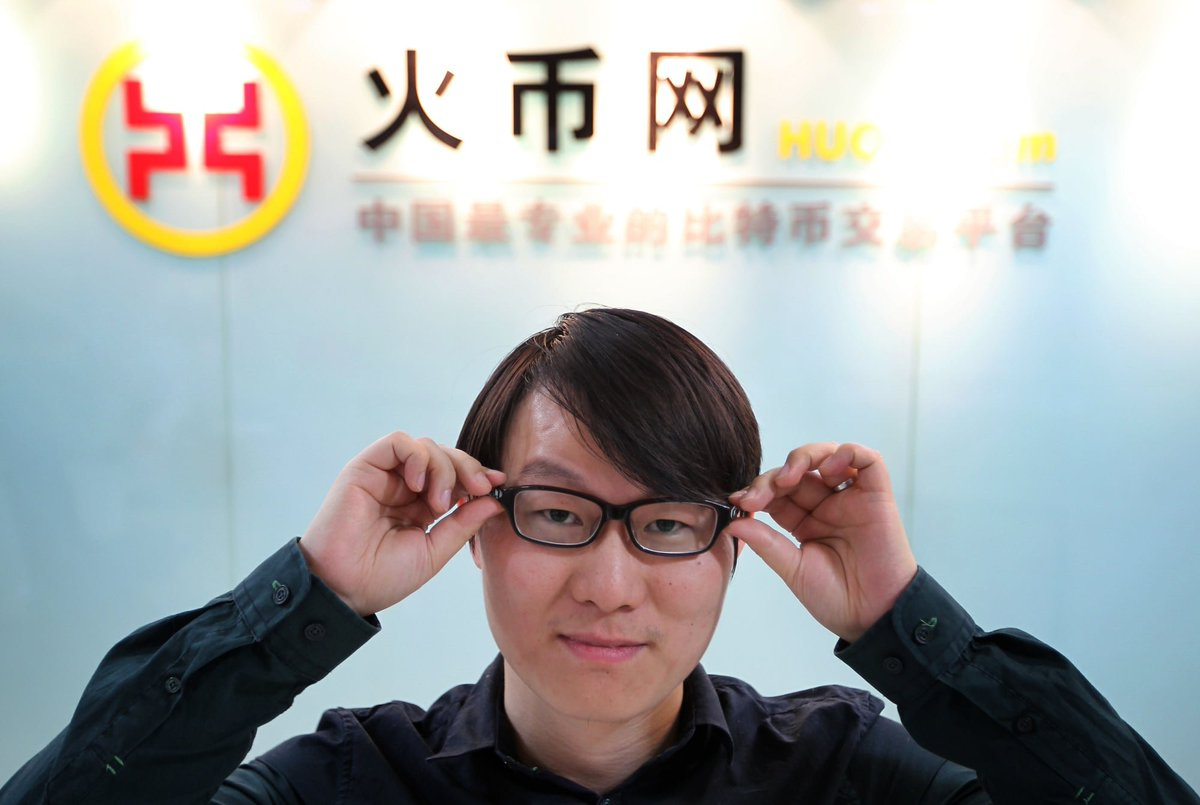
Li Lin's breakthrough strategy was user experience: instant deposits, instant withdrawals, 24-hour customer service, and a smooth interface, plus the killer move of free trading for life, directly undercutting the primitive platforms that profited from transaction fees.
While Li Lin was frantically seizing market share through user experience, Xu Mingxing, who also wanted to make money in this arena, took a completely contrary path.
Born in 1985 in Suzhou, Jiangsu, Xu Mingxing was a technical geek with a Ph.D. in optoelectronics from Canada. After being deceived while buying Bitcoin, he decided to create Bither.
After the September 4th regulations, he renamed it Gate.io. He was one of the few practical individuals in the sector; after his platform was hacked and 7000 Bitcoin were stolen, he compensated users entirely out of pocket, gaining a reputation and ensuring survival in the gaps between the giants.
These four people—guardians maintaining the status quo, aggressors, speculators, and pragmatists—thrived in the business of overseas exchanges. However, no one expected a former technical staff member from Huobi to shake the entire industry with an outrageous model.
This person was named Zhang Jian.
Zhang Jian was the former CTO of Huobi and had written China’s first bestselling book on blockchain, recognized as a technological idealist in the community. After leaving Huobi, he aimed to achieve real technical innovation, looking down on exchanges that made profits from transaction fees and cutting their user's profits. In 2018, the bear market came, and Zhang Jian came up with a bold move—transaction mining.
In simple terms, this meant that the transaction fees from users would be returned as platform tokens, and holding the tokens would yield dividends. It sounded like a benefit but essentially was a financial scheme that relied on the volatility of funds. But the industry had already gone mad; FCoin went live, and in just 12 days its trading volume surpassed the combined total of Huobi, OKEx, and Binance.
Zhang Jian went from being an industry example to an “innovator” overnight, but he was well aware that this bubble would eventually burst.
Sure enough, less than two years later, FCoin collapsed completely. Over 7000 Bitcoin became unrecoverable, and Zhang Jian disappeared overnight, leaving hundreds of thousands of users empty-handed. The former tech idealist became the biggest fraudster in the community, and this farce became the most glaring scar in a four-year-long gray industry.
FCoin collapsed, but the madness within the industry did not diminish.
Within the mainland, related businesses did not disappear entirely; they gradually shifted to more obscure, decentralized gray areas.
Mining had formed a significant aggregation in areas like Sichuan, Yunnan, and Inner Mongolia, with numerous mining rigs reliant on low-cost electricity. However, behind rapid expansion, issues such as energy consumption, local regulatory arbitrage, and power compliance began to accumulate.
Simultaneously, off-exchange trading around USDT quietly spread among the populace. WeChat, Alipay, and bank transfers became alternative channels for many users to enter and exit the crypto market. To some extent, this maintained market liquidity but inevitably became a tool for illicit funds, utilized in scams, gambling, and capital flight.
2019 was a golden period for the development of exchanges in the mainland.
After several rounds of bull and bear markets, industry discourse power was firmly in the hands of three companies, commonly referred to as the HBO Iron Triangle, with Huobi, Binance, and OKEx dividing over 80% of the effective traffic in the Chinese-speaking world, with both spot and derivative markets crushing the competition. Secondary platforms lacked the strength to engage, and third-tier small exchanges could only accompany in silence.
Binance pioneered the IEO launchpad with the initial release of BTT, which doubled in price, igniting a wave of enthusiasm for initial offerings. Subsequent quality projects followed, securing the first round of traffic dividends; in July, the platform launched perpetual contracts, pushing its trading volume to over 30% of global shares throughout the year, riding the tide of success.
Huobi followed suit by launching Huobi Prime, syncing with the IEO pace but lacking the aggressive edge and maintaining its second position in the industry. OKEx introduced OK Jumpstart, differentiating itself against IEOs and sitting firmly alongside Huobi in the second tier. The three platforms regularly copied each other’s strategies, leading to an influx of users migrating back and forth across platforms.
IEOs were the absolute traffic linchpin of 2019, becoming a universal tool for platforms' revenue generation, market manipulation, and user acquisition. Project parties could avoid cumbersome private fundraising processes, directly tapping into tier-one exchanges for compliant listings, while users could easily stake platform tokens to participate in draws for new offerings, with platforms reliably profiting from listing service fees and additional trading fees. This collective carnival led to the rise in valuations across the board. However, beneath the revelry, there were hidden dangers; numerous qualifications were lacking and speculative projects flooded the market during the chase for capital, leading to plummeting market values and frequent collective rights defenses.
As leading platforms competed for core benefits, second and third-tier exchanges did not confront them head-on but instead sought differentiated strategies to quietly thrive.
KuCoin, Gate.io, BitMax, ZB, LBank, Bibox, CoinEx, Bitforex, EXX, CoinBene, MXC, BiKi, Hotbit, BigONE, DigiFinex, BitZ, IDAX, and many others shared in these benefits, each fulfilling their roles to capture the remaining scattered traffic.
Overall, 2019 was the last wild feast of the cryptocurrency exchanges.
With distinct tiers, vibrant strategies, ample flow, and frequent wealth stories, the three HBO giants monopolized core benefits while second-tier platforms quietly grew. Third-tier exchanges merely followed along to survive, relying on gray traffic from the mainland, bullish rebounds, and IEO speculative modes for collective wealth.
It was during this phase that the image of the cryptocurrency industry in China began to rapidly diverge: on the one hand, there were huge business opportunities from mining, trading, and global liquidity; on the other, regulatory blind spots, gray funds, and scams posed social risks. The industry was not denied overnight; rather, it gradually accumulated reasons for strong regulatory adjustments during years of disorder.
Everyone knew that this gray era of good days would eventually come to an end.
First, regulatory agencies shut down off-exchange trading channels through Alipay and WeChat; then, they canceled mining sites in Inner Mongolia and Sichuan; finally, they severed all bypass channels for exchanges.
Until September 24, 2021, when a notification from ten departments came down, directly declaring all cryptocurrency-related businesses as illegal financial activities; it prohibited overseas platforms from providing services to mainland users and prohibited domestic merchants and individuals from offering payment, community, or technical support to exchanges, including all mining operations.
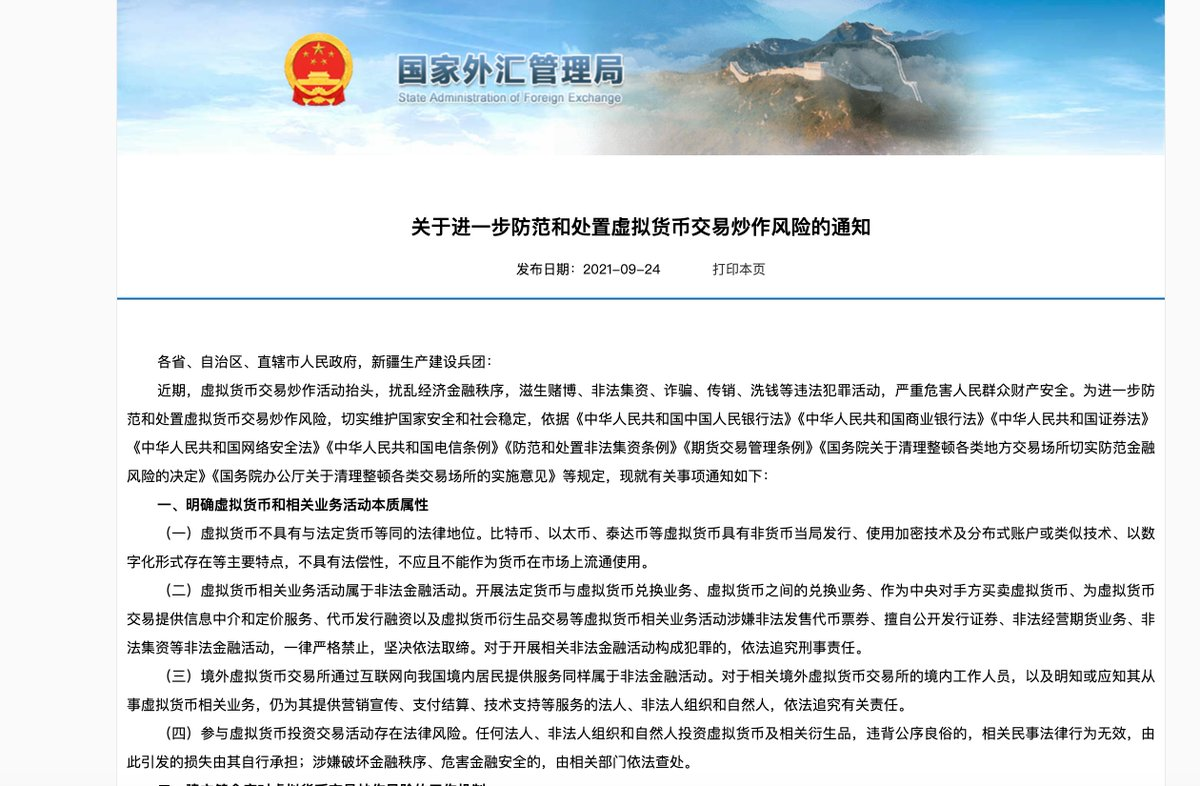
Image Source: https://www.safe.gov.cn/safe/2021/0924/19915.html
This time, no one dared to take chances anymore.
Li Lin's Huobi cleared all mainland users; Xu Mingxing turned off OKEx’s mainland IP, completely shifting toward Europe; Zhao Changpeng cut off Binance's bypass access, relinquishing the largest hidden traffic source; Gan Chun and Han Lin also restricted mainland users, saying goodbye to the gray business. And other small platforms reliant on the Chinese market essentially disappeared in this round of purging.
The formerly vibrant Chinese mainland market, which once accounted for 90% of global trading volume, came to a complete halt.
06 The Disintegration of Giants, Exiting the Market, and the New Global Compliance Landscape
With the arrival of the notification on September 24, 2021, all related cryptocurrency activities were placed under the category of non-compliant financial activities; the provision of services by overseas platforms to mainland users was also deemed illegal. This effectively halted the domestic native cryptocurrency ecosystem.
Overnight, the paths of the three giants began to diverge in three different directions.
Before the tightening policies, Huobi maintained a dominant position in the spot market thanks to its early entry and established reputation, with a continuous stream of mainland retail users providing steady transaction fees without the need to risk high-stakes contracts or messy niche tokens.
However, with the new rules in place, its advantages went up in smoke, and troubles followed:
Licenses were unattainable in Europe and the United States, regulatory bodies in Southeast Asia were making rounds to converse, and cross-border users frequently faced restrictions. Renting overseas offices, hiring local teams, and engaging in compliance legalities led to spending like water, but the platform's daily active users and trading volumes began to decline. The stable operational foundation Huobi once enjoyed was suddenly full of leaks; charging forward posed compliance risks, while retreating meant sacrificing years of established market presence.
Li Lin saw through it clearly; in the earlier lenient regulatory environment, one could conduct business steadily through personal connections and flexible flows.
After 2021, the situation turned into a stringent environment, with user funds needing to be held securely, on-site office filings, source traceability for funds, and compliance guarantees for executives—all of which were critical for survival.
He had the local connections needed, but the lack of a foundation for overseas compliance and cross-border corporate resources was felt. With increasing regulatory pressure on one side and skyrocketing operating costs on the other, along with unspoken risks in performance, he pondered deeply, ultimately finding that the optimal answer was to sell while the platform still held value, exiting gracefully rather than enduring the forthcoming tumult.
2022 coincided with a bear market; with assets across the industry shrinking, exchanges' valuations fell, marking a time for stable transitions and valuations at low points. Li Lin quietly connected with capital from Hong Kong, following a formal acquisition process and disclosing that the acquiring party was About Capital Management; soon, Sun Yuchen joined the global advisory board, becoming one of the most critical public figures in terms of branding, operations, and ecosystem synergy.
By October that year, all transfer procedures had been completed. Li Lin cleared all shares, resigning from all positions, fully separating himself from Huobi. On the surface, it seemed that the founding figure had left on a high note, but in reality, it was a precise strategic move to cash out and protect his assets during the bear market. From that moment on, the ironclad industry structure established by the old three giants started to crack, and the curtain on the comprehensive compliance reshuffling of the industry finally rose.
After stepping down, Li Lin ceased involvement in any platform matters and laid the groundwork for the subsequent establishment of a new compliant registration business.
Sun Yuchen took over the entire operational apparatus but did not carry on with the old practices; instead, he gradually adjusted the existing operating rhythm to align with the current environment of international compliance, adapting to the needs of offshore communities while quietly rewriting the previously stable competition among Chinese exchanges.
After taking charge, Sun Yuchen's first task was to modify the platform’s external naming scheme, minimizing local associations for easier compliance across various countries. Initially, it was temporarily renamed “Huobi,” lowering the mainland’s recognition to adapt to multi-national compliance standards. By September 2023, during the TOKEN2049 conference in Singapore, amidst a gathering of global industry figures, the name was officially updated to HTX.
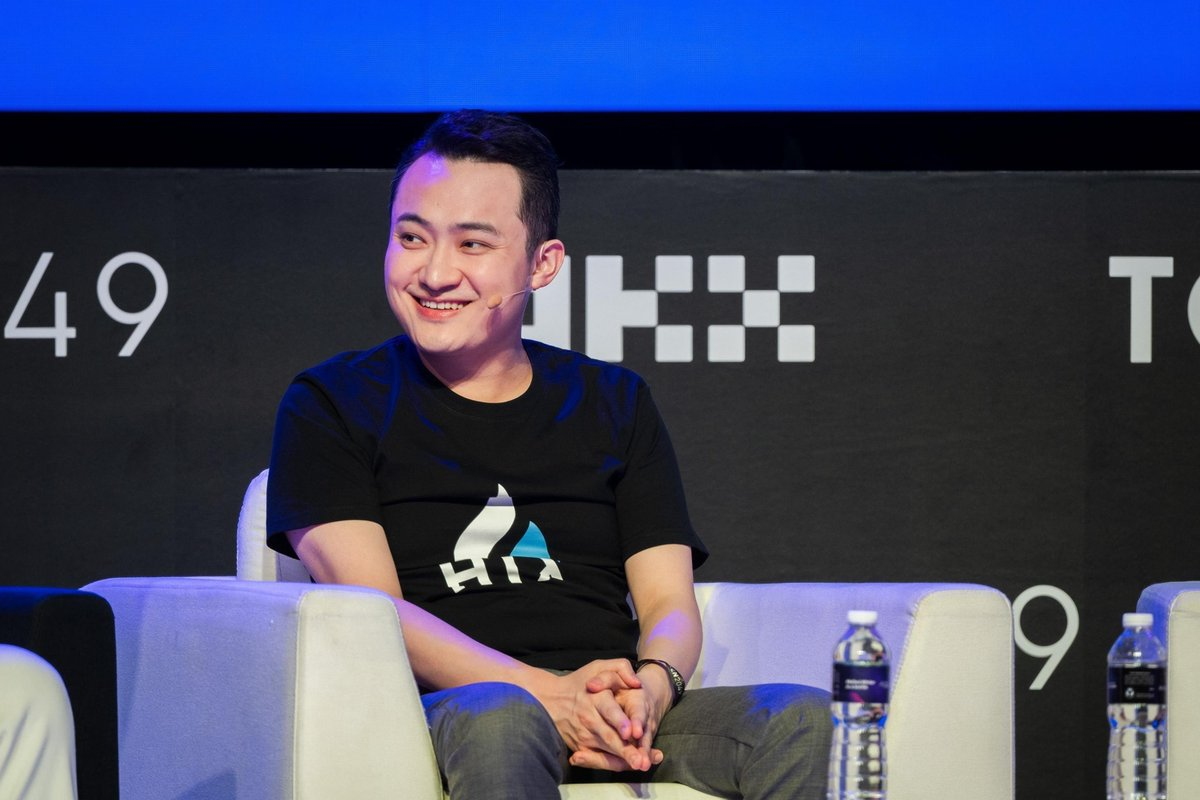
TOKEN2049 / HTX DAO x TRON Afterparty Scene
By leveraging the user base accumulated over years under Huobi's brand while linking with its own Tron ecosystem, they smoothly transitioned operations through the platform's decade-long management phase, quietly completing the brand upgrade and synchronizing external compliance announcements to affordably meet the fundamental requirements for global operational compliance.
With the brand aligned, the platform adjusted its operational strategies to align with traders' actual preferences, adding more highly liquid trading options, loosening derivatives trading positions moderately, and introducing a series of compliant niche tokens quickly to boost trading volumes, thus stabilizing its industry ranking. At the same time, it refined operations in various communities, tiered support for users with different needs, and invited seasoned industry experts to build an external advisory team to enhance its external compliance image.
In the short term, visible trading data showed signs of recovery, yet the underlying security and risk control systems of the platform and its full-chain fund custody systems had yet to be upgraded, while liquidity management of existing funds remained with room for improvement. Amidst the bustling traffic, there prevailed hidden pressures regarding long-term operations.
Indeed, the issues stemming from the share transfer left some unresolved matters that gradually came to light.
By 2025, Li Lin and Sun Yuchen had openly communicated several rounds regarding the reconciliation of funds post-transfer, the connection of positions, and the transfer of ecosystem tokens.
Both sides expressed their boundaries concerning rights and responsibilities, rationally sorting out existing funding gaps, tracking margin replenishment progress, and ensuring the compliant circulation of tokens, dealing with all the residual issues from the transfer prudently.
At the same time, fluctuations in the market from 2023 to 2025 saw significant variations, with some users reporting issues of system lag and inconsistent matching speeds during extreme market conditions. The platform was continuously optimizing its operational capabilities. The flow of industry technologists remained stable, and the operational efficiency of backgrounds smoothly adjusted. By 2026, HTX focused on deeply cultivating its existing user base, maintaining stability in its specific market segment without incident.
While HTX steadily adjusted its operational rhythm and refined its community reputation, Xu Mingxing, who relied on his contract technology prowess, had clearly captured the industry trends.
Anticipating that global regulatory scrutiny would only become stricter over time, he gradually reduced his public exposure, transferring daily operational responsibilities to a professional team while retaining control over strategic and overarching risk management.
Post-2021, OKEx maintained its core trading flows thanks to its robust foundational contract trading system and its long-term collaborations with leading quantitative firms. It did not experience disruptions or problems with liquidity.
Nonetheless, the broader environment never eased; cross-border leverage controls tightened significantly, and compliance checks intensified. Letters of inquiry from overseas regulatory bodies came frequently, necessitating the closure of user complaints and compliance with regional inspections. Although surface revenue appeared stable, the threat of high compliance pressures loomed constantly overhead, as fears remained of unintentionally crossing lines, risking restrictive actions or cross-border penalties.
Xu Mingxing was well aware: the days of easy profits through aggressive contract trading were over. In the future, success in the industry would hinge not on bold strategies, but on compliance, regulatory licenses, rigorous risk management, and institutional connections. Remaining in the spotlight would only elevate personal liabilities.
To mitigate risks and simplify governance, he voluntarily exited the public sphere, delegating daily operations to a professional team, while splitting operations into distinct offshore entities, assigning each aspect of compliance, user operations, and fund reconciliation to specialized units.
On January 18, 2022, OKEx officially rebranded as OKX, strategically laying the groundwork for a fully compliant web3 ecosystem and expanding on-chain custody services, stepping outside the singular exchange framework while diminishing its earlier contract-focused branding, and aligning its historical compliance documentation to mitigate the risks of cross-border tracing.
Once standing alongside Li Lin, the early fierce combatant, he now stepped back and ceased public appearances while OKX settled as a now-professional compliance platform, becoming the second pillar of the old three giants.
After relegating operational duties and decentralizing authority, OKX shifted its strategies, concentrating all resources on two objectives: acquiring compliance licenses globally and serving large institutional clients.
From 2023 onwards, OKX accelerated its transition to global compliance, establishing local teams and complying with regulatory credentials in markets such as the Middle East and Southeast Asia, gradually shifting from an offshore trading platform to a multi-region licensed operator.
In 2025, OKX achieved major advancements in European compliance, obtaining a MiCA license from Malta in January, and began expanding its services to the European Economic Area through passporting mechanisms. In February, OKX reached a settlement regarding historical compliance issues with the US Department of Justice, paying over $504 million in penalties and addressing AML, KYC, and cross-border operations compliance shortcomings.
Post-settlement, OKX continued to strengthen reserve proof, transparency of funds, and its AML risk management framework, shifting its image from a “contract technology exchange” to a mainstream trading platform emphasizing compliance, custody, institutional services, and global licensing.
By 2026, OKX received minority equity investments from ICE, the parent company of the New York Stock Exchange, with a corresponding valuation of approximately $25 billion. This not only indicated deeper involvement of traditional financial infrastructure in the cryptocurrency trading framework but also further emphasized OKX's alignment with mainstream financial markets.
Through three years of quiet development, it steadily captured stable funds exiting Binance and prudently sourced users diverted from HTX, quietly establishing itself as the undisputed second player globally.
On one side, some cashed out and exited, while on the other side, others maintained their watch from behind the scenes, subtly altering the industry structure.
Only Zhao Changpeng, who once rapidly ascended to the top of the industry, faced the layered encirclement of global regulatory bodies, finding the massive scale that previously compressed the entire industry returning to normal developmental patterns.
In its heydays, Binance capitalized on its lack of a fixed headquarters and offshore operations that attracted global retail traffic without selecting regions, leading trading volume to consistently outpace the entire industry.
During the early years of aggressive territorial expansion, it prioritized building webwide traffic and expanding global clientele, gradually institutionalizing its compliance framework and risk management to match the early chaotic development pace of the sector. But as regulatory agencies began to target Binance, serious challenges emerged.
The liquidity crisis surrounding FTX in November 2022 may have served as a catalyst.
Before the crisis brewed, CZ recognized the risks, reducing his holdings in FTX, while subsequently announcing adjustments to his portfolio. The liquidity of FTT itself was weak, prompting a flurry of investor withdrawals and disrupting FTX's funding base. Binance quickly announced its intention to acquire FTX, but after due diligence, it rationally terminated the cooperation.
SBF's inability to honor user withdrawals led to his identification as a fraudster, facing long-term imprisonment.
The fallout from FTX also redirected global regulatory scrutiny toward the compliance checks of top platforms.
With the aftershocks of FTX still resonating, in March 2023, several crypto-friendly banks overseas began making liquidity adjustments: Silvergate methodically wound down operations, Signature Bank faced comprehensive local financial oversight, and Silicon Valley Bank lightly intersected with crypto's capital flow. Traditional banks tightened their cooperation limits with crypto, leading the industry back to rational liquidity levels, as layered compliance checks and frequent inspections ramped up.
Faced with cumulative historical compliance tasks amid market fluctuations, in November 2023, Binance and Zhao Changpeng reached a compliance settlement with the US Department of Justice: the platform agreed to pay $4.3 billion for compliance-related adjustments, ensuring the closure of historical AML, cross-border operational compliance, and localization of business issues.
CZ was sentenced to four months in jail for violating US AML regulations, along with a personal payment of $50 million. After his release, CZ, stepping down as CEO, focused on the overall strategy for compliance while returning to a normalized decision-making role within the industry.
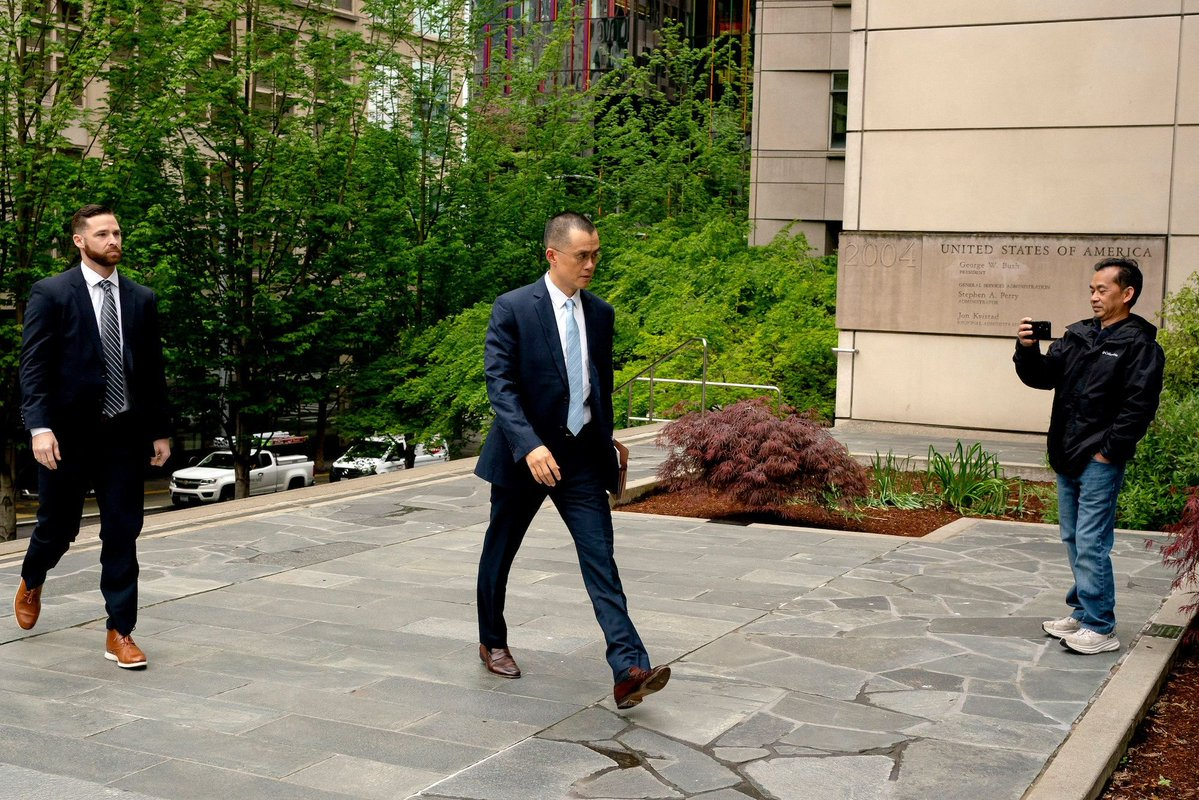
Zhao Changpeng's real scene outside the US Court in 2024
After concluding the restructuring efforts, CZ thoroughly reignited a reflective attitude toward expansion, ceased reckless land grabs, and instead honed in on maintaining stability, while concurrently optimizing governance over high-risk derivative products and enhancing controls over cross-border funds.
In 2025, as Trump was inaugurated, a significant shift in industry dynamics occurred with the Trump family launching the WLFI crypto ecosystem issuing USD1, a compliant stablecoin anchored by US Treasury reserves; in May, Abu Dhabi-based investment firm MGX employed WLFI's USD1 stablecoin to complete a $2 billion investment deal with Binance, further deepening Binance's ties with Middle Eastern capital and stablecoin ecosystems.
Moreover, by October 2025, CZ received amnesty for past compliance issues, signifying the industry's entry into a new phase of political-business collaboration.
As the three major giants adjusted and differentiated themselves, the vacated compliant user base and market shares flowed to the second-tier platforms that had long operated quietly without stirring controversy. A new equilibrium began to take shape, shutting the door on the opportunity for草莽 entrepreneurs to make a sudden leap into the industry.
Under Gan Chun's leadership, KuCoin had refrained from joining the fierce competition among giants, focusing instead on developing overseas niche currencies. Whenever leading platforms adjusted, users sought refuge, successfully weathering several rounds of market cycles.
Under Han Lin's leadership, Gate.io maintained a solid focus on liquidity by ensuring full compensation for stolen Bitcoin in its early years, effectively weathering various bearish storms and fluctuations among smaller platforms to secure a loyal base of high-net-worth users.
The curtain falls on the wild industry, and the tumultuous brawl concludes. The cryptocurrency industry officially enters a new stable era characterized by stringent regulation, professionalism, and globalization, marking the end of the turbulent stories from the first generation of cryptocurrency entrepreneurs.
免责声明:本文章仅代表作者个人观点,不代表本平台的立场和观点。本文章仅供信息分享,不构成对任何人的任何投资建议。用户与作者之间的任何争议,与本平台无关。如网页中刊载的文章或图片涉及侵权,请提供相关的权利证明和身份证明发送邮件到support@aicoin.com,本平台相关工作人员将会进行核查。


