Author: Claude, Deep Tide TechFlow
Deep Tide Overview: On May 13, the U.S. Senate confirmed Kevin Warsh as the new chairman of the Federal Reserve by a vote of 54 to 45, marking one of the most partisan confirmation votes for a Federal Reserve chairman in modern history.
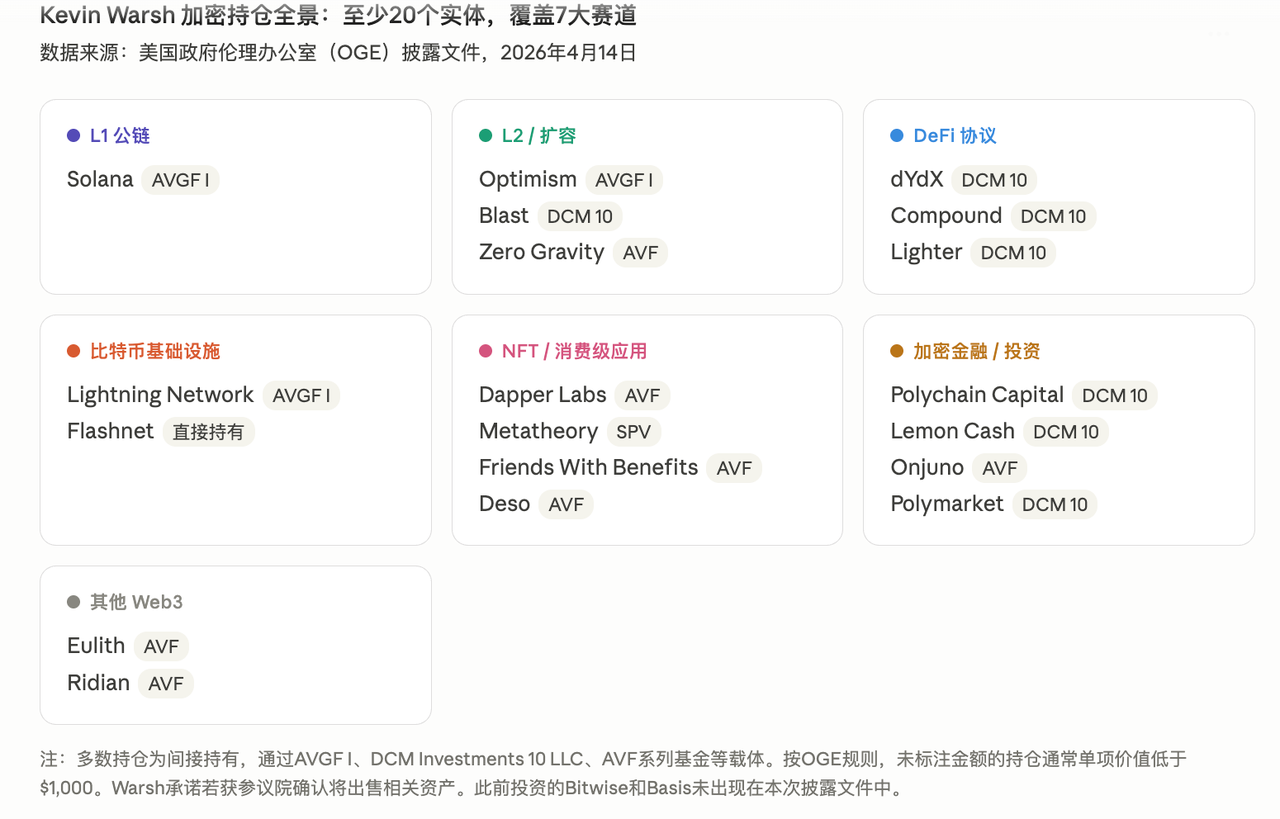
Warsh is the first Federal Reserve chairman to publicly hold crypto assets, with his financial disclosures showing interests in several crypto projects including Flashnet, Bitwise, dYdX, and Polychain Capital. He has previously called bitcoin "the new gold for people under 40," opposed central bank digital currencies (CBDCs), and supported the issuance of private stablecoins. However, with inflation running high (April CPI rising to 3.8%) and the pressures of the Iran War pushing oil prices up, the market expects interest rates to remain unchanged or even increase this year, with expectations for rate cuts nearly at zero.
Warsh's appointment comes at a critical moment for crypto regulation. Just a day after the confirmation vote (May 14), the Senate Banking Committee will review and vote on the 309-page Digital Asset Market Clarity Act (CLARITY Act), which is the first complete crypto market structural bill in U.S. history to be voted on by a committee.
The Most Controversial Federal Reserve Chairman Confirmation in Modern History
According to CNBC on May 13, the U.S. Senate confirmed Warsh as the 17th chairman of the Federal Reserve with 54 votes in favor and 45 against. Pennsylvania Democratic Senator John Fetterman was the only Democrat to vote across party lines. This was the most partisan chairman confirmation vote in the 111-year history of the Federal Reserve.
The day before (May 12), the Senate confirmed Warsh's appointment to the Federal Reserve Board by a vote of 51 to 45, with a 14-year term.
The confirmation process lasted several months and faced many twists and turns. The criminal investigation initiated by the Trump administration last year against then-chair Powell (citing cost overruns on the Fed headquarters renovation) became the biggest obstacle. According to CNBC on April 24, North Carolina Republican Senator Thom Tillis used this as a reason to refuse to push Warsh's confirmation vote. It wasn't until the end of April when D.C. federal prosecutor Jeanine Pirro announced the investigation was dropped that Tillis lifted his block.
Powell's term officially ends on May 15. According to NPR, Powell has indicated he will remain on the board as a member and will not resign from his board position, with his board term ending in January 2028. In his last press conference on April 29, he stated he would "keep a low profile" and support Warsh's work. He is the first Federal Reserve chairman in nearly 80 years to remain a board member after leaving the chairman position.
The First Federal Reserve Chairman to Hold Crypto Assets
Warsh's ties to the crypto industry far exceed those of any previous Federal Reserve chairman.
According to financial disclosure information compiled by CoinMarketCap and Bitcoin Magazine, Warsh's crypto-related interests include equity in the bitcoin payment startup Flashnet, connections with the crypto index management firm Bitwise, positions in the stablecoin project Basis, as well as investments in decentralized derivatives exchange dYdX, decentralized trading protocol Lighter, venture capital firm Polychain Capital, and NFT company Dapper Labs. Under the strict investment policy implemented by the Federal Reserve in 2022, Warsh must divest all crypto assets before May 15.
Warsh's public statements about bitcoin have consistently been positive. In May 2025, during an event at Stanford University's Hoover Institution, he described bitcoin as "an important asset" and "the good cop of policymakers," believing that the bitcoin price reflects market confidence in the Federal Reserve's ability to manage inflation, rather than a threat to the dollar's status. Earlier, in January 2021, during a CNBC Squawk Box interview, he stated bluntly, "If you're under 40, bitcoin is your new gold."
According to Blockhead, Warsh's regulatory stance is also clear: opposing central bank digital currency and supporting stablecoins issued by the private sector. During a Senate Banking Committee hearing, when Senator Bernie Moreno asked about CBDCs, Warsh directly referred to them as "a bad policy choice." This stance aligns closely with the framework of the CLARITY Act currently under consideration by Congress.
The Timing of Warsh's Appointment
There is a significant gap between the "pro-crypto" label and actual monetary policy.
The timing of Warsh's appointment is extremely awkward. According to CNN, the consumer price index (CPI) in April rose year-on-year to 3.8%, the highest level of 2023; on May 13 (the day of the confirmation vote), the April producer price index (PPI) was announced to have soared 6% year-on-year, primarily due to rising energy prices from the Iran War. Inflation has exceeded the Fed's 2% target for five consecutive years.
Trump has repeatedly called for interest rate cuts, even joking that he would sue Warsh if he didn't cut rates. According to Yahoo Finance, Warsh had indeed been open to the idea of rate cuts, previously stating that AI would boost productivity, lower inflation, and create room for cuts. But the Iran War completely changed that premise.
During the confirmation hearing on April 21, Warsh stated that Trump never asked him for preset commitments on interest rate decisions. When Senator Elizabeth Warren directly asked him if he would become Trump’s "puppet," Warsh answered, "Absolutely not."
Furthermore, the timing of Warsh's confirmation overlaps almost perfectly with another major event in the crypto industry.
At 10:30 AM (Eastern Time) on May 14, the Senate Banking Committee will vote on the 309-page CLARITY Act during a markup session. This is the first time a complete crypto market structural bill will be voted on by a committee in U.S. history.
According to CoinDesk on May 13, the committee received over 130 proposed amendments, with Elizabeth Warren submitting 44 of them, covering restrictions on the Federal Reserve issuing master accounts to crypto companies, tightening stablecoin yield regulations, and more. However, CoinDesk's analysis suggests that the vast majority of Democratic amendments are unlikely to pass.
The probability of the CLARITY Act passing this year is about 60% according to Polymarket. Citigroup analysts have linked bitcoin's benchmark target price of $143,000 in 2026 directly to the passing of the CLARITY Act, expecting that the bill's passage will bring $15 billion in net ETF inflows.
Bitcoin Stalls at $80,000, Market Waits for Direction
As of May 14, bitcoin was priced around $79,500, showing no significant fluctuations after Warsh’s confirmation vote. The crypto market had adequately anticipated this outcome (Polymarket previously gave a 93.5% confirmation probability).
For most of the spring, bitcoin traded in the $74,000 to $80,000 range. According to CoinPedia’s analysis, the 200-day moving average around $82,500 is a critical resistance level, and breaking above it could open up upward potential; failing to hold could lead to a retest of the $76,000 support.
DL News quoted former Credit Suisse banker and Theo chief investment officer Iggy Ioppe’s analysis, stating that if Warsh can implement a "balance sheet shrinkage coupled with interest rate cuts" strategy in the second half of 2026, it could create a historically favorable liquidity environment for risk assets, pushing bitcoin toward $100,000. But in the short term, "this is a hawkish waiting period."
Senator Cynthia Lummis posted after Warsh's confirmation, stating: "American businesses and digital asset holders finally have a Federal Reserve leader ready to deliver results."
免责声明:本文章仅代表作者个人观点,不代表本平台的立场和观点。本文章仅供信息分享,不构成对任何人的任何投资建议。用户与作者之间的任何争议,与本平台无关。如网页中刊载的文章或图片涉及侵权,请提供相关的权利证明和身份证明发送邮件到support@aicoin.com,本平台相关工作人员将会进行核查。


